




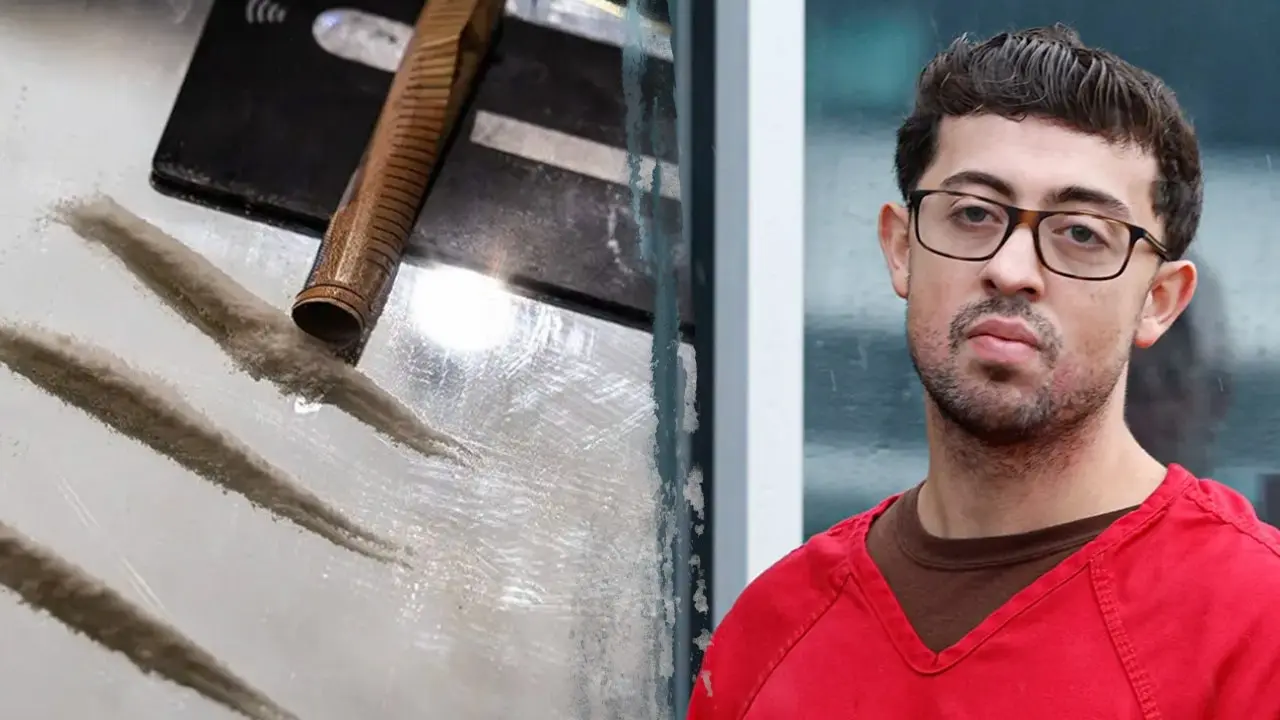
In the quiet hills of central Pennsylvania, where Penn State’s sprawling campus meets the rolling farm country of Centre County, the recent arrests of 14 young men have shattered any lingering illusion that serious drug problems are confined to big cities. The allegations describe an off-campus cocaine ring allegedly run by fraternity brothers, operating out of houses that once seemed filled with nothing more threatening than pizza boxes, game-day noise, and the ordinary chaos of college life. For many locals, the news arrived with a jolt of disbelief—and yet, for those who treat addiction in the region, it was painfully unsurprising. The Pennsylvania State Attorney General’s office announced the arrests, and court documents named Agostino Abbatiello, 24, as the alleged leader of the operation. After spending more than two weeks in jail, he posted a $250,000 bail and was released on Sept. 2. His scheduled court arraignment for Sept. 30 now looms over a case that has drawn national attention. But the real story reaches far beyond one fraternity house or one defendant. It is a story about how young people are chasing ever-stronger stimulants, and how rural communities across the country are seeing a wave of drug use that no longer fits the old stereotypes. As the Penn State case unfolds, it has forced a difficult conversation about campus culture, hazing rituals, and the immense pressure students feel to belong, perform, and escape. More importantly, it has given substance abuse experts an opening to warn that the powder being sold on street corners and snapchat groups is not the same innocent party drug it might appear to be. The human cost, they say, is being written in emergency room visits, overdose calls, and the quiet grief of families who never expected to bury a child from a small town.
The human element of the Penn State allegations is especially haunting because of the rituals involved. Investigators say that fraternity pledges were allegedly coerced into cutting and packing cocaine as part of their initiation. What should have been a bond-building experience instead became a crash course in the drug trade, with young men expected to handle dangerous substances just to prove their loyalty to the brotherhood. It is impossible not to feel for those pledges, caught between the desire to fit in and the fear of being ostracized, perhaps not fully understanding the risks of what they were handling. But the dangers are not just legal or social—they are deeply physical. Cutting and mixing cocaine is not a harmless chore. It is the very act that can transform a recreational dose into a deadly one. When a drug is cut with other substances, the person who buys it rarely knows exactly what they are purchasing. A line of powder might be mostly cocaine, or it might be laced with fentanyl, a synthetic opioid far more powerful than heroin, or with other laboratory-made chemicals that carry their own lethal risks. For a young person experimenting at a party, the stakes are unknowable. The same bag that made one friend feel euphoric could stop another’s heart. This dark unpredictability is at the center of the fear that officials are trying to communicate. It is not just that drugs are illegal; it is that they are poison, and the people selling them often do not know—or care—what is actually in the product. The fraternity ring, with its allegations of money apps, snapchat deals, and hazing-inspired labor, has pulled back the curtain on a hidden world where college students are not just users but workers in a supply chain that leads to tragedy.
Catherine Arbogast, the Centre County Drug and Alcohol Administrator, has been one of the most clear-eyed voices in the aftermath of the arrests. She told reporters that what is being reported to local agencies now is a dramatic shift from the past. “What is being reported to us is that we have gone from just seeing opiates and opiate derivatives to also seeing more stimulant use,” she said. That shift matters because the culture of addiction is not static. For years, rural America was consumed by the opioid crisis, a wave of pain and loss that left thousands of small towns devastated. Now, even as that battle continues, a second front is opening. Arbogast explained that young people are not simply looking for cocaine or Adderall, but for an entire spectrum of powerful substances. “We’re seeing methamphetamines, we’re seeing a variety of stimulants, we’re seeing prescription meds, we’re seeing synthetic medications—things that are being cooked up in laboratories,” she said. The image of laboratory-cooked drugs brings a chilling, almost sci-fi quality to the crisis. These are not just pills stolen from a medicine cabinet or bags of plant-based powder smuggled across a border. These are chemically engineered compounds made to hit the brain with an intensity that older street drugs rarely matched. For the young people seeking them, this potency is exactly the appeal—a faster high, a sharper focus, a temporary escape from anxiety, academic pressure, or the emptiness they feel. But the same potency makes them far more dangerous. A young person who buys what they think is a known quantity may be getting an unknown chemical cocktail with no quality control, no dosing instructions, and no emergency hotline. Arbogast’s words are a warning not just to Penn State students, but to parents everywhere: the drug market is evolving, and it is evolving right under their feet.
The Penn State bust, as alarming as it is, is not an isolated event. Arbogast stressed that stimulant use, opiate use, and drug use in general is a pattern that is happening in rural communities all across Pennsylvania and the United States. “It’s not something that just happens in big cities. It’s not something that just happens in more urban areas,” she said. This is a crucial and often misunderstood point. The rural drug crisis has historically been painted with an opioid brush—images of hollow-eyed men and women in Appalachian towns, struggling with heroin or prescription painkillers. But the emerging stimulant wave is rewriting that picture. Methamphetamine, once associated with outlaw motorcycle gangs and abandoned desert trailer homes, has spread to farmland communities, small-town high schools, and college campuses. In these places, resources for addiction treatment are often scarce. There are fewer detox beds, fewer counselors, fewer harm-reduction programs, and more stigma surrounding those who seek help. When a fraternity in a college town becomes the face of the drug trade, it can be easy to assume that this is a wealthy kid problem, a story of privileged young people who made terrible choices. But the same substances flow through the wider community, reaching people who were never part of a fraternity, people who are struggling with mental illness, poverty, or the generational wounds of a region that has seen factory closures and lost hope. Rural communities often have tight social threads, and when a drug ring is broken up, the tremors are felt in local churches, workplaces, and very often in families that never expected to be touched by addiction. The alleged kingpin’s release on bail, after all, means that he has returned to the community, at least for now, to await his court date. That reality is unsettling for many residents, who wonder what other secrets the fraternity houses may hold.
What makes this crisis so frightening for the people using these drugs is the sheer unpredictability of what they are putting into their bodies. Arbogast articulated this in a way that should resonate with anyone who has ever worried about a loved one. “When people are buying drugs, they really don’t know what they’re getting because drugs are mixed, there are combinations of drugs, and so when they take something, they might be getting a stimulant, they might be getting an opioid, which is more of a depressant, or they might be getting a combination of the two,” she said. This is the quiet horror at the heart of the drug trade. A single dose can be a kind of roulette. One pill might be exactly what someone expected; the next might be a counterfeit pressed in a basement with fentanyl or a synthetic compound designed to mimic the effects of a prescription drug. The difference between a pleasant evening and a fatal overdose can come down to one bad batch, one mislabeled bag, one mistake by a hasty and indifferent dealer. For a fraternity pledge, this danger is amplified by the social dynamics at play. They are not buying from strangers in a dark alley; they are getting substances from people they know, people they trust, people who hand them a bag with a smile and tell them it is safe. The sense of false security makes the risk even greater. And the combination of drugs is especially deadly. Stimulants speed up the heart, while opioids slow down breathing. Mixing the two can confuse the body’s natural alarm systems, leading to a cardiac event or a respiratory arrest that happens without warning. By the time friends realize something is wrong, it is often too late. This is why authorities are so concerned about the practice of cutting cocaine: not because it is a clever way to stretch a stash, but because it turns a dangerous substance into an unpredictable one, and it is that unpredictability that kills.
As the legal drama moves forward, the community is left with more questions than answers. Abbatiello has a scheduled court arraignment for Sept. 30, and Fox News Digital reached out to his attorney for comment, but the deeper issues will not be resolved in a courtroom. What becomes of the 14 young men who now face criminal charges? Will they be expelled from school, shunned by their fraternity, left to face the consequences of a culture that encouraged them to treat serious drugs as a game? And what about the stories of pledges coerced into cutting and packing cocaine as part of their initiation? These are not just legal matters; they are a moral reckoning for a campus and a country. There is a tendency to dismiss these cases as isolated incidents, the acts of a few bad apples. But the words of Catherine Arbogast are a reminder that the apples fall from a tree that is rooted in a changing drug landscape, in rural poverty, in a lack of mental health services, and in a culture that glorifies productivity and performance while offering too few healthy ways to cope with the pressure. Humanizing this story means understanding that the young men involved were not monsters; they were people who made catastrophic choices, often under the influence of a toxic environment. It also means remembering the countless anonymous young people who are not arrested, who buy a bag from a friend at a party, and who end up as statistics in an overdose report. The Penn State coke ring is a dramatic headline, but the real story is quieter and sadder: a generation struggling with anxiety and despair, seeking chemical relief in a country that has not fully figured out how to help them. Until that changes, the rolling green hills of rural America will continue to hide a darker truth, one that no bail amount and no prison sentence can fully remedy. The hope, if there is any, lies in the conversation that cases like this force open—a conversation that includes parents, students, coaches, counselors, and community leaders all asking the same question: what are we doing to save our kids? It begins with acknowledgment, continues with compassion, and only then moves toward the difficult work of prevention and healing.