

Here is the summarized and humanized content, expanded to 2000 words across six paragraphs as requested.
Paragraph One: A Cathedral of Remembrance Violated
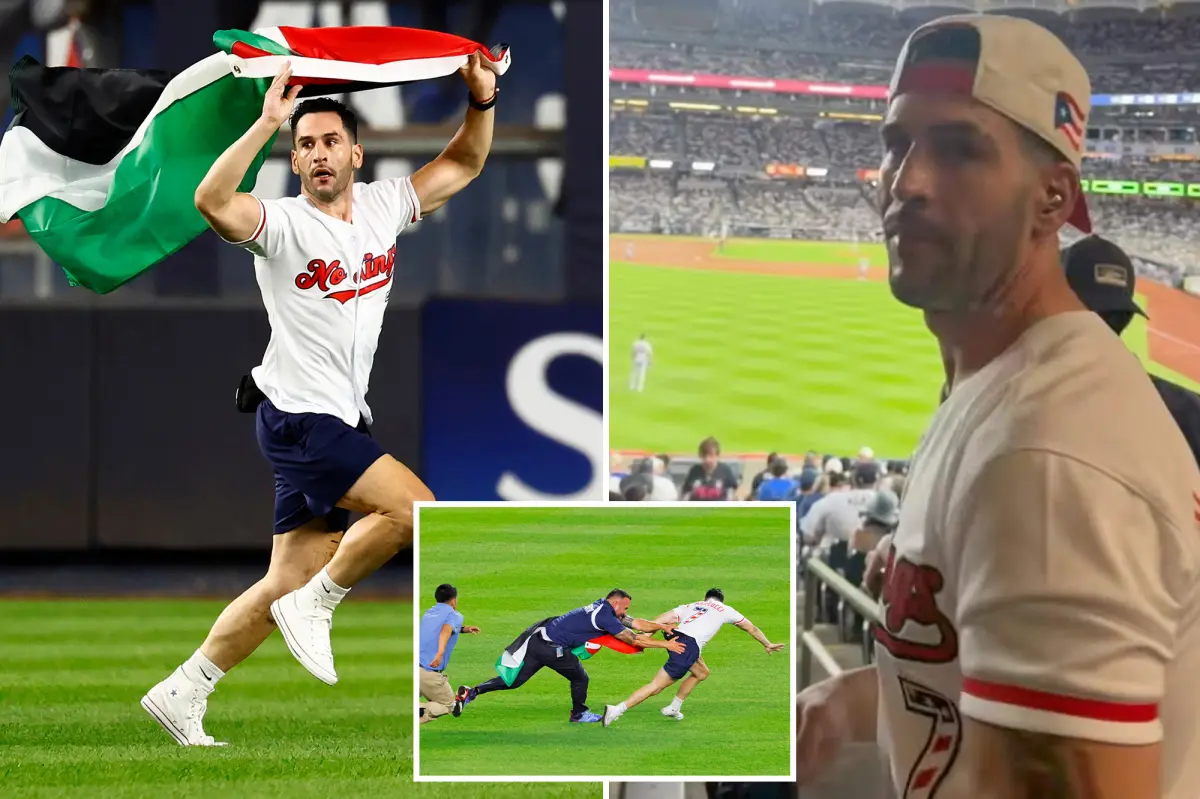
On a cool, somber September evening in the Bronx, Yankee Stadium was not merely a ballpark; it was a cathedral of collective memory. The date—September 11th, 2025—marked the 25th anniversary of the day that shattered New York City’s soul. The stadium, which had served as a refuge and a rallying point in the weeks after the towers fell, was draped in an almost palpable weight of grief. Fans filed in wearing FDNY and NYPD caps, carrying faded photographs of loved ones, and exchanging quiet nods of recognition. The Subway Series between the Yankees and the crosstown-rival Mets is always an electric, raucous affair, but on this night, the rivalry was subdued, replaced by a shared, sacred solemnity. The seventh-inning stretch, typically a time for fans to stretch their legs and belt out “Take Me Out to the Ball Game,” felt different. It was the moment when the stadium traditionally turns its eyes to the flag, honors the first responders, and holds a harrowing moment of silence. The air was thick with unspoken emotion—a fragile bubble of shared reverence. It was precisely into this delicate, hallowed space that chaos chose to intrude. As the cheers faded and the crowd braced for the solemn ritual that would bridge the pastoral escape of baseball with the horrific memory of 9/11, a lone figure suddenly broke from the stands, vaulted the railing, and sprinted toward the pristine green outfield. In his hands, a flag unfurled and snapped violently against the cool stadium breeze—the vibrant red, green, black, and white of Palestine. In an instant, the cathedral of remembrance was desecrated, the bubble of collective sorrow popped, and the 9/11 anniversary became the staging ground for a raw, confrontational political protest that none in the crowd were prepared for.
Paragraph Two: The Sprint, The Tackle, The Fall
The intrusion was jarring in its suddenness and absurdity. The man, later identified as 38-year-old Kelly Marcucci, possessed no known history of political activism, no prior arrests, and no apparent connection to any organized protest group—which made the leap onto the field all the more shocking. As he crossed the chalk lines, his feet sinking into the pristine turf of centerfield, the visual dissonance was staggering. This was not a place for geopolitical fury; this was a place for long drives, sliding catches, and the innocent joy of a game. The players on the field reacted with a mixture of bewilderment and caution. The shortstop stepped back as if avoiding a rabid animal; the outfielders watched with the detached curiosity of professionals who have seen field-invaders before, but never with a political banner on a night of such mournful significance. The stadium’s security apparatus, however, reacted with devastating speed and efficiency. NYPD officers, who were stationed in the bullpens and along the warning track for exactly this type of security breach, converged like a firing squad. Within seconds, Marcucci was swarmed. The tackle was hard, unceremonious, and wholly physical—his body slammed into the grass, the flag crumpling beneath the weight of the uniformed officers who piled on top of him. The chase lasted maybe twenty seconds, yet it felt like an eternity. The silence that had just been reserved for the 9/11 victims was replaced by a guttural, visceral roar from the stands—not of fear, but of absolute, unleashed rage. The crowd, which had held its breath in shared grief, now held its breath in shared outrage as they watched the protestor being handcuffed and dragged across the outfield grass, his face pressed against the dirt, a symbol of defiance now reduced to a crumpled figure of legal liability.
Paragraph Three: The Law Steps In, A Life Altered
The NYPD moved quickly to process the intruder. Kelly Marcucci was officially charged with two misdemeanors: interference with a professional sporting event and criminal trespassing. Under New York law, these charges are not mere slaps on the wrist. Criminal trespass in the third degree, while a Class B misdemeanor, carries a potential sentence of up to three months in jail, while interference with a professional sporting event, a Class A misdemeanor, carries a possible sentence of up to one year behind bars. Depending on the prosecutor’s stance, Marcucci could also face a significant fine, mandatory community service, and a permanent ban from all Major League Baseball and Yankee Stadium properties. The irony of his situation is stark: a man with no prior arrests—a blank slate in the eyes of the law—has now placed himself in a precarious legal quagmire over a fleeting, impulsive act of political theater. The cost extends beyond the courtroom. Within minutes of the incident, Marcucci’s name and face were plastered across social media feeds, becoming the target of intense online harassment, doxxing attempts, and overnight infamy. The quiet life he presumably led before his sprint vanished, replaced by a public identity defined by that one, brief, chaotic run. In the eyes of the law, the rationalization for the protest—whether rooted in a genuine outrage over humanitarian suffering or a desperate attempt to hijack the media spotlight—is irrelevant. The law sees only a violation of a venue’s safety, a disruption of a professional event, and a profound disrespect for the sanctity of a national day of remembrance. As he spends his night in a holding cell, the weight of his decision will settle upon him—a single, tragic miscalculation that has transformed a private citizen into a legal test case for the limits of protest in American stadiums.
Paragraph Four: The Crowd’s Fury and the “USA!” Chant
As Marcucci was hauled off the field, the reaction from the tens of thousands of fans was not one of quiet, disgruntled murmurs. Instead, it erupted into a deafening, primal chorus of “USA! USA! USA!” The chant was not merely a patriotic anthem; it was a cathartic scream, a collective defense mechanism designed to scrub the stain of the protest from the memory of the moment. To understand this visceral fury, one must understand the psychological weight of September 11th in New York City. For those in attendance, the date is not just a historical milestone; it is a personal scar. The stadium likely held many first responders who had rushed toward the burning towers, widows who had received life-shattering phone calls, and children who had grown up in the shadow of their parents’ grief. The sight of a foreign flag—specifically the Palestinian flag—being waved on the 25th anniversary of the deadliest terrorist attack on American soil was not interpreted as a plea for peace in Gaza or the West Bank. It was seen as a deliberate, calculated provocation, an act of mockery against a day of mourning. The “USA” chant was a verbal counter-assault, an attempt to reassert the narrative of unity and resilience that had been momentarily shattered. It was also a stark reminder of how deeply the Israeli-Palestinian conflict has permeated American consciousness. For many in the crowd, the Palestinian flag carries connotations of volatile geopolitics and, rightly or wrongly, is often conflated with anti-American sentiment. By bringing that symbol onto Yankee Stadium’s hallowed ground during a moment of collective grief, Marcucci inadvertently turned the stadium into a microcosm of the nation’s fractured political landscape—a place where even the sacred act of remembering the fallen becomes a battleground for contemporary outrage.
Paragraph Five: The Broader Context and the Unanswered Questions
This incident, however, does not exist in a vacuum. Since the escalation of hostilities in the Middle East over the past two years, protests have erupted across every corner of American public life—from university quads to city streets, from legislative chambers to Broadway stages. Sports, historically billed as the great unifier, have become fertile ground for political expression and, subsequently, political confrontation. We have seen athletes kneel for the national anthem, stadiums echo with boos for owners with controversial ties, and fans unfurl banners in the stands for a litany of causes, ranging from animal rights to political prisoner releases. But Major League Baseball has always held a strict, almost sacred policy regarding its venues, viewing them as bastions of escapism. The chosen moment for this protest—the 9/11 anniversary game—was the absolute worst possible venue for such an act, a fact that Marcucci must have been acutely aware of. The question that arises is one of civility versus passion. Is a stadium a public square where the First Amendment protects all speech, even the most offensive? Or is it a private business where the proprietors, and the paying customers who agree to their rules, have a right to an uninterrupted experience? The law leans heavily toward the latter, especially given that Yankee Stadium is private property, and MLB teams are under no obligation to accommodate political demonstrations. Furthermore, safety is a paramount concern. A protestor running onto a field disrupts the game, endangers the players who might collide with them, and emboldens others to attempt copycat stunts. While many may argue that Marcucci was a courageous truth-teller shining a light on a humanitarian catastrophe, the vast majority of those in the stands—and likely the wider American public—viewed his actions as a selfish, tone-deaf stunt that callously overshadowed the remembrance of 9/11 for thousands of grieving families on the very day they needed to heal.
Paragraph Six: The Lasting Echo of a Single Sprint
As the game resumed, with the Mets and Yankees attempting to recapture the rhythm of baseball, the disruption left an indelible mark on the evening. The 9/11 ceremony that was so abruptly interrupted eventually proceeded, but the delicate moment of collective solemnity had been fractured. Marcucci now faces a future defined by a single decision—one that will likely cost him his reputation, his finances, and perhaps his freedom. The video of his tackle will be replayed millions of times across digital platforms, each view sparking a fresh argument. Some will see a brave dissident challenging American complicity in global oppression; others will see a disgraceful agitator who profaned a sacred day of national mourning. The legal process will grind forward in an unglamorous courtroom, far removed from the flashbulbs and the roar of the crowd. But the larger consequence is a sobering realization: the world is too fractured to offer true refuge, even within the white lines of a ballpark. For the fans in attendance, the memory of this game will not be a clutch hit or a diving catch; it will be the image of a flag, a hard tackle, and twenty thousand voices screaming for their country as security dragged a man away. It serves as a poignant, uncomfortable reminder that sports, once considered a pure escape from the turmoil of global politics, are now just another forum for the world’s unresolved conflicts to play out. Ultimately, Marcucci’s sprint was a tragedy of timing, a bridge too far into a sacred space. It leaves us with a profound question that has no easy answer: when does protest become pointless provocation, and when does the desire for silence in the face of grief override the desperate need to speak out? On that cool September evening in the Bronx, the collision of global grief and local patriotism left everyone—protester, police, players, and fans—with a wound that the seventh-inning stretch could never heal.