






When Elon Musk boasted about spending a weekend “feeding USAID into the wood chipper,” he and President Donald Trump were playing to a political crowd that has long dismissed international humanitarian aid as wasteful, woke extravagance. To them, the U.S. Agency for International Development was an easy target, a symbol of overseas soft-heartedness that could be effortlessly slashed to prove fiscal toughness. Yet, in the real world—far removed from social media posts and political rallies—this agency was a quiet, life-saving machine, historically preserving a human life somewhere on the planet every ten seconds while maintaining a vital global shield against catastrophic epidemics. Today, as a highly lethal and rapidly expanding outbreak of the Ebola virus takes hold in Central Africa, the devastating consequences of this ideological warfare are becoming tragically clear. The Trump administration is discovering, too late, that the critical tools, surveillance networks, and expert personnel they so eagerly threw into the diplomatic wood chipper are the exact resources now desperately needed to keep a global pandemic from reaching American shores. While global health is inherently volatile, the systematic dismantling of America’s pandemic-response infrastructure has left the international community deeply vulnerable, transforming what could have been a localized, contained outbreak into a escalating humanitarian disaster.
The first and perhaps most catastrophic failure of this approach was the systematic destruction of USAID’s operational presence in the Democratic Republic of Congo, specifically in the remote northeastern province of Ituri. Under past administrations, both Democratic and Republican, the United States maintained a robust, active network of aid workers and health monitors in this highly vulnerable region, allowing for the rapid detection of viral anomalies. Jeremy Konyndyk, who led the USAID disaster response team during the devastating 2014 West African Ebola epidemic, noted that this deep local presence was key to stopping outbreaks before they could mushroom. However, after the Trump administration abruptly terminated up to 70 percent of U.S. humanitarian assistance to the Congo, that early-warning network evaporated. The human cost of these cuts was immediate and profound; highly trained local medical professionals were suddenly left without salaries, illustrated by a heartbreaking account of a frontline Congolese doctor forced to abandon medicine to cultivate cassava just to survive. Without USAID personnel on the ground, the rare and highly lethal Bundibugyo strain of Ebola circulated undetected for weeks in remote villages. In pandemic response, time is measured in human lives: a delay of days allows containment in weeks, but a delay of months means the virus runs rampant for years. By the time the hollowed-out global monitoring system finally registered the threat, the outbreak had a terrifying head start, growing from a handful of isolated cases into hundreds, making it the third-worst Ebola outbreak in recorded history.
This devastating delay was severely compounded by the administration’s intense ideological hostility toward the World Health Organization (WHO). In a bid to project nationalist strength, the administration withdrew the United States from the WHO and went so far as to prohibit American public health officials from communicating or sharing vital data with their international counterparts. This self-inflicted isolation shattered decades of constructive partnership, during which the U.S. Centers for Disease Control and Prevention (CDC) and the WHO combined their unique strengths to neutralize biological threats. Instead of a coordinated, rapid-response unit arriving in Ituri, a wall of bureaucratic silence separated American scientists from the ground reality. Consequently, while WHO officials were actively trying to manage the burgeoning crisis on the ground, British and European partners were working in tandem, but the United States did not even learn about the outbreak until more than a week after the rest of the world. This informational blackout crippled America’s ability to mobilize proactive defenses, proving that when political leaders choose to treat global health institutions as political adversaries, they strip their own citizens of the vital intelligence required to survive in an interconnected world where viruses do not respect sovereign borders.
Beyond the targeting of specific agencies, the current crisis exposes a broader, systemic disregard for public health preparation and scientific expertise within the executive branch. During the presidential transition, the outgoing Biden administration had prepared and delivered a comprehensive, multi-hundred-page strategy playbook specifically designed to guide incoming officials through the complex logistics of an international infectious disease outbreak. This blueprint, compiled by veterans of previous pandemic containment efforts, was reportedly ignored and discarded by incoming political appointees. Furthermore, key diplomatic and biodefense roles were left vacant, while vital funding was slashed for GAVI, the Vaccine Alliance, which has been instrumental in developing and distributing a vaccine to combat this specific, brutal strain of Ebola. Although Secretary of State Marco Rubio has offered vague assurances that the State Department intends to “re-engage” with GAVI, there is still no clear timeline or strategy in place. Compounding this neglect, the administration has continued its efforts to gut the President’s Emergency Plan for AIDS Relief (PEPFAR)—a historic bipartisan program that has saved over 26 million lives. Eight former directors of the CDC recently took the extraordinary step of issuing a joint warning, emphasizing that dismantling PEPFAR’s infrastructure will permanently cripple the global surveillance systems that detect deadly pathogens like Ebola, leaving the entire world defenseless.
In defense of his foreign policy, supporters point out that President Trump did take one constructive step by working to de-escalate the long-standing civil conflict in Eastern Congo, notably imposing sanctions on Rwanda’s military to curb their destabilizing influence in the region. Curbing active warfare is undoubtedly vital for health workers, who cannot safely treat patients or track contacts in an active combat zone. However, this singular diplomatic achievement has been completely undermined by the destabilizing fallout of the administration’s massive aid cuts. A revealing academic study recently concluded that in African regions where vital USAID programs were abruptly shut down, the sudden economic vacuum and loss of social services led to a alarming ten percent surge in local violence, riots, and combat deaths. By stripping away basic support systems, the administration unintentionally fueled the very instability and social unrest that make managing a highly contagious viral outbreak virtually impossible. The resulting chaos has left courageous healthcare workers on the front lines without even basic personal protective equipment, forcing them to fight one of the world’s most lethal pathogens in a highly volatile, under-resourced war zone.
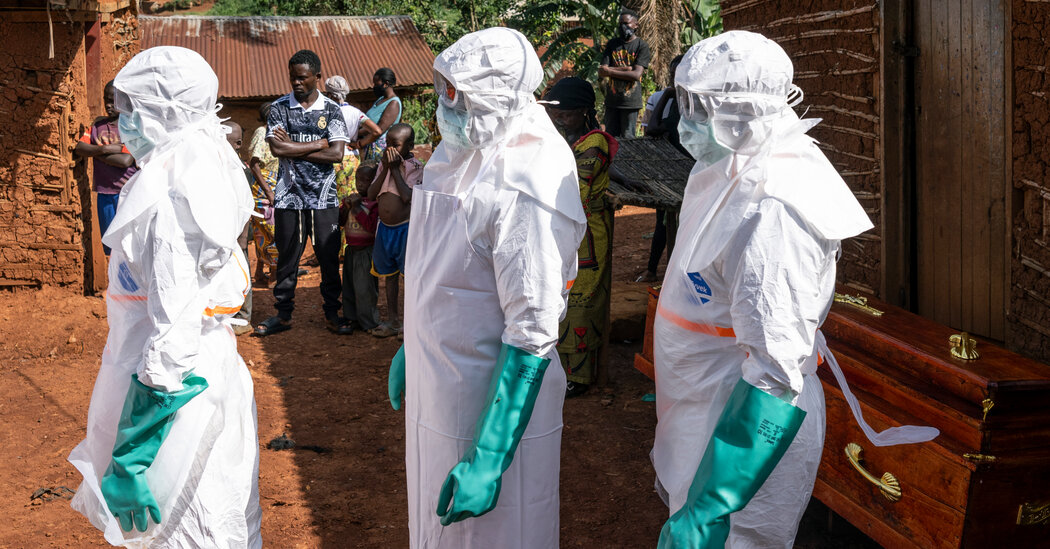
Ultimately, the tragedy of these policy choices is written in the agonizing physical reality of the Ebola virus itself—a disease that begins with deceptive flu-like symptoms before rapidly progressing to organ failure, severe internal and external bleeding, and death. Ebola is a exceptionally cruel pathogen because, in a deeply human sense, it is transmitted through acts of love and devotion: it spreads when family members hold the hand of a dying child, bathe an ailing parent, or tenderly prepare a loved one’s body for a traditional burial. While Washington officials comfortably debate the worth of foreign aid from climate-controlled offices, local doctors, nurses, and burial teams in the Congo are demonstrating extraordinary physical courage, risking their lives daily to halt the virus’s spread with dangerously limited supplies. The tragic irony of dismantling USAID under the guise of “America First” is that these global health programs were never merely acts of charity; they were highly strategic investments designed to stop lethal pathogens at their source, thousands of miles from American shores. By viewing global health through a narrow lens of partisan grievances, Donald Trump, Elon Musk, and Marco Rubio have not only condemned hundreds of thousands of impoverished children to preventable deaths from malaria, hunger, and viral hemorrhagic fevers, but they have also dismantled the vital defenses that keep the American public safe from the world’s most terrifying diseases.