




Paragraph 1: The Nightmare at Sabira
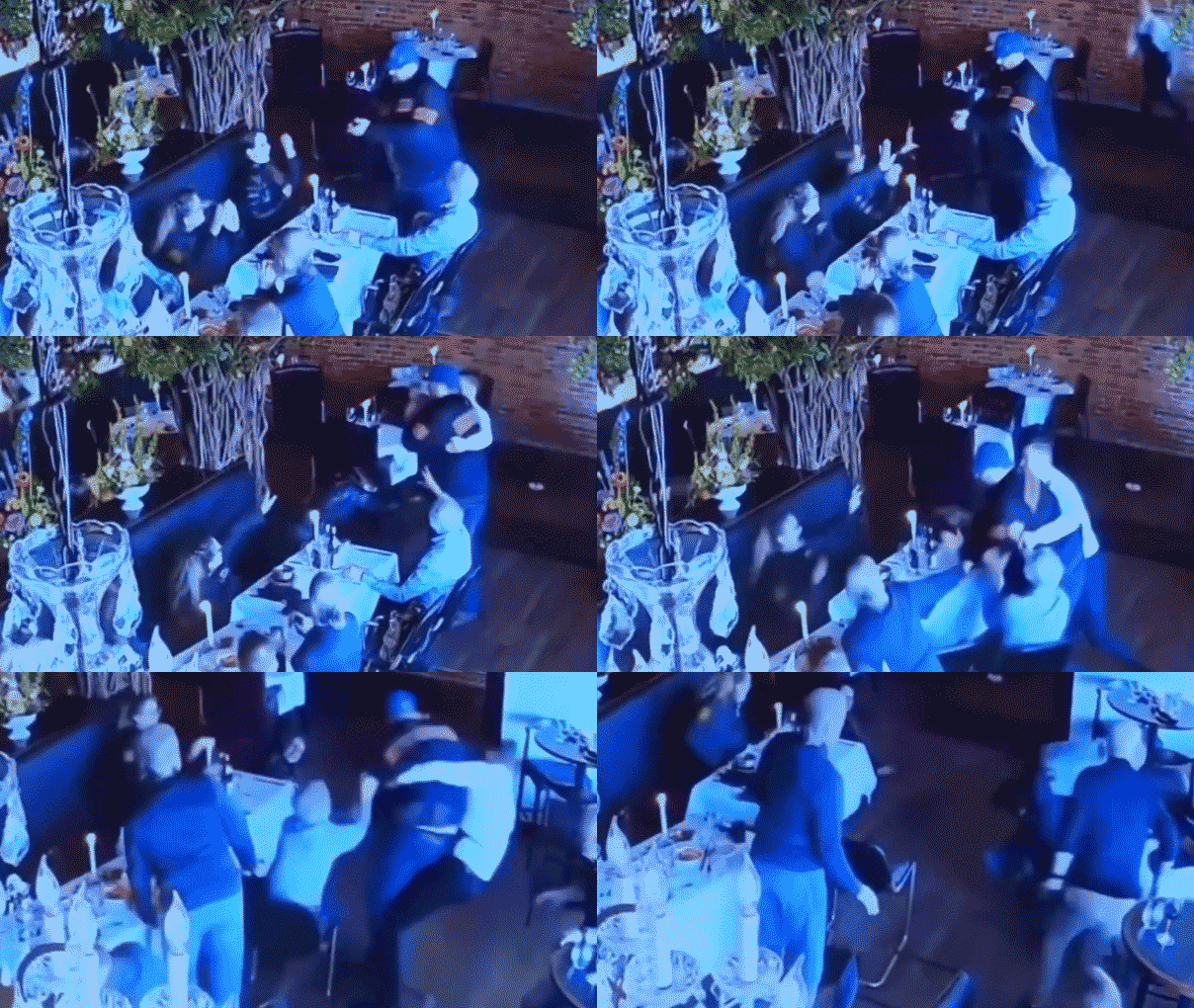
It was supposed to be an ordinary evening of pasta, wine, and family conversation at Sabira, a cozy Italian restaurant in Toledo, Ohio. Kada Malone sat with her parents, Jeannie and Charles, enjoying a meal that would, within moments, become the backdrop of their worst nightmare. Across the way, at a neighboring bar called Souk, her ex-husband, Matthew Exton, nursed a drink, his eyes scanning the room until they locked onto her figure. In that instant, something cold and calculated took over. Exton, a 43-year-old former attorney, entered Sabira with a purpose that had nothing to do with hunger. He approached the table, ordered a drink for Malone and her parents as a grotesque pretense of civility, then spat in their direction before sauntering back outside. The family sat frozen, shaken, uncertain of what had just happened. But the worst was yet to come. Surveillance footage captures the terror in raw, silent detail: Exton re-enters the restaurant, this time with a handgun in his grip, and strides directly toward the table. He thrusts the weapon within point-blank range of Malone’s temple and pulls the trigger. In a desperate, instinctive reflex, she throws her hands up to shield her face, her body bracing for the impact of a bullet that never comes. The gun clicks. It had failed to fire—the safety was still engaged. But the horror of that moment, the split second in which Kada Malone believed her life was over, cannot be undone. That single, terrifying instant became the centerpiece of a trial that would end in a guilty verdict for attempted murder, and a story that serves as a harrowing reminder of how quickly an ordinary night can turn into a fight for survival.
Paragraph 2: The Man Behind the Gun
Who was Matthew Exton, and how did a man who once swore an oath to uphold the law as a local prosecutor end up standing over his ex-wife with a loaded weapon in a crowded restaurant? Exton’s background made the crime all the more chilling. He was an attorney, a former local prosecutor, a man who knew the weight of evidence, the power of a well-argued case, and the consequences of breaking the law. He was also a man seemingly consumed by anger and bitterness following his divorce from Malone. The prosecution painted a portrait of a man who had been stewing in resentment, threatening his ex-wife long before he ever pulled the trigger. The clearest glimpse into his state of mind came from a voicemail he left for Malone prior to the attempted shooting. In it, Exton ominously referenced the Johnny Cash lyric, “Sooner or later God will cut you down.” It was a message designed to intimidate, to remind Malone that she was not safe, that someone was watching and waiting. The threatening words hung in the air like smoke, foretelling the violence that would erupt at Sabira. For the prosecution, that voicemail was not merely a strange coincidence; it was a window into Exton’s intent, his motive, and his volatile emotional state. He had not come to the restaurant that night for a meal. He had come with anger in his heart and a plan in his head, armed with a loaded firearm and a determination to end his ex-wife’s life in the most public and terrifying way imaginable.
Paragraph 3: The Evidence and the Verdict
In the aftermath of the failed shooting, investigators meticulously pieced together the evidence that would eventually seal Exton’s fate. The firearm was examined, and what they found was sobering: there had been a round in the chamber and seven more bullets waiting in the magazine. This was not a moment of rash, unplanned violence; it was a prepared execution. The only thing standing between Kada Malone and certain death was a mechanical safety mechanism that had been left engaged, a tiny piece of metal that functioned as the universe’s most improbable guardian angel. As the trial unfolded, the prosecution laid out the sequence of events with clinical precision: the spotting of Malone at Souk, the entry into Sabira, the spitting, the retreat, the return with the weapon. Lucas County Prosecuting Attorney Julia R. Bates did not mince words in her assessment, declaring that Exton had come with the intention of committing a public execution. She also lauded the restaurant’s employees and patrons who intervened, calling them heroes—a sentiment echoed by everyone who viewed the footage. For the jury, the evidence was overwhelming and unambiguous. On September 4, they returned guilty verdicts on all counts: attempted murder, two counts of felonious assault, and two firearm specifications attached to each charge. The two counts of felonious assault were tied to Malone’s parents, Jeannie and Charles, who had been forced to witness their daughter nearly shot to death before their eyes, a trauma that no parent should ever have to endure.
Paragraph 4: The Courtroom Explosion
If there was any doubt about Exton’s emotional instability, the courtroom itself provided the final, unequivocal answer. As the prosecutor’s closing arguments referenced the chilling voicemail—the Johnny Cash lyric that had served as a harbinger of violence—Exton could no longer contain himself. He erupted. Screaming the lyrics to “God’s Gonna Cut You Down” at the top of his lungs, he transformed the solemn atmosphere of the courtroom into a scene of chaotic theater. Court officers rushed to restrain him, their hands gripping his arms as he continued to shout, his voice echoing off the walls. But the outburst did not end there. In a moment that stunned onlookers, Exton pointed his fingers at assistant Lucas County Prosecutor Rose Mock, mimicking the shape of a gun and gesturing as if to fire. The message was unmistakable: he was still threatening, even in the face of his own conviction, even with the weight of a guilty verdict pressing down on him. The judge, maintaining the composure that the justice system demands, instructed the jury to disregard Exton’s conduct entirely, to let the evidence speak for itself and not allow the defendant’s courtroom meltdown to influence their deliberations. It was a wise instruction, a reminder that the verdict should be based on facts, not on the theatrics of a man who had already shown exactly who he was. For Malone, watching her ex-husband rage and threaten from the defendant’s table must have been a terrifying flashback to that night at Sabira, a stark reminder that his capacity for intimidation had not faded.
Paragraph 5: The Human Toll and the Heroes
Behind the legal drama, the verdict, and the courtroom outburst lies a deeper, more human story—one of survival, trauma, and extraordinary courage. Kada Malone did not merely walk away from that restaurant; she walked away from a bullet that was meant to end her life. The psychological scars of such an experience do not heal quickly. The sound of a gun click, the sight of a raised hand, the sudden movement of a waiter lunging from behind—these are the images that can replay in a survivor’s mind for years. Malone’s parents, too, carry the weight of that night. They had been enjoying a simple meal with their daughter, only to witness a man attempt to execute her in front of them. The terror of that moment, the helplessness of watching your child in mortal danger, is a wound that time may soften but never fully erase. Amid the darkness, however, there is an inspiring thread of heroism. A waiter, acting on pure instinct, tackled Exton from behind before he could fire a second time. This selfless act undoubtedly saved Malone’s life. He was not a trained security guard or a police officer; he was just a person who saw another human being in mortal danger and did not hesitate. The restaurant’s patrons, too, played a role, stepping in to subdue a man who had come armed with the intention to kill. The prosecutor’s office rightly called them heroes, and their actions remind us that in the most unexpected moments, ordinary people are capable of extraordinary bravery.
Paragraph 6: Justice, Sentencing, and the Road Ahead
Now, the legal process moves toward its final chapter. Exton is scheduled to be sentenced on September 21, 2026, a date that will determine how many years he will spend behind bars for his crimes. Given the severity of the charges—attempted murder, two counts of felonious assault, and the firearm specifications—he faces the possibility of a lengthy prison sentence. For Malone, the sentencing will mark the end of a long and painful ordeal, but it will not erase the memories of that night. Justice, in the eyes of the law, has been served by the verdict, but true closure is a more elusive thing. The story of that evening at Sabira is a sobering reminder of the insidious nature of domestic violence, which often escalates to its most lethal point when a victim tries to move on and rebuild a life. It is a tragedy that so many people know all too well. Yet, in the midst of this darkness, there is also a story of survival. Kada Malone survived. She survived because of a mechanical flaw in a gun, because of a brave waiter, because of the swift actions of good people. Her story is a testament to the resilience of the human spirit, and a warning that the threat of violence can come from anywhere, even from those we once loved. As Exton awaits his fate in a jail cell, Malone can now begin, slowly and painfully, to rebuild the sense of safety that was stolen from her. The road ahead may be long, but she has proven that she is a fighter, and she is not alone.