



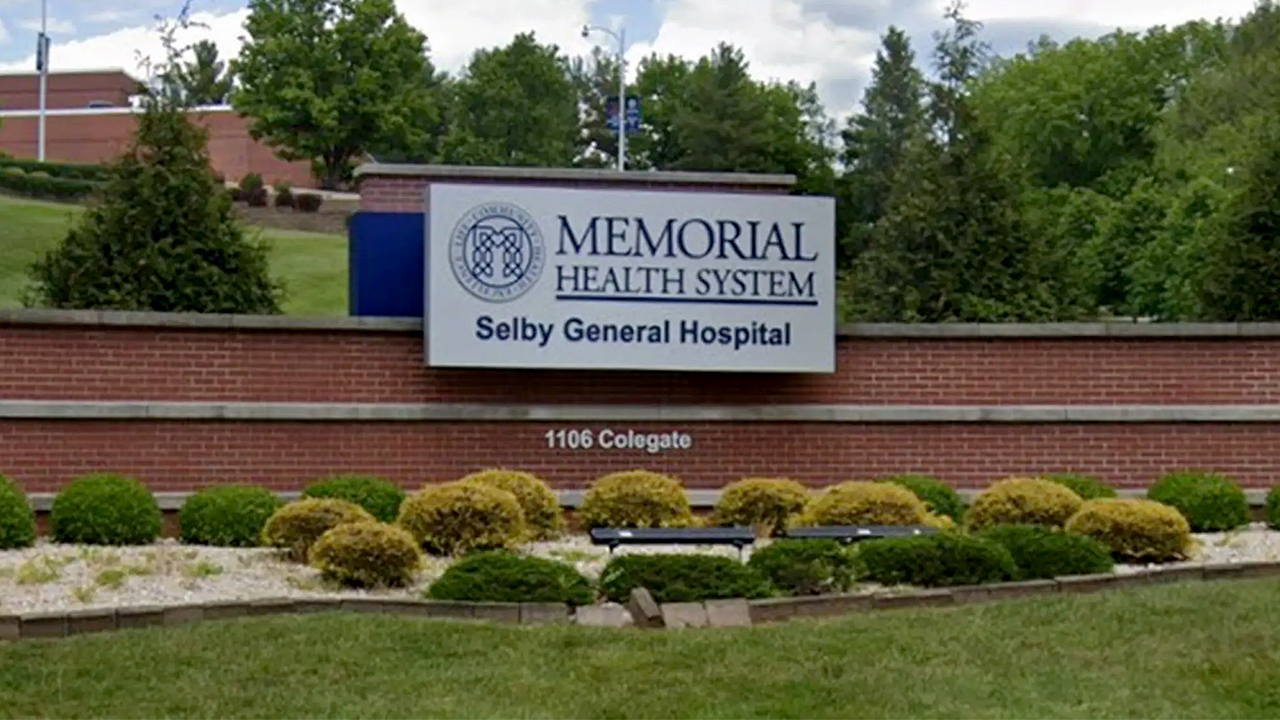
Some decisions in life are made in seconds but leave their weight on us forever. Sharon Jacks, an Ohio woman from Marietta, had every reason to trust the doctors at Selby General Hospital. She was facing something terrible enough: cancer in her right leg, a disease that had reached the point where the only path forward was a below-the-knee amputation. It is the kind of decision no one ever wants to make, but patients make it every day because they believe that losing part of a limb is better than losing their life. She walked into that hospital, or perhaps she was wheeled in, carrying that difficult courage. She likely had talked with her family, prayed with them, maybe cried with them, and tried to prepare herself for the changes ahead. She knew the right leg would be gone when she woke up. She expected to hear that the surgery had gone well and that the cancer had been removed with it. Instead, when Sharon Jacks woke from anesthesia, the leg that was missing was not the right one. It was her left leg—the leg that did not have cancer, the leg that was supposed to stay, the leg that would have been her foundation as she learned to walk again. Her attorney, Brad Layne, later said of the medical team’s mistake, “It defies explanation, obviously.” That is perhaps the most chilling part of this entire story: there was no reason for it, no medical justification, no complicated judgment call. It was simply a failure, a catastrophic human error in which every safeguard failed and no one in the operating room noticed what they were doing.
But the horror did not end in the recovery room. When Jacks woke and looked down, the left leg—the one that should have carried her through the months ahead—was gone. In that moment, her entire world collapsed into a nightmare. She had gone into surgery with cancer in her right leg and a plan to save her left leg. She came out with the wrong amputation and the original cancer still present. The right leg, the leg that was supposed to be removed, would have to be amputated as well. She is now a double amputee, not because both legs were dangerously diseased, but because a cascade of mistakes left her with no other option. The emotional weight of that reality is almost impossible to describe. She has lost not only the use of her legs but something deeper: her sense of security, her trust in medicine, and the simple expectation that a patient is protected when unconscious on an operating table. Her lawsuit argues that she has suffered previous and future medical expenses, physical pain, emotional distress, permanent impairment, and the loss of enjoyment of life. Those legal phrases barely scratch the surface. They do not capture the mornings when she reaches for a leg that is no longer there, the terror of being dependent on others for basic needs, or the quiet anger of knowing that this should never have happened. They do not capture the moments when she looks at a photograph of herself before the surgery and feels as though she is looking at a stranger, or the long nights when her mind keeps circling back to the same futile question: how could no one stop this? Her attorney has described the case as a “complete failure of basic safety procedures.” That phrase is clinical, cold, and accurate. But behind it is a woman whose future has been stolen not by cancer, but by the very people she trusted to save her from it.
How could a surgical team amputate the wrong leg? The details in the complaint are as stunning as they are tragic. Jacks’ attorney reviewed medical records and says the surgeon initially marked the correct leg—the right leg—with the standard marking used to identify the surgical site. That mark, according to Layne, was still visible on the correct leg after the wrong leg had been removed. And yet, in one of the most basic and vital safety checks in modern surgery, the team failed. Hospitals are supposed to perform a surgical “time-out” before every operation. During a time-out, everyone in the operating room stops and confirms the patient’s identity, the planned procedure, and the exact site of the operation. Jacks’ team reportedly performed not one, but two time-outs before beginning. They still amputated the wrong leg. Layne emphasizes that responsibility falls on every person in the room, from the surgeon and nurses to the anesthesiologist. “Every person in that operating room is responsible to make sure that that is verified before moving forward,” he said. “The records say that happened twice, but somehow Ms. Jacks is missing a leg that should have not been removed.” The lawsuit describes this as a “never event”—a term used in healthcare for catastrophic errors that are entirely preventable and should never occur. Wrong-site surgeries, wrong-patient procedures, and wrong-procedure operations are all classified as never events. They are considered so egregious that they should be a shocking rarity, yet they still happen. Layne’s own words carry the rage and disbelief of a professional who sees failure on a systemic scale: “It shouldn’t happen in any type of medicine. It shouldn’t happen anywhere. It shouldn’t happen in a veterinary setting, even.”
In the aftermath, the hospital has not tried to deny that something went horribly wrong. Selby General Hospital confirmed that an “adverse surgical event” occurred in September 2025 and said the surgical team “responded immediately to address the medical needs of the patient involved and provide support to their family.” But immediate response cannot undo what was done. The hospital also stated, “Our proactive review of what took place confirmed this was an avoidable event, and that our expected operating room procedures were not followed. Those involved were held accountable for their actions and are no longer in their positions.” That last sentence raises more questions than it answers. Who was held accountable? Were they fired, suspended, or disciplined? And if they were accountable, why did it take a lawsuit for the public to learn about it? The hospital says it fully cooperated with a review by the Ohio Department of Health and that the review confirmed its surgical protocols are “safe and effective.” It also says its clinical and leadership teams have “implemented corrective measures across our organization to prevent a situation like this from recurring.” Maybe that is true. Maybe policies have been rewritten, checklists strengthened, and staff retrained. But for Sharon Jacks, all of those corrective measures came too late. The hospital ends its statement with a prayer: “We are saddened by what occurred, and our team continues to keep this patient and their family in our prayers.” It is a nice sentiment, but prayers do not grow back a leg, and they do not erase the fact that Jacks will spend the rest of her life navigating a world that was never designed for someone who has lost both limbs through a mistake that should never have happened.
This case is not just about one woman in Ohio. It is about every patient who has ever put their life in a surgeon’s hands and closed their eyes. It is about the fundamental promise of medicine: first, do no harm. When a hospital performs a time-out, it is supposed to be a sacred pause, a collective breath, a final chance for everyone in the room to align their minds around one crucial fact: we are operating on the right person, on the right part, for the right reason. When the time-out is performed but the outcome is still wrong, the entire system has failed. It is like an airplane crew running through a pre-flight checklist and then taking off without wings. The checklist exists precisely because human beings are fallible. We are tired, rushed, distracted, anxious, overwhelmed. We can look at a mark on a leg and see what we expect to see instead of what is actually there. That is why the rituals matter. That is why hospitals should be held to the highest standard, and why the consequences for never events should be swift and severe. Jacks’ lawsuit seeks compensatory and punitive damages. Compensatory damages would cover her medical bills, her pain, her lost quality of life. Punitive damages are different—they are meant to punish the wrongdoers and send a message that this behavior will not be tolerated. Her attorney says the lawsuit names the hospital, the surgeon, and other members of the surgical team, accusing them of a “complete failure of basic safety procedures.” In a press release, Layne said, “There is simply no excuse” for what happened. “Complete and total failure by multiple medical professionals caused this catastrophe. Despite several opportunities to identify the mistake and stop the procedure, the surgical team somehow never noticed they were operating on the wrong leg. Now every day for the rest of her life, Sharon Jacks must live with the consequences of those failures.”
What do we do with a story like this? We can shake our heads in disbelief, thank our lucky stars it wasn’t us, and scroll past. But that would be a failure of our own. Sharon Jacks’ story deserves more than outrage; it deserves reflection and action. It reminds us that patients are not medical records or room numbers. They are mothers, fathers, grandmothers, friends. They have lives that no surgical error can be measured against. The term “never event” is a promise, and when that promise is broken, the breach is not just legal and medical—it is profoundly human. Jacks will now face a future she never chose: a future of rehabilitation, prosthetics, physical therapy, and the enormous emotional work of accepting a body that has been fundamentally altered by someone else’s mistake. Yet her decision to sue is a form of courage. She is not just seeking compensation; she is insisting that the people and institutions responsible for this catastrophe be forced to look at her, to answer for what they did, and to change the way they operate so that no other patient has to wake up in her nightmare. There is a quiet power in that. It does not fix the harm, but it creates a small measure of meaning in the midst of senseless loss. In the end, the most human response to an inhuman error is to demand better. Sharon Jacks cannot get her leg back. No verdict, no apology, no new hospital policy will ever give her what was taken from her. But perhaps her voice, carried by lawyers and reporters and anyone who hears this story, will be loud enough to remind every surgeon, every nurse, every hospital administrator of the sacred duty they owe. The marker in a surgeon’s hand is not just a pen. It is a boundary between life and devastating loss. The next time someone picks it up, may they see Sharon Jacks’ face—and make sure they are marking the right leg.