





The Unraveling of a Monday Afternoon in the Crossroads of the World
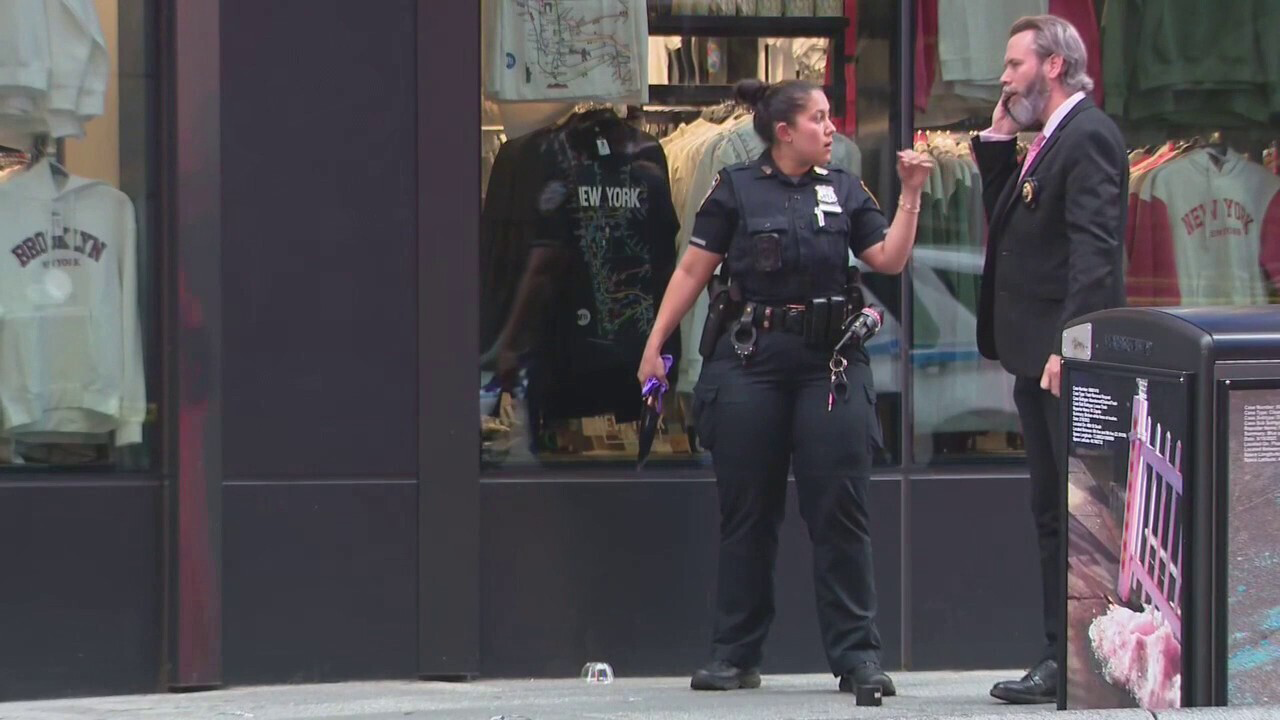
The heart of Manhattan, the fabled intersection of Seventh Avenue and West 43rd Street, usually hums with a specific, chaotic symphony. It’s a cacophony of honking yellow cabs, the relentless chatter of tourists snapping photos of towering billboards, the hiss of street vendors grilling hot dogs, and the bass-heavy thrum of Broadway musicals pouring out of nearby marquees. On an ordinary Monday, this concrete canyon is a stage for the world’s most overstimulating performance—a place where millions of footsteps blend into a single, restless pulse. But on this particular afternoon, the music stopped. The rhythm broke. A jagged, discordant note of terror cut through the noise, shattering the illusion of safety that the neon glow so often provides. The NYPD’s urgent advisory, blasting through smartphones and news alerts, was a stark warning that something profoundly wrong had occurred: a police-involved shooting in the very belly of the tourist beast. The instruction was simple—avoid the area, expect delays—but the underlying implication was chilling. The “Crossroads of the World” had momentarily become a crime scene, a place where the most primal fears of urban life had clawed their way to the surface. The bustling crowds, once absorbed in their own selfies and smoothie runs, suddenly stopped, looked around, and felt the cold prickle of uncertainty. The thin blue line, so often taken for granted, was being drawn right in their midst.
The details that emerged in the immediate aftermath were fragmented, messy, and raw, like a radio broadcast interrupted by static. A witness, breathless and frightened, took to social media with a claim that sent shivers down the collective spine: a woman was “running around stabbing people.” The words were a spark that ignited a wildfire of speculation and fear across the digital landscape. Then came the video. Grainy, shaky, and shot from a distance, it captured a scene that seemed to belong to a crime drama, not a reality in midtown. A woman, seemingly oblivious to the swarm of armed officers, was seen wielding a knife—a glint of silver in the afternoon light that looked disproportionately sinister against the backdrop of glamorous ads and theatrical posters. She moved with a purpose that was erratic and unpredictable, her body language suggesting a person in the grip of something far beyond reason. As the officers formed their perimeter, shouting commands that were inaudible in the recording, the woman approached them directly. The confrontation was a microsecond of terrifying suspense. The officers, trained to de-escalate but also to protect themselves and the public, were faced with a terrifying calculus: a blade against a bullet, a desperate person against a split-second decision. The video froze, then showed the inevitable, horrible conclusion—the discharge of a firearm, the crumpling of a figure, and the sudden, deafening silence that followed. The gunshot was the period at the end of a sentence that nobody wanted to hear. It was the brutal, unequivocal punctuation mark that transformed a chaotic incident into a tragedy, leaving the officers, the witnesses, and the entire city to grapple with the heavy aftermath.
In the moments that followed, the public discourse threatened to reduce the woman to a mere statistic—an unnamed “perpetrator” in a police report. But to humanize this moment is to pause and consider who she might have been before the knife was in her hand. Was she a person struggling with severe mental illness, lost in a delusional fog that told her the shiny lights of Times Square were a threat? Was she a soul in the throes of a personal crisis, a breakdown so profound that the physical world became an enemy? The streets of New York are the proving grounds for such invisible battles. We see the unhoused woman muttering to herself on the subway, the man arguing with an unseen presence on the park bench, but we rarely stop to recognize the fragile humanity within their pain. On this Monday, that invisible struggle was violently externalized in the most public arena imaginable. Conversely, we must also humanize the officers who pulled the trigger. They are not faceless enforcers of a policy; they are human beings who woke up that morning expecting to do their jobs—directing traffic, answering calls, assisting lost tourists. Instead, they were thrust into a life-or-death encounter where hesitation could cost them their lives or the lives of bystanders. The weight of drawing a weapon and firing it is a burden that never truly departs. They will replay that moment in their minds for years to come, asking themselves if there was another way, even when their training and the chaotic circumstances dictated that there was not. The officer’s hands probably shook as they called for medical assistance, the adrenaline masking the trembling that would come later. Both the woman and the police were victims of a tragic system of circumstance, two opposing forces colliding in a fraction of a second that would define their lives forever.
Times Square is more than just a location; it is an American archetype. It is the symbol of ambition, of spectacle, of the dazzling promise of the city that never sleeps. From the gritty, dangerous streets of the 1970s and 80s to the Disneyfied, pedestrian-friendly tourist mecca of today, it has been aggressively sanitized and rebranded. Yet, this incident is a stark reminder that no amount of public-private partnership or security cameras can fully sanitize the raw chaos of human nature. The giant screens that normally showcase the latest superhero movie or luxury watch now reflected the pulsing red and blue of emergency lights. The street performers—the Naked Cowboy, the Statue of Liberty impersonators, the breakdancers—vanished, replaced by the yellow tape of a police cordon. The tourists who flock here to feel safe and thrilled instead experienced the visceral reality of a police state in action. For the thousands of office workers streaming out of nearby buildings, the lockdown was a rude awakening, forcing them to duck back into lobbies, their lunchtime errands forgotten. The incident shattered the collective fantasy that Times Square is a bubble of pure entertainment, insulated from the city’s uglier realities. It is a place where the extremes of wealth and poverty, celebrity and desperation, joy and despair coexist in a tight, volatile proximity. The shooting was a violent reminder that this melting pot is under constant pressure, and occasionally, it boils over.
The ripple effect of the incident was felt far beyond the immediate crime scene, amplified by the digital echo chamber of social media. The initial witness claim of a “stabbing spree” spread across Twitter and Instagram faster than the facts could catch up, creating a terrifying phantom narrative of multiple victims and a deranged killer on the loose in the country’s most famous public space. News sites raced to publish headlines, each more breathless than the last, while the actual investigation remained a silo of official silence. The video footage became a Rorschach test for the public’s anxieties about policing, gun control, mental health, and urban safety. Some viewed it as a justifiable use of force, pointing to the inherent lethality of a knife. Others saw a tragedy of failed intervention, lamenting that a woman in distress wasn’t offered a mental health professional instead of a bullet. In the void of information, conspiracy theories festered. It’s a morbid human trait that we seek to assign blame or find a simple narrative to soothe our own fears. But the truth, as is usually the case, is far more complex. It isn’t a neat story of good versus evil, or hero versus villain. It’s a messy narrative of human frailty, institutional limitations, and the sheer unpredictability of life in a dense metropolis. The witness who yelled, the tourist who filmed, the office worker who watched from a window—they are all now part of this story, their own sense of security permanently altered by what they saw or thought they saw.
As the sun began to set over the Hudson River, the yellow tape was slowly rolled up, and the intersection of West 43rd Street and Seventh Avenue began to normalize. Street sweepers returned to clear the litter, and the lights of the billboards flickered back to their hypnotic brilliance. The physical evidence was washed away, but the psychological scar remained. The NYPD would launch a full investigation, reviewing body-camera footage, interviewing witnesses, and poring over the woman’s history to piece together the puzzle of that final, fateful hour. The questions that linger, however, are more profound. How do we, as a society, better address the crises of mental health that so often predate these public tragedies? Are our police officers equipped—not with guns and tasers, but with the training and resources—to handle individuals in the throes of a psychotic break? The woman on Seventh Avenue was likely a symptom of a broken system, a person who fell through the cracks of a civilization that sometimes struggles to care for its most vulnerable. The officers, too, are products of that same system, expected to be social workers, psychologists, and soldiers all at once. For the thousands who were forced to flee or hide, the memory of that gunshot will resurface in quiet moments, a reminder that safety is an illusion, a fragile construct that can be shattered in an instant. In the end, the incident in Times Square was a brutal, human story—a story about a woman’s despair, an officer’s fear, and a city’s resilience. Life will return to the intersection; the crowds will gather again. But the question of what we can do to prevent the next tragedy, to catch the next person before they pick up a knife, remains unanswered, echoing in the neon-lit canyons long after the last siren fades.