



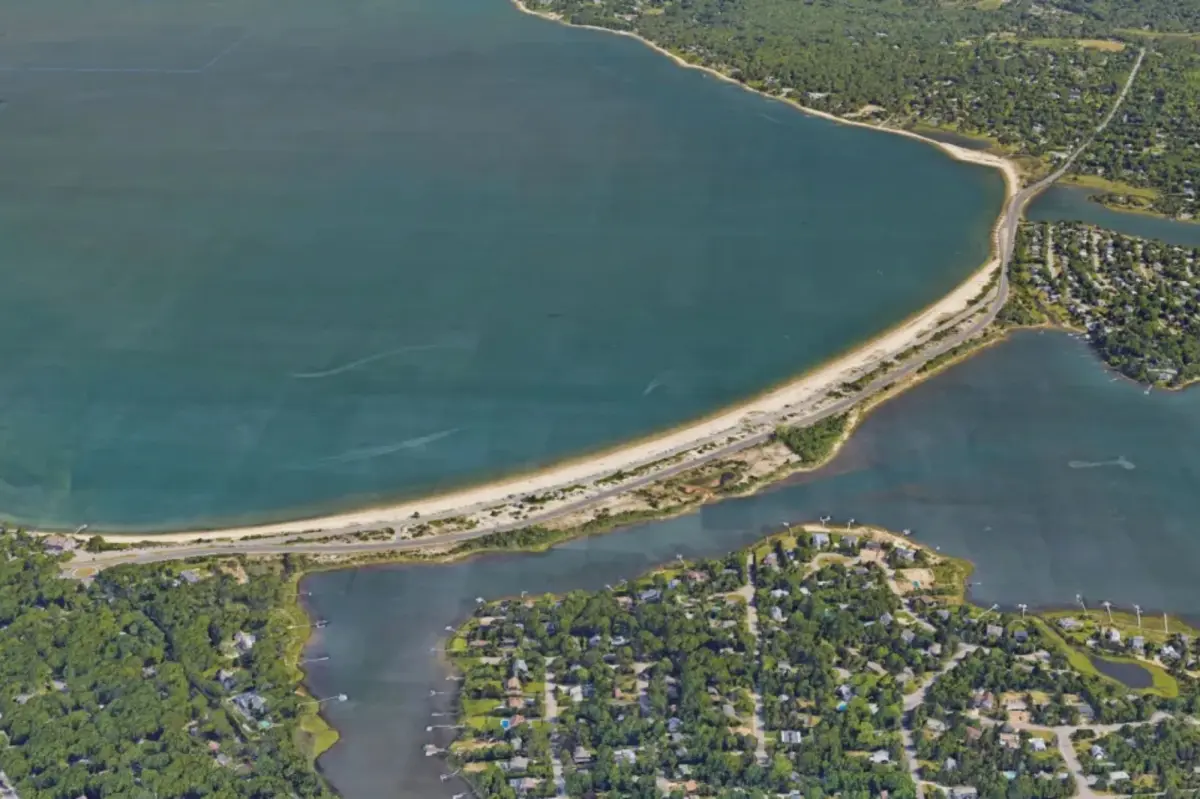
On a bright Sunday morning in the Hamptons, the shoreline of Noyack Bay should have been filled with the sounds of race-day excitement: the splash of swimmers, the cheers of spectators, the low hum of kayaks and paddleboards standing by. Instead, it became the scene of a sudden and devastating loss. Lin Chung, a 34-year-old triathlete from Queens, had come to Sag Harbor for the Mighty Hamptons Steve Tarpinian Memorial Triathlon, a race that honors a beloved figure in the sport and draws athletes eager to test their endurance against open water. Chung was in the 1.5-kilometer swim leg when he began struggling. Lifeguards saw him in distress and raced toward him, but a medical emergency overtook him before he could be saved. He was pulled from the bay, given CPR and life-saving measures, and rushed to Stony Brook Southampton Hospital, where he was pronounced dead. The news sent a shockwave through the triathlon community, a tight-knit world where athletes train for months for these races. EventPower, the Long Island organizer, confirmed the death and expressed grief. “We are deeply saddened to confirm the death of a male athlete who suffered a medical emergency during the swim portion of yesterday’s Mighty Hamptons Triathlon,” the statement said. “Our sport of triathlon lost a member of our beloved community. We extend our deepest condolences to the athlete’s family and friends and we offer them our support as they go through this unimaginable time.” Those words, formal as they are, barely capture the rawness of the moment. For the other athletes, the race was no longer about finish times. It was about processing the sight of a fellow competitor being lifted onto a paddleboard, unresponsive, while a lifeguard fought to bring him back. The bay, so beautiful and calm, had turned suddenly hostile, and the morning’s promise of achievement had turned into grief.
Witnesses described a frantic and heroic rescue. Lifeguards on duty spotted Chung in trouble and did not hesitate, diving into the water. Other racers rallied to help, and a group of swimmers brought a paddleboard to the scene, lifting Chung onto its slippery surface. Bill Hughes, a fellow triathlete, later described the desperate struggle to keep Chung on the board while a lifeguard performed chest compressions. “We got him up on the paddleboard and then we — it was me and several women, I think the wave right before me must have been mostly women, we were kicking as hard as we could to try go keep him on the paddleboard,” Hughes told the Southampton Press. “The lifeguard was doing CPR, chest compressions and turning him on his side and we were all working really hard to keep him from falling off the wet board. All credit to that lifeguard, I don’t know who the man was but it was a heroic effort by him.” The image is haunting: exhausted swimmers, still breathing hard from their own exertions, using every ounce of strength to hold a stranger’s body steady on a paddleboard, refusing to let him slip away. Additional lifeguards and police officers met them at the shore, where they continued life-saving measures, including using an automated external defibrillator, or AED. The response was swift and professional, but the young athlete could not be revived. He was pronounced dead at the hospital. The Suffolk County Medical Examiner’s office has launched an investigation, though officials have not yet revealed a cause. They believe Chung suffered a medical emergency during the race, a phrase that offers little comfort. For the rescuers, those minutes on the paddleboard will linger. They did everything they could. They were heroes in the truest sense. But the outcome was not the one anyone had prayed for, and the silence among competitors afterward must have been overwhelming.
This tragedy came less than two weeks after another open-water death in the same corner of Long Island, a coincidence that has left residents and athletes shaken. On September 2, Spencer Korwin, a 38-year-old married father of two from Manhattan, disappeared while swimming in the Shelter Island Sound during a family vacation. Korwin, a former member of the U.S. national triathlon team, had gone for a morning swim near the upscale Pridwin Hotel. When he did not return, a full-scale search was launched. Helicopters, boats and divers scoured the sound, and eventually his body was found underneath the dock from which he had launched hours earlier. The news was devastating, not only to his family but to the broader endurance sports community, which knew Korwin as a gifted athlete and devoted father. Shelter Island Police Chief Jim Read later offered a somber reminder about the dangers of open water. “These are open waters where tides, currents and boat traffic are always considerations,” Read said. The chief’s words now apply just as painfully to Chung’s death. Noyack Bay and the surrounding waters are not a swimming pool. They are dynamic, living environments where conditions can change in an instant. A strong swimmer can be overwhelmed by a sudden current, a cold patch of water, or a medical event that leaves no time to call for help. Even the best swimmers can become victims, as Read noted. The two deaths have cast a shadow over the Hamptons’ late-summer season. For the families, the grief is unbearable. Korwin’s wife is now left to raise their two children alone, and Chung’s parents, siblings and friends must make sense of a life cut short at 34. There are no easy answers. The investigations may determine whether a heart condition, a stroke, or some other medical issue caused these tragedies, but no finding can erase the loss. The water, which should have been a source of joy, has become a reminder of human fragility.
At the center of both tragedies are unanswered questions. For Lin Chung, the Suffolk County Medical Examiner’s office is working to determine exactly what happened. A cause of death has not been revealed, and while officials believe Chung suffered a medical emergency, they have not ruled out water conditions as a contributing factor. The uncertainty is one of the hardest parts for those left behind. Did he feel a sudden pain in his chest? Did a cramp seize his leg at the worst possible moment? Did a hidden current pull him off course? These questions may never be fully answered, and for his family, the silence is agonizing. The race organizers have offered condolences, but they too are left with a heavy burden. They must review safety protocols, examine the swim course, and ask whether anything could have been done differently. It is a responsibility no race director wants to face. In triathlon, the swim leg is often considered the most dangerous part of the race. The water is cold and disorienting, and athletes are packed closely together, their hearts pounding with adrenaline. Even a minor mishap can escalate quickly. The Mighty Hamptons Steve Tarpinian Memorial Triathlon is named after a man who was a passionate advocate for the sport, and its participants carry on his legacy every time they enter the water. Now the race will forever be associated with the loss of another athlete, a young man from Queens who had come to the Hamptons to push his limits. The medical examiner’s report will provide some clarity, but it will not restore what has been taken. It will not bring Chung back, and it will not erase the images of the rescue. It will simply mark the official end of a life that had so much more to offer. In the meantime, the community mourns. They mourn for Chung, for Korwin, and for all athletes who have died doing the sport they loved. They hold their loved ones a little tighter and think twice before entering open water. They remember that every race, every training session, every breath is a gift.
The triathlon community is small enough that every loss is felt deeply. When EventPower issued its statement, it spoke for countless athletes, coaches and volunteers who had spent the weekend in Sag Harbor. The phrase “our beloved community” was not empty rhetoric. Triathletes are connected by early-morning workouts, long bike rides, endless laps in the pool, and the shared understanding that they are chasing something greater than themselves. They celebrate each other’s victories and mourn each other’s losses. In the aftermath of Chung’s death, social media filled with tributes. Friends and fellow competitors shared memories of his smile, his determination, his kindness. Those who had not known him personally expressed grief anyway, because in this community, a fellow athlete is never a stranger. The race itself, already a memorial to Steve Tarpinian, now carries an even heavier weight. Tarpinian was a legendary figure, a mentor who inspired generations of endurance athletes. His legacy lives on in races where swimmers, cyclists and runners gather to test themselves against the elements. But the tragedy has forced everyone to confront the reality of that challenge. No amount of training can eliminate risk. No wetsuit can protect against a medical emergency. No lifeguard can be everywhere at once. Yet athletes continue to swim, bike and run, not because they are reckless, but because they love the sport and the sense of aliveness it brings. The loss of Lin Chung is a reminder that this love can come with a terrible price. For the organizers, difficult days lie ahead. They will need to communicate with the family, cooperate with investigators, and support witnesses and first responders processing their own trauma. They will need to decide whether changes are necessary for future races. But for now, all they can do is grieve and offer comfort. “We extend our deepest condolences to the athlete’s family and friends and we offer them our support as they go through this unimaginable time,” EventPower said. Those words are simple, but true. In the face of tragedy, the only thing a community can do is show up for one another.
In the end, Lin Chung’s story is not just about a race or a medical emergency. It is about a young man with a life, a future, and people who loved him. At 34, he was at an age when many athletes are reaching their peak, balancing careers, relationships, and training. He lived in Queens, a borough not known for open-water swimming, so he must have traveled, planned, and prepared with real dedication. He came to Sag Harbor on a weekend in September, ready to take on a 1.5-kilometer swim in Noyack Bay, followed by a bike ride and a run. He likely woke early, ate his pre-race breakfast, put on his wetsuit, and stood at the water’s edge with hundreds of other athletes, sharing the same mixture of nerves and excitement. He probably had goals for that day, a time he wanted to beat, a feeling he wanted to chase. Instead, his life ended in the water, surrounded by strangers who became his rescuers. There is a brutal irony in the fact that the activity he loved so much was the one that took him away. But there is also something profound in how the community responded. Strangers fought to save him. A lifeguard performed CPR without hesitation. Fellow athletes kicked and paddled until their legs burned, determined to keep his body from slipping off the board. They did not know his name. They only knew that a human being was in trouble, and they acted. That is the best of what humanity has to offer. The investigation will continue, and perhaps someday his family will have answers. But for now, the rest of us can honor his memory by acknowledging the fragility of life and the courage of those who try to save it. The water will remain. The races will continue. Athletes will still line up at dawn, filled with hope and determination. When they dive into the open sea, they will carry the memory of a man who lost his life doing what he loved. They will remember that the swim leg is not just a challenge, but a privilege. They will hold their fellow athletes a little closer and swim a little more carefully. And they will keep Lin Chung, and Spencer Korwin, in their hearts as they paddle toward the shore.