

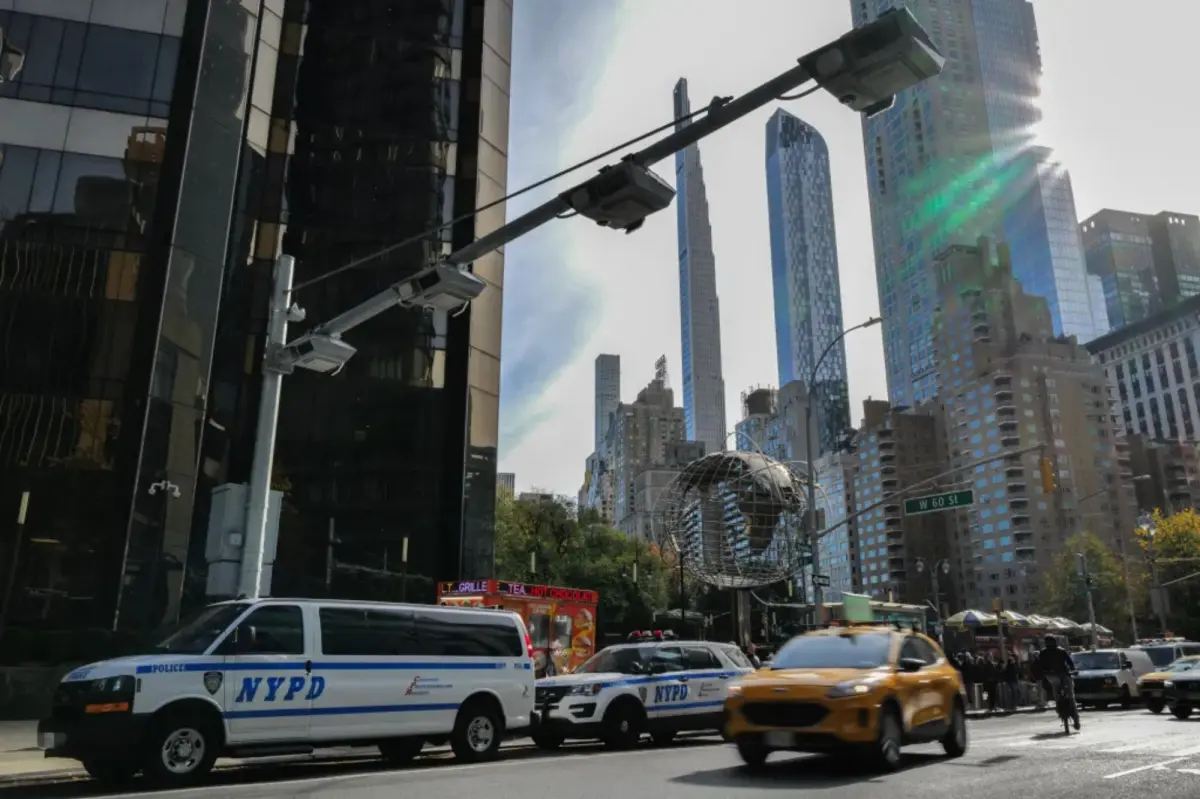
In the heart of one of the world’s most bustling metropolises, a grand experiment in urban policy has yielded a surprising and somewhat awkward result. New York City’s much-debated congestion pricing program, which charges drivers a hefty fee to enter the busiest parts of Manhattan, was launched with great fanfare and high hopes. The primary promise was twofold: to choke off the relentless tide of traffic and, in doing so, scrub the notoriously poor air that hangs over the city. However, a comprehensive report released by the city’s own Health Department has revealed a stark reality. After a full year of collecting the toll, the air quality in the designated zone has remained virtually stagnant. Despite a significant decrease in the number of vehicles on the road, the city’s analysis found no statistically significant improvement in overall pollution levels that could be directly attributed to the toll. This finding undercuts the core environmental justification for the program, leaving officials in a difficult position as they try to balance the program’s fiscal benefits against its underwhelming performance on its most ambitious promise.
The report zeroed in on four specific traffic-related pollutants within Manhattan’s Congestion Relief Zone, the area south of 60th Street. While the data confirmed an undeniable 11% drop in traffic volume since the $9 toll was introduced in January 2025, the effect on the air itself was negligible. The reason for this disconnect lies in the unique composition of New York City’s pollution sources. Unlike sprawling car-centric cities like Los Angeles or Houston, where vehicles are the primary culprits of smog, New York’s environmental challenges are far more complex. The Health Department’s findings suggest that cars and trucks account for only about 10% of the city’s total pollution output. This means that even a dramatic reduction in traffic—the kind that the toll successfully achieved—is merely a drop in the bucket when it comes to the overall chemical cocktail that residents breathe. The real offenders are the city’s dense infrastructure itself: the towering residential and commercial buildings that burn heating oil and natural gas, the thousands of restaurants firing up grills and stoves, and the massive power plants that supply electricity to keep the lights on in millions of homes and offices. These stationary sources dwarf the contribution of the passing commuter, making the road to cleaner air far more complicated than simply reducing the number of cars entering the borough.
This revelation has handed a powerful weapon to the program’s critics, who have long argued that congestion pricing is nothing more than a regressive tax dressed up in environmental clothing. The toll, which is often described as “lofty,” has been a significant financial burden for commuters from the outer boroughs and suburbs, as well as for small business owners who rely on delivery vehicles and customer parking. For these working-class individuals and families, the promise of cleaner air was the ethical justification for the new expense. Now, with the city’s own data showing that the toll doesn’t deliver on that promise, the opposition has been galvanized. The narrative has shifted from a necessary sacrifice for the greater good to a costly policy with little tangible benefit. The critics, ranging from local residents to national political figures, argue that the program simply serves as a cash grab by the state government, squeezing millions of dollars out of everyday people to fund public transit projects, all while failing to deliver the environmental miracle it promised.
Despite the damning findings, officials in the city and state have not backed down. They have framed the Health Department’s report not as a failure, but as the most comprehensive analysis of congestion pricing’s effects to date, highlighting several ancillary benefits that have materialized alongside the traffic reduction. They point to faster bus speeds, decreased traffic noise, and a more pleasant pedestrian environment as valuable quality-of-life improvements. Governor Kathy Hochul, a Democrat who has staked significant political capital on the program, has consistently defended it, referring to it as a “once-in-a-lifetime success story.” She and other proponents argue that the program is about more than just air quality; it is about untangling the gridlock that hampers the city’s economy and funding crucial upgrades to the aging subway system. They maintain that while the air quality improvement may not yet be measurable, the continued reduction in vehicle miles traveled will eventually contribute to a healthier environment, and that the reliable, dedicated revenue stream for mass transit is an irreplaceable boon for the city’s future.
The political and social battle over the toll has been just as congested as the streets it aims to clear. High-profile opponents, including former President Donald Trump and Transportation Secretary Sean Duffy, have lambasted the fee, with Duffy calling it a “slap in the face to working class Americans and small business owners.” The Trump administration even attempted to revoke the federal approval for the program, though a federal judge ruled this effort unlawful in March. Politically, the debate has become a stark illustration of the tension between environmental aspirations and economic realities. Proponents see the toll as a progressive step toward a sustainable future and a necessary tool to disincentivize car usage in one of the only cities in America where a car is truly optional. Opponents see it as a punitive measure that discriminates against those who have no viable alternative, forcing them to pay ever-increasing sums just to go to work. This friction has created a volatile environment where every piece of data is seized upon by both sides to validate their pre-existing positions, turning a complex urban planning issue into a highly charged ideological battleground.
As the city looks ahead, the future of congestion pricing remains secure for now, but its public perception is decidedly precarious. The toll stands, traffic remains down, but the first-year data presents an uncomfortable truth: the monumental effort and financial cost have not yet moved the needle on air quality. For the average New Yorker, the cacophony of honking horns may have lessened slightly and bus rides might be a touch quicker, but the air still carries the same hazy pall. The onus is now on the city’s administration to prove that the long-term benefits will eventually outweigh the short-term disappointments. The question that lingers is whether the public’s patience will outlast the timeline for those benefits to materialize. With critics eagerly pointing to the empty promise of “cleaner air” and supporters clinging to the program’s other merits, the city finds itself in a holding pattern. The significant investment in time, money, and political goodwill has purchased a modest improvement in traffic flow, but it has failed to deliver on its most important promise to the health of millions. Whether this is a temporary setback or a fundamental flaw in the program’s design will likely determine the legacy of this costly and controversial experiment.