






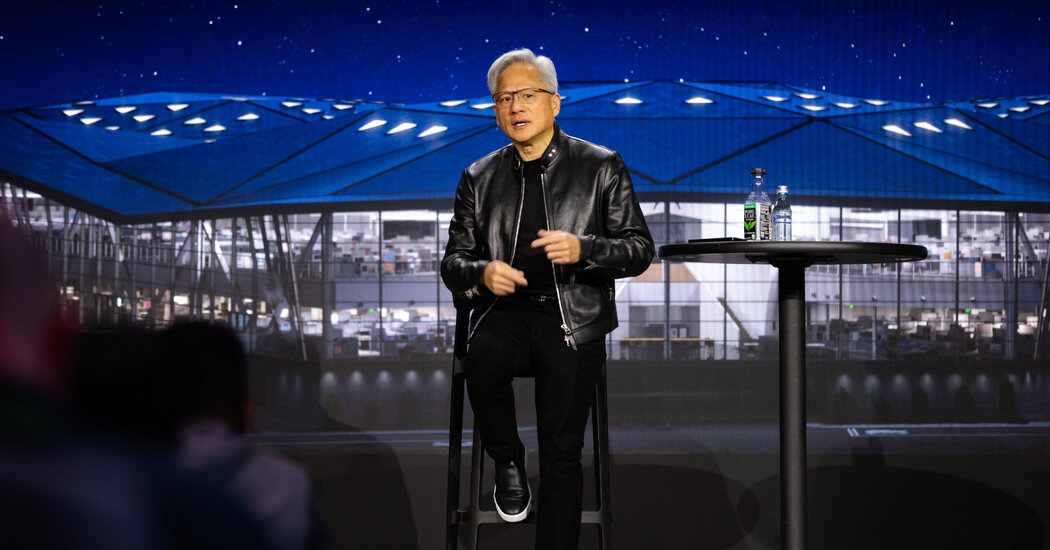
It was just another ordinary Tuesday for Jensen Huang, the tech titan running Nvidia, the world’s most valuable company. He’d been following the buzz in Silicon Valley about President Trump’s upcoming trip to China—a high-stakes summit with President Xi, loaded with business opportunities. Jensen had been quietly working the phones, lobbying both sides of the Pacific to get Nvidia’s cutting-edge AI chips into China’s markets. Then, the news dropped: Trump’s team unveiled a list of 16 CEOs invited to join the Air Force One flight to Beijing, including heavy hitters like Tim Cook from Apple and Larry Fink from BlackRock. But Jensen’s name? Nowhere in sight. It stung. He knew his chips were powering the AI revolution, coveted by tech giants and governments alike, but somehow, he’d been left off the guest list. We can imagine Jensen pacing his office that morning, the weight of being overlooked hitting hard—after all, he’d built a personal rapport with Trump, serving as an informal bridge between Washington and Beijing. He’d even flown to Alaska later that day, hoping against hope for a change of heart.
Jensen’s phone rang unexpectedly around mid-morning, pulling him out of his thoughts. On the line was none other than President Trump himself, calling to personally extend an invitation. “Hop on Air Force One,” Trump said, emphasizing Jensen’s importance. The person familiar with the call described it as a “last-minute pivot” after Trump saw the public outcry about Jensen’s omission. For Jensen, it must have felt like a redemption story unfolding in real time—a testament to the rapport he’d built with the outspoken leader. He’d spent nearly a year advocating for Nvidia’s products in China, navigating the complex politics of trade and tech restrictions. As Air Force One landed in Alaska for a refuel, Jensen boarded the iconic plane, stepping into history. The White House had initially listed him out, but Trump’s intervention flipped the script, highlighting how human connections and a quick call could change the narrative of international business dealings. It wasn’t just business; it was personal, a nod to Jensen’s relentless drive and his role in bridging technological divides.
Trump wasted no time trumpeting the moment on social media, a post that captured his bombastic style. “Jensen is currently on Air Force One,” he wrote, calling Jensen “the Great Jensen Huang” and referencing the “brilliant people” heading to the “Great Country of China.” He pledged to push President Xi to “open up” markets, allowing these innovators to unleash their “magic.” For Jensen, this wasn’t just praise from the president—it was validation. Imagine sitting in that plane, surrounded by power players, as Trump paints a vision of global collaboration. Jensen’s expertise in AI had made him a key player; his chips were central to the tech boom shifting economies worldwide. Being invited last-minute underscored Trump’s impulsive, people-driven leadership, where omissions could be corrected with a simple call. Yet, for Jensen, it was more than an honor— it was a strategic win, a chance to amplify Nvidia’s pitches through the highest channels.
The backdrop to this invitation was fraught with tension. Nvidia’s AI chips had become a hotspot in U.S.-China relations, with sales to China mired in controversy. Last summer, Trump had greenlit exports of older Nvidia tech to China, even proposing a “cut” of the profits for himself—a move that raised eyebrows but aimed to balance trade. However, the Chinese government hadn’t approved any purchases, leaving deals in limbo. Jensen had been lobbying hard to change that, making the trip to Beijing a critical opportunity. Republicans in Congress had pushed for laws limiting such sales, citing national security risks, and even members of Trump’s own team had intervened last year to block the export of more advanced chips. Jensen must have felt the pressure: his company’s fate tied to geopolitical winds, where AI wasn’t just innovation but a tool in a larger game of international influence and rivalry.
As the plane cruised toward Beijing, Jensen likely reflected on the AI revolution his company had ignited. Nvidia chips powered everything from autonomous cars to deep-learning systems, making them indispensable in an era where tech dominance meant economic superiority. Coveted by nations and enterprises, these chips symbolized the future, yet their distribution sparked debates. For Jensen, a man known for his dedication—burning the midnight oil in Silicon Valley’s hustle culture—the invitation felt like a personal triumph. It was a story of perseverance: building bonds with leaders, navigating setbacks like the initial omission, and landing a seat at the table during a pivotal moment. Being called “the Great Jensen Huang” by Trump wasn’t just flattery; it humanized the tech mogul, reminding us that behind blockbuster companies are relentless individuals pushing boundaries.
In the grand tapestry of U.S.-China relations, this episode highlighted the interplay of politics and innovation. Trump’s call to Jensen wasn’t isolated—it was a microcosm of efforts to “open up” markets, balancing economic ambitions with security concerns. As Air Force One touched down in China, Jensen stepped off with high hopes for dialogues with Xi, aiming to unlock pathways for Nvidia’s tech. The broader implications loomed large: How would AI chips shape global power dynamics? Would concessions pave the way for more deals, or stoke further debates? For Jensen, it was a chance to humanize his mission—turning cold tech specs into real-world progress. Trump’s approach, blending drama and diplomacy, turned what could have been a diplomatic snub into a symbol of opportunity. In the end, Jensen’s journey wasn’t just about chips; it was about people bridging worlds, a reminder that in the high-stakes game of international business, personal connections often trump policies. Those six hours on Air Force One might redefine Nvidia’s path, echoing Jensen’s journey from overlooked to pivotal. His story inspires innovators everywhere: persistence pays off amidst uncertainty. As the summit unfolded, optimism bubbled—perhaps this was the start of a new era, where barriers lowered and magic flowed freely. Jensen, with his laptop-bred wisdom and Trump’s flair, embodied the human side of tech diplomacy, proving that invites, much like opportunities, can arrive just in time. The adventure in Beijing awaited, filled with potential for transformative discussions.
Yet, beneath the enthusiasm, clouds of skepticism gathered. Several observers noted that while Trump’s gesture wowed Silicon Valley, the practical hurdles for Nvidia loomed. Past efforts to export advanced chips had stalled due to national security vetos, and Republican pressures hadn’t eased. Jensen might have boarded Air Force One with resolve, but he knew the road ahead twisted with complexities. Trump’s “open up” mantra echoed well, but implementing it required navigating China’s regulatory maze and U.S. oversight. Humanizing this meant recognizing Jensen’s quiet strength— a founder who’d climbed from humble beginnings to helm a trillion-dollar empire. His lobby efforts were sleepless nights and countless meetings, building trust in a climate of distrust. As the plane flew east, Jensen perhaps thought of the AI boom’s human impact: jobs created, innovations sparked, worlds changed. Trump’s call humanized the politics too, showing leadership as a series of instincts and interventions. This wasn’t cold strategy; it was about bridging divides, one invitation at a time. The outcome of the summit could redefine Nvidia’s playbook, but for Jensen, it reinforced his faith in human agency over bureaucratic blocks.
In reflecting on this tale, we see how a single phone call can weave personal destinies into global narratives. Jensen Huang, the unassuming CEO, emerged as a protagonist in a real-life drama of tech and geopolitics. His ability to connect with Trump underscored adaptable leadership, where overlooking details—like an initial guest list—could lead to pivotal corrections. As Air Force One soared, it carried not just executives, but hopes for collaboration. The AI chips, once mere products, symbolized potential for harmony in divided times. Jensen’s journey epitomizes resilience, a man whose persistence turned setbacks into breakthroughs. Trump’s flamboyant style added flair, making diplomacy feel approachable. Together, they showed that in the arena of innovation and international relations, human elements—relationships, instincts, and timely invites—drive progress. This episode, starting from a Tuesday omission to a Beijing high, reminds us that magic happens when brilliant minds align with bold actions, paving ways for mutual growth and understanding in an interconnected world.