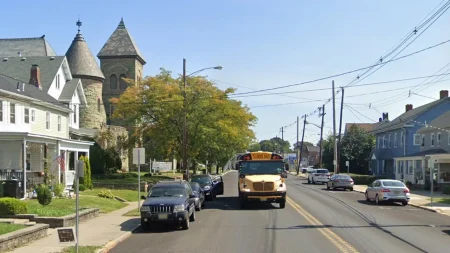






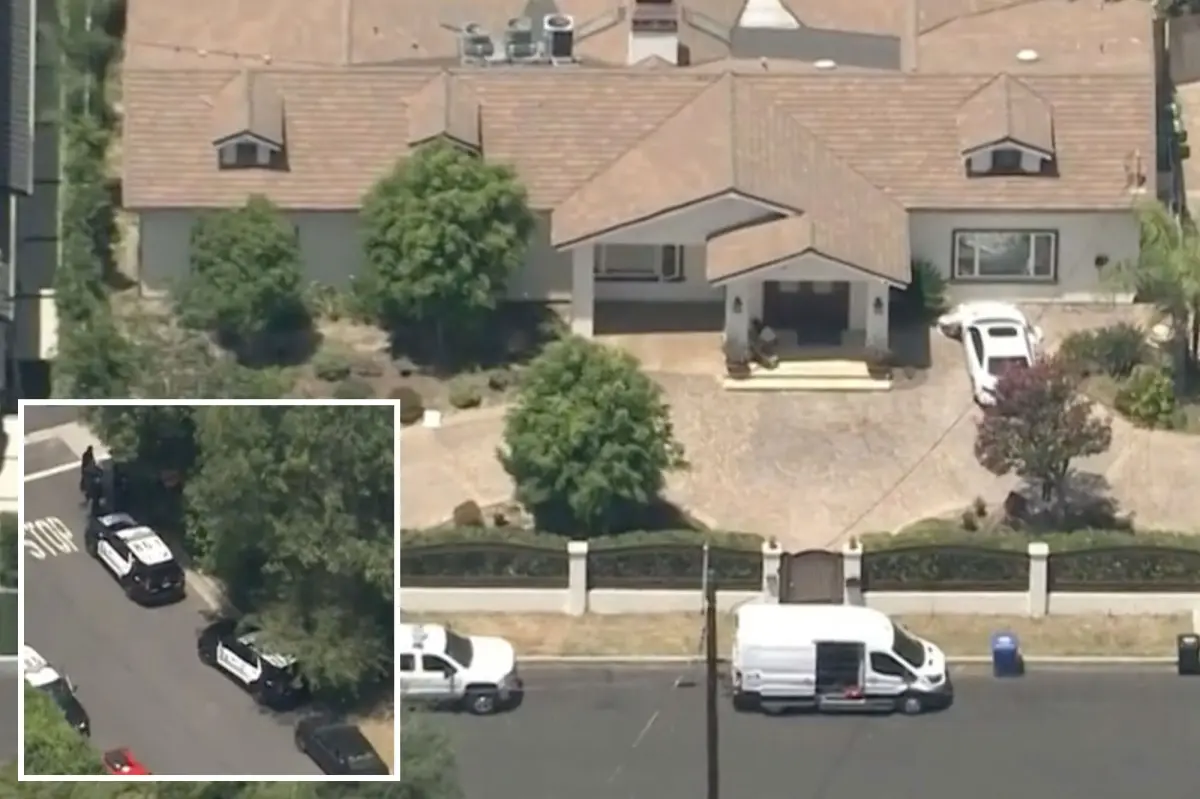
Wednesday mornings in the San Fernando Valley typically unfold with a familiar, comforting rhythm. In the tree-lined neighborhood of Valley Glen, residents were easing into their mid-week routines around 9:00 a.m.—some pouring their second cups of coffee, others navigating the early morning rush of remote work calls, and parents tidying up after sending their children off to school. However, this domestic tranquility was abruptly shattered on the quiet 6100 block of Rhodes Avenue. What began as an ordinary, sunny Southern California morning rapidly devolved into a scene of high-stakes anxiety when an apparent explosive device was discovered resting in the open. The sheer normalcy of the neighborhood suddenly contrasted fearsomely with the flashing lights of arriving Los Angeles Police Department cruisers. Within minutes of an emergency call reporting a suspicious package, the peaceful suburb became the focal point of an intense emergency response. The jarring sound of police sirens cutting through the cool morning air signaled to everyone nearby that their safe haven was suddenly compromised, transforming a routine Wednesday into a day of fear, confusion, and sudden disruption. Neighbors looked out of their windows, their curiosity quickly turning to alarm as they witnessed police vehicles blocking off the entrances to their street, creating a physical barrier between their safe, everyday lives and an unexpected, highly volatile emergency situation. This rapid transition from mundane morning to active crisis zone set a tense tone for the rest of the day, leaving local residents grappling with the unsettling reality that danger had arrived literally on their doorsteps, turning a quiet, unassuming stretch of asphalt into a monitored perimeter of high alert. For many, the sight of uniformed officers jumping out of patrol cars and setting up temporary commands was a sight they had only ever seen on the local television news, never expecting to witness such a dramatic logistical mobilization unfolding directly outside their living room windows. The contrast could not have been starker: while the morning sun gently warmed the manicured lawns and suburban driveways, the atmosphere grew cold with the dread of a potential explosion, establishing an unprecedented security emergency in the heart of Valley Glen.
The immediate reality of the threat hit home when police officers began going door-to-door, their urgent, commanding knocks echoing down the sidewalks of Rhodes Avenue. For the residents of Valley Glen, the instruction to evacuate immediately was a shocking wake-up call that forced them to make split-second decisions about what to save and what to leave behind. People rushed out of their homes clad in whatever they happened to be wearing—pajamas, activewear, or work clothes—clutching bewildered pets, essential medications, wallets, and cell phones. The human element of this crisis was highly visible in the interactions along the block, where neighbors who usually only exchanged quick waves while pulling out of their driveways now stood together on distant street corners, sharing anxious whispers, looking for updates, and checking on one another’s well-being. Elderly neighbors were gently helped into waiting vehicles, while frightened dogs barked in confusion at the flashing blue and red emergency lights that painted the suburban street. The sudden uprooting highlighted the fragile nature of suburban peace, as families found themselves standing behind yellow police tape, watching their beloved homes get blocked off, and wondering when, or if, it would be safe to return. The sheer psychological toll of being evicted from one’s sanctuary under the threat of a potential explosion cannot be overstated, as the simple comfort of home was replaced by a looming hazard. Many residents stood huddled together on the surrounding sidewalks for hours, watching the authorities establish their staging areas, their eyes fixed on the houses they had left behind so hastily. This sudden, enforced exodus converted a community of independent households into a collective unit united by shared vulnerability, proving that in moments of sudden adversity, the barriers that often keep neighbors isolated in their daily lives quickly dissolve in favor of mutual support and shared concern. People offered their cars for shelter against the rising midday heat, shared bottles of water, and passed around cell phone chargers, showing that even in the midst of fear, humanity and compassion remained at the forefront of the Valley Glen community.
As the safe perimeter around the suspicious package widened, the arrival of specialized units elevated the tension on the ground to a much more serious level. The LAPD’s highly trained bomb squad rolled onto Rhodes Avenue in heavy, armored transport vehicles, bringing a somber, cinematic weight to the unfolding investigation. Technicians clad in bulky, green armored explosive ordnance disposal suits prepared to face the unknown, their deliberate, slow-motion movements contrasting sharply with the anxious, frantic energy of the evacuated crowd watching from afar. Armed with sophisticated diagnostic machinery, specialized tools, and remote-controlled robotic devices designed to inspect and dismantle dangerous materials from a safe distance, the bomb squad began the meticulous process of assessing the suspicious package. Every single action taken by these brave responders was slow, highly calculated, and fraught with extreme peril, as the exact physical nature, origin, and potential volatility of the device remained completely shrouded in mystery. For the anxious onlookers watching from behind the safety barriers, the sight of a robotic tread vehicle rolling down their typically quiet street was deeply surreal—a stark, unforgettable reminder that the threat was very real and that a single misstep could have devastating consequences for their entire neighborhood. The technical precision of the recovery team, while reassuring, also emphasized the high-stakes risk of the situation, showing that the device was considered dangerous enough to warrant the highest level of caution. The atmosphere was thick with quiet anticipation as the specialists initiated their protocols, each minute stretching out like an hour for the displaced families waiting for news, their homes sitting in the line of potential fire, dependent on the expertise of a few brave individuals. Every click of the robot’s mechanical arm and every muffled communication over police radios was watched and dissected by the onlookers, who felt a strange combination of intense fear for their properties and immense gratitude for the technicians risking their lives on the pavement. The silence of the street, normally filled with the sounds of leaf blowers and passing cars, was deafening under these circumstances.
To truly appreciate the deep impact of this unsettling incident, one must look closely at the character and identity of Valley Glen itself. Located in the heart of the San Fernando Valley, this neighborhood is celebrated by its residents as a peaceful, tight-knit, and diverse enclave where families put down deep roots, children play safely in front yards, and local parks serve as vibrant communal hubs. It is a place characterized by charming mid-century homes, blooming bougainvillea, quiet cul-de-sacs, and a welcoming sense of solidarity that sets it apart from the more frantic, commercial areas of nearby central Los Angeles. A threat like an explosive device left open on Rhodes Avenue feels entirely alien to this landscape, which is precisely why the evacuation triggered such profound shock and disbelief among the locals. It violated the unwritten social contract of suburban life—the deep, fundamental expectation that home is a sanctuary entirely safe from the chaotic hazards of the modern metropolitan world. The shocking realization that danger could sit quietly on a local street corner forced many long-time residents to confront an unsettling sense of vulnerability, fundamentally redefining how they view the safety of the streets they walk every single day. This psychological shift is often the quietest but most enduring damage caused by such scares, as the feeling of absolute safety in one’s own front yard is temporarily lost, replaced by a new, cautious vigilance that changes how parents watch their playing children and how neighbors view unfamiliar cars parked on their curbs. Despite this, the core identity of Valley Glen remains rooted in its cooperative spirit, a trait that was highly evident as neighbors opened up their homes outside the evacuation zone to shelter those who had been forced out of their own houses, demonstrating the community’s innate warmth. This instinctive hospitality highlighted that while concrete streets and physical buildings can be temporarily threatened, the human fabric of the community remains resilient, standing firm against whatever anxieties a suspicious package on Rhodes Avenue might try to introduce into their quiet, everyday lives.
Compounding the community’s distress was the agonizing lack of concrete information during the initial stages of the evacuation process. As the hours slowly ticked by under the warm Southern California sun, the Los Angeles Police Department remained predictably tight-lipped, confirming to media outlets only that an investigation was actively underway and that the evacuation order stood firm for the foreseeable future. This information vacuum naturally became a fertile breeding ground for widespread anxiety, leaving displaced residents to scroll endlessly through local social media feeds, check news websites, and swap unverified theories about who could have left such a device, and what its intended purpose might have been. Was it a random act of malicious vandalism, a targeted threat against a specific resident, or perhaps merely an abandoned, harmless item that had been misidentified as something far more dangerous? The complete absence of clear, official answers meant that those sitting in parked cars, local diners, or waiting at nearby bus stops could not find any sense of closure or relief. This stressful state of mental limbo tested the patience and mental fortitude of the community, as the physical discomfort of being locked out of their homes was magnified by the dark imaginative leaps that naturally occur when individuals are left to wonder about the safety of their pets, properties, and the true intentions behind the emergency. Rumors spread quickly through group chats and neighborhood forums, with each new post adding to the collective unease, highlighting how a lack of communication can sometimes be just as stressful as the physical threat itself, keeping a community on edge while they wait for authorities to determine whether their lives can return to normal. For many, the hardest part of the day was this agonizing waiting game, where they could do nothing but speculate while watching the distant movements of police officers and wondering if their homes would remain intact when they were finally allowed to walk past the police tape once again.
Ultimately, this highly disruptive Wednesday morning in Valley Glen serves as a poignant reminder of both the structural vulnerabilities of modern urban life and the enduring strength of local neighborhood communities. Even as the unknown threat of the suspicious package loomed over the 6100 block of Rhodes Avenue, the collective response of both the emergency first responders and the local residents demonstrated a profound sense of resilience, organization, and bravery. Police officers worked diligently to secure the perimeter and keep people out of harm’s way, while neighbors supported each other through a shared, frightening experience, proving that community bonds are strengthened, rather than broken, during times of unexpected crisis. When the investigation is finally completed, the suspicious package safely rendered harmless, and the bomb squad finishes its painstaking, high-stakes work, the process of emotional healing and returning to normal routines will begin. Though the lingering memory of flashing emergency lights, urgent door-to-door knocks, and yellow caution tape will undoubtedly remain etched in the minds of Valley Glen residents for a long time to come, so too will the comforting memory of how they stood together in the face of sudden danger. In an increasingly unpredictable world, the swift, professional vigilance of first responders combined with the quiet, compassionate solidarity of everyday neighbors remain the truest safeguards of peace, ensuring that life on Rhodes Avenue will eventually recover its comfortable, quiet rhythm. The event stands as a testament to the fact that while houses can be evacuated and streets can be blocked off, the heart of a community lies in its people, whose unity and resolve cannot be easily shaken by a sudden mid-week scare. As the police tape is eventually rolled up and the barricades are dismantled, life will slowly reclaim the block, but the residents will share a deeper connection than before, forged in the quiet hours of a sunny Wednesday when they looked out for one another and kept the spirit of Valley Glen alive under pressure.