





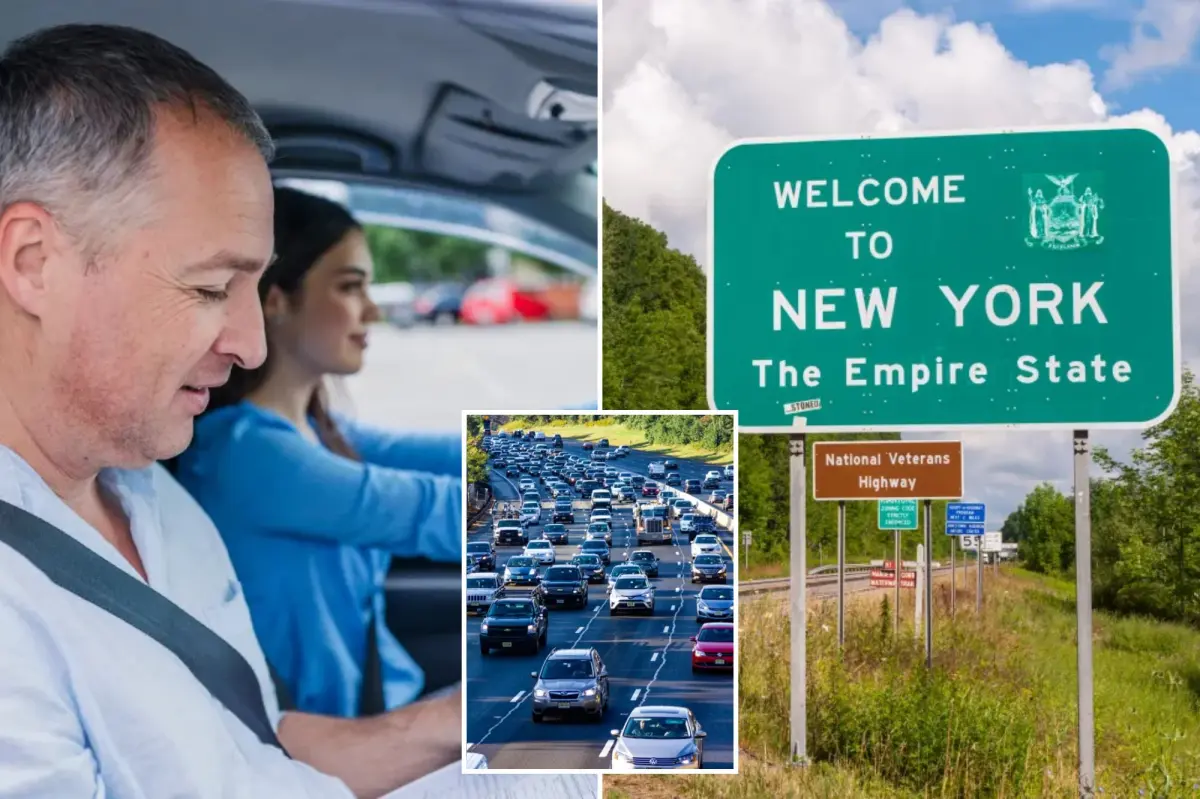
Handing over the car keys to a teenager is one of the most nerve-wracking moments of parenthood. You watch them adjust the mirrors, check their blind spots, and pull out of the driveway with a confidence that is both inspiring and terrifying. For parents in New York, however, there is a little more peace of mind than anywhere else in the country. For the third year in a row, New York has been named the best state in the nation for teen drivers, according to a comprehensive new traffic safety study from WalletHub. The study evaluated all 50 states using 23 different criteria, including teen driver fatalities, teen DUIs, and the availability of driver education and training programs. These metrics were then grouped into three major categories: safety, economic environment, and driving laws, with each state receiving a combined score out of 100 possible points. New York’s top ranking is not just a number on a spreadsheet; it represents thousands of small decisions, from stricter licensing laws to better driver education, that collectively make the roads safer for everyone. It is a reminder that behind every statistic is a family that gets to see their teenager walk through the door at night, and that is something worth celebrating.
What makes New York stand out so clearly from the rest of the country? The study reveals a state that performs consistently well across nearly every measure of teen driving safety. New York finished second overall in the safety category, losing only to New Jersey, and also took second place for the effectiveness of its driving laws. Digging deeper into the numbers, the state had the fourth-fewest teen driver fatalities, the fourth-lowest percentage of drivers using phones behind the wheel, and the third-lowest rate of poor turning in the country. It also boasted more driving schools per resident than any other state and the third-fewest teen DUI arrests by population. These are not arbitrary metrics; they are direct reflections of how a state prepares its youngest drivers for the realities of the road. A low rate of phone use suggests that education about distracted driving is actually sinking in. A high number of driving schools means that teens have more opportunities to practice with qualified instructors before they ever drive alone. And a low number of teen DUIs points to a culture that takes impaired driving seriously, reinforced by laws that hold young drivers accountable. With a total score of 72.14, New York narrowly edged out Oregon, which finished with 72.00, and New Jersey, which came in third with 68.01. The margin between first and second place was razor-thin, but for New York, this marks a remarkable three-year winning streak that has caught the attention of state officials and safety advocates alike.
Behind the ranking are real people, including Christian Jackstadt, the Acting Commissioner of the New York State Department of Motor Vehicles. As a father of two young daughters, Jackstadt understands the anxiety that comes with watching a child get behind the wheel. In a statement following the study’s release, he said he hoped the results would “reassure parents that New York is leading the way when it comes to road safety.” He added, “We’re thrilled to achieve this ranking, and we will continue to educate young people to better prepare them to be safer and more responsible drivers.” That human element is crucial. It is easy to get lost in scores and percentages, but the people responsible for these policies are thinking about their own children, their neighbors’ children, and the teenagers who will soon be sharing the road with their families. The study itself pulled data from a wide range of authoritative sources, including the National Highway Traffic Safety Administration, the Federal Highway Administration, the Governors Highway Safety Association, the American Automobile Association, and the FBI. This gives the ranking a level of credibility that goes beyond opinion or anecdote. It is a data-driven assessment, but it is also a reminder that behind every data point is a young life, a worried parent, and a community that wants nothing more than to keep its kids safe.
However, even with this top ranking, the reality is that motor vehicle crashes remain a leading cause of death for teenagers between the ages of 16 and 19 across the United States. New York’s own 2024 state data shows that drivers aged 16 to 20 were involved in 7 percent of all crashes in the state, even though they make up just 4 percent of licensed motorists. That disparity is sobering. It suggests that while New York is doing many things right, there is still significant work to be done. Jackstadt acknowledged this directly, noting that “most crashes involving teen drivers are the result of inexperience, inattention, impairment and nighttime driving.” These four factors are the classic dangers of teen driving, and they are not easily solved by a single law or program. Inexperience comes with time and practice. Inattention is fueled by smartphones and distractions that did not exist for previous generations. Impairment, whether from alcohol or drugs, remains a stubborn problem despite decades of awareness campaigns. And nighttime driving, with its reduced visibility and increased risks, requires special caution and often stricter restrictions for new drivers. To address these issues, New York has adopted a series of programs and rules designed to target risky practices head-on. Graduated licensing laws, restrictions on teen passengers, and mandatory driver education are just a few of the tools being used to reduce the dangers that young drivers face. The ranking suggests these efforts are working, but the statistics also serve as a warning that no state can afford to become complacent.
For contrast, consider the states at the bottom of the WalletHub ranking. Montana finished dead last with a score of just 22.78, less than a third of New York’s winning total. Missouri came in second-to-last with 29.16, and Mississippi was third-to-last with 35.88. These states face a variety of challenges, including rural roads, limited access to driver education, and less stringent licensing laws. The gap between New York and Montana is not just a matter of a few points; it is a chasm that reflects fundamentally different approaches to teen driving safety. The findings echo another recent report from May called the “Gen Z Recklessness Score,” which found that young drivers across the United States have been involved in serious crashes at alarming rates. Citing data from the National Highway Traffic Safety Administration, that report found the national average for Gen Z-related accidents sits at 14.81 per 100,000 people. Even more troubling, nearly 6,000 motorists were killed in speeding-related crashes involving Gen Z drivers in 2023 alone. In that study, New York’s Gen Z drivers were again ranked as the safest in the country, while Montana finished last in both studies. This consistency is meaningful. It shows that New York’s success is not a fluke or a one-year anomaly. It is the result of sustained investment in safety, education, and enforcement that has created a culture where young drivers are more likely to make responsible choices behind the wheel.
Ultimately, what can the rest of the country learn from New York’s example? The answer is not a single magic solution, but a comprehensive approach that combines strong laws, accessible education, and a genuine commitment to safety at every level of government. New York’s ranking should be celebrated, but it should also be seen as a challenge to keep improving. For parents, the study offers a measure of reassurance, but not a guarantee. For teenagers, it is a reminder that the privileges of driving come with enormous responsibility. And for policymakers in other states, it is proof that change is possible. The difference between a state like New York and a state like Montana is not the quality of its teenagers; it is the system that supports them. By investing in driver education, enforcing traffic laws, and creating an environment where safety is prioritized over convenience, any state can improve its outcomes. New York has shown that it is possible to reduce teen fatalities, lower DUI rates, and prepare young drivers for a lifetime of safe habits. But the work is never finished. Every new batch of teenagers needs to be taught, every new driver needs to be mentored, and every parent needs to stay engaged. The top ranking is a proud achievement, but the real victory is measured in lives saved, crashes avoided, and families spared from tragedy. As New York celebrates its third year at the top, the hope is that other states will take notice and follow its lead, because when it comes to teen driving safety, there is no such thing as too much progress.