





For the countless families across New Mexico who have had to endure the agonizing heartbreak of burying a child, a sibling, or a parent to the relentless scourge of fentanyl, law enforcement agencies are supposed to be beacons of hope, shield-bearers standing between vulnerable communities and lethal illicit markets. Yet, a profound sense of shock and systemic betrayal has swept through the state following New Mexico Attorney General Raúl Torrez’s recent announcement of a comprehensive criminal investigation into the U.S. Drug Enforcement Administration (DEA). This unprecedented inquiry, sparked by damning investigative reporting, seeks to determine whether federal agents knowingly allowed hundreds of thousands of deadly fentanyl pills to pour into local neighborhoods as part of a highly controversial strategy to build larger, long-term conspiracy cases against major drug syndicates. In an emotional but legally precise address, Torrez made it clear that if federal officials stood by and watched lethal narcotics flood into Spanish-speaking enclaves, rural towns, and urban centers without taking action, it could not simply be dismissed as an unfortunate bureaucratic misstep or a breakdown in inter-agency communication. Instead, Torrez framed it as a fundamental moral failure and a direct betrayal of the public trust, promising to utilize every civil, criminal, and structural legal avenue available within the state’s power to ensure that federal institutions are held strictly accountable to the human lives they are sworn to protect.
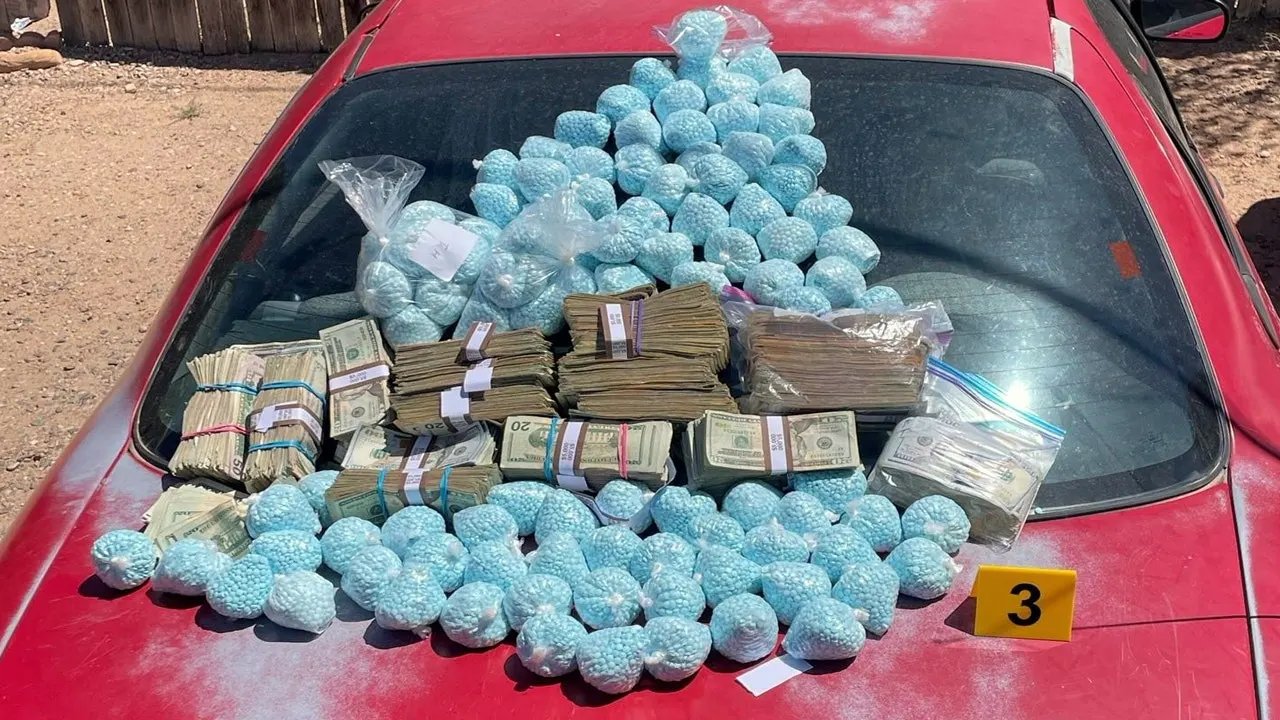
The spark that ignited this political and legal firestorm was a series of investigative reports by The Associated Press detailing covert operations conducted by the DEA between 2023 and 2025. According to current and former federal insider sources—most notably DEA whistleblower David Howell—agents frequently utilized “controlled deliveries” and long-term surveillance techniques that prioritized gathering intelligence over immediate public safety. Rather than seizing massive shipments of synthetic opioids at the border or during transit, agents reportedly tracked, documented, and monitored these shipments as they moved deep into the heart of New Mexican communities. In one particularly chilling instance highlighted by investigators, agents allegedly stood back and watched the delivery of approximately 74,000 highly concentrated fentanyl pills to an Albuquerque mobile home park, meticulously cataloging the numbers and documenting the suspects while doing absolutely nothing to stop the lethal doses from finding their way onto the streets. Whistleblowers have argued that such high-stakes investigative gambles not only directly violated Department of Justice guidelines regarding community safety but also treated the lives of local citizens as mere collateral damage in a bureaucratic game of statistical warfare against international drug cartels.
The revelations provoked a fierce and deeply personal reaction from New Mexico Governor Michelle Lujan Grisham, who actively championed the call for a state-level criminal probe into the federal agency’s operational tactics. Expressing utter horror at the notion that federal law enforcement could acts as passive spectators to an ongoing daily tragedy, Grisham pointed out the devastating real-world human cost of these calculated delays, noting that hundreds of New Mexican parents are now grieving empty bedrooms and young children are growing up without parental guidance because the federal government chose surveillance over active protection. Her sharp condemnation highlights a growing, systemic friction between state leadership, tasked with managing immediate public health emergencies, and federal agencies that often operate in secretive silos with minimal local oversight. To local state officials, the idea that federal officers would witness the exact pill counts of deadly poisons entering fragile neighborhoods and consciously choose not to intervene is a stark reminder of how disconnected Washington-based strategies can be from the lived realities of the communities they are meant to serve.
This operational philosophy stands in stark, hypocritical contrast to the DEA’s own highly visible public relations campaigns, most notably the “One Pill Can Kill” initiative, which floods schools and community centers with stark warnings that even a microscopic dose of fentanyl can instantly end a life. The disturbing cognitive dissonance of warning the public about the extreme lethality of a single pill while simultaneously permitting truckloads of those same pills to circulate in vulnerable communities has severely damaged the federal government’s credibility. In response to the growing public backlash and the state-level investigation, the DEA initially issued flat denials of the allegations, but the agency has since pivoted, requesting that the Department of Justice’s Office of the Inspector General launch an independent, third-party review of its tactical operations. While the Justice Department has claimed it will implement any recommendations for operational improvement and expressed a desire to partner with New Mexico leaders to combat the drug crisis, local advocates and state prosecutors remain deeply skeptical that internal bureaucratic reviews will yield the transparent accountability and structural reforms needed to prevent federal agents from treating local neighborhoods as disposable testing grounds for drug stings.
To truly understand the localized fury surrounding these allegations, one must look at the brutal backdrop of the overdose epidemic in New Mexico, a state that has historically suffered from limited healthcare infrastructure, generational poverty, and high rates of substance use disorders. Fentanyl has devastated every corner of the state, stretching municipal emergency services to their absolute limits and turning ordinary public spaces into battlegrounds for survival, where first responders are routinely exposed to toxic substances and local clinics are overwhelmed by continuous waves of overdose victims. Cartels have long exploited the state’s vast, open geography and marginalized socioeconomic communities to establish lucrative distribution nodes, making the active presence of reliable law enforcement a literal matter of life and death for residents. For New Mexicans, learning that the very federal agents charged with dismantling these predatory networks may have actively permitted the distribution of poison into their struggling communities feels less like a strategic law enforcement maneuver and more like an institutional abandonment that exacerbated an already cataclysmic public health emergency.
Looking forward, Attorney General Torrez’s criminal investigation promises to test the boundaries of state sovereignty, federal supremacy, and the legal immunities traditionally granted to federal officers operating within state borders. By threatening criminal prosecution, state-level civil litigation, and sweeping structural reforms to mandate real-time notifications for local police during federal drug operations, New Mexico is attempting to rewrite the rules of engagement between federal law enforcement and local communities. The ultimate goal of this legal battle extends far beyond securing indictments or political victories; it is about honoring the memory of the victims, validating the grief of their families, and demanding a fundamental paradigm shift in how drug wars are waged. True public safety can never be measured solely by the size of a future cartel indictment or the number of organizational charts displayed at a press conference; rather, it must be measured by the immediate, active defense of human lives, ensuring that no community is ever again sacrificed in the name of long-term federal strategy.