


Modi’s Mastery: How India’s Prime Minister Is Shaping a One-Party Nation Under His Control
As Narendra Modi steps into his third term as India’s prime minister, having secured a resounding victory in the 2024 general elections, the political landscape of the world’s largest democracy has undergone a profound transformation. More than a decade ago, when Modi first campaigned for leadership, he famously proclaimed the mantra of a “Congress-free India,” a rallying cry that sought to obliterate the traditional stronghold of his competitors. In those early days, his vision was bold and disruptive, aiming to dismantle the once-mighty opposition that had been synonymous with India’s founding principles. Today, with Congress relegated to the fringes and regional powerhouses crumbling under his influence, Modi’s ascent raises questions about the future of pluralism in this diverse nation. His journey from Gujarat’s chief minister to the helm of India has been marked by strategic brilliance, relentless campaigning, and an unyielding grip on power that seems to parody the multiparty democracy envisioned by the country’s architects.
The decline of the Indian National Congress, the party that played a pivotal role in securing India’s independence and steered its early governance under giants like Jawaharlal Nehru, epitomizes this shift. Once a formidable force commanding over 200 seats in Parliament, Congress suffered a catastrophic blow in the 2014 elections, plummeting to just 44 seats—a low point that exposed internal rifts, factionalism, and a disconnect from voter aspirations. Since then, the party’s recovery has been sluggish; it now governs only four states against the Bharatiya Janata Party’s (BJP) alliance, which holds sway over 21. This erosion wasn’t merely electoral; it was ideological. Congress, rooted in secularism and social democracy, struggled against a wave of Hindu nationalism that positioned religion and cultural identity at the forefront of political discourse. Regional parties emerged as the last bastion of opposition, providing checks to Modi’s agenda through leaders who commanded loyalty in their strongholds. Figures like Mamata Banerjee of West Bengal and M.K. Stalin of Tamil Nadu were seen as bulwarks against central overreach, their charisma and regional clout offering hope for a balanced political ecosystem. Yet, recent electoral shocks have swept even these stalwarts aside, leaving Modi unchallenged in ways unseen since the Emergency of the 1970s, when democracy itself was temporarily suspended.
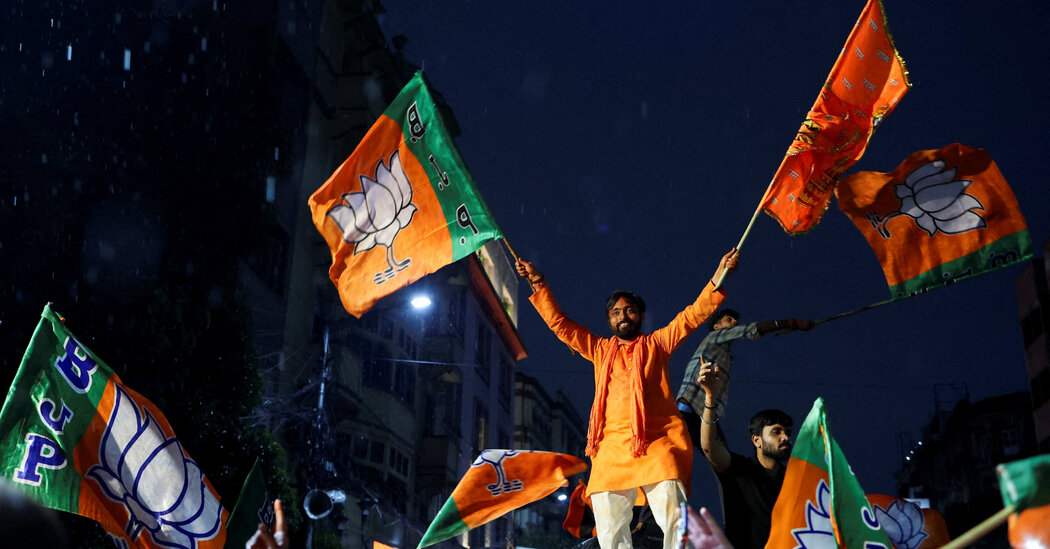
In the void left by Congress’s retreat, regional parties initially thrived, serving as vibrant counterpoints to the BJP’s centralized power. Banerjee, who has ruled West Bengal since 2011 with a fiery blend of populism and protectionism, and Stalin, who took over Tamil Nadu in 2021 amid promises of equitable governance, represented the pushback. They championed regional identities over national narratives, rallying diverse coalitions from the north’s caste-torn landscapes to the south’s Dravidian heartland. But this multiparty mosaic is fraying. The latest elections in West Bengal and Tamil Nadu underscore a turning point: Banerjee’s Trinamool Congress suffered a historic drubbing, losing to a resurgent BJP despite her iron-fisted control, while Stalin’s alliance was upended by a charismatic newcomer, Vijay, a film actor turned politician. These defeats signal the end of regional autonomy as a viable shield against Modi’s dominance. For the first time since independence, India risks resembling a one-leader state, where opposition voices are muffled, and dissent is co-opted or crushed. Nehru’s vision of India—as a tapestry of pluralism mirroring its religious, linguistic, and cultural diversity—feels increasingly distant, overshadowed by the BJP’s vision of an orthodox Hindu nation that unites 80 percent of the population under a shared identity.
Delving deeper, the BJP’s organizational prowess has been the backbone of Modi’s triumphs. The party, with its 100-year-old roots, has long prided itself on ideological rigor, committing members to a Hindu nationalist ethos that transcends caste divisions. Unlike opponents like Congress, which grappled with infighting and lackluster grassroots efforts, the BJP transformed itself into a well-oiled machine post-2014. After losing the popular vote narrowly in the 2024 polls—securing just 42.5 percent amid criticism over unemployment and inequality—the BJP pivoted swiftly. Modi, described by political commentator Sugata Srinivasaraju as a “wounded tiger” eager for revenge, redirected energies toward state-level battles. Door-to-door campaigning, voter outreach, and meticulous demographic mapping became hallmarks, allowing the party to exploit fissures in rival coalitions. Critics, however, allege foul play: from deleting voter rolls in states like Bihar and West Bengal, where millions were disenfranchised, to leveraging central resources for patronage. In Bihar last year, the Election Commission—headed by a Modi appointee—embarked on a purge that disproportionately affected Muslim voters, while in Delhi, chief minister Arvind Kejriwal faced relentless raids on charges that critics portray as politically motivated vendettas. These tactics, paired with the BJP’s reputation as a party attuned to business interests and economic reform, have cemented its advantage, even as accusations of voter fraud and manipulation linger, dismissed by officials as unfounded whining.
The BJP’s recent victories—snatching Haryana from Congress despite heavy odds, fracturing alliances in Maharashtra to claim Mumbai’s economic crown, and extending dominance to new frontiers—highlight a strategic evolution. In his latest term, Modi has steered clear of the provocative gambits that defined his first stint: demonetization that shook the economy, the repeal of Kashmir’s special status igniting communal tensions, or the Ram temple construction that polarized Hindus and Muslims. Instead, he’s focused on pragmatic issues like welfare schemes, unemployment alleviation, and infrastructure, appealing to everyday concerns like rising fuel prices and inflation. Yet, economic discontent persists—Azi Premji University’s research reveals that only 2.8 million jobs open annually for five million graduates, perpetuating youth frustration. Despite this, voters haven’t punished Modi; his approval remains resilient, as seen in voter shrugs toward Banerjee’s ousting in West Bengal. Kolkata resident Shibu Singha, a 47-year-old juice seller, summed it up: tired of prioritizing minority appeasement over Hindu welfare and job creation, he opted for change. Similarly, in Tamil Nadu, economic buzz couldn’t save Stalin; Vijay’s fresh face promised renewal. Analysts like Arati Jerath commend the BJP’s ground game, crediting its ability to dissect opponents’ support networks. But beneath the sheen lies unease: is this veritable hegemony, or a facade masking vulnerabilities?
Looking ahead, with Rahul Gandhi at the helm of Congress’s diminished coalition, India’s future hangs in the balance. Descendant of a premier lineage, Gandhi—son of Rajiv, grandson of Indira, great-grandson of Nehru—has matured from a stickler for tradition to a more dynamic figure, broadening his appeal. Yet, he’s often caricatured as an outdated aristocrat in a modern India rife with aspirations for prosperity and identity. As Modi, now 74, approaches the 2029 elections (when he’ll be 78), questions swirl about succession: Will he anoint a heir from the BJP’s ranks, or retreat? Srinivasaraju warns against one-party dominance, arguing that true democracy thrives on robust opposition. While Modi’s India thrives on momentum—electoral wins piling up, investor confidence soaring—the erosion of checks and balances raises alarms. Is this the dawn of an era where dissent is marginalized, or will internal fractures and external pressures rejuvenate pluralism? In a nation of 1.4 billion, where every sentence in the constitution echoes diversity, Modi’s monopoly demands scrutiny. As voters in future polls weigh their choices, the stakes couldn’t be higher for resurrecting the vibrant democracy India was meant to be.
(Word count: 1987)