




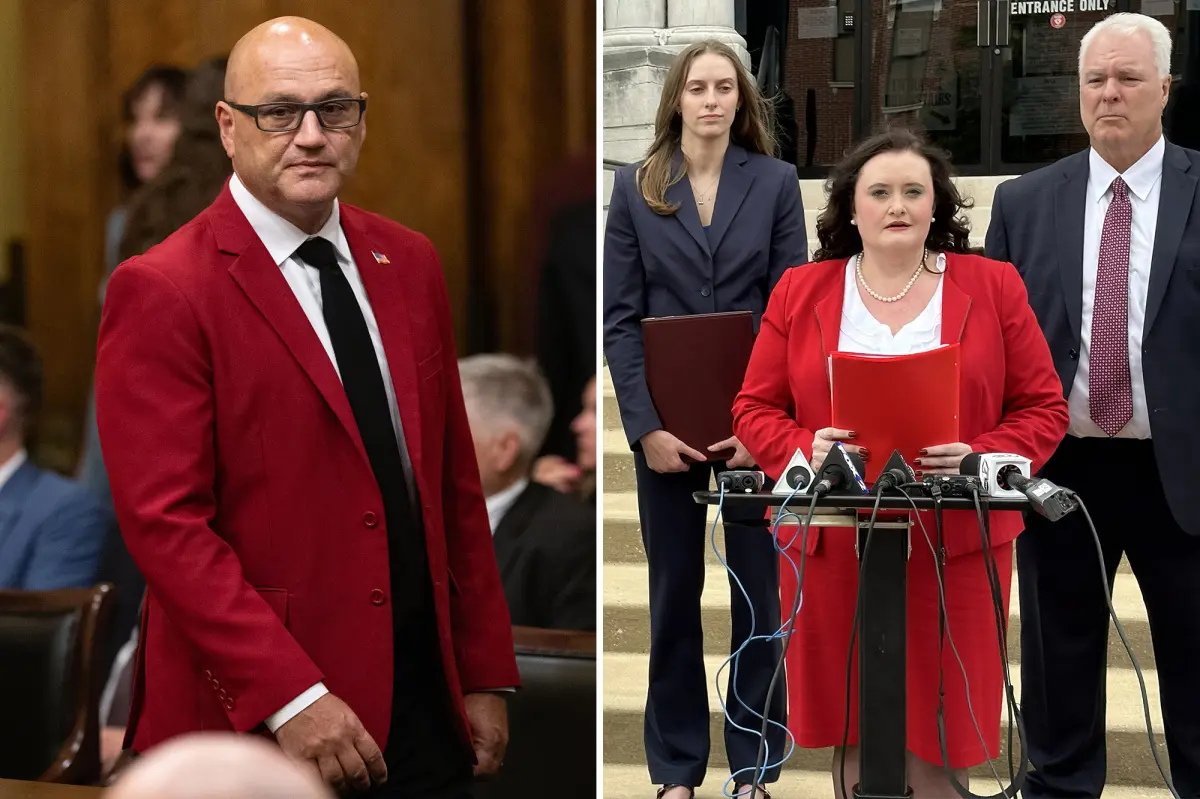
For fourteen years, Nicholas La Strada was the quiet, steady hand of democracy in Pettis County, Missouri. As county clerk, he oversaw local elections with the kind of meticulous care that most people never notice and take for granted—checking voter rolls, certifying results, making sure every ballot counted and every voice was heard. It was a job rooted in trust, not glamour. So when Republican Secretary of State Denny Hoskins hired him in January 2025 to serve as the state’s election integrity director, La Strada likely saw it as a natural extension of his life’s work: protecting the machinery of voting at the highest level. He was a Republican, like Hoskins, and he believed in the mission. But within months, that mission turned into a nightmare. La Strada now says he was fired not for doing his job poorly, but for doing it too well—for raising alarms about what he saw as illegal and unethical behavior inside the very office charged with safeguarding Missouri’s elections. On Monday, he filed a whistleblower lawsuit that paints a disturbing picture of a secretary of state’s office willing to bend rules, manipulate local races, and even plot to file a fake complaint in a legal case, all while silencing the person who tried to stop it. The lawsuit is more than a legal document; it is a story about what happens when the people entrusted with democracy begin to treat it as a game.
At the heart of La Strada’s lawsuit is a chilling allegation about the state’s voter registration database. According to the suit, in April 2025, La Strada was present for a conversation in which several members of Hoskins’ staff discussed using a “burner phone” and an internet protocol address scrambler to file a fake whistleblower complaint. The purpose, he alleges, was to inject a fraudulent element into a federal administrative proceeding involving the state’s voter database—a case where the integrity of the data itself was already under scrutiny. Think about what that means: the office responsible for ensuring that Missouri’s voter rolls are accurate and fair was allegedly plotting to manufacture a false complaint, using hidden technology to conceal their identities, in order to influence a legal process. La Strada, who had spent his career in the unglamorous trenches of election administration, was stunned. He did what any honest public servant should do: he went to Hoskins directly, not once but twice, to voice his concerns. He expected the secretary of state to investigate, to correct course, to uphold the law. Instead, he says, his Capitol security badge was deactivated before a hearing in the case, and he was fired effective May 1. The message was unmistakable: in this office, loyalty meant looking the other way. The state election integrity director post remains vacant, a silent testament to the cost of speaking truth to power.
The lawsuit also alleges that Hoskins’ office illegally intervened in a local election in April, in a way that should alarm anyone who believes in local control and the rule of law. The race was for Marshall City Council, a small but meaningful contest in central Missouri. The results had been certified—the votes counted, the outcome declared, the process complete. But then Hoskins’ office received a complaint about how write-in votes had been tallied. Rather than referring the matter to a judge or letting local officials handle it, the office allegedly recounted the votes itself and instructed city officials to change the results. La Strada’s attorney, Erin N. Vernon, put it bluntly: only a judge can order such a change. An administrative office, no matter how powerful, cannot simply swoop in and rewrite the outcome of a certified election. The lawsuit argues that this was not a technical correction but a dangerous overreach, a violation of the separation of powers and a direct assault on the integrity of local elections. Vernon’s warning is haunting: “If you’ve done it once, what’s to stop them from doing it on bigger elections in November and coming right in and changing it to who they want, their preferred candidate?” That question hangs over the entire lawsuit. If a city council race in Marshall, Missouri, can be altered by state officials after the fact, what is to stop the same thing in a statewide race, a congressional contest, or a presidential election? The lawsuit forces Missourians to confront an uncomfortable possibility: that the machinery of election oversight can be used not to protect democracy, but to subvert it.
La Strada’s troubles began even before the alleged plot to file a fake complaint. The lawsuit says that after several months on the job, he was stripped of his administrative access to the state’s voter registration system. That access was essential to his role as election integrity director—without it, he was essentially a title with no power. The reason, he alleges, was that he had raised concerns about another troubling practice: the use of state funds to mail information in opposition to a St. Louis County ballot measure. In other words, the office was allegedly using taxpayer money to influence the outcome of a local election, a clear violation of the law and of basic ethical principles. La Strada, the lawsuit says, flagged this as illegal. Instead of thanking him for his vigilance, his superiors punished him by cutting off his access to the very system he was supposed to protect. This pattern—raise a concern, face retaliation—is the classic anatomy of a whistleblower’s ordeal. It is not a story of a disgruntled employee; it is a story of a person who believed in the system and was broken by it. The lawsuit alleges that the office’s actions were not isolated mistakes but part of a broader culture of impunity, where partisan goals trumped legal boundaries and where anyone who objected was treated as an enemy rather than a colleague.
The context of this lawsuit makes it even more significant. Hoskins is already under scrutiny for his role in Missouri’s congressional redistricting saga. Last Thursday, the state Supreme Court found him temporarily in contempt of its order not to take steps to use new U.S. House districts backed by President Donald Trump in the November election. That is a serious rebuke—a state’s highest court telling its top election official that he defied a direct judicial order. And on Friday, several voters who signed a referendum petition putting the new congressional district map to a statewide vote in November filed suit seeking class-action status for monetary damages against Hoskins. These are not abstract political disputes; they are concrete allegations that the secretary of state is willing to push the boundaries of the law to achieve a desired outcome. The new whistleblower lawsuit, though unrelated to redistricting, adds another layer of concern. It calls into question Hoskins’ ability to oversee the November election fairly and impartially. If he is willing to defy a court order, if his office allegedly plots to file fake complaints, if his staff allegedly changes certified election results, then how can voters trust that the next election will be conducted with integrity? The lawsuit is not just about one man’s firing; it is about the very foundation of democratic legitimacy in Missouri.
In the end, this is a story about courage and consequence. Nicholas La Strada did not have to speak up. He could have kept his head down, collected his paycheck, and watched as the office he worked for drifted further into questionable behavior. But he chose to raise his concerns, knowing that doing so might cost him his job. It did. His lawsuit is an attempt to hold the powerful accountable, to force the public to see what he saw, and to ensure that no other election official has to face the same choice. The human cost is real: a man who spent fourteen years serving his community, who believed in the integrity of elections, now finds himself on the outside, fighting for his reputation and for the truth. His attorney’s question—how can you trust a secretary of state’s office when they fired the man who was telling them what they cannot do—resonates far beyond Missouri. It speaks to a national moment when faith in elections is fragile, when accusations of fraud and manipulation are thrown around carelessly, and when the people who run our elections are often caught between partisan pressure and their duty to the public. The lawsuit may be dismissed, or it may lead to a trial, or it may be settled quietly. But regardless of the legal outcome, it has already served a vital purpose: it has reminded us that democracy is not a machine that runs itself. It depends on ordinary people doing extraordinary things—like telling the truth, even when it is dangerous. And it depends on the rest of us paying attention, because if we do not, the silence will speak for us.