


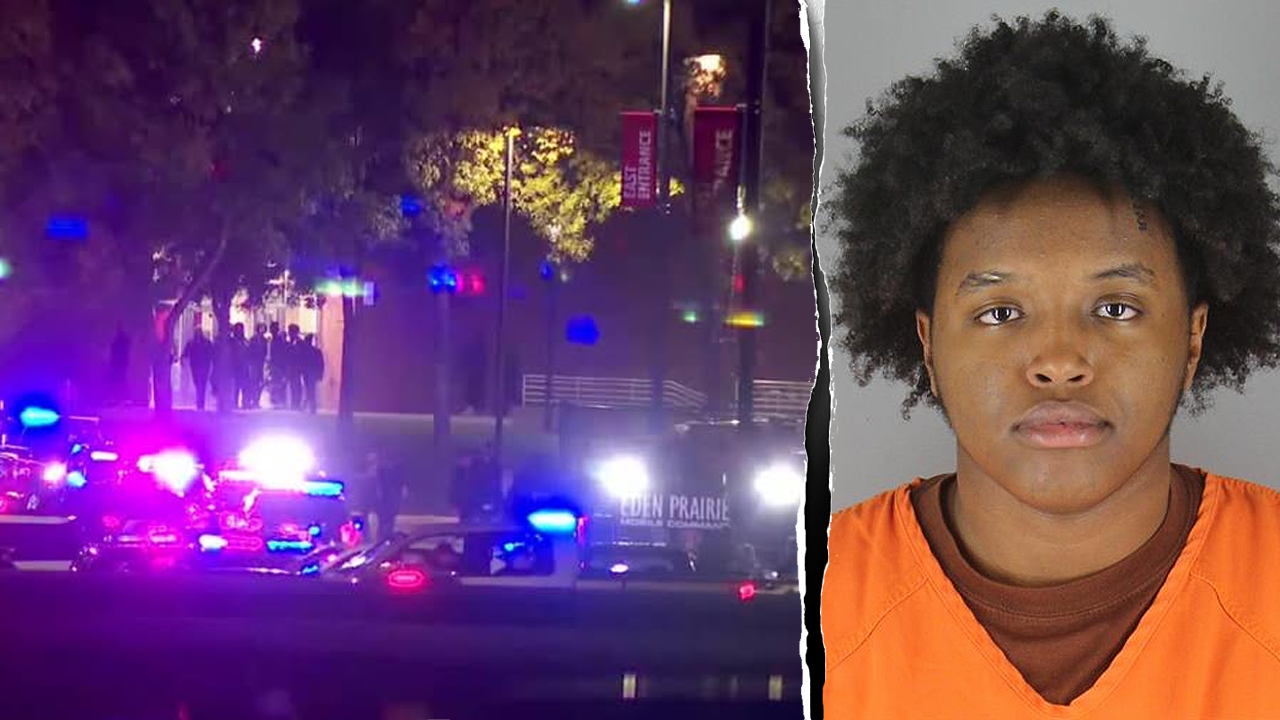
It was supposed to be a night of school spirit and celebration—homecoming at Eden Prairie High School, a suburban Minnesota community coming together for a Friday night football game. But the Oct. 2 festivities turned into a nightmare when gunfire erupted in the parking lot outside the stadium. Two teenagers, an 18-year-old and a 17-year-old, were shot and wounded, and the entire stadium was evacuated as panic spread through the crowd. What followed was an intense multi-agency investigation, an arrest, and then a moment that has turned this tragedy into a new flashpoint in the national debate over crime, bail, and public safety. Within just two days of being taken into custody, the accused shooter, 18-year-old Adam Abdihakeem Adam, was released from jail after posting bond. According to Hennepin County jail records, Adam walked out of custody on Saturday evening, Oct. 10, at 7:04 p.m., after a $100,000 bail or bond option was posted—a decision that stunned many in the community and drew immediate criticism from political voices, including the Trump campaign’s Rapid Response 47 account, which highlighted police statements linking the shooting to rival Somali gangs. For the families of the wounded teenagers, for the students who fled the bleachers, and for a community trying to make sense of how a celebration could end in violence, Adam’s release felt like another blow.
The details of the charges against Adam paint a troubling picture. He is facing two felony counts of second-degree assault with a dangerous weapon and one count of second-degree riot while armed with a dangerous weapon. His next court appearance was scheduled for Monday afternoon, but the fact that he was free at all has raised questions about how the system handles young defendants accused of gun violence. The criticism did not stop with the bail decision. A post from the Rapid Response 47 account accused a “Radical Left judge” of granting Adam “no-condition bail,” pointing to the fact that no special restrictions were imposed. While the jail records did list the bail amount, the lack of conditions made the release particularly hard for many to accept. It also came against a backdrop of growing anxiety in the Minneapolis-St. Paul area, where law enforcement has been increasingly vocal about gang-related violence. Police have said the homecoming shooting was linked to rival Somali gangs, and Eden Prairie Police Chief Matt Sackett has been clear that the investigation is far from over. For now, the legal process will continue, but the emotional whiplash of seeing an accused shooter released so quickly has left many residents feeling vulnerable and asking a painful question: Can they still trust the justice system to keep them safe?
The details of what happened that night, according to charging documents cited by FOX 9 Minneapolis, are chilling. Investigators believe the violence began when two cars entered the school parking lot and a fight broke out involving around ten people. In the chaos, the driver of one of the cars got out, opened fire on the victims, and then fled the scene. That driver, according to authorities, was Adam. Investigators said he was driving his brother’s car, and cellphone tracking placed him with the vehicle before, during, and after the shooting. He then allegedly abandoned his phone and changed his number in an attempt to elude detection. The investigation took a major turn when police searched his home in St. Louis Park and found clothing that matched what the shooter was wearing in surveillance video. The evidence was enough to secure charges, and the hunt for Adam came to an end on Oct. 8, when officers caught up with him near Highway 55 and Penn Avenue in Minneapolis. The arrest was made without incident, thanks to coordinated efforts from the Hennepin County Sheriff’s Office’s Auto Theft Task Force and West Metro Drug Task Force, along with officers from St. Louis Park and Hopkins. It was the kind of teamwork that Chief Sackett praised, saying he was “incredibly proud” of the officers and investigators who worked nonstop to identify those responsible and hold them accountable.
But the work, by all accounts, is not over. Eden Prairie police are still actively investigating the homecoming shooting, and officials have said more arrests and additional charges are possible. In the days following the shooting, regional public safety agencies came together under the coordination of the Minnesota Bureau of Criminal Apprehension to share intelligence and coordinate investigations, focusing on the broader issue of gang-related violence across the metro area. The concern is not just about one incident. Police leaders are warning that the shooting is part of a troubling pattern, and they are under mounting pressure to prevent more violence before it happens. In that context, the arrest and quick release of Adam have only intensified the scrutiny on the criminal justice system. Meanwhile, law enforcement is also looking into a separate shots-fired incident at a Speedway gas station on Oct. 5, though investigators have not yet identified a direct connection between that event and the homecoming shooting. The lack of reported injuries in that incident offered little comfort to a community on edge. Parents are now forced to wonder about the safety of every football game and gas station stop, and public safety officials are trying to reassure residents that they are taking the threat seriously.
The political and social fallout has been immediate and significant. Republican U.S. Senate candidate Michele Tafoya pointed to the homecoming shooting and other recent violent incidents during a campaign stop last week, warning that Minnesotans increasingly feel under threat in their own communities. She did not mince words about the cause, saying, “Our law enforcement here are calling it out as the product of Somali gang violence, and we’ve got to identify it, and we have to find a way to deal with it.” Her comments reflect a growing impatience among some voters and public officials who feel that a handful of repeat offenders and gang members are behind a disproportionate share of the violence. They are also demanding that the justice system take a tougher stance—especially when it comes to bail. How, they ask, does someone accused of shooting two teens at a high school football game get released just 48 hours after being arrested? The answer, at least in this case, appears to be a combination of the bail schedule and the absence of additional conditions. But for those on the front lines of policing, it feels like a revolving door that undermines their work. The frustration is not bipartisan; it’s shared by many residents who are simply tired of living in fear. And it has put the issue of public safety front and center in the run-up to election season, with candidates and voters alike debating how best to balance fairness in the justice system with the need to keep dangerous people behind bars.
For the teens who were wounded, their families, and the thousands of students and parents who witnessed the chaos, the trauma of that October night will not fade quickly. Even as the legal case moves forward, with Adam’s next court date looming, there is a sense that the entire community has been changed. The image of a homecoming game turned into a crime scene is now etched into the town’s memory. It has also become a symbol of a much larger national struggle over how to respond to gun violence, gang activity, and the justice system’s role in preventing the next tragedy. The accused is presumed innocent until proven guilty, of course, and the legal system must follow its process. But the sight of him walking out of jail has left many wondering if that process is broken. The investigation continues, as does the search for answers—and for accountability. The chief’s promise of more possible arrests offers a sliver of hope, as does the increased coordination among law enforcement agencies. But until the broader problem of gang violence is addressed, and until the community feels that bail decisions are made with public safety in mind, the tension will remain. For now, all Eden Prairie can do is grieve, heal, and hold onto the hope that no more families have to endure what the victims of this shooting are going through. The stadium lights will come on again, but the memory of that night will stay in the hearts of everyone who was there, reminding them that sometimes, the game isn’t just about football—it’s about community, safety, and the fragile peace of everyday life.