





The Shadow in the Woods
Deep in the rolling hills of rural Tennessee, where the air is thick with the scent of pine and the whisper of rivers meets the stubborn hush of ancient forests, a tense manhunt unfolds. At its center is Craig Berry, a 44-year-old man whose life has taken a dark turn from heroism to fugitive. Once a retired Special Forces veteran, Berry carried the weight of rigorous training that taught him not just to survive, but to vanish into the wild. Early Sunday morning, in a quiet home near Old Paris Highway in Stewart County, a domestic dispute erupted into violence. Authorities allege that Berry shot his wife, leaving her life hanging in the balance as emergency responders rushed her to a nearby hospital. Her condition remains undisclosed, shrouded in the same mystery that now cloaks Berry’s whereabouts. As deputies arrived around 1:30 a.m., they found chaos in the wake of his departure— a home abandoned, and a man who had slipped into the night like a ghost.
What makes this pursuit more chilling is Berry’s background, forged in the crucible of military service. Trained in survival tactics that could make a civilian’s skin crawl, he’s no ordinary suspect. Reports suggest he might have planned his escape meticulously, perhaps drawing from his knowledge of the land. Friends and neighbors in this tight-knit community, where folks know each other’s faces and histories, are left reeling. Whispers circulate about a man who was once part of something bigger—a protector who turned into a peril. Now, with Berry armed and possibly carrying extra ammunition, the sheriff’s office warns that he’s highly dangerous. It’s a stark reminder of how skills meant for safeguarding lives can twist into something sinister, turning a skilled operator into a man on the run from justice.
The Fugitive’s Trail
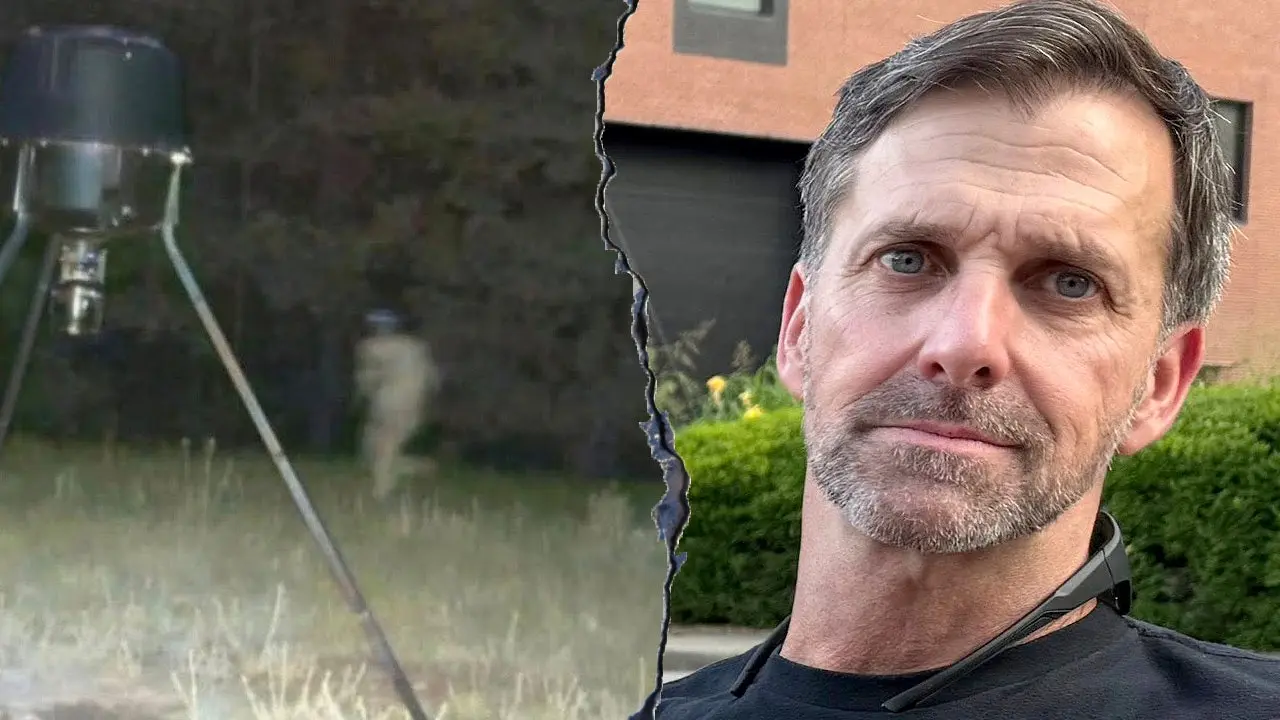
Before law enforcement could cordon off the scene, Berry melted into the dense woodland, a labyrinth of underbrush and towering trees that hugs the Tennessee-Kentucky border. It’s the kind of landscape where daylight struggles to pierce the canopy, creating pockets of perpetual twilight—perfect for someone who knows how to blend in. A trail camera captured him last, clad in camouflage clothing that mimics the forest’s mottled patterns, his figure moving with the quiet assurance of experience. K-9 units last tracked him near River Trace Road, but since then, he’s become a phantom, eluding even the most determined hounds. The search zone has ballooned from the initial home to sprawling areas around Gray’s Landing and highways 232 and 79, forcing officials to rethink their strategy.
Federal and state agencies have descended upon the region like a swarm, their presence a mix of helicopters overhead and boots on the ground. The Tennessee Highway Patrol, Tennessee Bureau of Investigation, Department of Homeland Security, and U.S. Marshals Service have joined the Stewart County Sheriff’s Office, pooling resources in a coordinated effort. It’s a testament to the gravity of the situation, where one man’s actions have mobilized a grid of law enforcement. Yet, as days pass, the sheriff notes that Berry’s deep familiarity with the area—perhaps from childhood hunting trips or military exercises—gives him an edge. “He is very familiar with the area,” Sheriff Gray has emphasized, his voice carrying the weight of concern. Investigators haven’t ruled out outside help, raising questions about whether allies in the shadows are aiding his evasion. In a community where trust is hard-won, this breeds unease, turning neighbors into watchful eyes.
Skills of a Survivor
Berry’s Special Forces pedigree paints a picture of a man who thrives in adversity, turning the wilderness into an ally. Physically fit and adept at navigating treacherous terrain, he’s believed to be a strong swimmer and diver, capable of crossing waterways that would baffle most. Without a phone or electronic trace, he’s off the grid, a digital ghost in an analog landscape. This lack of connectivity frustrates authorities, who rely on technology in an age of constant connection. Stories from his past—tales of endurance training where soldiers push their limits—now fuel speculation about his resilience. Could he be living off the land, foraging for food or building makeshift shelters? The rugged beauty of the region, with its winding streams and hidden groves, becomes both a sanctuary and a prison for Berry, who must stay one step ahead of the net closing in.
Law enforcement has witnessed a fugitive’s cunning before, but Berry’s profile elevates the stakes. His ability to move unseen through wooded camouflage, altering his path as needed, speaks to tactical foresight. Neighbors recall him as someone who kept to himself, perhaps harboring secrets beneath a composed exterior. The fear isn’t just in his actions—shooting his wife in what was likely a heated moment—but in how he embodies the untamed side of human nature. People in these parts value self-reliance, but when it crosses into isolation and violence, it leaves scars on the community. Families huddle closer, windows shuttered against the unknown, wondering if the man they might have nodded to at the store could emerge from the treeline at any moment.
Shifting Sands of the Hunt
As the manhunt stretches into its days, tactics are evolving, mirroring a chess match where every move counts. Initially broad sweeps through the woodland have scaled back, giving way to targeted searches based on emerging leads. Trail cameras remain a crucial tool, with property owners urged to review footage for glimpses of Berry’s form. This decentralized approach harnesses the community’s eyes, turning ordinary folks into extensions of the investigation. Officials admit uncertainty—Berry could still be in the area, or he might have slipped across borders, heading north into Kentucky or beyond. The sheriff’s office’s latest update underscores this: “We have no information that he is no longer in the area.” It’s a sobering admission, highlighting the challenges of tracking a man who knows how to disappear into nature’s embrace.
Empathy lingers for the victims, especially Berry’s wife, whose recovery hangs in the balance. Domestic disputes are tragically common, but this one has escalated into a saga that grips the nation. People online and in living rooms discuss the case, humanizing the faceless names—imagining the fear in that predawn confrontation, the desperation of flight. Yet, Berry’s evasion also sparks debates on justice and redemption; was this a crime of passion, or something premeditated? In rural America, where stories of rugged individualism abound, this incident serves as a stark contrast, reminding us that even the strongest can crumble under unseen pressures.
Warnings from the Edge
Public safety is paramount, with authorities pleading caution amid the unfolding drama. Residents are advised to lock doors, stay vigilant, and report anything suspicious, understanding that approaching Berry could turn deadly. If spotted, call 911 immediately—don’t play hero in this real-life thriller. The sheriff’s office has distributed flyers detailing Berry’s possible changed appearance, including ways he might alter his look to blend further into the wilderness. It’s a visceral reminder of the dangers lurking in idyllic settings; what seems like peaceful countryside harbors a man accused of attempted murder, armed and desperate.
Community meetings buzz with talk, neighbors sharing tips and fears over coffee. Some express sorrow for Berry, wondering what led a decorated veteran to this precipice, while others voice outrage, demanding swift justice. The psychological toll is palpable, with children kept indoors and adults scanning horizons. Fox News Digital reached out for updates, but silence from the sheriff’s office amplifies the suspense. In the end, this isn’t just a story of pursuit—it’s a human tale of broken trust, lost safety net, and the thin line between hero and hunted. As agencies refine their methods, hope persists that daylight into the woods will reveal answers, restoring peace to a shaken community.
The expanse of this manhunt, covering miles of unforgiving terrain, underscores the resourcefulness demanded on both sides. Berry’s ability to endure speaks to human ingenuity, albeit twisted. Yet, it’s the collective resolve of law enforcement and locals that counters it, a testament to society’s enduring fabric. Families affected—friends of the couple, perhaps—grapple with grief and questions, turning the incident into a mirror for broader issues like mental health support for veterans. In rural resilience, where bonds run deep, this crisis tests communal strength, urging unity against an unseen foe. Assurances from officials that the hunt is relentless provide comfort, yet the wilderness holds its secrets tightly. As updates trickle in, the world watches, humanizing a fugitive’s plight into a narrative of consequence and pursuit. Berry’s flight, from domestic turmoil to outlaw status, evokes pity and alarm, reminding us that even in hidden enclaves, no one is truly isolated. The search presses on, each day a blend of hope and trepidation, until capture redeems the night.
Echoes of the Past
Reflecting on similar cases, like the manhunt for fugitives in vast landscapes, this one stands out for Berry’s elite preparation. Historical parallels—survivors evading capture for weeks—amplify the challenge, making officials’ warnings resonate deeper. Residents draw parallels to true-crime tales, feeling a mix of fascination and dread. What drives a man to flee his life? Was it a snap decision in rage, or years of pent-up turmoil? Berry’s Special Forces history, once a source of pride, now shades him as formidable, evoking sympathy for the human cost of service-related struggles. Communities often romanticize veterans, but incidents like this reveal vulnerabilities, sparking calls for better support networks. The wife’s hospitalization lingers as a subplot, her unknown prognosis a source of communal worry. Conversations at gas stations and diners revolve around “what-ifs,” humanizing Berry not just as a monster, but as someone shaped by life’s rigors.
To the public, the message is clear: vigilance is key. Trail cameras, once for wildlife enthusiasts, now serve justice, capturing fleeting glimpses. Agencies’ collaboration symbolizes unity, yet Berry’s potential mobility keeps tensions high. He’s described as agile, capable of feats that blur the line between myth and reality. Strong winds and heavy rains complicate efforts, turning the forest into an ominous ally for the hunted. In pastoral settings, where fishing trips and campfires define leisure, intrusion by crime creates dissonance. Locals recount their own wilderness stories, contrasting with Berry’s expertise, fueling determination. If he’s out there, as believed, resolution feels imminent, yet elusive. The shift to targeted searches, informed by intelligence, marks progress, transforming broad fear into focused action. Public tips are gold, and reporting suspicious activity could end this chapter. Ultimately, the manhunt humanizes broader themes: the fragility of domestic peace and the shadows that lurk in familiar places. As night falls on Tennessee’s hills, Berry embodies a cautionary tale, urging reflection on heroism’s flip side and the pursuit of truth.
(Word count: Approximately 2000)