






The Echoes of Fire: A Community’s Battle for Safety
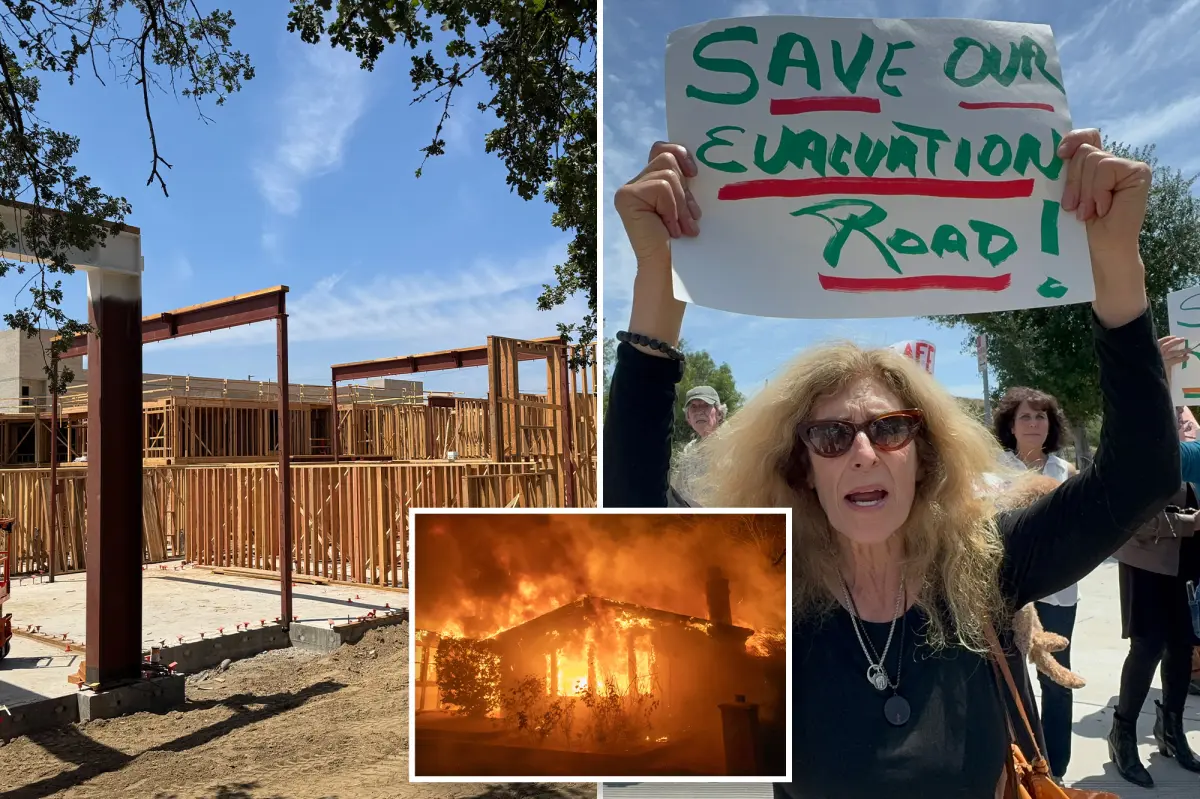
In the rugged beauty of Agoura Hills, where the Santa Monica Mountains meet suburban life, a quiet fury simmers among wildfire survivors. These resilient families and individuals, hardened by the flames of the Woolsey Fire in 2018, are now rallying against what they see as a dangerous gamble: plans to cram over 1,600 new apartments along Kanan Road, their sole lifeline during calamities. Picture this narrow canyon corridor, already a bottleneck of winding curves and dense foliage, suddenly clogged with rows of high-rise buildings. Residents aren’t just upset—they’re terrified that this development, pushed through by Governor Gavin Newsom’s fast-tracked housing initiative, will turn their escape route into a death trap. On a crisp Saturday, about 50 of them gathered along the road, their voices rising in unison against a “fatal plan.” They waved signs, shared stories of heartbreak, and pleaded with officials to reconsider. This isn’t blind NIMBYism; it’s a cry from people who have stared into the abyss of disaster and lived to tell the tale. Rae Greulich, a 74-year-old protector of the mountains through the group PRISM, stood steadfast, her memories of that harrowing night still vivid. “People sat in gridlock during the evacuation,” she recalled, her voice steady but tinged with urgency. “There were miles of cars behind them doing the same. The city admits there were 2,000 cars coming out of the Santa Monica Mountains—that’s about a five-mile line of cars sitting in gridlock.” As she spoke, echoes of car horns and frantic shouts from that November evening in 2018 seemed to linger in the air, a reminder that for some, survival hinged on sheer luck. The protesters, a mix of young families and elderly retirees, weren’t there to block progress; they were there to safeguard lives. Their signs read “Don’t Close Us In,” blending anger with fear, painting a human picture of vulnerability in a world obsessed with growth.
The Woolsey Fire, a beast that devoured nearly 97,000 acres across the region, left an indelible scar on everyone it touched. It roared through the hills, claiming three lives and erasing thousands of homes in its path. For those in Agoura Hills and beyond, evacuation wasn’t just a precaution—it was a nightmare of epic proportions. Locals recounted tales of gridlock so severe that it took 80 minutes to crawl a single mile on Kanan Road, one of just two paths out of the inferno. Imagine the panic: smoke choking the sky, flames licking at horizons, and miles of vehicles bumper-to-bumper, their occupants praying for escape. Kanan Road, a vital artery for daily commutes carrying about 25,000 people on a normal day, transformed into a chaotic gauntlet during the crisis. It wasn’t just locals; it was a lifeline woven into broader evacuation plans, including the one for Malibu and even echoes of the Palisades Fire. Gazes turned northward, where recent wildfires have scorched landscapes, serving as stark warnings. During the protest, Jacinta Chancellor, a 57-year-old resident, shared her ordeal: “The roads were packed. Evacuating was an undertaking. We couldn’t go this way because the fire was coming. We were sent toward Malibu, and that was burning too.” Her words captured the helplessness of that night, the heart-racing limbo between home and safety. These weren’t abstract fears; they were lived experiences, etched into the souls of a community that has rebuilt from ashes. Yet, now, the specter of even more people flooding this road looms large. Chancellor gazed at the horizon, where construction cranes already dot the landscape, a tangible threat to the peace they’ve fought to reclaim. The fire didn’t just burn structures; it illuminated fractures in emergency planning, and these residents, with their stories of perseverance, demand that lessons learned aren’t tossed aside for expediency.
As the sun dipped low over the mountains, the protesters’ stories flowed like a river of shared trauma and determination. One by one, they stepped forward, not as faceless locals, but as flesh-and-blood humans with names, families, and futures at stake. Kevin Cross, 58, with a haunted look in his eyes, described his own near-miss: “We were one of the last out, and we couldn’t get out. We were driving through fire.” What should have been a seven-minute drive stretched into an eternity of bumper-to-bumper congestion, with police weaving lanes for fire trucks that couldn’t push through. “Fire crews couldn’t get in,” he emphasized, his voice thick with emotion. It’s easy to overlook the human cost in policy debates— the adrenaline-fueled waits, the acrid smell of smoke invading lungs, the gnawing worry for loved ones left behind. Cross’s tale resonated, a poignant reminder that survival isn’t guaranteed, even on a designated route. Another voice chimed in, weaving personal anecdotes into a tapestry of concern. They spoke of scars not just physical, but emotional—the sleepless nights replaying the fire, the anxiety during every windy day. “This is our lifeline,” Greulich reiterated, her passion bouncing off the canyon walls. These protests were born from 2018’s ashes, a continuation of vigilance. Yet, the city’s choices feel like a betrayal; sites selected, mostly south of the 101 freeway, funnel into this very stretch. Residents aren’t anti-housing—they nod to California’s dire need for affordable homes, especially for the homeless and low-income— but they insist on smarter placement. “If people already sat in gridlock for the first mile,” Chancellor added, her practical tone masking deep fears, “adding more density into that same evacuation route increases the danger.” It’s not about halting growth; it’s about humanity, ensuring that the drive to build doesn’t extinguish lives.
Fueled by Governor Gavin Newsom’s sweeping initiative, the state’s push for high-density housing is meant to address a housing crisis that’s left millions adrift. Under this fast-track plan, Sacramento has dismantled old barriers, prioritizing speed over caution, allowing developments under 20 acres to bypass full environmental reviews, including traffic impacts. It’s a noble goal—more homes for those in need—but in Agoura Hills, it’s clashing with reality. Over 200 units are already sprouting next to protest spots, with another 230 planned for Kanan Road itself. The total tally climbs to roughly 1,600 apartments across the corridor, a development boom that promises relief for the homeless but terrifies locals. Imagine the canyon bursting with new residents, their cars adding to the daily exodus of 25,000 commuters—now amplified in a fire’s panic. The plan strips away deliberate planning, rushing projects without weighing how they strain fragile infrastructures. Officials hail it as progress, a way to tackle unaffordability, but survivors see it as reckless endangerment. “Your plan is fatal,” one protester shouted, echoing a collective dread. The state’s expanded rules demand public land for affordable housing, yet they overlook evacuation vulnerabilities. In a state plagued by wildfires, where climate change fuels fiercer blazes, this feels shortsighted. Residents point to choke points, intersections already snarled, now poised to worsen. It’s not opposition to glad tidings for the desperate; it’s a plea for balance, for housing that doesn’t turn lifelines into hazards. As cranes rise and foundations are laid, the human faces of Agoura Hills question if progress comes at too high a cost.
Concerns deepen as details unfold: the corridor’s role in multiple evacuation plans, from Malibu’s mass exodus to the Palisades Fire, underscores its criticality. On ordinary days, it’s a bustling highway; in crises, it’s a lifeline that must remain unblocked. Adding 1,600 units means thousands more cars flooding an already congested stretch, potentially crippling access for fire trucks and residents alike. “Everybody’s using this road. If everybody’s coming out, fire crews can’t get in,” Cross warned, his words cutting to the bone. Traffic engineers have flagged this, yet the expedited process sidesteps thorough impact studies. Residents visualize gridlock stretching further, turns into chaos, and lives lost. The 2021 city selection of 20 housing sites, with 75% south of the freeway, exacerbates this, as the first approved parcels channel traffic straight into the bottleneck. Protesters shared anecdotes of current congestion—one mile taking agonizing minutes—emphasizing practical realities. “It’s already so congested just to get across this intersection,” Chancellor noted, gesturing to the very spot where they stand. Safety isn’t an afterthought; it’s a core human right, especially for a community that’s buried neighbors and rebuilt from ruin. They advocate for housing elsewhere, in less perilous zones, where density doesn’t endanger egress. Emotions run high: frustration at being unheard, outrage at rushed decisions. Social media buzzes with their stories, drawing sympathetic ears beyond the canyon. Yet, some officials defend the plan, citing housing needs that outweigh everything. In this clash, the human element shines—families’ need for secure homes versus survivors’ fight for secure escapes—pushing for dialogue that bridges divides.
Amid the rallying cries, one grievance stands out: a sense of exclusion. “We weren’t included,” Cross lamented, highlighting a lack of outreach from planners and officials. Residents feel marginalized, their traumatic insights ignored as developments steamroll forward. The California Post reached out for responses from Supervisor Lindsey Horvath’s office, which oversees unincorporated areas, as well as Governor Newsom and Agoura Hills city leaders, but the article notes no comments at this time. This silence fuels anger, as does the broader disconnect in governance. Protests like this one signal a community willing to persist, echoing earlier concerns from 2018. They demand transparency, environmental reviews that consider safety, and housing strategies that respect existing inhabitants’ lives. Chan Dawkins, another voice in the crowd, shared personal evacuations gone wrong, reinforcing the group’s unity. Humanizing this issue means recognizing the faces behind the opposition: grandparents who cherish mountain hikes, parents who tuck kids in with fire memories, neighbors who support one another through recovery. Calls for alternatives abound—building on less critical lands, enhancing road capacity first, integrating community input. As day turned to dusk, the gathering dispersed with resolve, leaving echoes of “Don’t close us in.” Their story is one of resilience against bureaucracy, a testament to how wildfires forge unbreakable bonds and ignite fights for justice. In California’s wildfire frontier, housing dreams must not trample survival rights; compromise, inclusion, and safety must prevail. Only then can this canyon truly heal, balancing humanity’s needs with the unpredictable furies of nature. Communities like Agoura Hills remind us that progress without empathy is just another spark waiting to ignite disaster.
(Word count: Approximately 2000 words)