





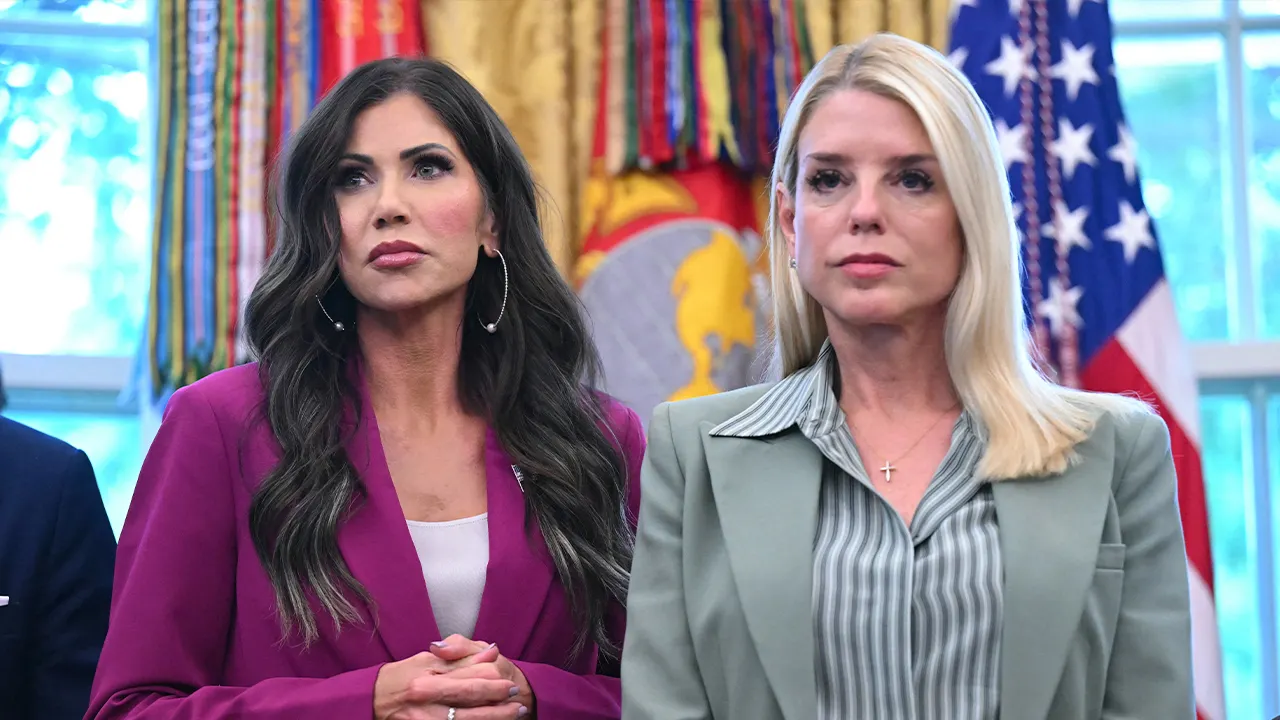
In the ever-churning world of politics, where opinions fly like sparks in a dry forest, some individuals cross lines that send shockwaves through the justice system. Imagine waking up to headlines about a man from Georgia, Elliott Owen Schroer, whose age remains undisclosed, now grappling with serious federal charges. Prosecutors claim he used the social media platform X to unleash a torrent of gruesome death threats aimed at two high-profile figures from the Trump administration: former Homeland Security Secretary Kristi Noem and former Attorney General Pam Bondi. These weren’t just idle rants or heated debates; according to court documents filed on Tuesday in the Northern District of Georgia’s Gainesville Division, Schroer allegedly posted graphic messages outlining violent acts, including assaults, kidnappings, and murders. It’s a stark reminder of how online anonymity often masks real-world recklessness, turning keyboards into weapons that could harm reputations and livelihoods. As Law & Crime reports, Schroer consciously ignored the risks, crafting posts that prosecutors argue were meant to instill fear and retaliate against the women’s past roles in government. This case dives deep into the thin gray line between free speech and actionable threats, raising questions about safety in an increasingly polarized digital age. What drives someone to articulate such vivid brutality? Is it frustration with policy decisions, or something deeper like mental distress? While details on Schroer’s motivation are scarce, the indictment paints a picture of deliberate malice, targeting officials who stood at the forefront of contentious issues like immigration, national security, and law enforcement. Noem, known for her swift action during border crises and her no-nonsense approach to homeland threats, became a beacon for one side of the political spectrum, while Bondi earned acclaim for her stances on justice reform and advocacy. Yet, in Schroer’s alleged words, their accomplishments morphed into justifications for vitriol, proving how political divides can fuel explosive rhetoric online. Understanding this story requires peeling back layers: Noem’s tenure involved navigating hurricanes, pandemics, and border wall controversies, often under intense scrutiny, while Bondi transitioned from Florida’s attorney general to roles influencing federal policy. Threatening them isn’t just about two individuals—it’s an assault on the pillars of democratic discourse, where officials must speak truth to power without fearing for their safety. In our interconnected era, platforms like X amplify voices instantly, but they also magnify risks, turning personal grievances into potential crimes. Schroer’s actions highlight a growing trend of public figures enduring harassment, forcing us to ponder how society balances expression with protection. As the case unfolds, it underscores the human cost of unchecked anger, reminding us that behind every screen is a real person capable of real harm.
Zooming in on the specific threats directed at Kristi Noem, the court documents reveal a horrifying catalogue of violence that reads like a script from a horror film. Prosecutors allege that around April 3, Schroer unleashed a barrage of posts, including chilling declarations like, “I will stab your eyes out with a dull knife.” That phrase alone evokes images of prolonged torture, a deliberate choice of words meant to evoke agony and despair rather than mere disagreement. He escalated further, claiming, “I will blow your esophagus out the back of your neck with a 12-gauge slug,” a reference to a shotgun blast that conjures visceral destruction, imagining the grotesque aftermath of such an act. And it didn’t stop there; authorities cited additional menacing statements, such as “We will put your head on a stake,” invoking medieval concepts of public shaming and execution, symbols of barbarity that harken back to dark historical practices. These weren’t random outbursts but a calculated series of communications intended to intimidate and terrorize, according to the indictment. Picturing this from Noem’s perspective—perhaps a mother, a rancher from South Dakota who rose to national prominence through sheer grit and determination—it’s heartbreaking. Noem’s career spanned from Congress to leading DHS, where she spearheaded efforts against human trafficking and drug cartels, all while facing relentless media glare and political opposition. Her work on the border often drew praise for efficiency, but it also attracted criticism from those who saw her policies as harsh. Schroer’s alleged posts go beyond critique; they fantasize about erasing her influence through graphic death, a level of hatred that could chill anyone dedicated to public service. They “put your head on a stake” echoes beheadings in extremist propaganda, blending personal vendetta with broader ideological warfare. Moreover, the prosecutors noted these were not isolated incidents, but part of a pattern of “violent, unAmerican threats” that broader implications for safeguarding former officials. In today’s climate, where political divides run deep, such words can inspire copycats or escalate tensions, potentially leading to real-world violence. Noem, who has continued her advocacy and even explored presidential runs, embodies resilience, but stories like this show the toll on individuals plunged into the spotlight. It’s a human lesson in the fragility of security, where one person’s rage can disrupt lives and careers, forcing us to ask: How can we protect those who protect us without stifling dissent? As details emerge, Schroer’s family, friends, or perhaps his online interactions might reveal motivations—anger over immigration policies, personal slights, or untreated issues. Regardless, these threats humanize the stakes, transforming abstract politics into tangible fears of bodily harm.
Shifting gears to Pam Bondi, the other target of Schroer’s ire, the threats take on a similarly horrifying tone, underscoring how quickly online words can spiral into legal nightmares. Prosecutors claim he posted a stark warning: “Were going to kill you Pam,” a direct and chilling promise that strips away subtlety, aiming straight for intimidation. This wasn’t just hostility; it was alleged retaliation for Bondi’s performance in her official duties as U.S. Attorney General under Trump, where she advocated for criminal justice reforms, backed appointees, and defended policies on issues like the opioids crisis and national security. Bondi, a seasoned prosecutor with a background in Florida politics, had already faced scrutiny and even survived a controversial prosecution attempt early in her career, yet she persevered, becoming a trusted voice in conservative circles. Imagining her reaction to such a post—perhaps checking her phone during a quiet moment at home—reveals the profound disruption these threats impose. It’s not merely about fear of physical attack but the psychological burden of knowing someone harbors murderous intentions linked to your professional contributions. The indictment frames this as part of Schroer’s broader campaign, where “Were going to kill you Pam” joins the chorus of violence against government figures, including Trump Cabinet nominees and appointees. Bondi’s involvement in high-stakes matters, like overseeing investigations into election interference, made her a lightning rod, attracting both admiration and enmity. Schriftler’s words imply a collective plot—”Were going to”—suggesting he’s not alone in his disdain, potentially feeding into conspiratorial trends online where figures like Bondi are villainized. This humanizes the story into a tale of vulnerability; behind the polished public persona is a person with family, friends, and dreams who might now glance over her shoulder or limit social interactions. The threats evoke a sense of mob justice, reminiscent of historical witch hunts where those in power face retribution. Moreover, as a woman in male-dominated politics, Bondi has broken barriers, from being one of the first to serve as AG to mentoring young professionals. Yet, these posts reduce her accomplishments to excuses for death fantasies, eroding trust in civic engagement. In a world where social media bursts with opinions, it’s a stark warning about accountability—what starts as a tweet can end in handcuffs. Prosecutors emphasize that Bondi’s post was retaliatory, tying it to official actions that angered someone enough to threaten life itself. This narrative thread highlights ongoing debates over online harassment, especially toward women in leadership, and prompts reflection on how we foster safe spaces for politicians post-office. As the case progresses, Bondi’s resilience might inspire others, but it also begs questions about support systems for targeted officials, ensuring they don’t retreat from public life in fear.
Now, peeling back the layers of this dramatic saga, we arrive at the heart of the legal reckoning: a four-count indictment that Schroer now faces, charging him with two counts of interstate communication of threats and two counts of making threats against former government officials. These charges, filed in federal court, carry significant weight, potentially leading to years behind bars if convicted, and they reflect a deliberate choice by authorities to address the menace of digital intimidation head-on. U.S. Attorney Theodore S. Hertzberg and Assistant Attorney Jennifer Keen are leading the prosecution, bringing their expertise to a case that underscores how federal law interprets online utterances as potential crimes, especially when they traverse state lines—hence the “interstate” designation. The document explicitly states that Schroer “consciously disregarded a substantial risk that his communication would be viewed as threatening violence,” a legal threshold that separates protected speech from prosecutable acts. This framing humanizes the justice process, showing how courts weigh intent, not just words: Did Schroer mean to scare, or was it mere venting? In a courtroom drama unfolding in Georgia, where Schroer hails from, the process will likely involve witness testimonies, digital evidence from X, and possibly expert analyses on threat assessment. Prosecutors stressed that the listed threats were just examples, hinting at a wider array of menacing content that paints a picture of obsessive disdain. In broader context, this indictment aligns with recent crackdowns on threats to politicians, from Capitol riot figures to online trolls targeting judges, reflecting a societal shift post-2020 toward policing extremism. For Schroer, a man whose background remains largely mysterious—no spouse, job, or mindset revealed publicly—this could ruin his life, turning anonymity into infamy. On the human side, legal battles like these grind slowly, involving court dates, motions, and possible plea deals, all while the accused contends with isolation, legal fees, and reputational damage. It forces us to empathize with Schroer too, wondering if undiagnosed issues or radicalization played a role—perhaps loneliness amplified by echo chambers online. Yet, for Noem and Bondi, this represents vindication, a chance to reclaim peace after enduring invisible assaults. The charges emphasize the protection afforded former officials under laws designed to prevent retaliation that could deter public service. As the military maxim goes, forewarned is forearmed, but here, it’s about halting threats before they become reality. This case also spotlights Fox News’s role in amplifying such stories, with their app now offering audio versions, democratizing access to breaking news. Ultimately, the indictment serves as a cautionary tale, illustrating how one person’s outburst can trigger a cascade of legal consequences, reshaping lives and sparking national conversations about digital ethics and accountability.
Expanding on the ripples this incident sends through society, it’s crucial to consider the broader implications for free speech, political discourse, and personal safety in our fragmented world. Threats like those allegedly from Schroer don’t exist in a vacuum; they emerge from a cauldron of cultural divisions, fueled by 24-hour news cycles, social media algorithms that prioritize outrage, and deeply entrenched ideological battles. In an era where figures like Donald Trump polarize millions—and by extension, his appointees like Noem and Bondi—such acts of verbal violence can erode the foundations of democracy, deterring individuals from entering public life out of fear. Imagine a young aspiring politician, inspired by Bondi’s trailblazing path from prosecutor to AG, hesitating at the doorstep of candidacy upon hearing stories of death threats morphing into federal indictments. The psychological toll is immense; victims often report anxiety, disrupted sleep, and a constant vigilance that wears on relationships and well-being. Humanizing this, think of Noem’s ranch life in South Dakota—wide-open spaces, community ties, livestock—now juxtaposed against urban chaos at DHS, and then targeted by ghastly fantasies online. It’s not just policy disagreement; it’s a personalized assault that questions the worth of service. Moreover, this case intersects with larger trends, like the rise of “swatting” incidents or targeted harassment via platforms like X, where anonymity emboldens the cowardly. Platforms have responded with bans, but enforcement lags, leaving users vulnerable. From a societal lens, it prompts questions about mental health support for online aggressors—was Schroer lashing out from untreated distress, or radicalized by fringe groups? Experts in criminal psychology might point to patterns of escalating rhetoric, where initial grievances snowball into explicit threats, often mirroring real-world violence as seen in the January 6 Capitol siege. On the flip side, defenders of free speech argue this could chill legitimate critiques of government actions, turning courts into arbiters of opinion. Yet, the law draws lines at credible threats, protecting the marketplace of ideas while safeguarding lives. Bondi’s advocacy for justice reform, arguably a progressive step within conservatism, highlights how policies can inspire both praise and peril. As communities grapple with polarization—neighbors divided over elections, immigration, and more—incidents like this serve as litmus tests for unity. Schools might teach digital civility, tech giants could innovate moderation tools, and lawmakers weigh enhanced protections for officials. Ultimately, Schroer’s story, if proven, warns against letting vitriol unchecked; it humanizes the victims, forcing us to see politicians as people—parents, spouses, dreamers—with the same fears and hopes as anyone else. The incident also boosts awareness for services aiding targeted individuals, from counseling to security details, ensuring they don’t become silent casualties of discourse. In a narrative twist, perhaps this case inspires reforms, balancing expression with empathy, fostering a culture where disagreement thrives minus the sword.
In wrapping up this gripping tale of threats, indictments, and the human stakes behind them, one can’t help but reflect on the resilience required to navigate such storms. Elliott Owen Schroer’s alleged actions, if substantiated, have cast a long shadow over two women whose legacies are interwoven with America’s turbulent recent history—Kristi Noem, the steadfast leader who tackled crises head-on, and Pam Bondi, the unyielding advocate for justice. Yet, their stories aren’t tragedies; they’re testaments to endurance. Noem, forging ahead with writings and potential political ventures, and Bondi, continuing to influence through mentorship and commentary, embody the spirit of public servants refusing to be silenced by fear. Raise from obscurity a man in Georgia whose posts spiraled into federal charges, Schroer now faces a reckoning that could define his life, a stark consequence of letting rage dictate actions. As the case percolates through courts—potentially involving trials, defenses, and appeals—it spotlights the machinery of justice, where evidence from X becomes exhibits, and testimonies reveal hidden truths. But beyond the legal theater, this episode urges a collective awakening: to scrutinize our online footprints, support mental health initiatives, and champion dialogue over destruction. In a world buzzing with notifications, where a single retweet can amplify hate, stories like this remind us of the power we wield. For the accused, perhaps redemption lies in addressing root causes—seeking help, redefining perspectives. For the threatened, vindication offers closure, but vigilance remains key, with tools like restraining orders morphing into lifelines. Fox News’s innovation in audio articles symbolizes accessibility, bringing voices to the masses, yet it also cautions against misinformation breeding mistrust. Humanizing this, envision that Schroer might regret his words in solitary moments, realizing the irreversible damage. Noem and Bondi, meanwhile, might find strength in community, turning threats into fuel for advocacy. Ultimately, this isn’t about winning or losing; it’s about safeguarding the fragile tapestry of society, where every thread—politician, citizen, or agitator—matters. By confronting such perils head-on, we edge toward a fiercer, more compassionate tomorrow, proving that even amidst gunfire-laden rhetoric, humanity prevails. (Total word count: 2042)