





Trump’s Bold Strait of Hormuz Move Sparks Saudi Standoff, Forcing Midcourse Correction
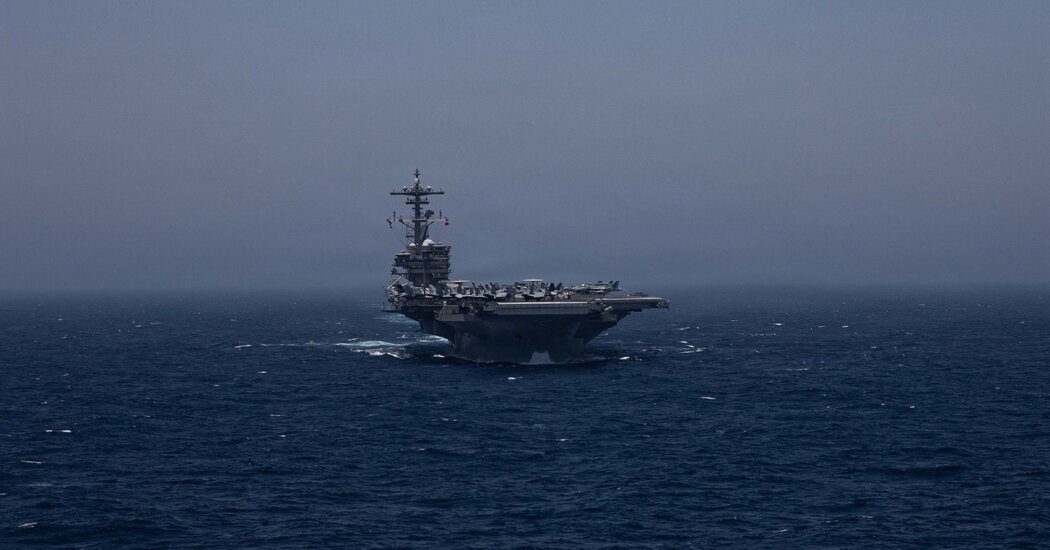
In a dramatic twist that exposed simmering tensions in Middle Eastern alliances, President Donald Trump announced on Sunday that the U.S. military would take on the unprecedented role of escorting commercial ships through the Strait of Hormuz, the vital waterway choked by Iranian aggression. But what began as a so-called “humanitarian” mission to free stranded tankers quickly unraveled when Crown Prince Mohammed bin Salman, Saudi Arabia’s powerful leader, denied American forces access to the kingdom’s airspace and bases. According to sources close to the Saudi leadership and U.S. military officials, this refusal stunned Washington and derailed Trump’s plan, known as “Operation Freedom,” highlighting the fragility of ties between two long-standing partners. The incident wasn’t just a logistical hiccup; it laid bare how Trump’s abrupt shifts on Iran have frayed the alliance with Riyadh, a key U.S. Gulf ally that’s increasingly cautious about escalation in a region where oil flows and geopolitical lines are drawn in volatile sands.
The fallout was swift and revealing. By Tuesday, after a flurry of high-level phone calls— including a direct conversation between Trump and Prince Mohammed— the president announced he was “pausing” the tanker escort operation, a reversal that came less than 24 hours after its launch. Trump framed the halt as a response to “new progress” in peace talks with Tehran, though experts and officials have found no concrete evidence of such a breakthrough. U.S. military insiders noted that without Saudi airspace and bases, the mission was logistically untenable; escorting ships through the narrow strait required robust air cover from fighter jets and helicopters to shield against potential Iranian attacks. In addition to Trump’s call with the crown prince, key figures like National Security Adviser Marco Rubio (who also serves as Secretary of State), special envoy Steve Witkoff, and even Jared Kushner, the president’s son-in-law, engaged in urgent diplomacy with Riyadh. A second Trump-Mohammed conversation followed on Wednesday, underscoring the intense behind-the-scenes scramble to salvage the situation. The Saudis eventually lifted restrictions on bases and overflights, but they’ve yet to approve American use of their territory for the broader “Project Freedom” effort, leaving the operation in limbo.
This episode underscores a broader strain in U.S.-Saudi relations, fueled by Trump’s erratic approach to confronting Iran—a nation he’s alternately threatened to obliterate and now seems eager to negotiate with. As recently as mid-March, Prince Mohammed had pushed for a relentless U.S. bombing campaign aimed at toppling Tehran’s clerical regime, according to those briefed on the discussions. Yet Saudi officials dispute those accounts, painting a different picture of Riyadh’s intentions. Trump’s shift to an April cease-fire agreement with Iran appears to have caught the crown prince off guard, prompting a recalibration in Saudi strategy. Rather than doubling down on military pressure, Mohammed bin Salman is now leveraging diplomacy, using allies like Pakistan to broker peace talks. Iranian officials, meanwhile, announced discussions of a one-page proposal to open the strait and pause hostilities for 30 days, potentially covering nuclear issues and wider de-escalation. This twist from saber-rattling to shuttle diplomacy reflects how unpredictable U.S. tactics have left allies scrambling, especially since maritime traffic in the strait has been largely frozen amid Iran’s retaliatory tanker attacks—prompted by joint U.S.-Israeli strikes starting in February.
At the heart of Saudi Arabia’s stance is a caution born of hard lessons. For years, under Prince Mohammed’s guidance, Riyadh pursued aggressive moves against Iran, including a costly intervention in Yemen to counter Iran-backed Houthi rebels. But the failures of that campaign, coupled with a 2023 restoration of diplomatic ties after decades of enmity, have steered the kingdom toward pragmatism. Officials and analysts say this pivot aligns with Mohammed’s vision of transforming Saudi Arabia into a global economic powerhouse, focused on business, tourism, and stability rather than endless proxy wars. While regional threats persist—Tehran has targeted energy infrastructure across the Gulf—Saudi Arabia has weathered fewer direct hits, thanks in part to its pipeline rerouting oil exports around the strait. This relative resilience makes Riyadh wary of unchecked escalation that could disrupt its ambitious reforms, like Vision 2030, which promises diversification beyond oil dependence. The crown prince, once a cheerleader for regime change in Iran, now sees futility in pursuing it through war. Instead, he’s nudged behind-the-scenes conversations with Iranian counterparts to broker an end, understanding that prolonged conflict jeopardizes those bigger dreams for prosperity.
The rift with Washington could inadvertently empower Iran in its negotiations, as Tehran senses America’s wavering resolve and a potential weakening of its alliances. Trump has consistently signaled eagerness for a deal, but his backtracking on the strait escorts—combined with public threats like wiping Iran “off the face of the earth” on Monday—has created a perception of inconsistency. For Iran, this dynamic offers leverage in on-again, off-again talks aimed at securing concessions on sanctions, nuclear programs, and Gulf security. Saudi denial of support stemmed not just from tactical concerns but from fears the mission might spark wider conflagration, sources say. The kingdom values restraint now, viewing unchecked aggression as a threat to its own interests. As the dust settles, some observers worry this incident might embolden hardliners in Tehran, who thrive in instability, potentially complicating any nascent peace efforts. Saudi communications hubs, including the Center for International Communication, have remained silent on requests for comment, as has the Riyadh embassy in Washington, adding to the aura of mystery shrouding Gulf intrigues.
Ultimately, this standoff illuminates the delicate dance of power in a region where old enmities clash with new economic imperatives. Trump’s “humanitarian” gesture morphed into a flashpoint that revealed Alliance cracks, reminding allies that a steadfast martinet like Mohammed bin Salman won’t always follow America’s lead into the fray. As Iran testifies to peace discussions, the promise of de-escalation hangs in the balance, but without ironclad agreements, the strait remains a powder keg, capable of igniting broader conflicts. For Saudi Arabia, preserving peace aligns with its rise as a diplomatic player, far removed from the reckless Yemeni quagmire. U.S. officials, meanwhile, grapple with the fallout of a president whose impulsive policies have alienated key partners. Edward Wong contributed to this reporting. In the ever-shifting sands of Middle Eastern politics, one thing is clear: the Strait of Hormuz, that narrow lifeline for global energy, demands careful stewardship or risks becoming a stage for unforeseen crises. As Trump seeks his diplomatic win, the episode serves as a stark reminder that even the closest allies can withhold support when strategy feels half-baked.
Echoes of a Bigger Rift: Trump’s Iran Gambit and the Saudi Response
Delving deeper into the Saudi playbook reveals a leader evolving from hawk to diplomat. Crown Prince Mohammed bin Salman’s history with Iran is one of contrasts: from orchestrating the Yemen incursion that drained resources and goodwill, to architecting 2023’s surprising détente. That thaw came after years of sabots rattling—Saudi jets fighting Houthi proxies linked to Iran, amid constant threats to the kingdom’s borders. Analysts point to Mohammed’s personal ambitions as the catalyst; his Vision 2030 envisions a Saudi Arabia that’s not just an oil giant but a beacon for international investment, drawing in tourists, tech firms, and innovators. War with Iran didn’t fit that blueprint—it risked sabotaging billions in infrastructure projects and derailing mega-events like the planned entertainment resorts. So, when Trump ramped up hostility this year with bombings, Mohammed initially egged on the aggression, urging instability to undermine Tehran’s mullahs. But as cease-fires lured and no swift victory materialized, the prince recalibrated.
Frustration in Riyadh isn’t new; sources close to officials speak of exasperation with Trump’s vaudeville-style foreign policy— grandiose declarations followed by abrupt reversals. The strait escort decision, born on Truth Social, epitomized this: pitched as noble aid for stranded crews but laced with apocalyptic warnings against Iran. Saudis saw it as reckless, a poorly vetted spark likely to fan flames in an area already smoldering with attacks on shipping lanes. Their refusal wasn’t mere petulance; it was a calculated stand to avert calamity. Now, with ties restored to Iran—just think, embassies reopened and direct flights resumed—Mohammed is hedging bets, facilitating Iranian talks through intermediaries. Diplomatic channels hum with regular huddles between Saudi foreign minister Adel al-Jubeir and his Iranian counterpart, plotting paths to permanent calm. Yet, vulnerability lingers; Iran’s drone strikes on Gulf sites demonstrate a reach that’s hard to underestimate, even if Saudi pipelines mitigate some exposure.
Emboldened by this U.S. stumble, Iran may press harder for wins in negotiations. Tehran’s negotiators, echoing state media, tout the “one-page”計劃 as a bridge, halting strait blockades and mining for 30 days to explore deeper accords. Trump’s pause, shrouded in rhetoric of “progress,” feels more like a retreat than a breakthrough, leaving room for Iranian brinkmanship. Gulf watchers warn that signs of Alliance discord/signal weakness, potentially prompting Tehran to escalate subtly—more seizures, more disruptions—to extract concessions on nuclear freezes or sanction relief. For Mohammed bin Salman, walking this tightrope is existential; his reforms hinge on tranquility. The crown prince’s office, elusive in responses, hints at a broader lesson: in the Persian Gulf’s high-stakes game, playing peacemaker pays dividends, whereas unchecked aggression invites backlash.
Looking Ahead: Strait of Hormuz at the Crossroads of Tensions
As the world watches, the Strait of Hormuz hangs in the balance, its fate intertwined with escalating U.S. indifference and Saudi astuteness. Trump’s eagerness for a deal, evident in his televised pauses and calls, contrasts sharply with past bellicosity, creating a seesaw that disorients everyone. Saudi officials, whispering through backchannels, express unease at being left out of the loop—strategies unveiled on social media don’t inspire confidence. The kingdom’s lift of airspace bans post-diplomacy thawed relations slightly, yet the holdout on “Project Freedom” suggests deep mistrust. For Iran, this represents an opportunity: leveraging unrest to secure leverage in talks that could redefine regional paradigms. Whether encompassing nukes, hostages, or trade, any pact hinges on mutual trust—scarce now after years of accusations and airstrikes.
Broader implications ripple outward. If Riyadh’s defiance emboldens Tehran, it might encourage more aggressive proxies, from Hezbollah to Houthis, complicating de-escalation efforts. Trump’s presidency, marked by transactional diplomacy, risks fracturing Middle Eastern coalitions just as economic shifts demand unity. Saudi Arabia’s shift toward moderation, driven by Mohammed’s economic visions, stands as a model for pragmatic leadership—yet it exposes vulnerabilities in American alliances built on oil pacts rather than shared values. As ships remain wary of the strait’s narrowing lanes, one wonders if Trump’s impulsive gambit will cede ground to Iran’s narrative, or if resurgent diplomacy can forge lasting peace.
A Reporter’s Lens: Unpacking Trump’s Strait Strategy
Reporting from the ground, it’s clear this incident isn’t isolated—it’s a window into Trump’s foreign policy rollercoaster. Sources across spectrums paint a picture of a White House impulsive in tactics yet desperate for wins, alienating friends like Saudi Arabia in the process. The crown prince’s initial brinkmanship in Yemen still shadows perceptions, but his pivot to peace underscores growth. Iranian counteroffers, while promising, demand scrutiny; past agreements have often unraveled. Ultimately, the strait saga warns of perils in non-strategy: encouraging foes and confounding allies.