





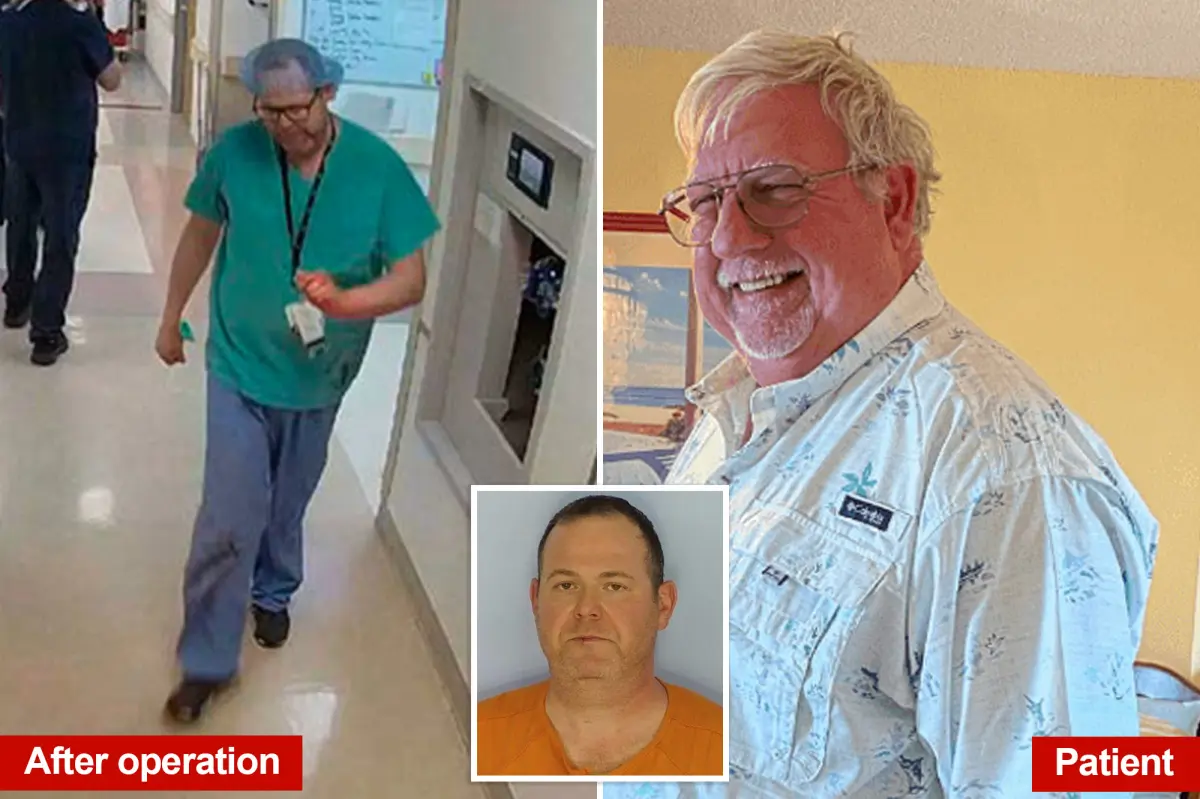
Dr. Thomas Shaknovsky was just an ordinary surgeon in Florida, dedicated to helping patients through complex operations, until that fateful day in August 2023 when everything unraveled in a way he could never have imagined. At 44 years old, his life was consumed by the rigors of general surgery, but now, he’s grappling with the aftermath of a botched procedure that led to the death of his patient, William Bryan, a 70-year-old man from Muscle Shoals, Alabama. Shaknovsky, facing unimaginable pressure, admitted under oath during a deposition that during what was supposed to be a routine laparoscopic splenectomy—removing the spleen—things went horribly wrong. As William bled out from an unknown source in his abdomen, amid a frenzied attempt to save his life, Shaknovsky confessed he couldn’t distinguish between the spleen and the liver because he was so distraught. In that moment of chaos, with the patient’s enlarged colon obstructing his view and blood filling the field, doctors on his team were performing chest compressions to restart William’s pounding heart. The family, holding onto hope, trusted these medical professionals with their loved one’s health, unaware of the dawning tragedy.
The surgery, which began as an attempt to address an abnormality in William’s spleen, escalated into a life-or-death ordeal. Imagine the sterile environment of the operating room at Ascension Sacred Heart Emerald Coast Hospital, the beeps of monitors piercing the air, the hiss of equipment, and the focused yet panicked voices of the team. Shaknovsky described how complications arose unexpectedly: blood pooling in the abdomen, visibility impaired, and the patient’s colon barring easy access to find the source of the bleeding. Switching from the minimally invasive laparoscopic approach to a riskier open surgery seemed necessary for better control, but it only compounded the risks. In the heat of it all, with seconds feeling like hours, he made errors—snipping and stapling vessels around the liver, unaware of his mistake—that led to catastrophic hemorrhaging. William’s heart arrested, and despite efforts to revive him, the damage was irreversible. Shaknovsky’s voice during the deposition was laced with regret, as he spoke of how demoralizing it is for any surgeon to lose a patient on the table, the weight of what “could have been” crashing down like a tidal wave. For Beverly Bryan, William’s widow, this wasn’t just a medical mishap; it was a heartbreaking loss of her companion of many years, robbed of future memories together.
Shaknovsky, in his own words, revealed the profound emotional scars this incident etched into his soul, a testament to the human fragility even healers face. “I can’t explain what it’s like to lose a patient like that—how devastating it is,” he testified, his tone cracking under the scrutiny. Upset and overwhelmed by the multiplying emergencies, he admitted he couldn’t tell the spleen from the liver, a confusion born not of ignorance but of sheer panic. This event, he said, marked him forever, creating a burden he’ll carry every single day, haunting his thoughts like a persistent shadow. As a father, a husband, and a doctor now without his license, Shaknovsky’s life was transformed overnight from one of purpose to one of quiet introspection and shame. He expressed deep regret, calling it an “incredibly unfortunate event” that traumatized him irreparably. For Beverly, hearing these admissions must have stirred a mix of anger and sorrow—anger at the deception and loss, sorrow for a man whose error cost her husband his life. It’s a reminder that behind every surgical mistake are real people, families shattered, and professionals grappling with guilt that no apology can fully mend.
William and Beverly Bryan’s story began innocently enough, as a couple from Alabama embarking on a trip to Florida, enjoying perhaps a slice of paradise away from home. But stomach pain brought them into the emergency room, where doctors, including Shaknovsky, diagnosed an issue with William’s spleen and urged immediate surgery on August 21. Trusting the expertise before them, they agreed, never anticipating the nightmare that followed. According to the malpractice and wrongful death lawsuit filed by Beverly, Shaknovsky removed the liver instead of the spleen, leading to immediate blood loss that ended William’s life. The horror deepened when, post-surgery, the doctor allegedly tried to conceal the error by labeling the excised organ as the spleen and fabricating explanations—that the spleen was massively enlarged and had “migrated” to the wrong side, despite the livers in question being significantly heavier. Beverly, left to mourn alone, described in court papers the pain of discovering the truth only after autopsy, feeling betrayed by the very people who vowed to heal.
Peeling back further, the allegations paint a disturbing picture of Shaknovsky’s actions and omissions that compounded the tragedy. Authorities, mounting a criminal case, accused him of fatal mistakes: failing to summon backup despite the escalating crisis, persisting with risky procedures, and then orchestrating a cover-up by misidentifying the organ to evade accountability. This wasn’t his first brush with legal trouble; documents reveal a prior malpractice suit from years before, where he was involved in the death of another 70-year-old woman who succumbed to sepsis after he removed a mass during surgery. That case was settled quietly for an undisclosed sum, but it raised red flags about patterns in his practice. For Shaknovsky, now stripped of his medical license and working as a Lyft driver, these revelations must evoke a swirl of defensiveness and despair, knowing his past haunts him. Beverly’s lawsuit demands justice, compensation for the irreplaceable loss of her husband, and accountability to ensure no one else suffers similarly. It’s a human story of fallibility, where one man’s fear led to another’s ultimate sacrifice.
In the end, the legal reckoning looms large, as Shaknovsky faces arraignment on May 19, charged with second-degree manslaughter and potentially up to 15 years in prison if convicted. From a thriving surgeon to someone answering phones in a rideshare car, his fall from grace underscores the unforgiving nature of errors in high-stakes professions. For families like the Bryans, this tragedy has shattered lives—siblings, children, friends all lamenting the void left by William. Beverly continues to fight through her grief, seeking closure in the courtroom, while Shaknovsky navigates his own arena of remorse and fear, aware that this one day in the operating room has redefined everything. It’s a poignant reminder of the trust we place in doctors, the humanity in mistakes, and the enduring quest for healing that follows immense loss, reminding us all of our shared vulnerabilities in an imperfect world.