





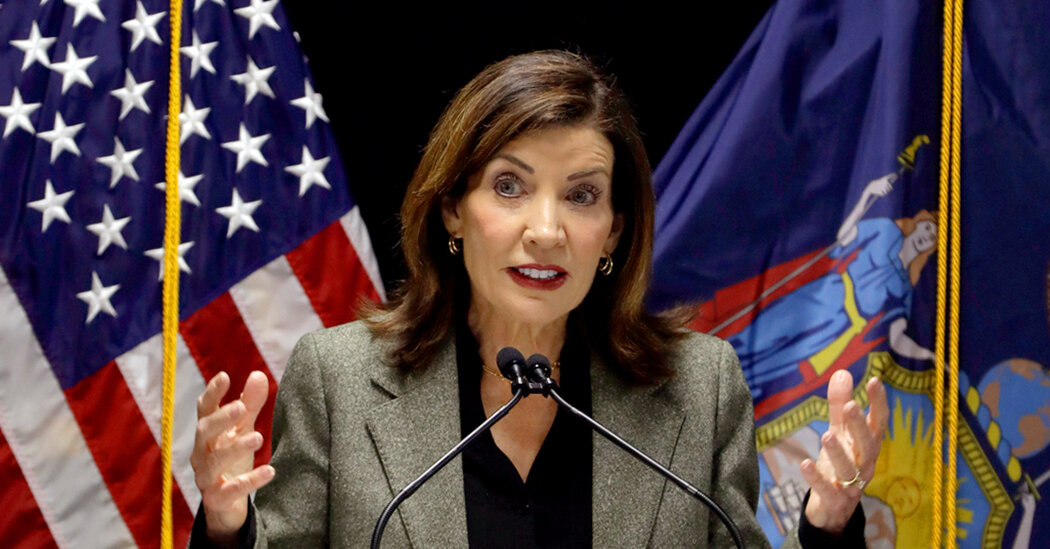
Governor Kathy Hochul stood in front of a crowd in Albany last Thursday, her voice steady but carrying the weight of months of grueling negotiations, as she unveiled the outline of New York State’s massive $268 billion budget deal. After weeks of delays—more than five, in fact—the plan was finally taking shape, promising a mix of bold initiatives and tough compromises that reflected the state’s diverse needs and mounting pressures. At its core, the budget aimed to address everyday struggles like skyrocketing living costs, child care shortages, and the impacts of federal immigration policies, while navigating the choppy waters of political rivalries and special interest lobbies. “This wasn’t easy,” Hochul admitted, her words echoing the frustrations of leaders from the Assembly and Senate who had pushed back hard on various points. Assembly Speaker Carl Heastie later clapped back, claiming it was “premature” to call it a deal, while Senate Democrats echoed that only “big concepts” were agreed upon. Still, the governor pressed on, highlighting how this framework could ease burdens on working families while tackling long-standing issues like climate goals and insurance rates. For working-class New Yorkers, especially in booming cities like New York City, the budget offered a glimmer of hope amid economic uncertainty.
One of the standout features was the fresh push on child care, with a whopping $4.5 billion earmarked to expand services statewide. This wasn’t just about meeting needs— it was personal for Hochul, who framed it as a way to support mothers and fathers juggling jobs and family. In the city, Mayor-elect Zohran Mamdani, fresh from his upset victory on a progressive ticket, saw this as a step toward making pre-K and 3-K universal for kids under five, plus pilot programs for 2-year-olds. It symbolized an unlikely alliance between Hochul’s pragmatic centrism and Mamdani’s left-leaning ideals, bridging gaps that once seemed insurmountable. But even with this boost, the city faces a gaping $5.4 billion deficit, and Hochul made it clear that more cuts from local leaders would be essential. On the economic front, the budget included $1.5 billion in extra state aid to New York City, plus targeted tax breaks like exempting up to $25,000 in tips from state taxes for earners up to $150,000 annually, mirroring federal changes. Utility rebates worth $1 billion were promised to help with energy bills, and $15 billion in reserves would provide a safety net. Environmentally, however, the deal took a step back, delaying climate goals to 2028 and tweaking methane calculations to make compliance easier—a move critics called a betrayal of the state’s 2019 climate law under environmental groups, but Hochul defended as realistic in a world of fossil fuel dependencies and federal hurdles like the shuttering of the Indian Point nuclear plant.
Then there was the immigration package, a defiant stand against the Trump-era crackdown that had strained communities nationwide. The budget would bar ICE agents from donning masks to conceal identities—a nod to civil liberties that drew cheers from advocates—and forbid cooperation agreements with federal immigration officials without warrants for searches in homes, schools, or hospitals. Critically, it didn’t touch normal law enforcement coordination on crime, ensuring public safety remained intact. For New Yorkers worried about their neighbors and friends facing deportation fears, this felt like tangible protection. Hochul positioned it as a moral imperative, countering policies that she argued dehumanized millions. But opposition came swift, with Republican challenger Bruce Blakeman calling the whole budget a “triple threat” of higher taxes, unchecked spending, and surging utility costs—words that resonated with suburban voters in places like Nassau County, where ICE support ran strong.
Hochul’s efforts also extended to housing and transportation, areas where everyday frustrations boiled over. She fought for streamlining environmental reviews, making it faster to build homes in urban areas and curb sprawl. This was pitched as essential for combating homelessness and high rents, appealing to younger renters and families priced out of the market. On the roads, a contentious auto insurance overhaul capped payouts for pain and suffering in accidents, especially for uninsured or impaired drivers, aiming to lower premiums that had climbed to among the nation’s highest. Companies like Uber backed this hard, pouring money into lobbying, but trial lawyers fought tooth and nail, accusing Hochul of sneaking changes through budget bills to sidestep public debate. In the end, compromises narrowed “serious injury” categories and limited emotional distress claims to $100,000—a win for drivers, they argued, though victims’ advocates fretted about fairness. Tied to this, New York City got new tools against reckless drivers: speed-limiting devices could be installed on vehicles of frequent “super-speeders” in school zones, targeting just 14,600 cars citywide, drawing on tech already used on municipal vehicles for safe streets.
Perhaps the most divisive element was the new tax on multimillion-dollar second homes in New York City, a plot twist straight out of Hochul’s evolving political playbook. For years, she’d blocked wealth taxes, fearing a flight of rich residents and businesses. But with populist winds blowing after Mamdani’s win and whispers of federal cuts, she pivoted, targeting “pieds-à-terre” owned by out-of-town millionaires. The tax, slated to rake in $500 million yearly, would feed directly into closing the city’s budget gap, helping fund essentials like schools and infrastructure without broad income hikes. Details were sparse—rates, thresholds, exceptions—but the intent was clear: make the ultra-wealthy shoulder more, echoing national Democratic shifts toward taxing affluence amid inflation woes and midyear elections. Hochul vowed to flesh it out soon, but skeptics wondered if it would spark legal battles or prompt elites to decamp to estates in the Hamptons or beyond.
Wrapping it all up, Hochul spun the budget as a testament to inclusive leadership, balancing progressive dreams with fiscal prudence. “This is reality over idealism,” she declared, pushing back at green groups over climate delays. For her reelection bid against Blakeman, it positioned her as a doer, delivering on promises in a state bruised by pandemics, migrations, and inequities. Yet, as Assembly leaders like Heastie reminded, the ink wasn’t dry—senior lawmakers still haggled over totals and tweaks, with Assembly refusing to let talk turn into action without final votes. New York City’s Mayor Mamdani, watching from the sidelines, expressed cautious optimism, grateful for the unprecedented support but hinting at more work ahead. In the end, this budget wasn’t just numbers on a page; it was a living tapestry of hopes, fears, and hard-won agreements, shaping the future for millions of New Yorkers navigating a post-pandemic world. As debates raged on, one thing was certain: the Empire State was trying to rebuild, one policy at a time, even if it meant stepping on toes along the way. With contributions from reporters Stefanos Chen and Dana Rubinstein illuminating the backstory, the story underscored how politics in Albany remained a rollercoaster—messy, money-laden, and deeply human.