

1. On a Monday afternoon that began like so many others at Six Flags Over Georgia, the carefree sounds of summer were shattered by tragedy. Just before 4 p.m., an incident involving the Goliath roller coaster, one of the park’s most towering and thrilling attractions, claimed the life of a guest and left several others injured, according to the Cobb County Police Department. What had been a day of anticipation, laughter, and the simple joy of a theme park outing turned in an instant into a scene of chaos, fear, and profound grief. The police confirmed the death but offered few immediate details, leaving families, park employees, and the wider community to grapple with the unsettling reality that a place built for fun could become the setting for such heartbreaking loss. The victim, whose identity was not immediately released, was a guest enjoying the same experiences that thousands of others had enjoyed before—waiting in line, climbing into a seat, feeling the anticipation build before the rush of speed and height. No one could have imagined that this ride, designed to deliver thrills within carefully engineered limits, would end in such a devastating way. The news rippled quickly across local news outlets and social media, with many expressing shock and sorrow. For the families present, the afternoon would never be forgotten; for the first responders called to the scene, the image of what they encountered would linger. And for the park itself, a place synonymous with childhood memories and weekend excitement, the day became a solemn reminder of how fragile life can be, even in the midst of joy. The investigation was only beginning, but already the questions weighed heavily: How could this happen? What went wrong? And how does a community begin to heal from a loss so sudden and so public?
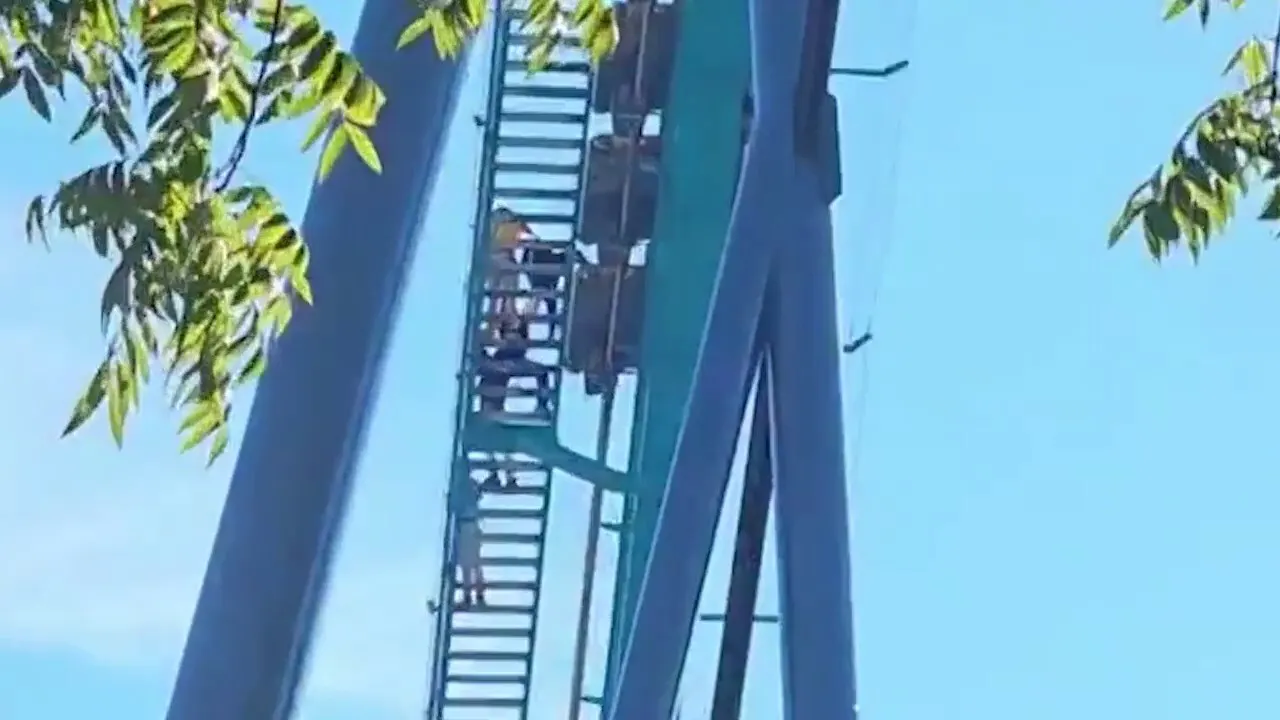
2. The horror of the moment became even more visceral through the accounts of witnesses who were present when the tragedy unfolded. One witness described a man falling from the ride, an image that will likely haunt everyone who saw it. In a chilling detail, another witness told local station WXIA that the man appeared in their souvenir photo as he fell. “He was in our pictures,” the witness said, their voice carrying the weight of disbelief. “He fell and hit the car three different times.” The words paint a grim picture of an event that unfolded in seconds but felt like an eternity. The Goliath coaster, standing roughly 200 feet tall, had been in motion when the incident occurred, and the sudden halt of the massive ride left passengers stranded high above the ground. Emergency crews worked quickly to evacuate those still seated in the coaster cars, but the process was slow and harrowing. Video from the scene showed riders climbing out of their seats and carefully making their way down a narrow staircase that seemed to stretch endlessly above the park, with nothing but open air around them. Each step was a reminder of how high they were and how close they had come to danger. For the riders, the trauma did not end with the fall; they had to sit suspended in the air, looking down at the scene below, waiting for help to arrive. The psychological scars of that experience—the sight, the sounds, the uncertainty—would not fade quickly. Witnesses on the ground described screams and panic, followed by an eerie silence as the reality of what had happened began to sink in. The park, usually filled with the music of carnival games and the excited chatter of visitors, became a place of hushed voices and tearful embraces. Parents clutched their children a little tighter, strangers reached out to comfort one another, and the ordinary rhythms of a day at the amusement park gave way to something far more somber.
3. In the aftermath, Six Flags Over Georgia issued a statement that reflected the deep sadness of the moment. “We are deeply saddened by the guest incident at our park today,” the spokesperson said. “Our thoughts and heartfelt condolences are with the guest’s family, friends, and loved ones. We are also providing support to the guests and team members affected.” The language was measured and careful, but the emotion behind it was unmistakable. A company that builds its reputation on creating happiness found itself in the impossible position of addressing a death on its property. The statement continued, “The park team and local authorities responded immediately, and we are cooperating fully with local authorities as they complete their investigation. Out of respect for the family’s privacy, we will not be sharing additional details at this time.” These words, while necessary, could only do so much to ease the pain of those who had witnessed the tragedy or who had lost a loved one. The promise of cooperation with investigators was important, but for the family of the victim, no investigation could bring back what was lost. The support offered to guests and team members acknowledged that the emotional impact of such an event extends far beyond those directly involved. Ride operators, security staff, and other park employees who were on duty that day would carry the weight of the incident with them, likely for years to come. They had been trained to handle emergencies, but no amount of training can fully prepare a person to witness the death of a guest in the midst of what was supposed to be a joyful experience. The company’s decision to refrain from sharing additional details, while respecting the family’s privacy, also left the public with many unanswered questions. But in the early hours after such a tragedy, the focus was not on answers—it was on grieving, on supporting one another, and on finding a way to move forward through the shock and sorrow.
4. The ride at the center of this tragedy, Goliath, is not just any roller coaster. According to the park’s website, it is a hypercoaster that reaches speeds of up to 70 miles per hour and peaks at an elevation of 200 feet. Its layout includes a 170-foot initial drop, a secondary drop of 175 feet, a 540-degree spiral, and forces that press riders with up to 4 Gs. It is a ride designed to push the boundaries of human sensation, to make riders feel as though they are defying gravity, if only for a few minutes. For thrill-seekers, Goliath represents the pinnacle of amusement park excitement—a chance to scream, to laugh, to hold on tight and surrender to the rush. The sheer scale of the coaster is part of its appeal; standing at its base, looking up at its towering structure, one cannot help but feel a mix of awe and nervous anticipation. The ride is a centerpiece of the park, drawing visitors from near and far who come to test their courage. But on that Monday afternoon, the same elements that made Goliath so thrilling—its height, its speed, its intensity—became factors in a tragedy that no one could have anticipated. The very features that made the ride an attraction also made the emergency response more complex. When the ride stopped, passengers were left at heights that made evacuation difficult and dangerous. The 200-foot drop that would normally have been the highlight of the ride became a source of fear, and the 4 Gs that would have pressed riders into their seats became a reminder of how much power the machine held. The contrast between the ride’s intended purpose and what actually happened is almost too much to process. For those who had ridden Goliath before, the memory of the ride would now be tinged with sorrow. For those who had never ridden it, the incident might serve as a reminder that even the most carefully engineered attractions carry an inherent risk, however small. The roller coaster is a symbol of human ingenuity, a testament to our ability to create experiences that defy expectation. But it is also a machine, and machines, no matter how well designed, can fail in ways that break the heart.
5. Amusement park accidents are rare, but when they occur, they capture the public’s attention in a way that few other incidents can. There is something deeply unsettling about the idea of danger in a place designed for leisure and escape. Theme parks are spaces where families go to celebrate, to bond, to create memories that will last a lifetime. The thought that a day of joy could turn into a day of loss is almost too much to bear. This incident at Six Flags Over Georgia is not the first tragedy to strike an amusement park, and it will not be the last, but each one is a reminder of the need for vigilance, safety, and accountability. In the wake of the accident, investigators from the Cobb County Police Department and other agencies would begin the painstaking work of determining what happened. They would examine the ride’s mechanical systems, review maintenance records, interview witnesses, and analyze video footage. They would look for any sign of negligence, any flaw in design, any error in operation that could explain how a person fell from a roller coaster that was supposed to keep them secure. The investigation would take time, and the answers would not come easily. But for the family of the victim, the wait would be agonizing. They would want to know why their loved one was taken from them, and they would need to find a way to make sense of something that seemed senseless. The broader amusement park industry would also be watching closely, aware that an incident like this could have implications for safety standards and regulations across the country. Parks routinely conduct inspections and adhere to strict guidelines, but the pressure to ensure that such a tragedy never happens again would now be even greater. For the witnesses, the investigation would provide some answers, but it could not erase the images seared into their minds. The man in their souvenir photo, the sound of the impact, the sight of riders stranded in the sky—these would remain with them, a permanent reminder of a day that changed their lives forever.
6. In the days and weeks that follow, the community around Six Flags Over Georgia will have to find a way to heal. The park itself may reopen, and life may eventually return to something resembling normalcy, but the memory of what happened on that Monday afternoon will not easily fade. For the family and friends of the victim, there will be a long road of grief ahead, a journey marked by questions, anger, and the slow, painful process of acceptance. The support of the community, the condolences of strangers, and the prayers of those who heard the news may offer some comfort, but they cannot fill the void left by a sudden and tragic loss. For the witnesses, there will be sleepless nights and anxious moments, times when the memory of the fall comes rushing back without warning. For the park employees, there will be the difficult task of returning to work in a place that now holds a painful memory. But even in the midst of this darkness, there is room for compassion and humanity. Strangers reached out to one another in the aftermath of the incident, offering comfort and support. First responders did their jobs with professionalism and care, putting their own emotions aside to help those in need. The Six Flags team moved quickly to assist, even as they mourned. These acts of kindness, small and large, are what carry us through the hardest moments. They remind us that even when tragedy strikes, we are not alone. The investigation will continue, and eventually, there will be answers. But answers are not the same as healing. Healing takes time, and it takes the willingness of a community to come together, to acknowledge the pain, and to hold space for one another. The Goliath roller coaster, once a symbol of excitement and adventure, will forever be associated with this tragedy in the minds of those who were there. But perhaps, in time, the park and its visitors can find a way to honor the memory of the one who was lost, to remember that behind every ride, every statistic, every thrill, there is a human life. And that life, with all its hopes and dreams, deserves to be remembered with dignity and love. As the sun sets on that somber day, the hearts of many are heavy, but the spirit of community remains strong. And in that, there is a glimmer of hope, a reminder that even in our darkest moments, we can find a way to carry on together.