




The Belfast Stabbing and the Battle for Peace in a Digital Age
The Shadows of North Belfast: A Midnight Encounter Translates into National Crisis
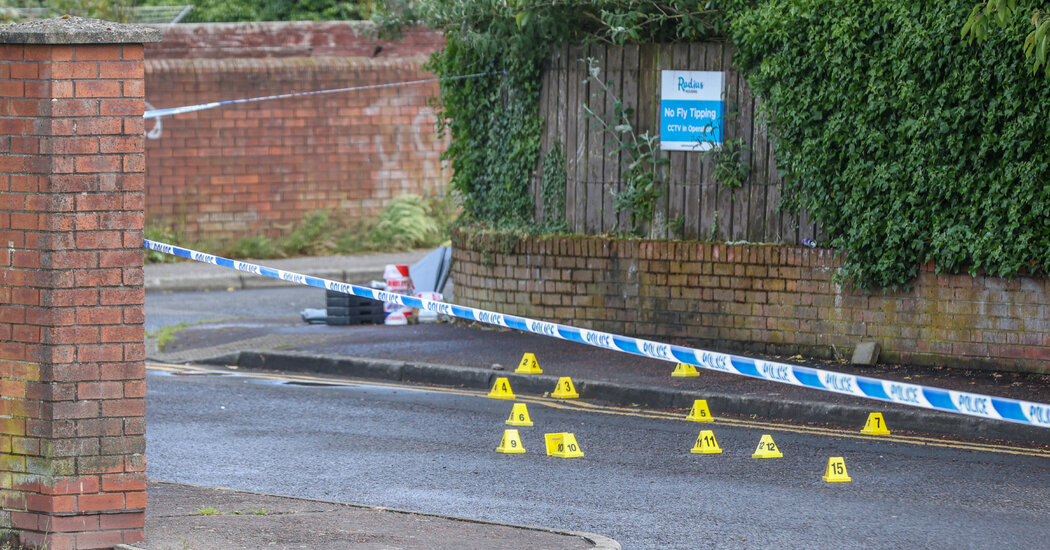
Under the damp, amber glow of streetlights outside a quiet apartment complex in northern Belfast, a brutal late-night altercation quickly transformed from a local emergency into a flashpoint of international political theater. It was approximately 10:30 p.m. on Monday when the Police Service of Northern Ireland (PSNI) responded to urgent calls detailing a horrific knife attack that left an unidentified man in his 40s fighting for his life in a local hospital. Officers arrived within minutes to discover a scene of startling violence, arresting a 30-year-old suspect who was subsequently charged with attempted murder. Initially misidentified by police as a Somali national—a clerical error that was corrected by midday Tuesday—the suspect was later confirmed to be a Sudanese citizen who had been granted legal refugee status in the United Kingdom the previous year. As the victim undergoes intensive medical treatment for severe facial lacerations, deep slash wounds across his back, and catastrophic injuries to his eyes, the incident has instantly reverberated far beyond the physical boundaries of Belfast. For a community still carrying the psychological and physical scars of decades of civil unrest, the specialized response of the police—led by Assistant Chief Constable Ryan Henderson—underscores a desperate institutional effort to maintain public safety while detectives scramble to determine the exact motive behind an attack that has sent profound shockwaves through the local population.
   [Monday Night Stabbing in North Belfast]
                     │
                     ▼
    [Viral Social Media Video of Attack]
                     │
     ┌───────────────┴───────────────┐
     ▼                               ▼
[Far-Right Exploitation] [Calls for Civic Calm]
- Nigel Farage demands – PM Starmer & Hilary Benn
suspect status details warn of exploitation - Online mobilization – O’Neill & Little-Pengelly
of street protests reassure ethnic minorities
and appeal to peace
The Digital Crucible: How Viral Violence and a Hurley Frame a Modern Spectacle
The immediate horror of the physical assault was almost instantly translated into a digitized collective trauma as graphic video footage of the encounter erupted across global social media networks, bypassing traditional editorial filters to fuel immediate public fury. The deeply disturbing recording captures a deeply intimate and visceral struggle: a man mounted squarely on the chest of a bloodied victim, his hands moving frantically around the older man’s throat and face while onlookers cry out in terror. In a striking intervention that has since become a major point of discussion across Northern Irish society, a brave bystander is seen rushing toward the assailant, repeatedly striking him with a hurley—the heavy, traditional ash-wood stick used in the ancient Irish sport of hurling—in a desperate bid to disrupt the life-threatening assault. While this display of raw civic intervention successfully halted the immediate violence, the unvarnished clip rapidly became a weapon of information warfare online, eagerly seized upon by political commentators, local agitators, and international far-right networks to bypass police updates and inflame public anger. Recognizing the highly volatile nature of this digital ecosystem, Assistant Chief Constable Henderson issued an urgent appeal to the public on Tuesday, urging social media users to exercise restraint and deep caution regarding what they share, pointing out that online speculation, misinformation, and the sensationalism of real-world violence threaten to compromise the fairness of the judicial process while needlessly terrifying vulnerable local communities.
The Corridor of Power: Westminster’s Desperate Plea for National Calamity Avoidance
In the political heart of London, the fallout from the Belfast stabbing was met with immediate, high-level condemnation, reflecting a deep-seated fear within the British government that localized violence could once again spark wider civil unrest. Prime Minister Sir Keir Starmer took to social media to brand the knife attack as utterly “sickening,” sternly asserting that his administration harbors absolutely zero tolerance for such barbaric acts of violence on British streets. Meanwhile, Hilary Benn, the Secretary of State for Northern Ireland, addressed a tense House of Commons on Tuesday, reminding lawmakers of all political persuasions that they carry a collective moral responsibility to de-escalate tensions rather than stoke them. Benn specifically cautioned against dangerous attempts to utilize this tragedy as a political football to inflame xenophobia and trigger copycat riots across Northern Ireland, a region where the memories of street-level disorder are never entirely dormant. The cabinet minister’s direct plea served as a sober acknowledgment of the fragile peace holding the UK together, emphasizing that when public anxiety is high, responsible leadership must actively work to neutralize the rhetoric of division before it manifests as physical violence outside communities already feeling deeply vulnerable.
Borders, Status, and the Weaponization of the Common Travel Area
The controversy surrounding the assault took on a much more complex geopolitical dimension on Tuesday afternoon when the Home Office officially confirmed that the Sudanese national in custody had entered the UK in 2023, where he was quickly granted official refugee status with legal residency permitted until 2028. Crucially, the suspect claimed to have entered British territory via the Common Travel Area—the historic, open-border zone that facilitates passport-free travel between the Republic of Ireland and the United Kingdom, of which Northern Ireland remains a part. This detail immediately injected fuel into the ongoing, highly polarized British immigration debate, especially when contrasted against recent violence elsewhere in the country, such as the fatal stabbing of Henry Nowak in Southampton, which became heavily politicized after footage of his arrest went viral and right-wing figures like Reform UK leader Nigel Farage alleged systemic institutional biases. Farage was quick to leverage the Belfast incident as well, using social media to challenge the government with demands for the immediate public disclosure of the attacker’s identity and immigration history under the banner of the public’s “right to the truth.” This collision of international human migration, open-continent border policies, and right-wing political messaging highlights how easily a localized crime in Belfast can become entangled in a much larger debate about national sovereignty, border control, and the perceived failures of modern asylum systems.
Echoes of the Troubles: A Historic Peace Confronts the Friction of Global Migration
To fully understand the volatile environment in which this stabbing occurred, one must look at the specific geography of northern Belfast—a district historically defined as a crucible of the Troubles, where sectarian divisions between Catholic nationalists and Protestant unionists once routinely erupted into deadly violence. Over the quarter-century since the signing of the Good Friday Agreement, this embattled cityscape has gradually transformed, evolving into an increasingly diverse, multicultural hub that welcomes new populations from around the globe, from East Africa to the Middle East. However, this transition from old-world sectarian tribalism to a modern, multicultural landscape has brought its own unique demographic adjustments, making the area a highly sensitive space where historical anxieties are easily mapped onto contemporary debates over immigration and cultural change. As far-right groups and anonymous online accounts attempt to draw battle lines between long-term residents and newly arrived asylum seekers, the threat of renewed street-level mobilization looms large over these working-class communities, threatening to disrupt decades of carefully maintained, hard-won reconciliation with a new wave of racially motivated hostility.
   [Historic Sectarian Divide] ──► (Catholic vs. Protestant)
                                           │
                                           ▼
[Post-1998 Transition to Multiculturalism] ──► (Global Migration Integration)
│
▼
[Modern Digital Provocation] ─────────► (Risk of New Civil Friction)
Guardians of the Peace: Power-Sharing Leadership Unites Against Faceless Agitators
Faced with the threat of imminent street protests and a rising tide of online hostility, Northern Ireland’s unique power-sharing executive presented a resolute, unified defense of their society, demonstrating a shared commitment to protect vulnerable communities from outside manipulation. First Minister Michelle O’Neill of Sinn Féin appealed directly to the public for calm, urging residents to ignore anonymous, “faceless” orchestrators on social media who are actively trying to incite hatred in a region they do not truly care about, while Deputy First Minister Emma Little-Pengelly of the Democratic Unionist Party issued an emotional reaffirmation of safety to Northern Ireland’s ethnic minorities, insisting that everyone, regardless of nationality or background, deserves to feel secure and valued. Their joint political stance was backed up on the ground by the PSNI, which deployed an increased, highly visible police presence across Belfast on Tuesday evening to deter any potential rioting or unauthorized demonstrations. Ultimately, the aftermath of this brutal event has laid bare a profound struggle between two very different visions for Northern Ireland: one championed by local leaders seeking to preserve a fragile, diverse peace, and another driven by digital opportunists eager to turn a localized tragedy into a flashpoint for wider social conflict.
Comparative Context: Recent UK Public Order Incidents
| Location | Incident/Trigger | Key Political Fallout | Community Response |
|---|---|---|---|
| Belfast (Current) | Knife attack by Sudanese refugee on local resident. | Calls for Common Travel Area reform; joint condemnation by power-sharing executive. | Increased police presence; strong warnings against anti-immigrant exploitation. |
| Southampton | Death of Henry Nowak; delayed release of arrest footage. | Accusations of policing biases by right-wing lawmakers; heightened racial tensions online. | Outbreak of localized overnight street protests and minor clashes. |