





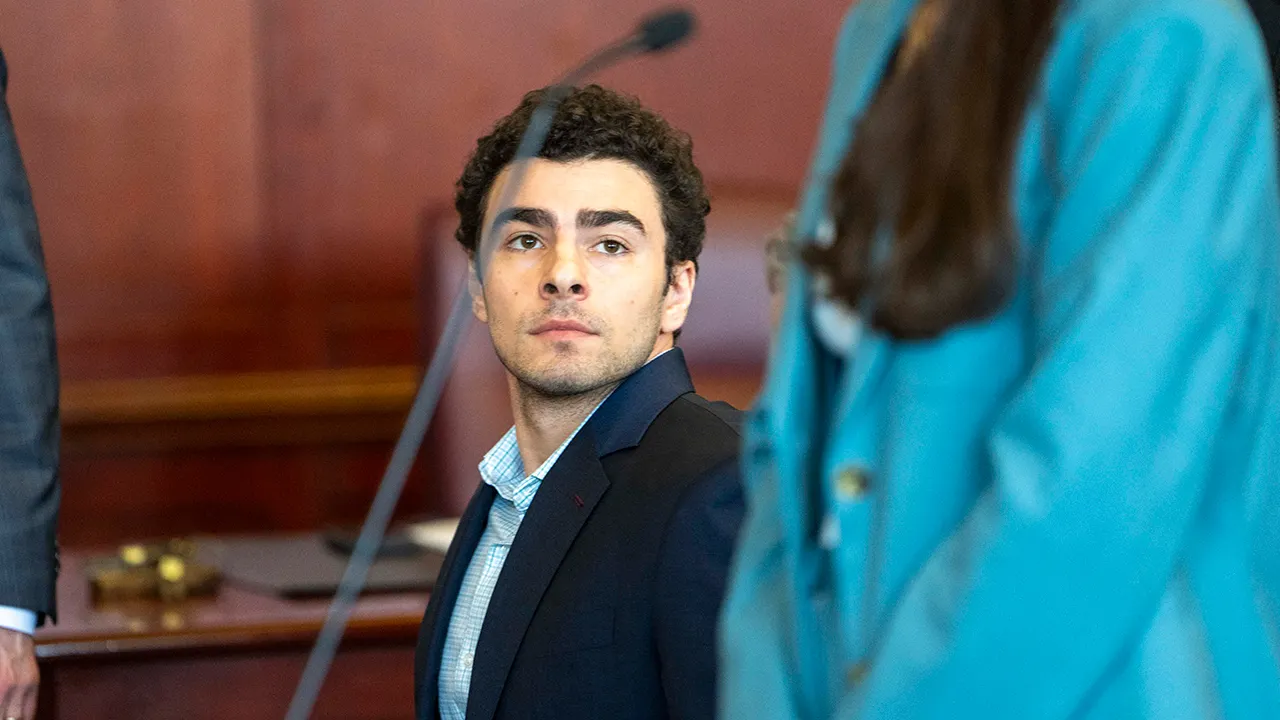
In the sterile, unforgiving arena of the American criminal justice system, the clothes a defendant wears are never just fabric; they represent a silent, powerful testimony before a single word is ever spoken under oath. For Luigi Mangione, the young man thrust into the blinding spotlight of national media as the accused killer of a prominent healthcare executive, the fight for a fair trial has begun not with complex constitutional arguments, but with a deeply human plea for a suit, a shirt, and a pair of shoes without laces. His defense team’s recent petition to U.S. District Judge Margaret Garnett to permit him to shed the stigmatizing, drab jumpsuit of the Metropolitan Detention Center (MDC) in Brooklyn and appear in civilian clothing for his upcoming August 11 status conference before New York Supreme Court Justice Gregory Carro is a calculated, compassionate attempt to reclaim his humanity. In the eyes of the law, a defendant is presumed innocent until proven guilty, yet the visual of a man shackled and clad in prison garb subtly but undeniably erodes that presumption, planting seeds of criminality in the minds of observers, the media, and potential jurors. By requesting that the Bureau of Prisons and MDC officials accept and transport Mangione in professional attire, his attorneys—Karen Friedman Agnifilo, Marc Agnifilo, and Jacob Kaplan—are seeking to strip away the dehumanizing veneer of federal incarceration. They want the court, and by extension the public, to see a human being rather than a caricature of a dangerous convict. This procedural battle highlights a profound truth about our legal system: that justice is a sensory experience, and the psychological impact of seeing a man dressed in the uniform of a free citizen rather than the uniform of the state can fundamentally alter the trajectory of a life-or-death defense.
To fully understand the urgency behind this seemingly routine request, one must look at the grim, isolating reality of the Metropolitan Detention Center in Brooklyn, where Mangione is currently housed under federal custody. MDC Brooklyn has long been notorious for its harsh, overcrowded conditions, administrative backlogs, and the profound psychological toll it imposes on its inmates, making the transition from a cold cell block to a highly publicized Manhattan courtroom an intense and disorienting shock. Navigating the bureaucratic maze of federal prisons to secure something as simple as a civilian suit requires a formal judicial order, showcasing the rigid, often unyielding nature of state machinery that treats individuals more like inventory than people. The defense’s motion specifically requests that MDC officials allow Mangione to wear the suit, shirt, socks, and laceless shoes not just during the hearing itself, but during his transportation to the courthouse, ensuring that no pre-trial images of him in handcuffs and prison orange are captured by the paparazzi waiting outside. Because Justice Carro and the state prosecutors have offered no objection to the request—a standard courtesy in high-profile cross-jurisdictional cases—the decision now rests with Judge Garnett to cut through the federal red tape. This logistical dance reveals the immense effort required to preserve a defendant’s dignity when they are caught between the gears of state and federal prosecution, illustrating how the defense must fight tooth and nail for microscopic concessions in a system designed to process individuals as numbers rather than human souls.
This dispute over courtroom attire is merely the latest skirmish in a much larger, highly calculated public relations war being waged by Mangione’s legal team, who have adopted an unusually aggressive and public-facing defense strategy. Long before filing the motion for civilian clothing, his attorneys have been pushing the boundaries of traditional courtroom decorum by challenging the court’s strict limits on media access, arguing that restrictions on press coverage are inherently unconstitutional and damage the public’s right to an open trial. In a media landscape dominated by instant commentary and viral true-crime narratives, the defense team fears that the court will “hand-pick” the press allowed inside the room, thereby controlling the narrative and shutting out independent voices who might offer a more objective view of the case. By advocating for livestreamed proceedings and demanding open-door access for a wider array of journalists, Mangione’s lawyers are attempting to democratize the trial, believing that transparency is their client’s best shield against a rush to judgment. This strategy reflects a modern understanding of legal defense: that high-profile trials are no longer won or lost solely within the quiet, wood-paneled confines of a courtroom, but are instead negotiated in the court of public opinion, where the public’s perception of the defendant’s character, motives, and humanity can exert an invisible yet powerful pressure on the entire judicial process.
However, this aggressive media campaign has met with fierce resistance from the Manhattan District Attorney’s Office, whose prosecutors view the defense’s tactics not as a crusade for transparency, but as a calculated attempt to pollute the jury pool and manipulate public sentiment. Prosecutors have accused Mangione’s legal team of disseminating false and misleading claims regarding the court’s media policies, arguing that the defense is manufacturing a controversy over press access to distract from the gravity of the charges and paint their client as a victim of institutional overreach. This clash highlights the delicate ethical tightrope walked by attorneys in the modern era, where the line between zealous advocacy and public relations spin is increasingly blurred. While the defense argues that they are merely protecting Mangione’s constitutional rights in a hyper-sensationalized environment, the prosecution asserts that the court must remain a sacred, impartial space untainted by media circuses and strategic leaks. The battle over whether the trial will be livestreamed or strictly controlled reflects a deeper systemic tension: the struggle to balance the public’s right to know, the media’s hunger for sensational content, and the fundamental right of a defendant to a fair, untainted trial free from the noise of the digital mob.
Beneath the complex layers of legal maneuvering, public relations battles, and bureaucratic red tape lies a deeply tragic and violent event that shattered lives and sent shockwaves through the American corporate landscape. On the chilly morning of December 4, 2024, UnitedHealthcare CEO Brian Thompson was shot and killed outside a luxury hotel in midtown Manhattan, a brazen, execution-style slaying that captivated the nation and sparked an intense, multi-state manhunt. For days, the public watched in fascinated horror as law enforcement searched for the elusive gunman who had vanished into the winter cold, leaving behind a trail of digital clues and a deeply divided public discourse on the state of American healthcare. The search came to a bizarre and sudden end in a fast-food restaurant in Altoona, Pennsylvania, where an observant McDonald’s employee recognized Mangione’s face from the news, leading to his swift arrest by local police. This dramatic contrast—between the high-stakes, multi-million-dollar world of a Manhattan corporate executive and the mundane, fluorescent-lit interior of a Pennsylvania McDonald’s—underscores the surreal nature of the case, grounding the legal abstractions in a raw, human reality of sudden death, flight, and the eventual, inevitable capture of a young man whose life was forever altered in a matter of seconds.
As Luigi Mangione prepares for his August 11 status conference, having pleaded not guilty to both the state murder charges and the federal counts stacked against him, the road ahead looms long, fraught, and deeply uncertain. This trial will undoubtedly be about far more than the physical evidence, the security footage, or the ballistic reports; it will be a profound exploration of human desperation, systemic anger, and the ultimate value we place on human life in a complex, often indifferent society. By fighting for Mangione to stand before the judge in a suit rather than a prison uniform, his lawyers are trying to ensure that when the jury looks at him, they see a son, a brother, and a citizen entitled to the full protection of the Constitution, rather than a pre-determined villain. Whether he wears a prison jumpsuit or a tailored suit, the gravity of the accusations will remain, but the insistence on his dignity serves as a vital reminder that even in our darkest moments, the integrity of the judicial process depends on treating every accused individual with basic human decency. As the court prepares to convene, the world will be watching, not just to see if justice is done for Brian Thompson, but to witness how a civilized society balances the scales of justice when a human life is cut short and another hangs precariously in the balance.