



Paragraph 1
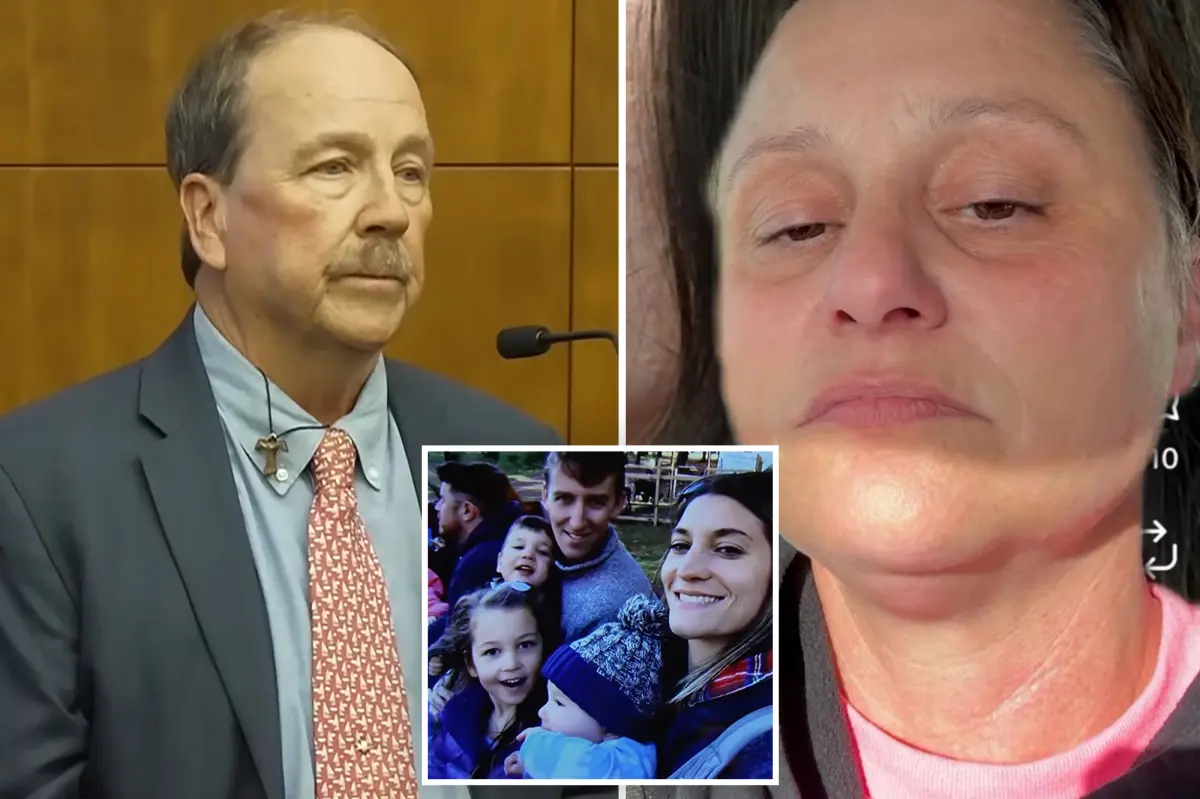
In the quiet aftermath of one of the most harrowing criminal cases to grip the nation, a new and disquieting chapter has unfolded, one that pits the shadowy world of true-crime obsession against the fragile boundaries of privacy and grief. When Lindsay Clancy, a Massachusetts mother, stood trial for the unfathomable act of strangling her three young children—Cora, five, Dawson, three, and eight-month-old Callan—the case transcended the courtroom. It became a morbid spectacle, drawing in armchair sleuths, conspiracy theorists, and self-styled internet vigilantes. Among them was Shawna Gramkow, a 46-year-old woman from Sanford, Florida, who built a social media persona around the case, posting countless videos and commentary that mixed genuine curiosity with baseless speculation. Her obsession, however, has now led to a criminal charge of her own. On August 30, Gramkow allegedly posted a secretly recorded phone call involving Christopher Clancy, the father of Patrick Clancy, who was Lindsay’s husband and the father of the slain children. The recording, which she shared on her Instagram page, saltylunatics, reportedly captured Christopher’s voice without his knowledge or consent. When Christopher heard his own words broadcast to Gramkow’s followers, he filed a police report, setting off a legal chain that now threatens to overshadow the very tragedy that inspired it.
Paragraph 2
The details of the alleged wiretap are as unsettling as they are invasive. According to court papers, Christopher Clancy, who had testified during Lindsay’s trial, remembered receiving a call from an unknown number on August 6 while he was driving. The trial was in its third week, and the emotional toll on the Clancy family was immeasurable. Christopher, already grappling with the loss of his grandchildren and the disintegration of his son’s family, did not intend to answer the call. But in a moment of distraction—perhaps a flicker of curiosity or simply a fumbled finger—he accidentally accepted it, unknowingly creating an open line for the caller to record his comments. Gramkow, in the video accompanying the audio, allegedly explained that Lindsay’s lawyer had released Patrick’s phone number, prompting one of her followers to make the call. She described how Patrick’s father remained on the line, mumbling to himself, apparently oblivious that the connection was still active. The recording itself was described as “mostly unintelligible,” yet Christopher recognized fragments of his own voice, specifically comments about his eldest son, Brian. For a man already mourning the horrific deaths of his grandchildren and the psychological ruin of his son, this violation was a cruel, added insult—a reminder that even in the private recesses of a family’s grief, there is no escape from the prying eyes of those who treat tragedy as entertainment.
Paragraph 3
To fully grasp the gravity of Gramkow’s alleged actions, one must revisit the context of the trial itself. Lindsay Clancy’s case had gripped the nation for months, not only due to the brutality of the crime but because of the complex, heart-wrenching legal battle that followed. Prosecutors painted her as a calculated killer who meticulously planned the murders on January 24, 2023, methodically using exercise bands to strangle her children before attempting to take her own life. Her defense, led by attorney Kevin Reddington, argued that she was in the throes of severe postpartum psychosis, a condition so debilitating that she heard a commanding male voice in her head, urging her to carry out the unthinkable. The trial ended on September 4 with a hung jury—a verdict that left neither side satisfied and the Clancy family in a state of suspended anguish. Patrick Clancy, the father who lost his entire world in a single morning, had already divorced Lindsay. He has since remarried to Rachel Danis, who is now pregnant with his child, a tentative step toward rebuilding joy amidst the rubble. The trial’s controversy and the subsequent mistrial spawned a fertile ground for internet conspiracies, with many casting Patrick as a villain, often without a shred of evidence. It is within this toxic ecosystem that Gramkow found her audience, feeding the frenzy with content that blurred the line between advocacy and exploitation.
Paragraph 4
Gramkow’s rise as a self-appointed commentator on the Clancy case is emblematic of a disturbing trend in the true-crime genre, where empathy often yields to sensationalism. Her Instagram page, which boasted 886 followers but reportedly gave her reach to over 50,000 across various platforms, was a repository of conspiracy theories, unfounded accusations, and purported “exclusives” about the trial. Her narrative was not neutral; it suggested a deep-seated suspicion of Patrick Clancy and a willingness to amplify any rumor that painted him in a damning light. The posting of the recorded call was presented as a “gotcha” moment, a supposed revelation that Lindsay’s lawyer had exposed the family’s phone number and that the resulting interaction proved something sinister. In reality, the audio was incoherent, and its only tangible effect was to further harass a grieving family. When the police summons arrived, Gramkow initially displayed bravado, dismissing the allegations as “false and easy to prove” in a Facebook post. Yet by October 27, she had adopted a more defensive tone, linking to a GoFundMe page and pleading for financial support to “protect myself right away.” The fundraiser, which had collected over $13,000 by Friday, served as a somber reminder that even those who peddle harm often seek community when faced with consequences. Her delusion of righteousness collides with the simple legal fact: recording a private conversation without consent in Massachusetts is a crime.
Paragraph 5
The legal charge against Gramkow—unlawful wiretapping—is not merely a minor infraction. Under Massachusetts law, it is a felony, punishable by imprisonment and fines, reflecting the state’s strong commitment to protecting conversational privacy. The case also raises profound ethical questions about the responsibilities of content creators in the digital age. True-crime influencers often operate in a legal gray zone, reposting public records, speculating on motives, and dissecting every detail of a case for entertainment. But there is a line—one that separates commentary from invasion. By releasing a privately recorded phone call involving an unwitting participant, Gramkow crossed that line with impunity. Her actions highlight the ease with which modern technology can be weaponized against innocent people, and the callous disregard some have for the collateral damage of their pursuits. For the Clancy family, this episode is a stark illustration of how their tragedy has become public domain, their private grief commodified for clicks and engagement. Christopher Clancy, who must already endure the memory of testifying against his former daughter-in-law, now faces the surreal experience of hearing his own disembodied voice circulating on social media, stripped of context and dignity.
Paragraph 6
Ultimately, the human story behind this wiretap charge is one of profound loss compounded by relentless intrusion. The Clancy family has been through what no family should endure: the murders of three innocent children, the public scrutiny of a sensational trial, and the ensuing chaos of online speculation. For Patrick Clancy, who has sought to rebuild his life with a new wife and a child on the way, the actions of an influencer like Gramkow are a cruel reminder that the past is never truly behind him. For Gramkow, her obsession may have been born from a genuine interest in justice, but it devolved into a reckless pursuit of attention that now threatens her own freedom. As she prepares to appear in Scituate criminal court on November 20, the case serves as a cautionary tale about the ethics of true crime fandom and the high cost of forgetting that real people—with real grief and real limitations—stand behind every headline. Lindsay Clancy’s retrial looms, ensuring the national spotlight will remain on this family for months to come. But amid the legal maneuvering and fevered speculation, we must pause to remember the souls at the center: Cora, Dawson, and Callan, whose lives were cut tragically short, and the families left to navigate a world where even a private phone call can be twisted into content for strangers. In that fragile space between tragedy and spectacle, our collective humanity is tested. And in this instance, it was found wanting.