





Paragraph 1
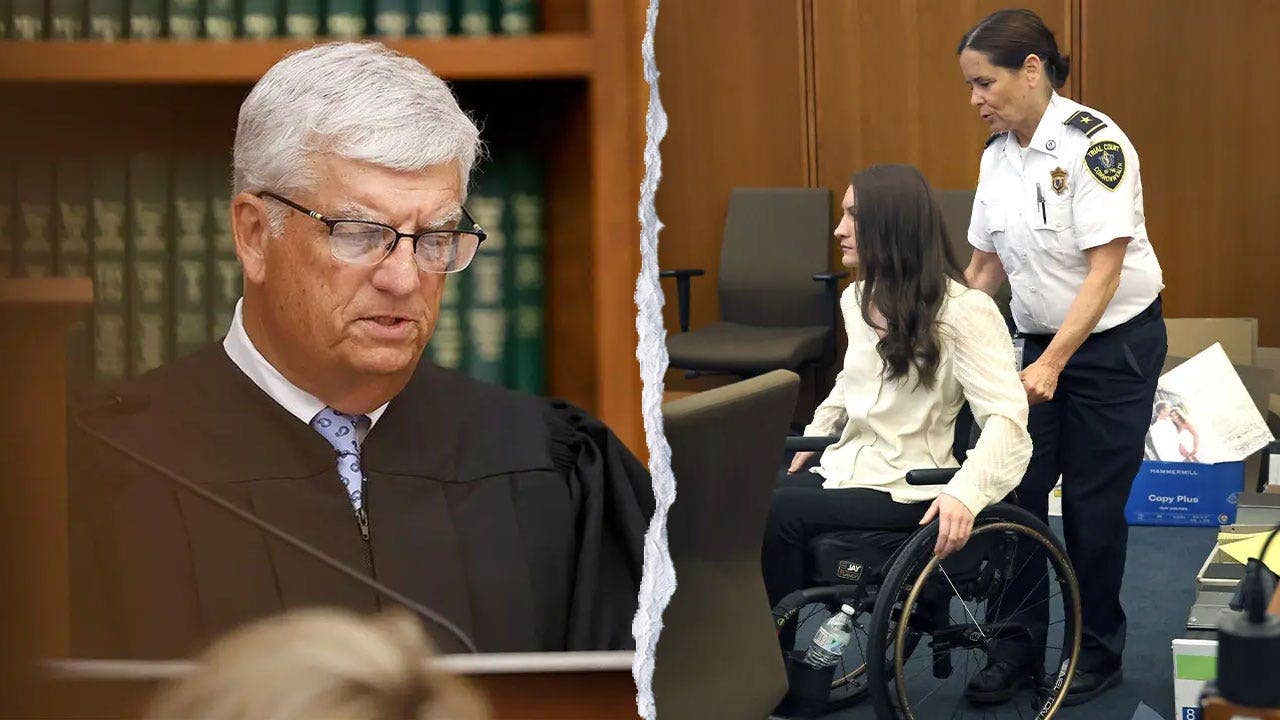
In a quiet yet powerful move that underscores the immense pressure surrounding one of the most haunting cases in recent memory, Judge William Sullivan has indefinitely sealed the names of the jurors who served in the Lindsay Clancy murder trial. The decision, issued on Monday, comes after a mistrial was declared on September 4, 2026, when a jury deadlocked 11 to 1 on whether the 36-year-old mother was guilty of the first-degree murder of her three children. Sullivan’s order is not a casual footnote in the legal saga; it is a shield against what he described as “significant and divisive attention” and a “real and present” risk of harm to the men and women who weighed the evidence in a case that has gripped the nation. The judge acknowledged the public’s right to know the names of those who sit in judgment, but he determined that the danger to the jurors—some of whom had already been identified without their permission—outweighed that right, at least for now. The decision leaves the community and the press in a state of suspended anticipation, waiting to see whether the names will ever be revealed, and more importantly, whether the case itself will be retried. For the jurors, this sealing is both a protection and a burden, a recognition that their civic duty came with an unexpected and unwelcome spotlight, and that their private lives have become collateral to a tragedy that was never theirs to own.
Paragraph 2
To understand the gravity of this judicial action, one must revisit the heartbreaking origins of the case. In January 2023, Lindsay Clancy, a labor and delivery nurse from Duxbury, Massachusetts, was arrested after her three children—five-year-old Cora, three-year-old Dawson, and eight-month-old Callan—were found strangled in the family’s home. The details were as grim as they were bewildering: a mother accused of ending the lives of her own babies, with her husband, Patrick Clancy, discovering the scene after returning from a quick errand. The tragedy sent shockwaves through the state and beyond, not only because of the sheer horror of the act, but also because of the glimpses into Lindsay’s mental state that emerged in the months that followed. Her defense team argued that she was suffering from severe postpartum depression and postpartum psychosis, conditions that had been exacerbated by the pressures of motherhood, a demanding job, and a history of anxiety. The prosecution, however, painted a picture of deliberate and calculated actions, pointing to internet searches for homicide methods and attempts to harm herself. The trial became a national referendum on how society understands maternal mental illness, criminal responsibility, and the limits of empathy. For the families on all sides—the Clancy and the children’s relatives—the proceedings were a raw and public excavation of their grief, with every witness testimony and piece of evidence reopening wounds that may never fully heal. The case was never just about Lindsay Clancy; it was about the fragile line between sickness and evil, and the uncomfortable truth that sometimes the most unthinkable acts are born of the most profound suffering.
Paragraph 3
The mistrial, declared on September 4, marked the dramatic climax of a trial that had stretched over many weeks. Jurors had deliberated extensively, but the stubborn 11-1 split revealed a deep philosophical and emotional divide that could not be reconciled. For one juror, Paula Devlin, a 65-year-old woman who chose to speak publicly after the mistrial, the experience was not just a civic obligation but a mission. Devlin denied allegations of bias—whispers that she had entered the courtroom with a pre-formed opinion—and instead framed her stance as a voice for compassion and deeper understanding. In an interview with Fox News Digital, she said, “We didn’t know what was going on outside of that room, but we knew that we had a chance to get a conversation started that could change something, that could maybe stop this from ever happening again.” Her words carried a quiet desperation, the hope of a stranger who had been thrust into a world of impossible choices. Devlin explained that she and others on the panel saw “holes” in the prosecution’s case, areas where the evidence did not convincingly prove intent or sanity, at least in her view. She was not alone; the other holdouts on her side of the deliberation table shared her conviction, while the remaining juror stood firm in the opposite direction. The result was a hung jury, a legal deadlock that left the judge to declare a mistrial and the district attorney’s office to grapple with the unenviable decision to try again. For the families, the mistrial was a cruel twist, extending their agony indefinitely; for Lindsay Clancy, it was a reprieve, but one shadowed by the looming possibility of a second trial.
Paragraph 4
Devlin’s most striking comments, however, were reserved for the very issue at the heart of the case: gender and mental health. When asked about accusations that she was biased in favor of Lindsay Clancy because she was a woman, Devlin responded with a mixture of impatience and clarity. “In the biggest piece of the whole case, the whole thing was based on mental health. How can you have bias if only women can go through postpartum depression? Only women can go through postpartum psychosis. Only women can deliver a baby. That’s not biased. That’s just a fact.” Her words cut to the core of a societal misunderstanding, one that has historically marginalized women’s mental health struggles and often dismissed them as exaggerations or excuses. Devlin’s insistence on turning the trial into a wider conversation about maternal mental health reflects a growing call among advocates to destigmatize postpartum conditions and provide better screening and support for new mothers. She hoped that the jury’s split would compel people to listen not just to the legal arguments, but to the desperation that often goes unheard. “I hope that no other woman or husband has to go through this,” she said, acknowledging the ripple effects on partners like Patrick Clancy, who has spoken of his wife’s struggles and his own heartbreak. Devlin’s stance, whether one agrees with her verdict or not, humanizes the jury process itself—showing that the people in the box are not anonymous cogs in the judicial machine, but individuals carrying their own perceptions, histories, and hopes. By speaking out, she risked being vilified, and indeed she faced backlash, yet she remained unwavering in her belief that the trial was a missed opportunity to address a public health crisis disguised as a criminal case.
Paragraph 5
Judge Sullivan’s order to seal the jurors’ names is, in a strange way, a testament to the very real consequences of that public vulnerability. In his memorandum, he noted that “some of the empaneled jurors have come forward and spoken to the media after the declaration of a mistrial on September 4, 2026. However, the majority of the jurors, deliberating and alternates, have maintained their anonymity, despite multiple requests to give statements.” Sullivan cited “identifications of jurors and their personal information without their permission” as a direct threat, pointing to an environment in which civic duty is now subject to harassment, doxxing, and potential physical harm. He concluded that “there is a risk of immediate and irreparable injury should the list be made available to the public at this time.” The decision walks a delicate tightrope between the First Amendment rights of the press and public, and the court’s duty to protect those who serve it. It is not a permanent ban, but an indefinite one, pending further order, leaving the door open for a future reassessment once the media frenzy subsides. For the twelve deliberating jurors and any alternates, this means they can return to their lives without the constant fear of being cornered in grocery stores or flooded with hostile messages. Yet it also means that the public will never fully know the composition of the jury that almost set Lindsay Clancy free—or at least did not convict her. The judge’s action, while grounded in practical safety concerns, also serves as a quiet acknowledgment that the trial itself had become a spectacle, carved into the national psyche in a way that few local criminal cases ever do. It is a reminder that justice does not occur in a vacuum, but in the messy, human, and occasionally dangerous intersection of law, media, and society.
Paragraph 6
The immediate future of the case remains uncertain, and the ripple effects of this extraordinary order will be felt in any retrial. Lindsay Clancy is due back in court on September 29 for a status hearing, where the district attorney’s office may signal whether they will pursue the case again. The Plymouth County District Attorney has made no decision yet, and the legal teams on both sides are likely still poring over the trial transcripts and strategizing for the next round. For the families of Cora, Dawson, and Callan—names that will forever be etched in the memories of those who followed the case—the uncertainty is a brutal continuation of their grief. For Patrick Clancy, who has publicly expressed forgiveness toward his wife while also acknowledging the incomprehensible nature of his loss, every court date is a new chapter in a story he never asked to live. The sealing of the jurors’ names may give those citizens their privacy, but it cannot restore the broken trust between neighbors, nor does it answer the fundamental questions that linger: Was Lindsay Clancy a killer or a victim of her own biology? Did the system fail her, and if so, how does society atone for that failure? As the nation watches and waits, the debate rages on, fueled by podcasts, op-eds, and dinner-table conversations. Some see the mistrial as a victory for the mental health movement, a sign that the public is finally willing to consider nuance in cases of maternal psychiatric emergencies. Others see it as a travesty, a belief that a mother who took her children’s lives must be held accountable regardless of her state of mind. And in the middle, there are ordinary people—like Paula Devlin, like the anonymous jurors, like Lindsay herself—who are forever changed by a tragedy that defies easy answers. For now, the names of the jurors remain hidden, a small comfort in a case where comfort is in short supply. And as the legal machinery grinds forward, we are left to remember that justice, like grief, is not a straight line but a winding, painful, and profoundly human journey.