


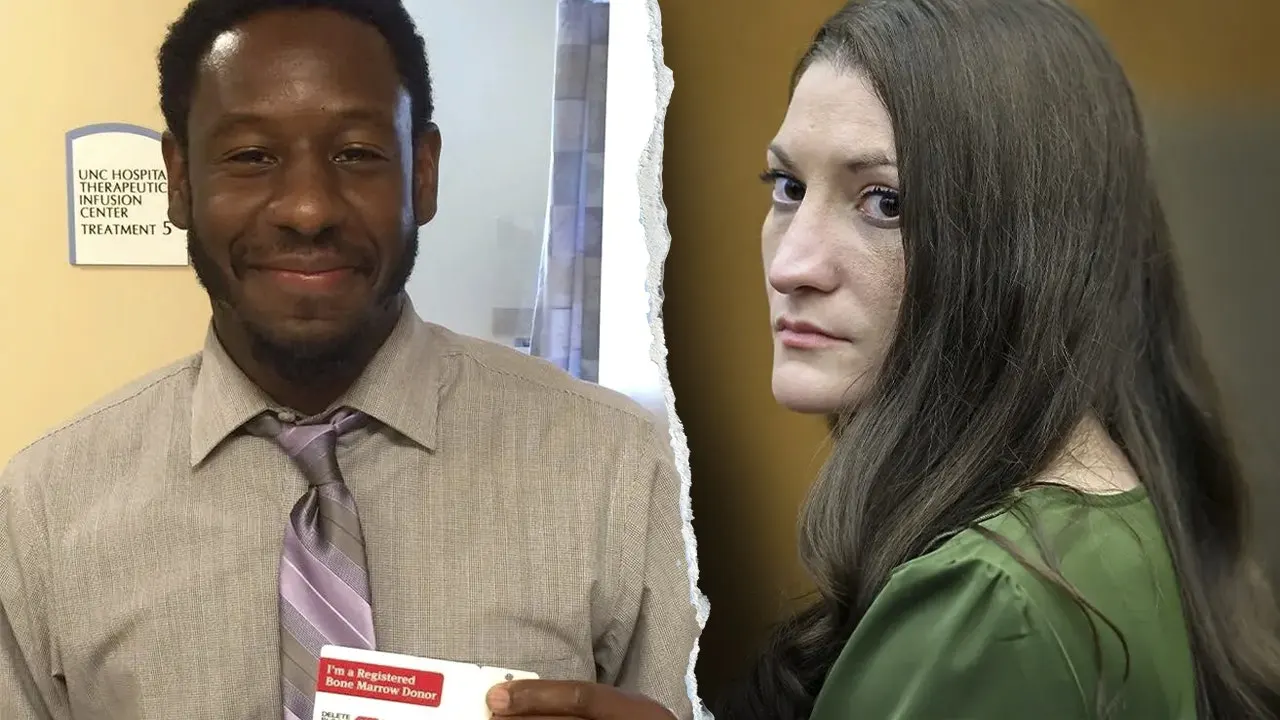
The courtroom had gone quiet after seven long days of deliberation, but the silence left behind was anything but peaceful. When the judge declared a mistrial in the case of Lindsay Clancy, the lone juror who refused to join the other eleven became an instant lightning rod for controversy. That juror, Michael P. Desronvil, has now promised to speak for himself, in his own words, through his attorney Edward Paltzik. In a time when the public hungers for answers, Desronvil’s silence has been filled with speculation, anger, praise, and everything in between. But behind the headlines lies a far more ordinary human story: a citizen summoned to jury duty, asked to weigh the most agonizing kind of evidence, and forced to stand alone against eleven others in a room where the fate of a grieving family—and a mother accused of unspeakable acts—hung in the balance. Paltzik’s Facebook post offers a glimpse into the emotional weight of that position. He thanked supporters for their messages and acknowledged that many will disagree with Desronvil’s decision. Yet he insisted that the United States was built on intelligent debate and that a juror must be able to follow the evidence and the law wherever it leads, without fear of reprisal. Those words resonate deeply in a culture that often seeks to punish those who complicate a satisfying narrative. Desronvil, a man who never asked for the spotlight, has been thrust into it—and his decision to tell his story is an attempt to reclaim his own voice from the swirling storm of public opinion.
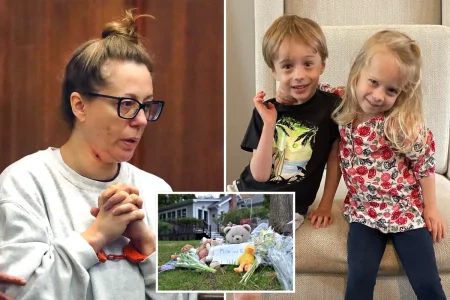
To understand the weight of that choice, one must look back at the tragedy that brought twelve strangers into that jury room. Lindsay Clancy, a 36-year-old former labor and delivery nurse, was accused of strangling her three children inside the family’s Duxbury, Massachusetts home in January 2023. The victims were five-year-old Cora, three-year-old Dawson, and eight-month-old Callan. The details of the case were as harrowing as any courtroom drama, but the real tragedy was unmistakably human: a young mother, once entrusted with the care of newborns, now accused of ending the lives of her own children. Clancy admitted she had killed the children, but her defense argued that she was not criminally responsible because she suffered from postpartum psychosis—a severe and often misunderstood mental health crisis that can distort a person’s perception of reality. Her attorneys painted a portrait of a woman overwhelmed by hormones, exhaustion, and psychosis, one who believed her children were better off dead than in a world she could no longer trust. The prosecution, however, told a different story: that Clancy was a smart, capable medical professional who knew exactly what she was doing, planned the killings, and carried them out with deliberate intent. The jury was left to choose between two equally devastating interpretations of a single family’s shattered life. There could be no perfect verdict, only a choice between two kinds of harsh truths—one in which a mentally ill mother committed an unforgivable act without real understanding, and another in which a woman in full control of her faculties destroyed everything she loved.
For seven days, the jury wrestled with those painful possibilities. In the end, eleven jurors were prepared to find Clancy not criminally responsible, meaning she would be committed to a mental health facility rather than prison. Desronvil held out for conviction. His position made him the deciding figure in a mistrial, and his refusal to yield drew fury from some and admiration from others. Desronvil later said he had no doubt the prosecution proved its case. “Based on all the physical evidence, key witnesses and what the prosecution presents, I thought it was enough proof that she knew exactly what she was doing and planned,” he said. He also revealed that during deliberations, he tried to raise different theories and interpret the evidence in alternative ways, but he felt repeatedly cut off by fellow jurors who treated his questions as confusion or uncertainty. Imagine sitting in a small room, facing eleven people who see things differently, each one pressing you to reconsider, while the memory of three dead children weighs on every word. Desronvil’s experience reflects a deeply uncomfortable reality of the American legal system: juries are made up of human beings with different life experiences, biases, and reasoning styles. When those differences harden into an unbreakable split, the system calls it a mistrial—but the human cost lingers long after the judge’s gavel falls. The jurors walk away, not into triumph, but into the uneasy knowledge that the families involved still have no resolution, and that a woman’s fate remains suspended in legal limbo.
The aftermath of the mistrial was swift and merciless. Desronvil’s name leaked into the press, and he quickly found himself at the center of a public firestorm. Online, strangers accused him of everything from cruelty to incompetence. Some called him an obstacle to justice; others called him a hero who refused to bend to groupthink. Death threats and harassment became a real enough concern that the judge, William Sullivan, took the rare step of impounding the names of all jurors, citing safety concerns and what he described as “divisive” attention. For Desronvil, the scrutiny transformed a civic duty into an ordeal. His attorney, Edward Paltzik—a lawyer with experience representing President Donald Trump in lawsuits against major news outlets—stepped in to defend not only Desronvil’s legal interests but his basic well-being. Paltzik told Fox News Digital that he is focused on the juror’s health, safety, and well-being, and called him an “American Hero” and “Champion of Justice.” Those labels are, of course, contested. But Paltzik’s broader point speaks to a fundamental principle: the jury room should be a sacred space where ordinary citizens can weigh evidence without fear of retaliation. As former prosecutor and behavioral health law expert Mark Astor put it, “The whole idea of the jury is sort of this sacred arena where jurors get to decide a verdict in a case. And now we’re taking what is really a sacred arena, and we’re exposing it to the public.” When jurors become public figures, the entire justice system trembles. If regular people fear that their decisions will follow them home, if their names become magnets for threats, then the very idea of a fair trial is in danger. Desronvil, in this sense, is not just a juror anymore—he is a symbol of a larger struggle between the need for accountability and the necessity of protecting the people who serve the system.
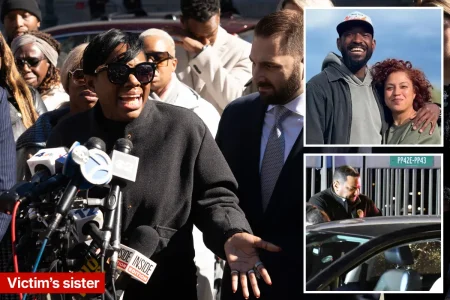
Meanwhile, the case’s other central figure, Patrick Clancy, the father of the children and Lindsay’s ex-husband, broke his long silence in a deeply personal television interview with “60 Minutes.” Patrick sat with correspondent Ross Douthat, alongside his wife, Dr. Rachel Danis, and spoke about the grief that has defined his life since discovering his three children dead. He remembered Cora’s bright spirit, Dawson’s playful energy, and Callan’s infant warmth—all gone, all carried away by a nightmare he never could have imagined. In the interview, Patrick also addressed the baseless conspiracy theories that have spread online since January 2023. In the absence of official answers and amid the frenzy of speculation, false narratives flourished: some accused Patrick of involvement, others blamed vaccines, still others invented elaborate stories about the Clancy family’s private life. Watching a grieving father have to defend his own innocence, while also mourning three children, is a brutal reminder of how the internet can amplify pain rather than heal it. Patrick’s appearance was not just a catharsis; it was a plea for the public to stop chasing shadows and to remember the real victims. His grief is vast, but so is his courage. To sit before millions of viewers, speak of the children he lost, and do so with a new wife by his side, is to invite the world into the most intimate and devastating part of his life. There is a kind of grace in that—a humanity that resists the cold calculations of legal strategy. And yet, even as Patrick sought to reclaim his family’s story, the machinery of the courts continued to turn.
What happens next remains veiled in uncertainty. Plymouth County prosecutors have not announced whether they will retry Lindsay Clancy. Her defense team, now strengthened by veteran Boston attorney Martin Weinberg, has begun pursuing a motion to dismiss the case on double-jeopardy grounds—the argument that she should not be tried again after a mistrial because the jury’s near-unanimous decision to acquit on grounds of insanity should be respected. The law is complicated, and the stakes could not be higher. A dismissal would mean Clancy receives mental health treatment and supervision without another trial. A retrial would mean another agonizing process for everyone: for Patrick Clancy, who would have to relive the details of his children’s deaths; for the jurors, who would again face the impossible choice; and for Lindsay herself, who remains caught between two interpretations of her own mind. On September 29, Clancy is due back in Plymouth Superior Court for a status hearing, where the next steps could become clearer. But no matter what the court decides, no verdict can heal the deeper wound. Cora, Dawson, and Callan are gone. A marriage and a family have been destroyed. A community has been divided. And a lone juror’s refusal to abandon his belief has become part of the story, for better or worse. In the end, this is not just a case about law or mental illness. It is a case about how people cope with horror—how they find meaning in suffering, how they protect the fragile institutions that keep society from chaos, and how they summon the courage to stand alone when everyone around them wants them to sit down. Michael Desronvil may be vilified or praised, but his story reminds us that justice is not a machine that delivers easy answers. It is a human process, halting and messy, full of doubt and conviction, grief and grace. As the nation watches, the hope is not for a perfect conclusion, but for an outcome that honors the truth as best as human beings can find it—and that allows a grieving father, an accused mother, and a divided public to finally begin the long, slow work of healing.