


Here is a summarized and humanized version of the story, presented as a reflective six-paragraph essay.
—
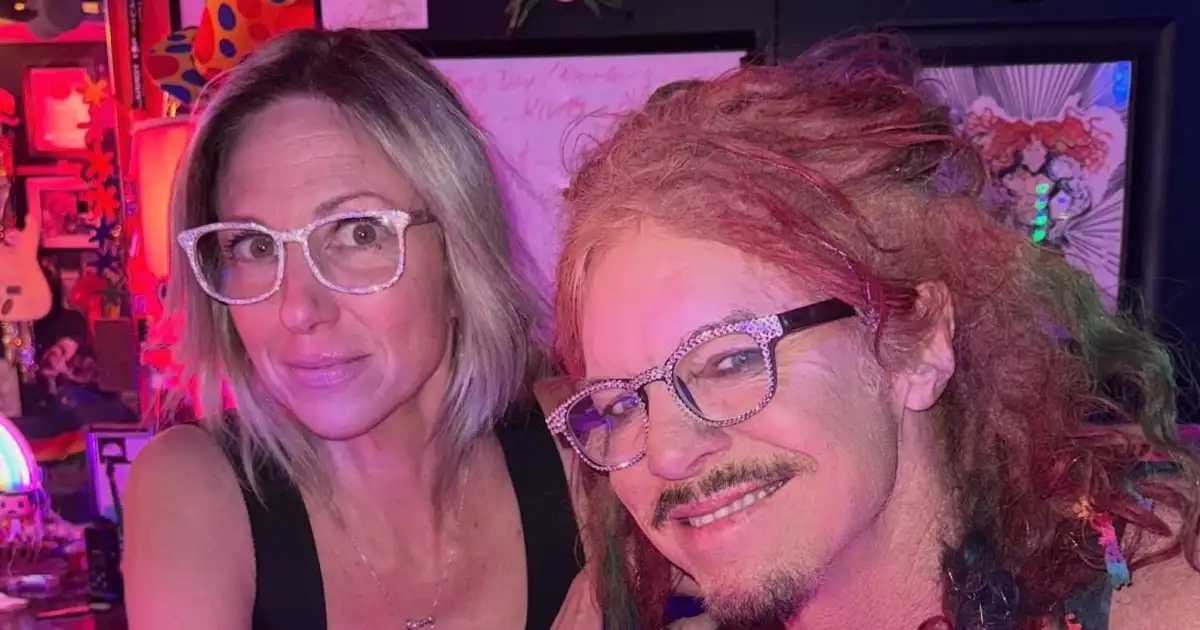
The news landed with the kind of quiet thud that makes a person pause and reread the screen. Debbie Gibson, the beloved pop icon of the late 1980s, had taken to social media to send her support to a dear friend: Carrot Top, the wild-haired, prop-wielding comedian whose real name is Scott Thompson. The 61-year-old entertainment veteran had been hospitalized in Las Vegas on Friday, September 20, following what was described in multiple reports as an alleged suicide attempt. As a result, his scheduled Friday and Saturday comedy shows were canceled, leaving fans and friends alike stunned. Gibson, 56, used her Instagram platform not as a celebrity issuing a performative statement, but as a concerned friend, writing, “Sometimes it’s the ones who make us laugh the hardest who are hurting the most. Sending love to you, Scott.” Her words were simple, but they carried a heavy truth that echoed far beyond the immediate moment. Here was a man who had spent decades bringing joy to packed theaters in Las Vegas, a headliner at the Luxor since 2005, known for his explosive energy and self-deprecating humor. And yet, behind the stage lights and the carefully crafted zaniness, there was pain.
Gibson’s message went beyond a generic well-wish. She offered a glimpse into their friendship, one that many people can relate to when they think about the people they care about but don’t see often. She described how Scott Thompson is the kind of friend who will send you a random video message at an unexpected hour, not because he wants anything, but simply to let you know he was thinking of you. “He’ll send you a video message at some random time just to let you know he’s thinking of you and to put a smile on your face,” she wrote. It was this detail that made the news so deeply saddening. Gibson admitted that she hadn’t heard from him in a little longer than usual, so she reached out just two days before he was hospitalized. She figured he would reply later in the week, as he often did after a weekend of shows. She didn’t think much of it when the reply didn’t come right away, because that was the rhythm of their friendship. This kind of reflection is a stark reminder that we often interpret silence as busyness or timing, when in reality, it could be something far more serious. Gibson’s words carry an implicit ache—that feeling of “if only I had known,” or “I’m glad I reached out, even if I didn’t know why.”
The official response from Carrot Top’s team was brief and careful. His representative, Jami Schlicher, released a statement confirming his hospitalization and asking for privacy during a vulnerable time. “Mr. Thompson is recovering in the hospital and is receiving the care and support he needs,” the statement read. “His family and those closest to him are deeply grateful for the concern, prayers and respectfully ask for privacy.” The statement offered few details, which is entirely understandable. In the age of viral news, it is all too easy to forget that the people on stage are not characters but real human beings with families, fears, and fragile parts of their lives. The fact that the word “alleged” was used in many headlines points to the careful dance that media and the public must go through when discussing someone’s mental health crisis. We want to know, and yet we also need to respect. The outpouring of support from friends like Gibson is testament to the fact that while fame can be isolating, it does not have to be. Carrot Top has made people laugh for decades, but this moment is not about laughing. It’s about recognizing that no one is immune to the storms of the mind, not even those who seem to have everything it takes to make a room light up.
In her post, Gibson did something incredibly important: she turned a moment of crisis into a broader conversation about mental health. She didn’t just say “prayers up” and move on. She explicitly talked about her own journey, noting, “Check on your friends, especially the ones who give and give and give as Scott does to his loved ones and his audiences.” She added, “We are all here for you friend, and to anyone going through mental health issues … please know that I myself have a therapist on speed dial.” This is a powerful admission, especially coming from someone who has navigated the pressures of fame since she was a teenager. Gibson went on to share that she has used all kinds of modalities, including medications when necessary, in order to stay safe and healthy. She was not ashamed to say it. She wanted her followers to know that mental health care is not a sign of weakness, but a form of strength. “I continue to explore whatever is going to best help me stay safe and happy and healthy on all levels,” she said. This kind of transparency is invaluable. When public figures speak openly about therapy and medication, it normalizes these tools as part of a comprehensive approach to wellness, and it gives ordinary people permission to seek help without shame.
The deeper truth of this story lies in its paradoxes. Carrot Top’s entire comedic brand is built on loud, larger-than-life energy—flying hair, bulging drumsticks, and relentless physical comedy. His shows are high-octane, carefully calculated explosions of entertainment. But as Gibson so poetically noted, “Sometimes it’s the ones who make us laugh the hardest who are hurting the most.” This is not an empty cliché; it is a psychological reality that has been seen time and time again in the world of entertainment. The clown is often the loneliest person in the room. The people who spend their lives making others feel joy are often the ones who are quietly struggling in moments of solitude. It’s an exhausting, cruel irony. Gibson continued, “Life is full of layers that nobody sees. There is no stigma in prioritizing your mental and emotional well being at all times!!!” Those words are a balm to anyone who has ever felt that they have to wear a mask in public while their private world falls apart. It is also a reminder that we are all just doing the best we can, often navigating a complicated web of unspoken pain. The least we can do for one another is to be gentle, to check in, and to resist the urge to judge people for having a bad day, or a bad week, or a bad season of life.
As the story continues to unfold, the message that matters most is one of hope and connection. Debbie Gibson closed her post by saying, “This is a safe space and a loving community for all of you going through whatever you’re going through.” It is a beautiful reminder that none of us are alone, even in our darkest moments. Carrot Top may be the one in the hospital right now, but his story has touched everyone who has ever felt invisible or overwhelmed. It has opened the door for conversations about how we treat ourselves and one another. It has reminded us to call the friend we haven’t heard from in a while, because that little voice telling us to check in might be more important than we know. And, of course, if you or someone you know is struggling or in crisis, help is available. You can call or text 988, or chat at 988lifeline.org. There is no shame in asking for help. There is no failure in struggling. What matters is that we keep talking, keep caring, and keep showing up for one another—today, tomorrow, and always. We may never fully know the depths of what someone else is going through, but we can always offer a hand, an ear, or a heart that is willing to listen. And in the end, that might just be the most important thing any of us can do.