






We live in an era where the boundary between political theater and absurdist comedy has completely dissolved, leaving us to rely on our late-night hosts as the ultimate translators of daily chaos. Welcome to the Late Night Roundup, your sanctuary for catching up on the previous night’s comedic highlights while preserving your precious sleep cycle—all while we do the heavy lifting of watching the madness so we can bring you the best breakdowns (and maybe remind you of those fifty incredible movies waiting for you on Netflix right now). Lately, the news cycle has felt less like a pristine documentary and more like a satirical sitcom, where every high-stakes national event is swiftly met with a barrage of punchlines. From the murky, bright-green waters of Washington D.C.’s most iconic monuments to the complicated, watered-down intricacies of international diplomacy, the humorous dissection of our leaders and their eccentric associates has become a vital form of modern therapy. As we dive into the latest round of late-night roasts, it becomes clear that whether our politicians are managing historic foreign policy or literally just trying to keep a public monument clean, there is absolutely no hiding from the relentless, sharp-witted observations of America’s favorite comedians.
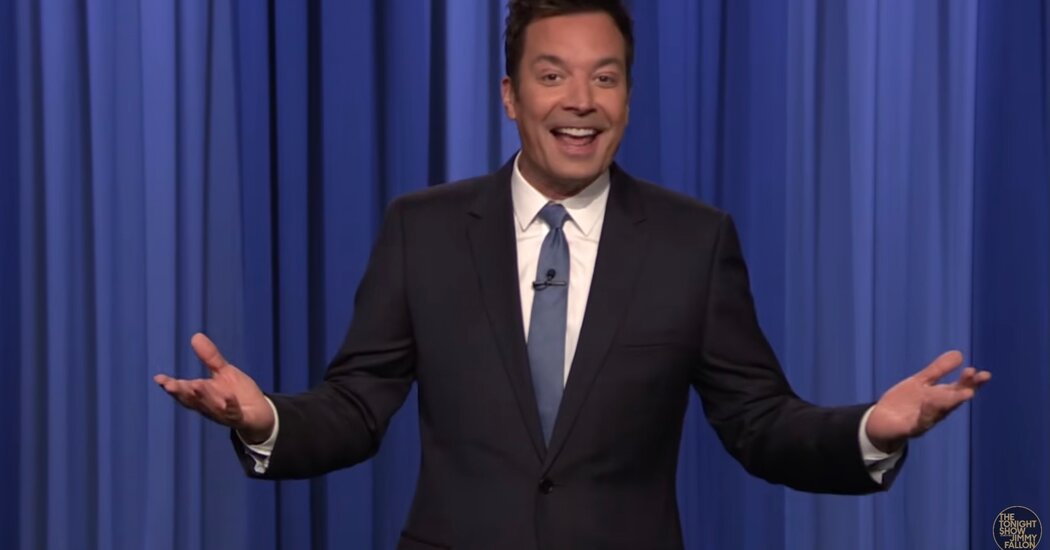
Take, for instance, the bizarre ecological disaster currently unfolding right in front of the Lincoln Memorial. President Donald Trump found himself on the defensive Monday, insisting to a crowd of reporters that the sudden, aggressive algae bloom choking the newly renovated Lincoln Memorial Reflecting Pool was absolutely not his fault. Naturally, this defensive posture acted as an open invitation for late-night hosts to relentlessly mock Greenwater Services, the ironically named business hired to install the pool’s brand-new, supposedly state-of-the-art water-treatment system. Jimmy Fallon led the charge on The Tonight Show, facetiously congratulating the company with a sarcastic “They nailed it—mission accomplished,” before wondering aloud if they had somehow traded historic monument water for a giant basin of neon-green Mountain Dew. Jon Stewart over at The Daily Show couldn’t help but marvel at the sheer aesthetic comedy of it all, pointing out the hilarious irony of a president who loves the lush, rolling green of the countryside somehow managing to combine his love for country fields and historic pools into one murky, swampy disaster. The visual of our nation’s capital looking like a neglected backyard hot tub provided the perfect canvas for a masterful display of comedic tag-teaming.
But the green slime was only the tip of the comedic iceberg, as both Stewart and Fallon quickly shifted their sights to the real star of the show: John J. Cafaro, the head of the trust behind Greenwater Services. In a brilliant display of parallel thinking, both hosts independent of each other noticed that Cafaro looked less like a corporate environmental executive and more like a character plucked straight out of a classic mobster film. Jon Stewart, with his trademark exasperation, openly questioned if the former president is physically capable of doing business with anyone who looks remotely normal, joking that the pool contractor resembled a background extra who had walked right off the stage of a Broadway production of Guys and Dolls. Stewart painted a vivid picture of backroom deals, imitating a classic cinematic wise guy who claims to be “in the chlorine management business” as a front for something far more devious, even comparing Cafaro’s puffy appearance to a version of Donnie Brasco who had unfortunately been stung by a swarm of angry bees. Fallon eagerly joined in on the caricature, adding that Cafaro looked like a “gangster Fred Flintstone” who probably shouts “Yabba dabba doo” before conducting business from a makeshift office consisting of a lone card table parked right outside a butcher shop in New Jersey. The collective consensus was clear: if you are going to hire someone to clean a historic reflecting pool and they fail this spectacularly, they had better at least look like a Hollywood caricature, though Fallon lamented that it was a shame the administration hadn’t just hired the Blue Man Group to turn the pool a proper shade of primary blue instead.
Meanwhile, shifting away from the domestic swamp of Washington and onto the hyper-complex stage of global politics, Bill Maher took to his platform to deliver a blisteringly cynical critique of the latest developments regarding international diplomacy. The focal point of his monologue was the highly anticipated and fiercely debated agreement with Iran, a nation that has long been at the center of American foreign policy anxieties. Maher took immediate aim at the triumphalist rhetoric surrounding the announcement, dryly celebrating the agreement by claiming we received absolutely everything we wanted out of the negotiation—well, except for literally everything we actually asked for in the first place. Highlighting the stark division between domestic bravado and international reality, Maher joked that his only remaining hope was that the United States would somehow get matched up against Iran in the upcoming World Cup, if only to give Americans a sporting chance at beating them at something tangible. His sharp wit dismantled the political spin, shifting the audience’s focus from official press releases to the harsh, unvarnished reality of compromises made behind closed doors.
Maher’s most devastating critiques, however, were reserved for the actual semantic structure of the agreement, which has officially been designated as a “Memorandum of Understanding” rather than a formal, binding treaty. With his characteristic bite, Maher scoffed at the term, declaring that a memorandum of understanding carries about as much legal weight and authority as a passive-aggressive handwritten note stuck to the break room microwave pleading with employees to clean up after themselves. He lamented how far the administration’s negotiating posture had crumbled, tracing the journey from bold, public declarations of demanding “unconditional surrender” and launching “Operation Epic Fury” to eventually settling for a polite, non-binding note, comparing the resulting diplomatic dilution to the tragic state of his own thoroughly hosed dog. For a leader who literally built his entire political brand, legacy, and public persona on being the ultimate, cutthroat corporate dealmaker—the author of the mythic The Art of the Deal—this meek compromise felt like a staggering defeat, leading Maher to deliver the ultimate, devastating verdict on the president’s business reputation: “The emperor has no close.” In the midst of all this dense geopolitical satire, late-night television also proved it still has room for the wonderfully bizarre, as John Oliver on Last Week Tonight took a hard, investigative left turn to educate the nation on the destructive, chaotic menace of feral hogs invading the American landscape, showing that whether it is foreign treaties or wild boars, late-night television knows exactly how to balance high-stakes diplomacy with pure, unadulterated absurdity.
As we look ahead to what promises to be another wild night of television, the momentum shows no signs of slowing down, with exciting programming on the horizon including an appearance by Gangland star Lou Diamond Phillips on the upcoming episode of The Daily Show. These nightly roundups serve as a powerful reminder of why we continue to tune into these late-night programs evening after evening: they perform the essential psychological service of transforming our collective political anxieties, frustrations, and bewilderment into shared, healing laughter. Whether the comedians are dissecting a neon-green reflecting pool designed by someone who looks like a classic B-movie mob boss, exposing the laughable weaknesses of a watered-down global treaty, or sounding the alarm on a plague of wild swine, they offer us a way to digest the overwhelming complexity of our world without losing our sanity. In a media landscape that can often feel exhausting, polarizing, and relentlessly grim, having these sharp-witted guides to walk us through the daily circus is more than just entertainment; it is an invaluable cultural safety regulator that lets us laugh at the absurdity of power, catch our breath, and ultimately sleep a little easier.