






A Fragile Peace Shattered: Iranian Strikes Rain Down on Kuwait and Bahrain During Eid Celebrations
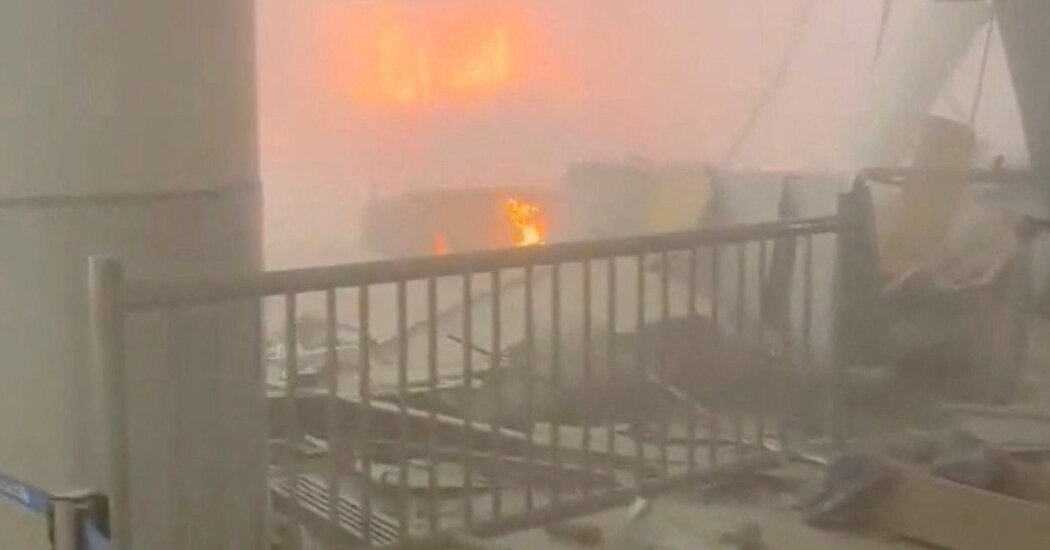
The festive atmosphere of Eid Al Adha, a time typically defined by family reunions, spiritual reflection, and bustling travel across the Middle East, was violently punctured on Wednesday as a series of coordinated Iranian drone and missile strikes targeted critical infrastructure in Kuwait and Bahrain. According to statements released by the United States military and local Gulf civil defense authorities, the unexpected aerial offensive represents the most severe escalation in regional hostilities in months, resulting in the tragic death of at least one civilian, injuring more than 60 individuals, and sending shockwaves through the international aviation sector during one of the busiest travel periods of the year. In Kuwait, the primary target of the aggression was the state’s central transportation hub, Kuwait International Airport, where an Iranian ballistic missile alongside a swarm of explosive-laden drones struck the facility, leaving terminal buildings heavily damaged, shattering glass across departure halls, and sending terrified travelers fleeing for safety. The physical impact of the explosions immediately crippled the airport’s operations, causing widespread cancellations, disrupting flight paths across the unstable airspace of the Arabian Peninsula, and leaving both seasoned travelers and local airport employees among the casualties. Abdullah al-Rajhi, an official spokesman for Kuwait’s civil aviation authority, confirmed to local television networks that the strikes targeted areas teeming with civilian workers and families returning from holiday travel, while the country’s foreign ministry noted that several nearby diplomatic missions also sustained varying degrees of structural damage. Meanwhile, across the waters of the Persian Gulf, the island kingdom of Bahrain faced its own aerial onslaught as air defense systems were rapidly activated to counter incoming threats, lighting up the night sky over Manama; local military commanders confirmed that they successfully intercepted three heavy Iranian ballistic missiles and a cluster of low-flying attack drones designed to evade radar detection, which were programed to strike civilian residential areas and vital commercial installations.
The Cease-fire Paradox: Escalating Tensions and Failed Truces in the Gulf Region
This latest wave of violence marks a disastrous breakdown in regional security, representing the first recorded civilian fatality within a Gulf Cooperation Council (GCC) member state since the United States and Iran nominally agreed to a highly publicized, UN-backed cease-fire in April. That truce, brokered after months of intensive backchannel negotiations in neutral capitals, was widely hailed by international diplomats as a vital window of opportunity that would allow the warring parties to engage in structured dialogue to permanently de-escalate the broader Middle East conflict. Instead, the agreement has proven to be a fragile paper shield, failing to halt the cycle of retaliatory actions as both Washington and Tehran continue to trade heavy kinetic strikes under the guise of pre-emptive defense. U.S. Central Command (CENTCOM), which directs all American military operations in the Middle East, issued a detailed technical brief following the attacks, stating that while a massive wave of Iranian-manufactured drones had been launched toward joint defense facilities, the vast majority of the unmanned aerial vehicles (UAVs) ultimately “failed to hit their intended military targets” due to sophisticated electronic jamming and kinetic interceptions. CENTCOM officials further emphasized that no American service members or defense contractors were injured during a specific, targeted attempt by pro-Iranian forces to overrun U.S. military installations housed within Kuwait’s broader territory. However, the diplomatic fallout was immediate, with Tehran’s foreign ministry issues a defiant public statement via state media channels, arguing that the Islamic Republic retained an inherent, sovereign right under international law to strike the launch sites of U.S. military operations, specifically pointing to recent “self-defense strikes” launched by American forces against Iranian military assets on Qeshm Island in the Strait of Hormuz.
Caught in the Geopolitical Crossfire: The Dilemma of Gulf Arab Nations
The brazen attacks on civil infrastructure in Kuwait and Bahrain highlight a profound and increasingly dangerous strategic dilemma confronting the leadership of the Gulf Arab monarchies as the protracted conflict between the United States, its regional allies, and the Islamic Republic of Iran shows no signs of abating. For decades, these oil-rich nations have pursued a delicate double-game, attempting to secure their sovereign borders by hosting expansive American military footprints while simultaneously utilizing deep diplomatic channels, economic incentives, and backchannel negotiations to appease their powerful neighbor across the Gulf. This classic security architecture—whereby the United States guarantees the territorial integrity of these monarchies in exchange for hosting strategic bases like the U.S. Navy’s Fifth Fleet in Bahrain or the vast logistics hubs at Camp Arifjan in Kuwait—has transformed from an ultimate shield into a dangerous liability, turning civilian populations into high-value targets for Iranian asymmetric warfare. By embedding American military assets, launch pads, and personnel directly within or adjacent to civilian transportation networks, such as the logistics facilities historically operated by U.S. forces within the Kuwait International Airport complex, these governments have inadvertently blurred the lines between military strongpoints and civilian safe zones. Consequently, despite their concerted efforts to steer clear of direct military confrontation and their constant public pleas for global diplomatic mediation, the Gulf states find themselves inexorably dragged into a destructive proxy war, their sovereignty repeatedly violated by an adversary that views their hospitality toward Western forces as an existential threat to its own national security.
The Toll on Critical Infrastructure: A Legacy of Vulnerability in Regional Hubs
To fully comprehend the gravity of Wednesday’s strikes, one must look at the historical context of the broader regional conflict, which has seen the Gulf Arab states targeted in thousands of sophisticated Iranian missile, rocket, and drone incursions over the past several years, resulting in mounting civilian casualties and catastrophic damage to vital economic infrastructure. Throughout this prolonged shadow war, the Islamic Revolutionary Guard Corps (IRGC) and its network of regional proxies have systematically mapped and targeted the economic lifeblood of the Arabian Peninsula, launching precision strikes on critical desalination plants, deep-water commercial ports, state-of-the-art power grids, and even luxury international hotels that symbolize the region’s status as a global tourism hub. Although the sheer volume and desperation of these aerial barrages had decreased dramatically in the immediate aftermath of the April cease-fire agreement, the fundamental threat was never neutralized, as evidenced by a persistent trickle of low-intensity proxy operations that have quietly continued to test local air defenses. This week’s dramatic resurgence of state-backed violence, which included not only the devastating strikes on Kuwait and Bahrain but also a series of separate, uncoordinated attacks targeting commercial sea lanes and urban centers within the United Arab Emirates, underscores the reality that any perceived pause in hostilities was merely a tactical regrouping rather than a shift toward lasting peace. For the citizens and millions of foreign expatriates living in these ultra-modern cities, the constant threat of incoming fire has shattered the long-held illusion of absolute security, exposing the vulnerabilities of highly integrated, technocentric societies to relatively inexpensive, mass-produced asymmetric weapons.
Economic Warfare and the Global Energy Shock: Targeting the World’s Oil Hubs
Beyond the immediate human suffering and localized structural damage, the strategic architecture of Iran’s military doctrine reveals a highly calculated, broader economic objective: to apply direct, painful pressure on the global financial system and the political leadership in Washington by targeting the world’s most sensitive energy export hubs. By striking deep within the territories of OPEC heavyweights like Kuwait and the UAE, Tehran has demonstrated its capacity to instantly disrupt the global energy supply chain, weaponizing market anxiety during a period of acute global economic vulnerability. The reaction from global energy markets was instantaneous and severe following Wednesday’s reports, with international benchmark crude oil prices surging on global trading floors, pushing the total increase in oil prices to over 30 percent since the outbreak of active hostilities in the region. This dramatic rise in energy costs serves as a direct blow to the economic defense strategies of Western nations, particularly the administration of President Donald Trump, which has struggled to contain inflationary pressures and stabilize domestic fuel prices while maintaining a campaign of maximum economic pressure against Iran. By continuously threatening the reliable flow of crude oil through the Strait of Hormuz and the Bab el-Mandeb strait, and by demonstrating that even secure inland storage facilities and airports are within range of its missile inventory, Iran has successfully altered the risk calculus for international shipping conglomerates, global insurance underwriters, and foreign investors, casting a dark shadow over any remaining diplomatic optimism for a negotiated resolution to the conflict.
The Long Road to De-escalation: Shifting Alliances and the Uncertain Future of Gulf Security
As the dust settles over the damaged runways of Kuwait International Airport and cleanup crews begin the somber task of clearing debris from the streets of Manama, the geopolitical landscape of the Middle East stands at a critical crossroads, forcing a fundamental reassessment of security alliances and regional defense strategies. The harsh reality confronting Gulf policymakers is that the traditional reliance on a unilateral American security umbrella may no longer provide the absolute deterrence it once did, as Washington’s own military posture becomes increasingly constrained by domestic political considerations and competing global security priorities. This realization is driving a quiet but significant shift in Gulf Arab foreign policy, characterized by a growing appetite for strategic autonomy, the diversification of defense partnerships, and a renewed emphasis on building indigenous, multi-layered air defense networks capable of neutralizing drone swarms without relying solely on Western intervention. However, military defense is only one side of the coin; without a genuine, comprehensive regional dialogue that addresses the root causes of the US-Iranian rivalry and the security anxieties of all sovereign nations in the Gulf, any future cease-fires will remain temporary pauses in an ongoing tragedy. Until the international community can forge a robust, verifiable diplomatic framework that respects the sovereignty of smaller Gulf nations and halts the proliferation of state-sponsored proxy networks, the skies over this vital global crossroads will remain a perilous theater of war, where the line between celebration and devastation remains terrifyingly thin.