




Frisco, Texas, is a rapidly growing suburban community deeply rooted in the traditions of high school sports, where athletic achievements are celebrated and competitive events serve as major social gatherings. On a warm spring afternoon on April 2, 2025, this idyllic athletic backdrop morphed into a scene of unimaginable horror when a trivial dispute over seating at a track and field meet escalated into a fatal physical confrontation. Two young high school football players—seventeen-year-old Austin Metcalf and nineteen-year-old Karmelo Anthony—found their paths tragically crossing in a moment of intense teenage bravado and unresolved friction. Within moments, a knife was drawn, and Metcalf lay mortally wounded on the ground, his bright athletic future and young life extinguished in a matter of seconds. The incident immediately transcended local sports news, igniting a national firestorm of public interest and media scrutiny as details of the violent encounter emerged. As the legal system began its painstaking process, the homicide case became a lightning rod for broader societal anxieties, deeply polarizing observers along racial lines. Austin Metcalf, who was white, was portrayed by some as an innocent victim of senseless violence, while others sought to frame him as an aggressive bully who had targeted Anthony, a young Black teenager navigating a highly charged, predominantly white environment. This intense clash of narratives transformed a localized tragedy into a vast cultural battleground, underscoring the deep-seated racial tensions that continue to simmer just beneath the surface of suburban American life. At the heart of it all remained two families devastated by a single, impulsive decision: one left to mourn the permanent loss of a beloved son and twin brother, while the other watched another young man’s entire future evaporate in the blink of an eye.
As the murder trial unfolded within the highly secured courtroom of veteran District Judge John Roach Jr., the defense mounted a vigorous strategy centered on the concept of self-defense, arguing that Karmelo Anthony acted out of a genuine and immediate fear for his physical safety during the chaotic, fast-moving physical altercation. Despite the high stakes of his legal defense, Anthony himself remained silent, choosing resolvedly not to take the witness stand to narrate his own version of that fateful afternoon, a decision that left the jury to interpret his state of mind solely through the lens of frantic eyewitness testimony, chaotic video snippets, and cold forensic evidence. The demographic makeup of the jury quickly became a focal point of intense controversy and public outcry, as a panel was empaneled without a single Black member, fueling accusations of systemic unfairness in a case already heavily weighed down by delicate racial dynamics. Throughout their tense and protracted deliberations, the defense desperately lobbied for a “sudden passion” finding—a specific legal distinction under Texas law that acknowledges a defendant acted under the immediate, overwhelming influence of an emotion directly provoked by the victim, which would have downgraded the conviction from a first-degree to a second-degree felony and capped his maximum prison sentence at a mere twenty years. Ultimately, however, the jury rejected this mitigating argument, delivering a resounding first-degree murder conviction alongside a steep thirty-five-year prison sentence. This outcome sparked fierce, polarized debates across the country, with civil rights advocates arguing that the harsh punishment reflected systemic inequality, while supporters of the verdict insisted that the jury had simply upheld the rule of law in the face of a violent and preventable act that claimed an innocent teenager’s life.
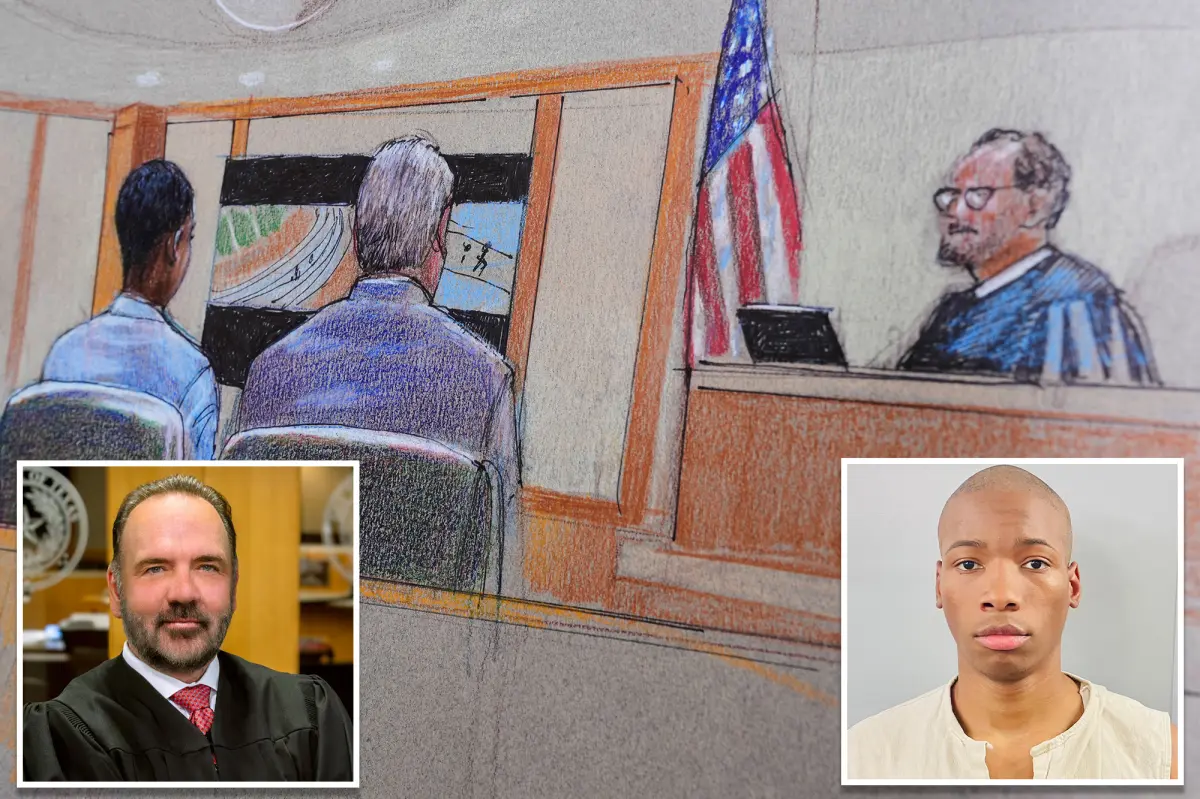
Presiding over this volatile legal arena was Judge John Roach Jr., a seasoned and formidable jurist who stood as a pillar of calm resolution amidst the relentless whirlwind of public outrage, media posturing, and community protests. Throughout the trial, Roach became the target of intense criticism from multiple factions; some accused him of actively suppressing public transparency through his strict ban on cameras in the courtroom, while others spread unsubstantiated theories suggesting he harbored a personal bias toward the victim’s family due to their shared social ties to the local high school athletic community. Trotz the mounting external pressure, Roach maintained an unwavering focus on his judicial duty, later explaining that his primary, overriding goal in every single case is to ensure that both the accused and the prosecution receive a thoroughly fair and legally sound trial, regardless of public opinion. Roach’s long career on the bench is defined by his management of high-stakes, highly sensitive litigation, including the notorious capital murder trial of Brandon McCall, who was sentenced to death in 2020 for the tragic slaying of police officer David Sherrard, proving that Roach is no stranger to the immense emotional and logistical weight of high-profile proceedings. With his judicial term set to expire in just six months, this historic trial serves as the final major milestone of his long and illustrious career, a circumstance that perhaps afforded him the professional latitude to prioritize legal integrity over popular acclaim. When addressing the public’s lingering anger over his unpopular procedural rulings, Roach remained characteristically unapologetic, concluding that while his decisions may have angered many, his role was never to court popular favor but to strictly interpret and apply the law—allowing him to sleep soundly at night knowing he adhered to his oath.
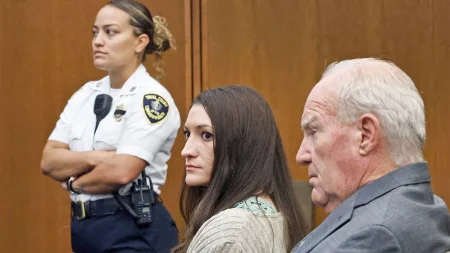
The devastating human toll of the entire ordeal culminated in a poignant, emotionally raw climax when the jury’s guilty verdict was officially read aloud to a hushed and anxious gallery. Karmelo Anthony, who had maintained a stoic and reserved demeanor throughout much of the grueling, multi-day trial, finally buckled under the immense weight of the moment, bursting into a flood of uncontrollable tears as the reality of his thirty-five-year sentence washed over him. During the subsequent victim impact statements, Metcalf’s family, consumed by an ocean of grief, addressed the court, but Anthony kept his head bowed low, staring at the table, seemingly unable or unwilling to face the profound sorrow of the family whose lives he had forever altered. It was only when Hunter Metcalf, Austin’s twin brother, directly appealed to him from the podium, asking him to look up, that Anthony raised his head to look his grieving peer in the eyes—a moment of shared, heartbreaking humanity that cut through the sterile atmosphere of the legal system and left onlookers breathless. Because of Judge Roach’s absolute ban on broadcasting equipment, the public was spared the intrusive gaze of television cameras, leaving these deeply intimate moments of sorrow, regret, and confrontation to be captured only through the expressive and interpretive medium of courtroom sketch artists. These charcoal drawings, showcasing furrowed brows, slumped shoulders, and tear-stained faces, became the sole visual record of a tragedy that words could scarcely encapsulate, serving as a stark reminder of the fragile human beings behind the sensationalized headlines of a national news story.
In the wake of the trial, Judge Roach offered a remarkably nuanced and humanizing perspective on the young man he had just seen sentenced to decades behind bars, describing Karmelo Anthony as a “nice young man” who had found himself caught in the worst possible circumstances of his own making. This unexpected characterization highlighted the bittersweet, multifaceted reality that Anthony was not merely a monster defined solely by his worst moment, but a teenager whose immense potential had been permanently derailed by a sudden, tragic act of violence. Roach observed that through the grueling trial and the stark finality of the verdict, Anthony had finally come to truly understand the heavy, irreversible consequences of committing a violent crime, a realization that came far too late to save either himself or his victim. This internal complexity was at the heart of the community’s profound division: while some viewed Anthony through a lens of irredeemable criminality, others saw a teenager who, in a moment of panic and poor judgment, made a fatal error that destroyed two families. By publicly characterizing Anthony in this manner, the veteran judge sought to remind the public that human lives are rarely black and white, and that the justice system is tasked with punishing destructive actions rather than erasing the totality of a person’s humanity. Even as Roach validated the jury’s decision as legally sound and thoroughly considered, his words reflected a profound sadness for a youth wasted, recognizing that the courtroom had ultimately witnessed a double tragedy where both families lost a son to the violent impulses of a single afternoon.
The legal battle, however, did not conclude with the final sounding of the gavel on sentencing night, as Anthony’s defense team swiftly filed a formal notice of appeal just one day after the verdict, signaling that the battle over his future is far from over. This critical legal move ensures that the questions surrounding the trial’s fairness, the racial composition of the jury, and the exclusion of the “sudden passion” argument will continue to be fiercely debated in appellate courts, keeping the painful wounds of the Frisco community open for the foreseeable future. For the Metcalf family, the upcoming appeal process represents a painful continuation of their nightmare, prolonging the timeline of their grief and forcing them to remain anchored to the horrific event that stole Austin from them. As Judge Roach prepares to step down from the bench in six months, his legacy will remain inextricably linked to this landmark trial, serving as a testament to a judicial philosophy that prioritizes the cold, protective letter of the law over the shifting, emotional winds of public opinion. Ultimately, the story of Karmelo Anthony and Austin Metcalf stands as a somber, deeply moving cautionary tale about the devastating speed with which youthful bravado can turn lethal, leaving behind a trail of broken hearts, unanswered questions, and a legal system struggling to balance the demand for justice with the loss of human potential. The echoes of that tragic day at the track meet will linger long after the courtroom sketches fade, reminding a divided public of the preciousness of young life and the permanent, tragic echoes of a single violent choice.