




From the Brink of Escalation to a Fragile Truce: Inside the High-Stakes Diplomatic Maneuvers Shaping the New Middle East
A Sudden Shift in the Middle East Powder Keg
                          MIDDLE EAST FLASHPOINT

  ┌────────────────┐     U.S. Intermediaries    ┌────────────────┐
  │     ISRAEL     ├───────────────────────────>│   HEZBOLLAH    │
  │ (IDF Forces active)│    "Mutual Cessation"     │ (Backed by Iran)│
  └───────┬────────┘                            └────────┬───────┘
          │                                              │
          │ Retaliatory Threats          Missile Strikes │
          ▼                                              ▼
  ┌──────────────────────────────────────────────────────────────┐
  │                     REGIONAL FLUIDITY                        │
  │  • Beirut's Dahiya District Evacuations                      │
  │  • Strait of Hormuz Threatens Energy Markets                 │
  │  • Crucial U.S.-Iran Backchannel Negotiations Ongoing        │
  └──────────────────────────────────────────────────────────────┘
In a diplomatic sequence as sudden as it was structurally precarious, the volatile geopolitical landscape of the Middle East shifted on Monday from the precipice of an all-out regional catastrophe to the tentative promise of a negotiated truce. President Donald J. Trump asserted via a social media announcement that Israel and the Lebanese militant group Hezbollah had reached a landmark understanding to halt their devastating cross-border campaigns, introducing a unexpected narrative arc to a multi-front conflict that only hours prior seemed bound for a catastrophic escalation. The announcement, which came in the wake of intensive backchannel communications managed by the United States, suggested a reciprocal agreement wherein Israel would suspend its offensive operations in Lebanon while Hezbollah, the heavily armed, Iranian-backed political and military group, would permanently cease its rocket and missile operations targeting Israeli municipal centers and rural border communities. This diplomatic developments occurred against a backdrop of imminent devastation, arriving just as the Israeli Defense Forces (IDF) prepared for a massive bombardment of Beirut’s heavily populated southern suburbs, and Iran threatened severe retaliation through its regional proxy networks. The sudden pivoting toward diplomacy, confirmed in broad strokes by Lebanese authorities but met with highly qualified rhetoric from Israeli leadership, exposes the delicate architecture of modern Middle Eastern negotiations. In this theater, psychological pressure, tactical military movements, and backchannel statements frequently serve as precursors to formal international diplomacy, and the announcement of a cease-fire can be both a mechanism of active warfare and a potential path to peace.
Jerusalem’s Stance: Netanyahu’s Calculated Military Ambiguity
         ┌───────────────────────────────────────────────┐
         │       ISRAEL'S BALANCED STRATEGIC POSITION    │
         └───────────────────────┬───────────────────────┘
                                 │
              ┌──────────────────┴──────────────────┐
              ▼                                     ▼
 ┌────────────────────────┐            ┌────────────────────────┐
 │ CONDITIONAL RESTRAINT  │            │  CONTINUOUS OPERATION  │
 │ Strike Beirut if       │            │ Military maneuvers in  │
 │ Hezbollah attacks city │            │ Southern Lebanon       │
 │ targets persist.       │            │ continue uninterrupted.│
 └────────────────────────┘            └────────────────────────┘
In Jerusalem, the response to the American executive’s triumphant announcement of a cease-fire was tempered by a deliberate, calculated display of strategic ambiguity designed to preserve Israel’s tactical leverage and address domestic security concerns. Prime Minister Benjamin Netanyahu released a carefully calibrated statement that conspicuously avoided endorsing the term “cease-fire,” choosing instead to frame the dynamic as a conditional ultimatum backed by the threat of immediate, overwhelming military force. While Netanyahu confirmed that he had engaged in a direct, high-level telephone call with President Trump, he sought to reassure a skeptical Israeli populace—weary from years of relentless rocket fire in the north and the ongoing regional war—that the nation’s defense apparatus would not hesitate to exact an unprecedented price from its adversaries should the diplomacy falter. The Israeli leader explicitly declared that if Hezbollah failed to cease all threats to Israeli cities and non-combatant populations, the IDF was fully prepared to execute a series of devastating, pre-targeted airstrikes against the organization’s nerve centers in the Dahiya district of Beirut, an area traditionally considered the movement’s main administrative and security bastion. Simultaneously, Netanyahu emphasized that Israeli ground operations and tactical maneuvers in southern Lebanon would proceed unimpeded, signaling that Jerusalem views the proposed cease-fire not as a concession or an immediate cessation of its broader strategic objectives, but rather as a highly structured security framework that must be enforced through the continuous, real-time threat of military retaliation.
Beirut’s Paradox: Diplomatic Intermediation Amid Sovereignty Deficits
            ┌─────────────────────────────────────────┐
            │      LEBANESE STATE RECONCILIATION      │
            └────────────────────┬────────────────────┘
                                 │
       ┌─────────────────────────┴─────────────────────────┐
       ▼                                                   ▼
┌──────────────────────────────────────┐ ┌──────────────────────┐
│ STATE DIPLOMATIC EFFORT │ │ MILITANT AUTONOMY │
│ President Aoun defends negotiations │ │ Hezbollah retains │
│ to preserve sovereign infrastructure │ │ parallel military │
│ and prevent domestic destruction. │ │ power and control. │
│ │ │ │
│ “Least Possible Harm” Strategy │ │ Nabih Berri Liaison │
└──────────────────────────────────────┘ └──────────────────────┘
The diplomatic landscape in Beirut reflected the structural paradox of the Lebanese state, where a weak central government frequently finds itself negotiating on behalf of a powerful, heavily armed non-state actor over which it exerts zero direct administrative control. As the theoretical sovereign authority, the Lebanese government was quick to issue a statement confirming that it had received explicit assurances that Hezbollah would accept the American-brokered proposal for a mutual cessation of hostilities. This diplomatic channel was facilitated primarily by Nabih Berri, the Speaker of the Lebanese Parliament and a veteran Shiite politician who has long served as the crucial, high-stakes intermediary between the Western powers and Hezbollah’s insulated leadership structure. While Hezbollah’s official media wings maintained a calculated, strategic silence on the details of the agreement, Berri’s assurances provided the international community with the requisite diplomatic currency to move the proposals forward. The domestic political stakes of these negotiations were captured by Lebanese President Joseph Aoun, who mounted a public defense of diplomacy as an essential tool of national survival rather than an act of political capitulation. Confronting critics who portrayed any compromise with Israel as an abandonment of national sovereignty, Aoun argued that proactive negotiation represents a pragmatic, vital mechanism designed to safeguard Lebanon’s remaining civil infrastructure and halt the cycle of violence with the least possible harm to a populace already grappling with severe socio-economic decline.
The Shadow War: Washington-Tehran Proxy Dynamics and Global Energy Vulnerability
                     GLOBAL IMPACT PATHWAYS

 ┌──────────────────────┐               ┌──────────────────────┐
 │   IRANIAN RESPONSE   │               │   U.S. DEPLOYMENTS   │
 │ Ballistic missile    │               │ Naval forces protect │
 │ defense challenges   │               │ shipping lanes and   │
 │ proxy battlefronts.  │               │ global oil routes.   │
 └──────────┬───────────┘               └──────────┬───────────┘
            │                                      │
            └──────────────────┬───────────────────┘
                               │
                               ▼
                 ┌───────────────────────────┐
                 │    STRAIT OF HORMUZ       │
                 │  Assault risks disrupt    │
                 │  global shipping cargo.   │
                 └─────────────┬─────────────┘
                               │
                               ▼
                 ┌───────────────────────────┐
                 │    ENERGY PRICE SURGES    │
                 │  Volatile markets impact  │
                 │  global economic indices. │
                 └───────────────────────────┘
The underlying currents of this diplomatic breakthrough remain deeply linked to the broader shadow war between Washington and Tehran, an expansive battle that has periodically erupted into direct kinetic engagements across the global commons. Only hours before the cease-fire framework was publicized, the risk of a regional escalation was driven home by the U.S. military’s interception of two Iranian ballistic missiles over Kuwait, launched in the direction of strategic American military installations. This close-call interception, executed by advanced air defense networks, occurred in tandem with a series of heavy U.S. retaliatory strikes against strategic radar facilities and command centers inside southern Iran, launched after an American surveillance drone was shot down over international waters. The volatility of the situation was further exacerbated by a report from Iran’s state-aligned Tasnim News Agency, which suggested that Tehran might suspend all diplomatic engagements with the United States and move toward a total operational closure of the Strait of Hormuz—the vital maritime artery through which approximately one-fifth of the world’s petroleum supplies transit daily. While senior Iranian diplomats eventually distanced themselves from this threat, the mere rumor of such a move sent instant shockwaves through international energy markets, causing Brent crude futures to spike and illustrating the direct connection between Middle Eastern stability and global economic growth. The high-stakes dynamic highlights how easily localized cross-border skirmishes between Israel and Hezbollah can morph into an expansive geopolitical crisis involving global super-powers, ballistic missile engagements, and systemic threats to international trade.
The Toll of Perpetual Flight: Civilians Caught in the Crossfire of Attrition
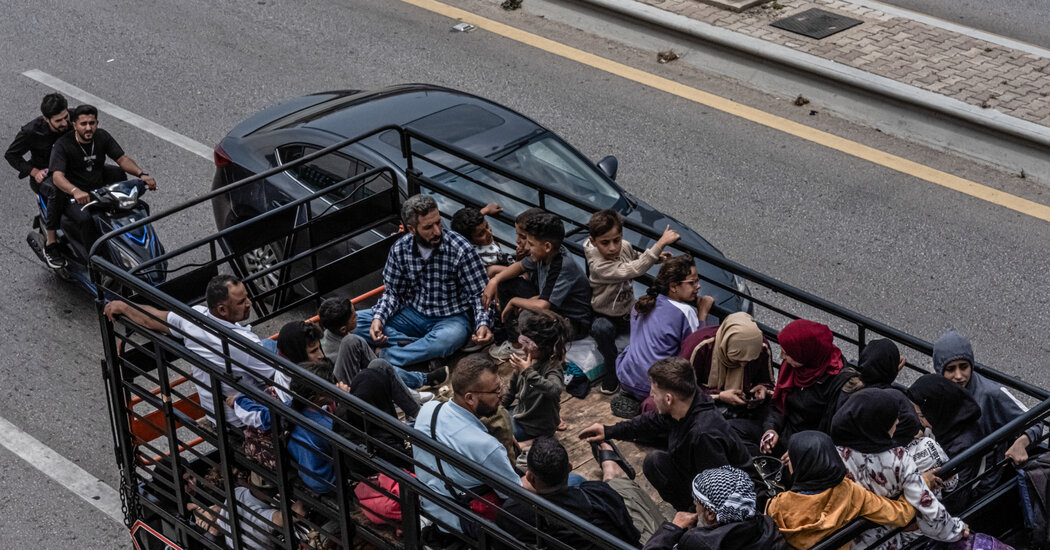
While the corridors of absolute power in Washington, Jerusalem, and Tehran buzzed with grand geopolitical calculations, the immediate human reality of the conflict was framed by the exhausting cycle of displacement experienced by ordinary civilians along the Lebanese-Israeli border and within the densely populated city districts of Beirut. In the Dahiya district, the southern periphery of Lebanon’s capital, the threat of an imminent, retaliatory Israeli bombardment triggered another mass exodus, sending thousands of families fleeing northward along congested coastal highways in search of temporary shelter. For residents like 47-year-old Batoul Hassan Srour, who abandoned her home in Dahiya to seek safety in a crowded municipal shelter in Aramoun, the endless cycle of strategic threats and sudden evacuations has extracted a profound, agonizing psychological toll. Srour’s weary skepticism underscores a widespread war-weariness shared by civilians on both sides of the Blue Line, who have lived under the persistent threat of aerial bombardment, artillery barrages, and rocket attacks for nearly three full years. In northern Israel, municipal centers have been rendered ghost towns by persistent Hezbollah rocket batteries, displacing tens of thousands of families and creating a parallel humanitarian crisis that has severely strained the state’s domestic infrastructure. This shared trauma of displacement has cultivated a deep-seated public cynicism toward grand diplomatic declarations, with ordinary citizens repeatedly noting that nominal cease-fire agreements have historically served as brief interludes for armed groups to consolidate their forces before launching the next round of violence.
   HUMANITARIAN PRESSURE METRICS: BEIRUT & NORTHERN ISRAEL

   Southern Beirut (Dahiya)                 Northern Israel
   ┌────────────────────────┐               ┌────────────────────────┐
   │ • Heavy displacement   │               │ • Ghost town regions   │
   │ • High civil trauma    │ <───────────> │ • Constant rocket fire │
   │ • Infrastructure decay │               │ • Domestic strain      │
   └────────────────────────┘               └────────────────────────┘
The High-Stakes Diplomacy of Lasting Peace vs. Transactional Truces
The ultimate viability of this newly announced cease-fire remains deeply contingent on whether the international community can successfully transition from transactional crisis management to a sustainable, legally binding regional framework. The current diplomacy is unfolding in a highly non-traditional fashion, characterized by President Trump’s characteristically disruptive transactional style, which has seen the administration alternate between public pressure campaigns and intensive, behind-the-scenes renegotiations of baseline agreements. By presenting a revised, more stringent draft of the peace proposal to Iranian and Lebanese emissaries, the U.S. executive branch is attempting to permanently alter the operational parameters of Hezbollah along Israel’s northern border, demanding a complete withdrawal of militant forces north of the Litani River in dynamic alignment with historic United Nations Security Council resolutions. Yet, as the UN Security Council convenes for an emergency session to address the crisis, monumental hurdles to a lasting peace remain, including the unresolved sovereignty disputes over the Shebaa Farms, the continuous flow of sophisticated weapons from Iranian manufacturing hubs, and the underlying ideological commitments of the regional proxy networks. If this agreement is to survive where its predecessors have failed, it must establish robust, transparent, and internationally verifiable monitoring mechanisms that can assure security for northern Israel while concurrently guaranteeing the territorial integrity and political independence of a sovereign Lebanese state.
Geopolitical Comparison: Key Strategic Dimensions
To understand the core challenges facing this diplomatic effort, it is helpful to analyze the primary regional actors, their immediate objectives, their underlying long-term strategies, and the critical stress points that could cause this fragile cease-fire to unravel.
| Geopolitical Actor | Primary Immediate Objective | Long-Term Strategic Goal | Key Stress Point / Trigger for Failure |
|---|---|---|---|
| Israel | Establish a secure northern border to facilitate the repatriation of thousands of displaced citizens. | Neutralize Hezbollah’s military capability and break Iran’s ring of fire. | Any rocket attacks on civilian centers or perceived militant build-ups south of the Litani River. |
| Hezbollah | Prevent the destruction of its military infrastructure in southern Lebanon and Beirut. | Maintain its status as the chief vanguard of regional resistance against Israel. | Continued targeted Israeli strikes on its command structure during the cease-fire transition. |
| Iran | Preserve its premier regional proxy network while avoiding direct kinetic warfare with the United States. | Establish strategic regional depth to deter direct military strikes on its homeland. | U.S. or Israeli military moves targeting its domestic infrastructure or nuclear facilities. |
| United States | De-escalate regional tensions to stabilize international oil transit routes and secure diplomatic achievements. | Limit Iranian influence throughout the Levant while ensuring Israel’s long-term defense. | A failure of backchannel communications or accidental direct military engagements in the Gulf. |
| Lebanon | Halve the devastating humanitarian and economic toll of the conflict on its public infrastructure. | Re-assert state sovereign control over its national boundaries and minimize foreign military presence. | Political instability or the collapse of the state structure under economic and military strain. |