






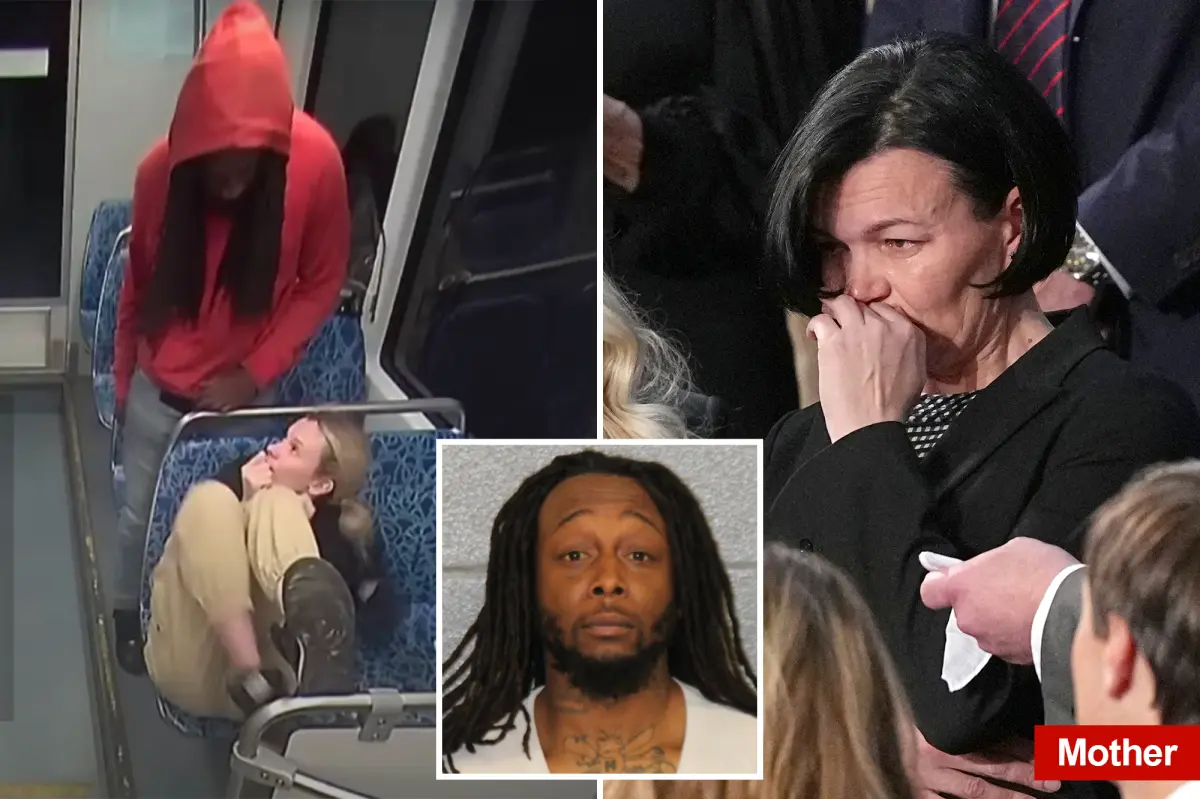
Iryna Zarutska came to Charlotte looking for a second chance. A Ukrainian refugee fleeing the horrors of war, she had hoped to build a quiet, peaceful life in a city that promised safety and opportunity. Instead, on August 22, 2025, she was fatally stabbed while riding the Lynx Blue Line light rail, a brutal act of violence that sent shockwaves far beyond North Carolina and left a family shattered by grief. One year later, her loved ones are still searching for answers, and they have turned to the courts in their fight for justice. The family has filed a wrongful-death lawsuit against the City of Charlotte and Professional Police Services Inc., which does business as Professional Security Services, or PSS, the private contractor responsible for guarding the transit system. The lawsuit argues that Iryna’s death was not an unavoidable tragedy but a preventable catastrophe born of systemic failures and negligence. Through their attorneys, her family is demanding accountability, not only for themselves but for every rider who steps onto a train expecting to arrive home safely.
The lawsuit paints a devastating picture of a transit system that was left dangerously exposed. At the center of the case is a simple but haunting allegation: there was no security guard on the train when Iryna was attacked. The complaint, filed by attorney Lauren Newton on behalf of the family and estate, argues that the City of Charlotte and PSS had known for years about vulnerabilities in the system yet failed to take meaningful action. According to the lawsuit, the city’s amended contract with PSS provided funding for 219 security personnel for fiscal years 2025 and 2026. But at the time of Iryna’s killing, PSS had only hired 183 people, leaving the system understaffed by dozens of guards. The gap becomes even more alarming when looking at armed personnel: the contract allowed for up to 39 armed guards, yet only 11 were in place. Newton was blunt in her assessment, telling local reporters that if a security guard had been present on that train, Iryna Zarutska would still be alive today. That specific claim has not yet been established in court, and the allegations remain unproven, but the numbers reveal a system straining under chronic shortages, whether through poor management, insufficient oversight, or a combination of both.
The lawsuit also takes aim at fare enforcement, arguing that the lack of basic ticketing controls made the entire light-rail system more dangerous. It alleges that Iryna’s accused killer, Decarlos Brown Jr., had been riding CATS transportation without paying before the attack. There were no physical barriers preventing non-ticketed riders from accessing the trains, and the complaint argues that this open-door policy created an atmosphere where anyone could enter the system without any sort of check or deterrent. Attorney Newton described this as a profound failure of basic safety infrastructure. Fare enforcement, she said, is not just about collecting revenue; it is one of the most fundamental tools a transit agency has to ensure that riders are known, accountable, and safe. The lawsuit alleges that there has been “literally no fare enforcement” and that such measures are necessary at a basic level for security. Without them, the system becomes a place where violent individuals can move freely and anonymously, with no one to question their presence or stop them before tragedy strikes. The implication is clear: had there been fare gates, station attendants, or onboard security, the attack on Iryna might never have happened.
Beyond the lack of security personnel and fare enforcement, the lawsuit points to a troubling pattern of criminal activity along the Blue Line that should have served as a warning. The complaint alleges that the City of Charlotte and PSS knew, or should have known, that the Blue Line and its stations had been the site of repeated criminal incidents prior to Iryna’s death. These were not isolated occurrences, but a pattern of violence and disorder that made future attacks foreseeable. Newton did not mince words when she addressed this, saying that violent crime was absolutely foreseeable given the circumstances. The lawsuit argues that despite this knowledge, the city and its contractor failed to take corrective action, leaving riders exposed to known dangers. For the family, this is perhaps the hardest part to accept. It is one thing to lose a loved one in a random, unpredictable act of violence. It is another to learn that the people responsible for protecting the public had ample warning and still did not act. The wrongful-death suit names claims based on negligent and inadequate security, as well as gross negligence, charging that both the city and PSS ignored their duty to keep passengers safe. While the legal system will ultimately determine the facts, the emotional weight of these allegations is impossible to overlook.
The family’s legal action seeks damages exceeding $25,000, along with punitive damages against PSS, though notably not against the city. This decision reflects a desire for accountability, not simply financial compensation. Punitive damages are meant to punish egregious behavior and deter future wrongdoing, and the family believes that the private security contractor bears significant responsibility for what happened. Attorney Newton emphasized that the family does not want this tragedy to happen to anyone else’s loved one. That sentiment lies at the heart of the lawsuit. It is not about revenge, but about changing a system that allowed a young woman’s life to be cut short. In the face of unimaginable loss, Iryna’s family is trying to turn their grief into purpose, pushing for reforms that could protect other passengers, other mothers, daughters, and friends. The City of Charlotte has declined to comment, saying it does not discuss active litigation. PSS did not respond to requests for comment. But the silence from those being sued only underscores the importance of the family’s fight. They are asking difficult questions that deserve answers, and they are refusing to let Iryna’s name fade quietly into memory.
Iryna Zarutska’s story is more than a legal case. It is a reminder that public transit is a shared trust, a place where people from all walks of life depend on one another and on the systems built to protect them. For Iryna, the light rail was likely just a part of her daily routine, a simple commute that ended in unspeakable horror. Her death has become a symbol of what happens when safety nets are allowed to fray, when budget shortfalls, staffing gaps, and misplaced priorities come at the expense of human life. Her family now carries the burden of remembering her, of fighting for transparency, and of hoping that her death will not be in vain. They are asking for something that no court can fully provide: to have their daughter, their sister, their loved one back. But since that is impossible, they are demanding that those responsible look at what happened, acknowledge the failures, and do everything in their power to ensure that no other family has to endure the same heartbreak. In the end, this lawsuit is a plea for humanity, for the simple, fundamental belief that every person riding a city train deserves to be protected, and that one life lost to negligence is one too many.