





The New Face of Iranian Nationalism: How a Fractured Nation Limits the Bounds of Dissent Under Fire
1. The Unexpected Aesthetics of a State-Sanctioned Ideological Shift
  _____                               _
 |_   _|                             (_)
   | |  _ __  __ _ _ __   _ __  _   _ _
   | | | '_ / _` | '_  | '_ | | | | |
  _| |_| | | | (_| | | | || |_) | |_| | |
 |_____|_| |_|__,_|_| |_|| .__/ __,_|_|
                          | |
                          |_|
Dressed in a striking pink top and acid-washed jeans, the young woman captured in the viral video stood out as a vivid anomaly, a stark contrast to the sea of women draped in conservative black chadors. Her long, dark curls fell freely onto her shoulders—a direct and public defiance of the country’s strict compulsory hijab law. Yet, her presence was not part of an anti-government rally; instead, she was standing alongside state loyalists, offering a highly emotional, on-camera testimony to Hossein Shamaghdari, a prominent filmmaker known for his close ties to the hard-line establishments in Tehran. Holding back tears, she confessed that while she had never previously supported the Islamic Republic or its conservative clerical leadership, the devastating military strikes launched against her country by the United States and Israel in early February had radically shifted her perspective. She remarked that without the defensive actions of the Islamic Revolutionary Guard Corps (IRGC) and the local Basij militias, the nation would have collapsed under the weight of foreign intervention, prompting her to rethink her long-held opposition to the autocratic government. This carefully produced encounter, which quickly circulated across major state-aligned digital platforms, highlights a sophisticated, newly formulated brand of Iranian nationalism designed by state authorities to co-opt the very cultural symbols and rebellious demographics that had, just months prior, pushed the government to the brink of collapse.
2. Geopolitical Survival and the Dual Realities of Domestic Control
  _____                                _
 / ____|                              (_)
| (___  _   _ _ ____   __ ___   ____ _ _
 ___ | | | | '__  / // _  / / _` | |
 ____) | |_| | |    V /|  __/ <| (_| | |
|_____/ __,_|_|    _/  ___| _\__,_|_|
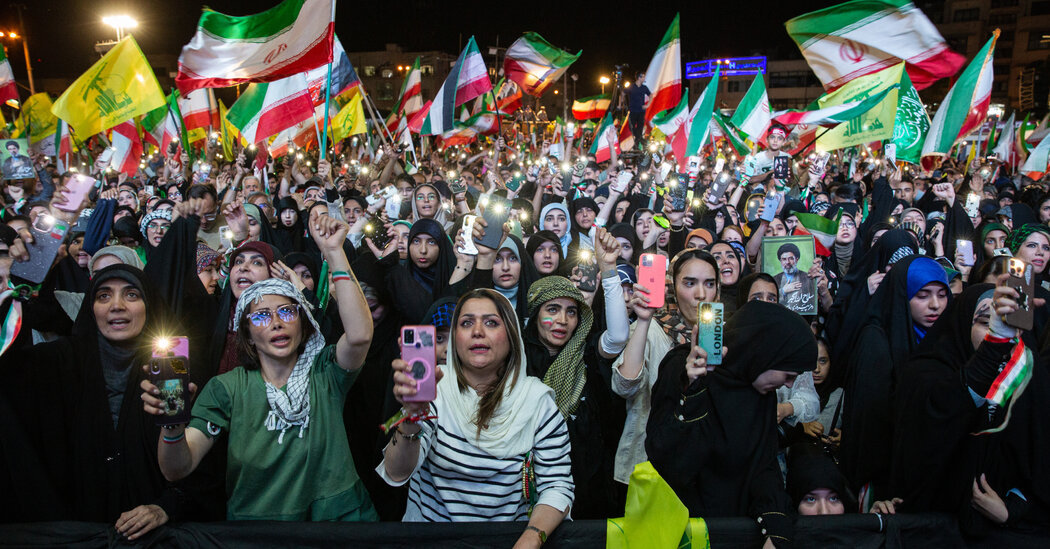
By weathering the intense military campaign and positioning itself as an essential player in the subsequent regional peace negotiations, Iran’s ruling establishment has emerged from the conflict feeling remarkably vindicated and emboldened. However, this outward projection of resilience masks a staggering domestic crisis characterized by a cascading economic collapse, sky-high inflation, and a deeply traumatized population that remains profoundly polarized following the bloody clampdowns on civil unrest that preceded the hostilities. To preempt these volatile domestic challenges, the government and its vast media apparatus are skillfully exploiting the widespread public outrage sparked by foreign military aggression, attempting to forge a sense of collective defense that reaches far beyond their traditional conservative base. The core of this propaganda campaign is a message of cross-factional reconciliation, asserting that lifelong loyalists and ardent political dissidents can find common ground when defending the territorial integrity of the state. Ironically, this softer, more inclusive public image is being projected simultaneously alongside a relentless domestic crackdown, with human rights organizations reporting that the judiciary is currently executing political prisoners, seizing private property, and silencing internal critics at the highest rate seen in decades. This calculated duality is manifested in a deluge of pro-government internet videos in which heavily pierced youth, secular hipsters, and former street protesters express their newfound admiration for the recently elevated Supreme Leader, Ayatollah Mojtaba Khamenei, signaling a determined effort by the state to present a unified national front, regardless of whether these public sentiments are born of genuine patriotism or subtle coercion.
3. Redefining the Red Lines of the Compulsory Hijab Law
  _    _ _  _       _
 | |  | (_)(_)     | |
 | |__| |_ _  __ _ | |__
 |  __  | | |/ _` || '_
 | |  | | | | (_| || |_) |
 |_|  |_|_| |__,_||_.__/
         _/ |
        |__/
Historically, the mandatory hijab has stood as an uncompromising foundation of the Islamic Republic’s social policy, serving as a non-negotiable divide between the devout vanguard of the 1979 revolution and the secular sectors of Iranian society. Over the last several decades, any attempt to flout this dress code was met with severe state retribution, a reality underscored by the recent sentencing of popular singer Parastoo Ahmadi to 74 lashes for performing unveiled at an independent concert. While a growing number of women in cosmopolitan hubs like Tehran and even in traditional rural provinces now openly ignore the headscarf requirement, their images have been historically blacklisted from state television and government publications. According to Omid Memarian, a distinguished senior Iran analyst at the Washington-based think tank Democracy for the Arab World Now (DAWN), this sudden integration of unveiled women into state media represents a historic shift in the country’s sociopolitical landscape, wherein the primary division is no longer defined by personal lifestyle choices but by one’s stance on foreign military threats. This pragmatic pivot contrasts sharply with the state-backed iconography of the devastating eight-year Iran-Iraq War in the 1980s, which relied heavily on imagery of highly pious, chador-clad women symbolizing revolutionary self-sacrifice; today, the state-run media showcases modernized, highly stylized female military parades featuring pink-accented military hardware alongside unveiled citizens participating in state-sponsored rallies, all to construct an image of an inclusive homeland protected by all its children.
4. The Shadows of the Past and the Ghost of Mahsa Amini
  _____                               _
 |  __                              | |
 | |__) |_ __ ___  _ __   __ _  __ _ | |
 |  ___/| '__/ _ | '_  / _` |/ _` || |
 | |    | | | (_) | |_) | (_| | (_| ||_|
 |_|    |_|  ___/| .__/ __,_|__,_|(_)
                  | |
                  |_|
For many ordinary citizens living in the capital, this sudden, state-sanctioned embrace of unveiled women is viewed with immense cynicism and labeled as a hypocritical maneuver designed to exploit female bodies for geopolitical leverage. Residents like Maryam, speaking anonymously to protect her safety, point out the painful irony of a government that previously deployed morality police to arrest, beat, and harass women for minor dress infractions now suddenly declaring “we are all Iranians” when faced with the threat of external military defeat. Online activists have highlighted this blatant contradiction by posting side-by-side comparisons of the unveiled women currently celebrated at pro-government rallies next to photographs of Mahsa Amini, the 22-year-old Kurdish-Iranian woman whose tragic death in police custody in late 2022 catalyzed the historic, nationwide “Women, Life, Freedom” protest movement. Shima Tadris, an expert on Iranian women’s rights movements at the Germany-based Gerda Henkel Foundation, observes that while the state has historically tolerated a degree of social non-conformity during high-stakes national moments to simulate unity, the current post-war campaign is unprecedented in its scale and strategic intent. By publicizing these images, Tadris argues, the conservative clerical establishment seeks to systematically gaslight and psychologically isolate the remnants of the domestic reform movement, delivering a stark, demoralizing message to those who participated in the recent January demonstrations that they are now entirely alone, while their fellow citizens have supposedly abandoned dissent to unite behind the leadership.
5. The Fracturing of Modern Iranian Civil Society
  _____            _           _ _
 / ____|          (_)         | (_)
| (___   ___   ___ _  ___  ___| |_ _   _
 ___  / _  / __| |/ _ / __| | | | | |
 ____) | (_) | (__| |  __/__  | | |_| |
|_____/ ___/ ___|_|___||___/_|_|__, |
                                    __/ |
                                   |___/
The state’s elaborate appeals to a unified Persian identity arrive at a time when the broader fabric of Iranian society is more severely fragmented than at any other period since the aftermath of the 1979 revolution. According to Naghmeh Sohrabi, a prominent historian of the modern Middle East at Brandeis University, the traditional binary dynamic that previously of-divided the nation into clear-cut pro-government and anti-government factions has completely disintegrated under the compounding pressures of severe economic sanctions, hyperinflation, and external military threats. The diverse opposition movement has fractured into a spectrum of irreconcilable camps: those who quietly supported the US-led military campaign in the desperate hope that external shockwaves would finally dismantle the clerical regime, and those who fiercely opposed the foreign bombs out of a deep-seated fear that military intervention would yield only catastrophic state failure, infrastructure ruin, and widespread civilian suffering. Concurrently, the conservative ruling class and its traditional base are also deeply divided between uncompromising hard-liners who advocate for perpetual regional confrontation and a more pragmatic domestic faction eager to leverage the post-war peace talks to secure economic relief and normalize diplomatic relations. This multi-layered fragmentation creates an incredibly complex social landscape where traditional political identities have collapsed, presenting the ruling elite with the monumental challenge of stabilizing a population that is psychologically exhausted, internally alienated, and profoundly distrustful of any state-led initiative.
6. The Precarious Path of Reconciliatory Rhetoric and Future Governance
  ______ _      _ _ _ _   _ _ _
 |  ____| |    (_) | (_) | (_) |
 | |__  | |     _| | |_  | |_| |_ _   _
 |  __| | |    | | | | | | | | __| | | |
 | |    | |____| | | | |_| | | |_| |_| |
 |_|    |______|_|_|_|__|_|_|__|__, |
                                   __/ |
                                  |___/
Ultimately, while the deep-seated structural rifts within Iranian society cannot be easily healed by temporary appeals to wartime nationalism, there remains a genuine, complex undercurrent of collective pride regarding the country’s survival in the face of two of the world’s most sophisticated militaries. Roya Khoshnevis, a Tehran-based academic and cultural analyst, remarks that while the population does not necessarily feel more ideologically aligned with their rulers, there is a widespread, quiet pride in the state’s military resilience, even among those who have suffered immensely under the regime’s long history of systemic human rights violations and economic mismanagement. This transient period of state tolerance, however, inspires deep apprehension among human rights defenders who fear that once the immediate threat of foreign invasion recedes and diplomatic negotiations conclude, the state will inevitably return to its default policy of aggressive internal oppression. A recent political dispute over a photo essay published by the state-run news agency, IRNA, which featured an unveiled woman within her private home, illustrates the volatile nature of this debate within the halls of power; when legislative hard-liners summoned the agency’s editor for questioning, it was President Masoud Pezeshkian himself who publicly intervened, arguing on state television that the government must learn to accept internal cultural differences rather than classifying every lifestyle variation as an act of hostility. Whether this delicate, top-down attempt to redefine Iranian identity representing a permanent, pragmatic evolution of the Islamic Republic or merely a cynical, temporary shield against domestic collapse remains the central, unresolved question of the nation’s post-war era.