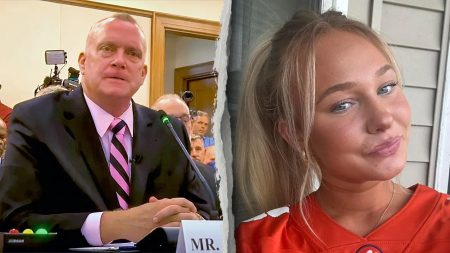






Under the harsh, unyielding glare of the television cameras and the solemn, history-soaked atmosphere of the Senate Judiciary Committee room, a classic Washington drama of trust, power, and institutional survival unfolded with quiet but unmistakable fury. Sitting at the polished mahogany witness table, illuminated by the bright spotlights of the press corps, was the nominee for Attorney General of the United States—a seasoned legal operative and bureaucratic strategist whose path to the nation’s highest law enforcement office had suddenly run aground on the rocky shoals of a single, unyielding legislative demand. Across the room, perched on the elevated, tier-like dais that overlooks the witness table, sat Senators John Cornyn of Texas and Thom Tillis of North Carolina, two influential Republican heavyweights who spent decades navigating the treacherous, hyper-partisan currents of Capitol Hill. The two senators, known for their sharp, analytically rigorous legal minds and calculated political maneuvering, leveled a devastating and highly public accusation against the nominee, transforming a standard, somewhat predictable confirmation hearing into a high-stakes constitutional standoff that threatened to derail the entire administration’s legal agenda. They accused him of a brazen, highly calculated breach of trust: specifically, of verbally promising to dismantle or “kill” key aspects of a highly sensitive, controversial legal settlement he had previously brokered to resolve former President Donald Trump’s high-profile lawsuit against a federal agency, while flatly refusing to formalize that critical commitment on paper. For Cornyn and Tillis, this refusal was not a minor administrative technicality, nor was it a routine disagreement over bureaucratic procedure; it was a profound, flashing red flag that signaled a nominee who wanted the political benefits of their crucial confirmation votes without the legal accountability of a written pledge. The atmosphere in the room was thick with tension, a tangible manifestation of the deep-seated suspicion that now defines the modern government appointment process, where verbal handshakes are increasingly treated as worthless currency and the boundary between private assurance and public record has become the ultimate legislative battleground. This test of strength was not merely a debate over dry legal codes, but a deeply human clash of wills, pitting the senators’ demand for binding, written accountability against the nominee’s desperate attempt to retain his professional independence and avoid a career-ending political trap.
To fully understand the deep-seated bitterness animating the hearing room, one must untangle the complex, high-stakes history of the original lawsuit and the controversial settlement that lay at the absolute heart of this political dispute. Years earlier, Donald Trump had initiated an aggressive, highly publicized legal campaign against a prominent federal agency, a lawsuit that symbolized his enduring war against what he termed the “deep state” administrative apparatus and threatened to expose the agency’s internal decision-making processes to unprecedented public and legal scrutiny. The nominee, then acting in a critical, high-level legal capacity within the administration, found himself positioned as the primary architect of the compromise designed to resolve this ticking political time-bomb before it could detonate in open court and cause irreparable reputational damage to the government. He successfully negotiated the settlement—a complex, incredibly dense web of legal concessions that brought a swift end to the active litigation but left behind a wake of unresolved constitutional questions, administrative headaches, and deep ideological grievances among the former President’s allies. To conservative critics on Capitol Hill, most notably Cornyn and Tillis, this settlement did not represent a fair, objective, and balanced resolution of a legal dispute, but rather a deeply flawed surrender that shielded entrenched bureaucratic actors from accountability while leaving key systemic problems unresolved. They stubbornly viewed the deal as a masterclass in administrative self-preservation that ultimately undermined the former President’s legitimate grievances and protected an agency system they believed was inherently biased against conservative oversight and outsider scrutiny. In their eyes, the nominee was not just a neutral mediator performing his civic duty; he was the individual who had put his signature on a document that institutionalized a set of rules they deeply opposed, making his subsequent nomination for Attorney General a bitter pill to swallow unless he was willing to systematically undo his own handiwork and prove his loyalty.
In the modern theater of congressional oversight, a verbal promise is a currency that has rapidly and catastrophically depreciated, and Cornyn and Tillis were determined not to let the nominee purchase his confirmation with what they viewed as a bad check. During private, tense preparatory meetings in Capitol offices and subsequent public question-and-answer sessions, the nominee had reportedly sought to soothe the senators’ intense anxieties with private, verbal assurances, hinting that he fully intended to dismantle the offensive provisions of the settlement once he secured the formidable keys to the Justice Department. To the senators, however, these quiet, behind-closed-doors assurances sounded too much like the convenient, ephemeral whispers of a cynical politician seeking the path of least resistance to confirmation, only to change his tune once the appointment was secured. They knew all too well that in the ruthless, rapidly shifting environment of modern Washington, a verbal commitment is easily denied, conveniently reinterpreted, or simply forgotten once the public spotlight fades and the nominee is safely ensconced in office with the shield of executive privilege protecting his actions. By demanding that the nominee commit his promises to paper, Cornyn and Tillis were attempting to erect a legal and political firewall—a signed testament of accountability that would bind his future administrative decisions to his present words, forcing him to choose between the political safety of strategic ambiguity and the perilous clarity of a written oath. Their insistence on a written pledge was a raw demonstration of legislative leverage, reflecting a broader, systemic breakdown of trust between the branches of government, where senators no longer believe that a nominee’s word is his bond, and instead demand the absolute security of a signed contract before granting access to federal power.
From the nominee’s vantage point, however, the senators’ aggressive demand represented an existential threat to his professional integrity, an ethical minefield, and a dangerous trap designed to hamstring his future leadership of the Justice Department before he even had a chance to move into his office. Had he complied with their demands and put his signature on a written pledge to “kill” specific aspects of a legally binding settlement, he would have effectively pre-judged a major administrative and legal matter, laying himself open to devastating accusations of political bias, ethical misconduct, and a fundamental failure to uphold the rule of law. Such a written document would have sent a chilling and immediate signal to the thousands of career attorneys and investigators within the agency, suggesting that their decisions were subject to the backroom ultimatums of legislative powerbrokers rather than the objective execution of constitutional and statutory mandates. He sat at the witness table caught in an agonizing, slow-motion vice: to refuse the senators was to invite their public condemnation, risk alienating key members of the committee, and potentially doom his nomination to a humiliating defeat, while to acquiesce was to compromise the independence of the Attorney General’s office and enter his tenure as a politically hand-strung pawn. His calculated defiance—his refusal to let ink touch paper despite the intense, grinding pressure of his interrogators—was not merely a stubborn act of personal pride, but a desperate, strategic effort to defend the institutional boundaries of the executive branch and protect himself from future legal challenges that would surely arise if his decisions were shown to be pre-ordained by a legislative deal. This silent stand was his way of asserting that while he respected the oversight role of Congress, he would not allow the Department of Justice to become a mere transactional tool used to settle old political scores.
This intense, localized standoff carries profound implications that reverberate far beyond the immediate careers of the individuals involved, offering a stark window into the broader, ongoing constitutional tug-of-war that defines the separation of powers in twenty-first-century America. When Cornyn and Tillis confronted the nominee, they were not simply prosecuting a localized grievance over a single settlement; they were executing a tactical maneuver in a much larger, relentless war for control over the federal government’s vast administrative and legal apparatus. For decades, the Department of Justice has struggled to maintain its delicate, carefully curated reputation as an impartial arbiter of the law, free from the direct taint of partisan politics, yet this dispute vividly illustrates how deeply the shadow of past administrations, and specifically the legally litigious legacy of Donald Trump, continues to darken that ideal. The American public is left to watch a confusing, often dispiriting spectacle where legal settlements, which ought to be dry, technical exercises in administrative dispute resolution, are instead treated as ideological peace treaties that can be torn up or rewritten depending on who holds the levers of legislative confirmation. This hyper-politicization of the appointment process threatens to transform the leadership of the nation’s premier law enforcement agency into a series of highly transactional compromises, where the rule of law is slowly supplanted by the transactional logic of political hostage-taking, and where nominees are forced to navigate a gauntlet of ideological litmus tests that prize ideological loyalty over administrative competence. In this environment, the very concept of an independent judiciary or a politically neutral Department of Justice becomes increasingly difficult to sustain, as every legal action is viewed through the distorting lens of partisan warfare.
Ultimately, the high-stakes clash between the stubborn refusal of the nominee and the unyielding, contract-style demands of Senators Cornyn and Tillis serves as a sobering, deeply human parable about the systematic erosion of trust at the highest levels of the American republic. When the vital ink of mutual confidence has dried up, when seasoned senators can no longer trust the spoken word of a prospective public servant and a nominee cannot trust the legislature to respect the constitutional boundaries of his office, the machinery of representative governance begins to grind to a halting, dysfunctional stop. Whether this specific standoff ultimately derails the nominee’s path to the cabinet or whether a complex, facesaving compromise is eventually hammered out in the shadows, the deep scars of this confrontation will linger, serving as a cautionary tale for future generations of public servants who must navigate the treacherous waters where law, policy, and raw politics collide. In this hyper-partisan era, the old ways of doing business in Washington—where a firm handshake and a quiet word of honor were sufficient to seal a pact between gentlemen—have been thoroughly dismantled, replaced by a cold, deeply skeptical reality where only the written word holds any sovereign sway, and even then, only until the next political storm threatens to blow it away. The tragedy of this standoff is not found in the technical details of the settlement itself, but in the glaring realization that in the modern arena of American governance, trust has become the rarest commodity of all, leaving our institutions to be governed not by shared ideals, but by the rigid, defensive postures of mutual suspicion. As the hearing adjourned and the dust began to settle, the empty witness chair stood as a silent witness to a system where the pursuit of power has eclipsed the pursuit of justice, leaving the nation’s legal landscape more fractured and polarized than ever before.