





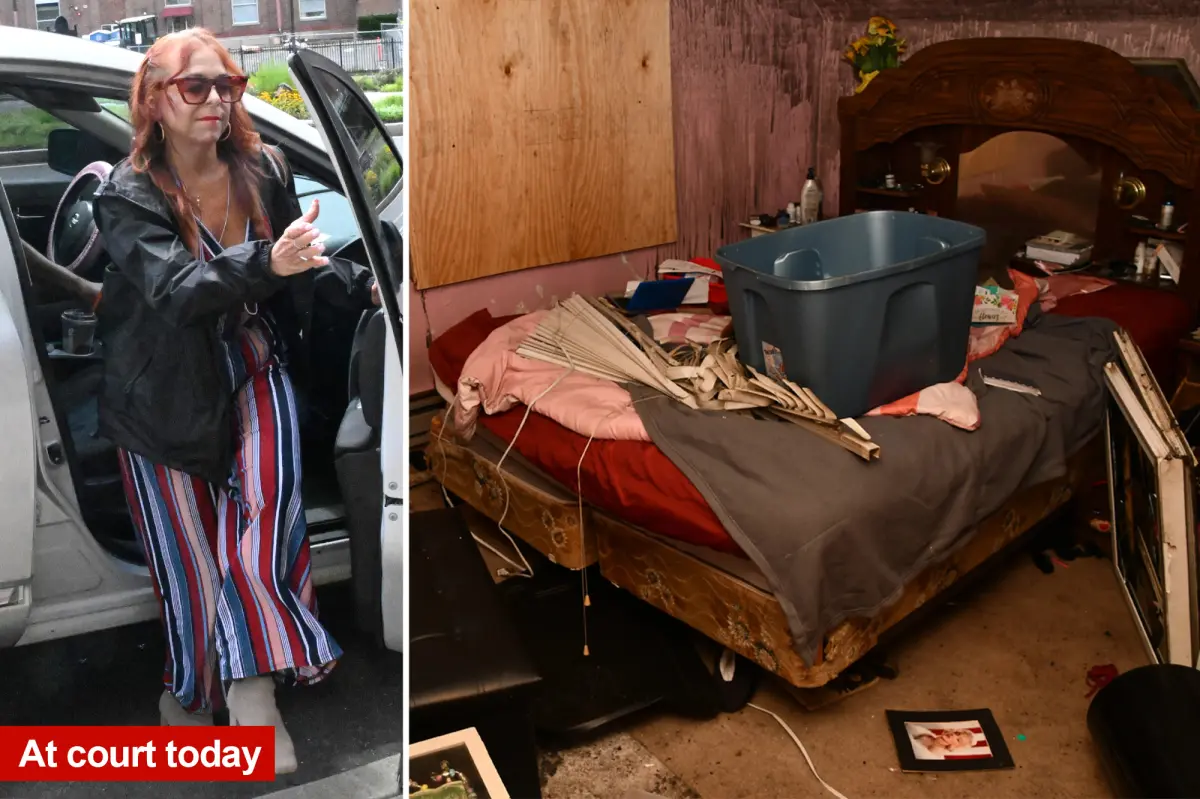
The agonizing reality of what occurred inside a nondescript home in Waterbury, Connecticut, represents a terrifying breakdown of human empathy and a stunning testament to the sheer resilience of the survival instinct. For more than two decades, a young boy known to the public only by the single, fragile initial “S” was systematically erased from the fabric of society. Plucked from his school system around the age of ten, he was allegedly relegated to a squalid, locked upstairs bedroom that would serve as both his living quarters and his prison for the majority of his life. This was not merely physical confinement; it was a total dismantling of his youth, his social development, and his baseline humanity. In this dark, neglected space, his days were marked by a suffocating silence, broken only when he was permitted to emerge for brief, transactional periods to perform household chores before being locked away once more. His life was reduced to a ghost-like state of survival, hidden behind closed doors while the outside world went about its business. The harrowing details of his captivity came to a shocking peak when, driven by a desperate, instinctual urge to survive, the now 33-year-old man did the unthinkable: he set fire to his own bedroom. It was a perilous, make-or-break bid for escape that finally shattered his decades-long silence. When emergency responders pulled him from the smoky ruins, they did not find a grown man of typical build, but a skeletal figure weighing a mere 68 pounds—a catastrophic physical testament to a lifetime of profound neglect, starvation, and severe psychological abuse. His rescue exposed a decades-old horror story hiding in plain sight, prompting a deep sense of collective grief and outrage for a boy who had his entire childhood, adolescence, and young adulthood stolen in the shadows. This unimaginable tragedy highlights the critical need for vigilance in protecting isolated children who fall through the cracks of our public institutions.
The legal battle surrounding this unthinkable domestic horror recently reached a tense, brief climax in a Waterbury courtroom, highlighting the deep chasm between systemic legal efficiency and the raw, emotional demand for justice. During a fleeting 90-second hearing, prosecutors presented a revised plea agreement to the accused stepmother, 57-year-old Kimberly Sullivan. The state’s initial offer was a thirty-year sentence to be suspended after serving twenty years, but Judge Corinne Klatt attempted to expedite a resolution by sweetening the terms, suggesting a sentence of thirty years suspended after serving just ten. This offer, which would allow a woman accused of stealing three decades of a child’s life to walk free after only a decade behind bars, was met with immediate pushback—not from a remorseful defendant, but from her defense team who flatly rejected any deal involving prison time. Her attorney, Ioannis Kaloidis, steadfastly asserted that his client is entirely innocent, framing her as a bewildered bystander who was shocked that any charges were even filed against her. Speaking to reporters with absolute confidence, Kaloidis made it clear that he expects the case to go to trial, expressing his hope to secure a court date in early September. His public remarks shifted the focus from the suffering of the victim to the challenge of selecting an unbiased jury, arguing that the true obstacle to a fair trial was not the evidence itself, but the sensational media coverage and the natural sympathy the public would inevitably feel for the scarred victim. By framing the narrative around media sensationalism and jury bias, the defense sought to neutralize the sheer horror of the allegations, setting the stage for a highly contentious trial that promises to drag the victim’s family through a painful, public dissection of their private tragedy, turning a deeply personal nightmare into a cold, clinical debate over legal semantics.
Kimberly Sullivan’s own demeanor throughout these initial legal proceedings has done little to soothe the public’s mounting outrage or the profound grief of those damaged by her alleged actions. Stepping out of the courthouse in bright, multicolored striped pants, she remained completely silent, her hushed exit offering a chilling contrast to the loud, agonizing reality of the charges leveled against her. Currently free on a $300,000 bail bond, she is permitted to navigate the free world under the sole restriction of having no contact with her stepson—a freedom of movement that stands in stark, painful opposition to the tiny, locked room where “S” was kept for the majority of his life. She faces a severe slate of criminal charges, including two counts of first-degree kidnapping, first-degree assault, first-degree unlawful restraint, and intentional cruelty to persons. To many observers, the contrast between her casual attire and the gravity of her alleged crimes represents a profound disconnect, highlighting how easily someone accused of grave inhumanity can operate within the mundane structures of the legal system. Furthermore, the public nature of her release on bond has sparked intense discussions about the adequacy of pre-trial conditions for individuals accused of long-term domestic captivity. While “S” begins the monumentally difficult task of re-learning how to exist under constant medical supervision, his accused abuser enjoys the comforts of a normal life, a disparity that many find deeply unjust. The charges against her speak to a level of calculated, sustained malice that is rare even in the annals of criminal justice, yet the legal process treats her with the routine protocol of any standard felony case, leaving a community grasping for a sense of proportion and accountability. This striking contrast raises painful questions about how such immense suffering can remain hidden within plain sight, buried beneath a veneer of domestic normalcy.
Standing at the epicenter of this emotional storm is Tracy Vallerand, the biological mother of “S,” who is now forced to grapple with a devastating cocktail of guilt, grief, and fury. Decades ago, when her son was a mere six months old, Tracy made the agonizing decision to surrender her parental rights, leaving the infant to be raised by his biological father, Kraigg Sullivan, and his new wife, Kimberly. She believed she was giving her child a chance at a stable, conventional family life, completely unaware that the woman she trusted would allegedly turn her son’s life into a living nightmare. Today, her reality is a daily cycle of torment as she realizes that her baby grew up to be a prisoner in his own home, experiencing a level of isolation and torture that is difficult for any mother to comprehend. Adding to her profound anguish is her complete exclusion from her son’s current life and recovery process; because of the long-standing estrangement, she is kept entirely in the dark regarding his medical care, his current housing, and his progress. She finds herself trapped in a frustrating limbo, desperately wanting to protect and nurture the boy she lost, yet unable to access any information about his physical therapy, mental health treatment, or cognitive rehabilitation. This profound lack of information eats away at her, leaving her to torture herself with terrible imaginings of his daily struggles, knowing with absolute certainty that the psychological trauma of his confinement will require a lifetime of intensive, agonizing therapy to unpack and heal. Every news report and legal update serves as a fresh reminder of her inability to shield her child from a life of starvation and isolation, leaving her to carry the weight of a mother’s love that has nowhere to go. The agonizing journey of her son’s recovery remains a painful mystery to her, leaving an unbridgeable void in her heart that grows wider with each passing day.
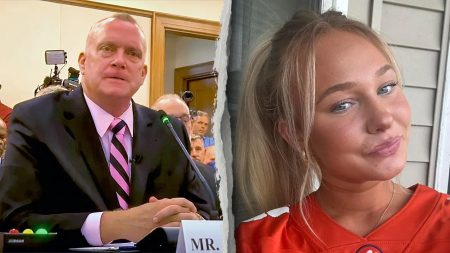
Tracy’s overwhelming grief has naturally transformed into a fierce, protective rage directed at the legal system that she believes is failing her son, and at the defense attorney whom she views as a cynical exhibitionist. She has publicly condemned the court’s lenient plea offers, arguing that suggesting a ten-year prison sentence for twenty-plus years of psychological and physical torture is a profound insult to human life and dignity. In her eyes, the thirty-one years of suffering her son endured—a figure she calculates based on the details of his confinement—can only be justly answered by a lifetime behind bars, loudly declaring that she does not want to hear any legal discussions that do not involve Kimberly Sullivan spending at least thirty-one years in prison. Her anger boiled over into a scathing attack on defense attorney Ioannis Kaloidis, whom she cuttingly compared to the cartoon character “Beavis” to mock what she perceives as his cartoonish disregard for the victim’s humanity. She accuses the defense team of exploiting a tragic humanitarian crisis to garner personal fame and media attention, suggesting that Kaloidis is merely using the trial as a platform to proudly announce that he is representing the “worst of the worst” for the sake of television cameras and newspaper headlines. For Tracy, the legal proceedings have become a grotesque theater of self-promotion and administrative compromise, where the profound suffering of a boy who was kept like an animal is reduced to legal maneuvers, media statements, and lenient plea deals that completely minimize the horrific reality of his stolen youth. She argues that the justice system’s willingness to entertain such brief sentences reflects a fundamental devaluation of the lives of the vulnerable, treating a lifetime of abuse as a mere negotiating point on a docket. This systemic failure drives her to remain a highly vocal public advocate, channeling her maternal sorrow into an unyielding demand for absolute accountability.
Ultimately, as the legal system grinds slowly forward toward a potential trial, the true focus must remain on “S” and the Herculean task of rebuilding a life from the absolute ruins of a stolen existence. At thirty-three years old, he is entering a world he barely knows, carrying the immense physical and cognitive scars of a life lived in isolation, deprivation, and terror. His journey toward recovery is not a simple matter of physical rehabilitation to restore his depleted, 68-pound frame; it is an incredibly complex, lifelong process of learning how to exist as an independent adult after being denied the most basic blocks of human socialization. He must navigate the profound psychological shock of freedom while processing the ultimate betrayal by the people who were supposed to protect and love him. The road ahead for “S” will require an extraordinary network of compassionate professionals, comprehensive mental health support, and intensive therapy to help him untangle the decades of trauma and rebuild his shattered sense of self. No court verdict, no maximum prison sentence, and no amount of public outrage can ever truly compensate for the childhood memories, school days, friendships, and milestones that were systematically taken from him. Yet, his desperate act of setting fire to his room to secure his freedom stands as a powerful testament to the unyielding strength of the human spirit—a spark of resilience that, despite decades of darkness, refused to be extinguished and now guides him toward a fragile, much-deserved dawn of liberation. It is crucial that society does not forget him once the headlines fade; his ongoing need for support, security, and absolute kindness will persist long after the trial’s final gavel falls. His future, though deeply scarred, now belongs solely to him, offering a quiet hope that healing is possible even after the deepest imaginable betrayal.