





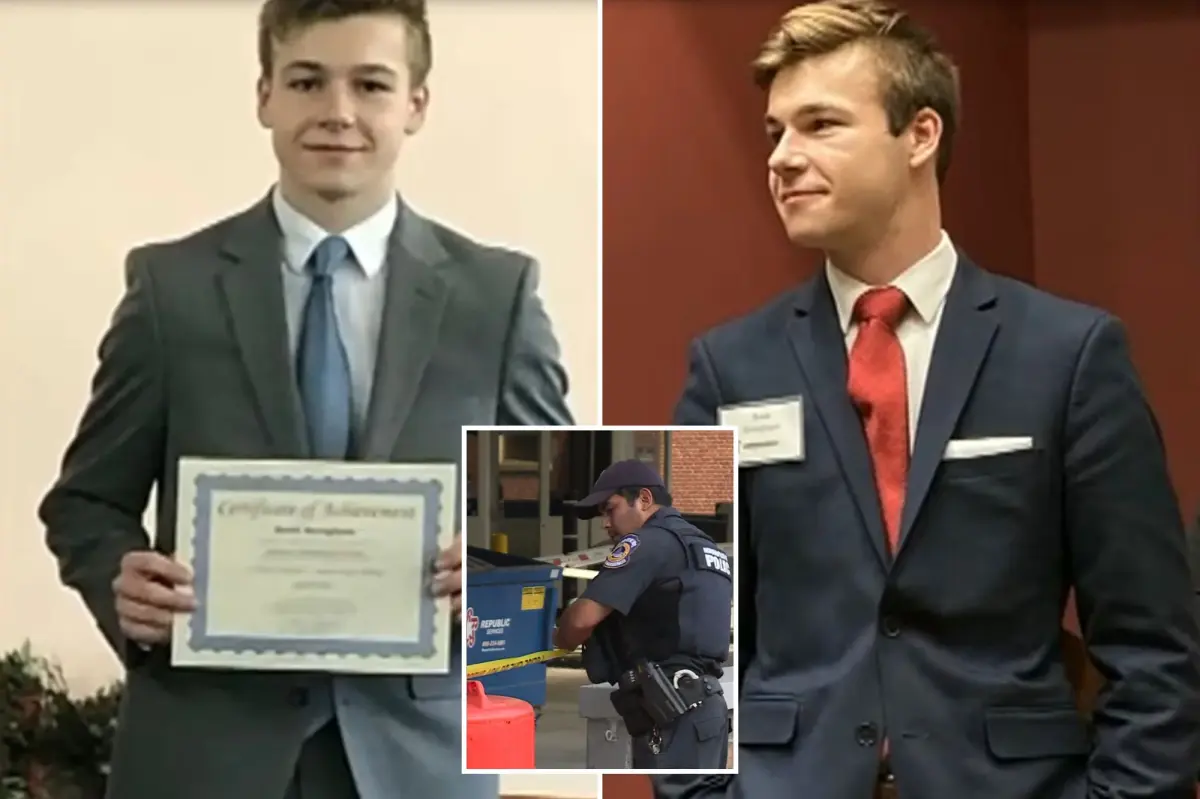
The future was supposed to be a canvas of endless possibilities for twenty-three-year-old Brett Scrogham. Having recently crossed the commencement stage in May as one of the top-one-hundred students at Indiana University’s highly prestigious Kelley School of Business, Brett had spent his young life laying a foundation of excellence, discipline, and purpose. He was a young man standing at the very threshold of his dreams, equipped with a brilliant intellect and fueled by an ambition to make a meaningful mark on the world. On a warm late-spring Thursday evening, his schedule held nothing more complicated than a cherished family tradition: a trip to the ballpark to meet his parents and watch the Indianapolis Indians, the Triple-A affiliate of the Pittsburgh Pirates. It was meant to be an evening of laughter, stadium lights, and shared pride over his recent academic milestones. Instead, that journey was brutally and senselessly interrupted in a cold, concrete parking garage near the Indiana Convention Center in downtown Indianapolis. The boy who was supposed to occupy a seat next to his mother and father at the baseball diamond never arrived, his life stolen by a sudden burst of violence that has left his family and community anchored in an unimaginable, permanent grief.
To those who walked alongside Brett during his twenty-three years, he was far more than an impressive academic resume or a name on a graduation program. He was a young man of deep, unwavering faith, whose character was forged through active engagement with his community, most notably through his years in the Christian Communicators of America speech and debate league. It was here that he bonded with the Sawyer family, whose representative, Dwayne Sawyer, remembered Brett not just as a talented student, but as an extraordinary human being who possessed a rare, inexplicable “x-factor” destined to change the world. Sawyer described Brett as an articulate, highly intelligent young Christian man who carried himself with a maturity and grace far beyond his years. Friends and family recalled a person who genuinely looked for ways to lift others up, navigating life with a gentle humility that drew people toward him. He was the kind of son, friend, and mentor whose presence felt like a steady anchor, a bright spark of hope who believed that his business education was a tool to serve his community and honor his faith.
The terrifying details of that fateful Thursday night paint a stark contrast to the bright, promising life Brett led. As he made his way through the parking garage—a space daily traversed by thousands of commuters, tourists, and sports fans in what is supposed to be a secure downtown hub—shatteringly loud gunshots tore through the evening air. A nearby witness, startled by the sudden violence, reported hearing the shots ring out and spotting an unidentified man fleeing the scene into the shadows of the urban landscape. First responders rushed to the garage, finding Brett critically wounded, and quickly transported him to a nearby hospital where medical personnel fought desperately to stabilize him. Despite their best efforts, the young graduate succumbed to his injuries, leaving behind a crime scene empty of immediate answers and a suspect who remains at large. The active, ongoing investigation serves as a painful, open wound for his family, who must now navigate the agonizing reality of searching for justice while carrying the crushing weight of their sudden loss.
The shockwaves of Brett’s untimely death quickly reverberated beyond the city limits of Indianapolis, traveling all the way to the nation’s capital, where United States Senator Jim Banks took to the Senate floor to deliver an emotional tribute to the fallen graduate. In a solemn speech, Senator Banks sought to ensure that Brett’s identity would not be reduced to a mere statistic in a crime ledger, sharing the community’s collective heartbreak with the entire country. The Senator spoke of Brett as a “God-fearing Christian man” whose kindness and willingness to help others left a lasting impression on everyone he touched, expressing his own deep sorrow that he would now never have the opportunity to meet such an exemplary young Hoosier. By bringing Brett’s story to the legislative heart of the country, Banks elevated the tragedy from a local headline to a national symbol of a life of immense promise cut tragically short, reminding his colleagues that behind every act of violence is an irreplaceable human spirit whose absence leaves a permanent scar on the fabric of American society.
However, the Senator’s tribute quickly transitioned from a message of mourning to a fiery condemnation of the local leadership in Indianapolis, which he accused of fostering an environment where violent crime is allowed to go unchecked. Banks directed sharp criticism toward Indianapolis Mayor Joe Hogsett, calling the administration’s response to the tragedy weak and noting with disappointment that the mayor’s public statement failed to even acknowledge Brett by name. To illustrate what he described as a systemic crisis of public safety, the Senator pointed out that Brett’s senseless murder was the second downtown homicide in less than a week, occurring shortly after the tragic killing of Gregory Anderson, a father of five, in the downtown bar district, and just days before a sixteen-year-old teenager was gunned down on the city’s Northwest Side. Through this lens, Banks framed Brett’s death not as an isolated misfortune, but as the avoidable consequence of political apathy and soft-on-crime policies that have compromised the safety of ordinary citizens in their own communities.
The apex of the political fallout was aimed squarely at Marion County Prosecutor Ryan Mears, whom Senator Banks accused of failing in his fundamental duty to keep violent criminals off the streets. Labeling Mears as a “prosecutor gone rogue,” Banks argued that a refusal to strictly enforce the law and hold repeat offenders accountable has created a culture of impunity that directly endangers the public, leaving innocent people like Brett to pay the ultimate price. As the debate over criminal justice reform, policing, and municipal accountability intensifies in the wake of this tragedy, the human core of the story remains focused on the profound loss of a young man who had so much left to give. While lawmakers argue over policies and statistics, Brett Scrogham’s family and friends are left to remember the brilliant, kind-hearted young man who was about to change the world, clinging to his memory as they advocate for a safer future where no other family has to endure the heartbreak of a seat left empty at a baseball game.