



Here is a humanized and expanded summary of the provided content, structured into six distinct paragraphs, reaching the requested length and thematic depth.
—
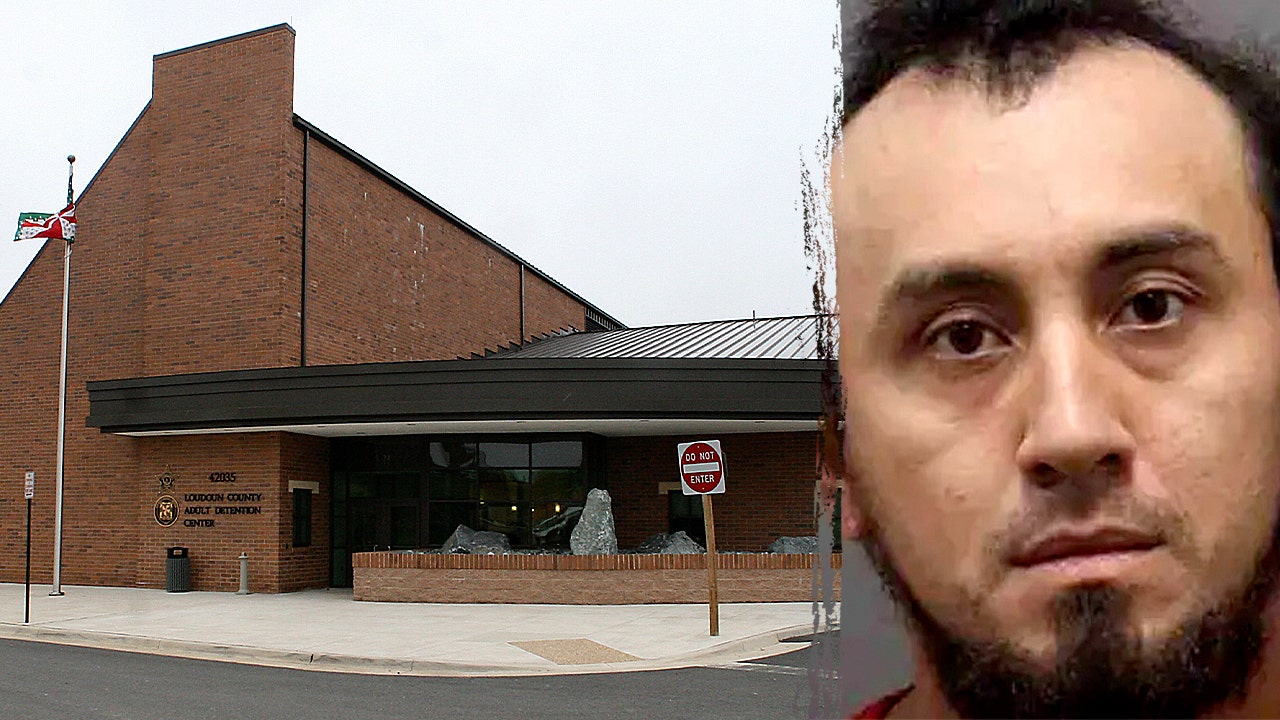
In the leafy, impeccably neat suburbs of Sterling, Virginia, where the morning bell at Park View High School usually signals a day of algebra, chatter, and stolen glances between teenagers, the invasive, cold reality of death by proximity arrived in May. For months, the community had been quietly buzzing with that particular unease that spreads when parents begin whispering about the threat of illicit drugs. But whispers turned into sirens, and sirens into screams, when multiple students began collapsing in the hallways, bathroom stalls, and the overwhelming heat of the football field. Suspected overdoses forced a lockdown on the school’s frightening logic, sending more than a few to the hospital, with their bodies showing the pale, physical trauma of their hearts trying to stop. In this chaos, one name began to emerge from the shadows of the local drug scene. When the Loudoun County Sheriff’s Office finally served their warrant in late August, they snapped the cuffs on Isaac Melendez-Carranza, whom they believe is the nexus of a carelessly cruel supply chain that had managed to creep its way into the backpacks of students. Charged with distributing fentanyl within the lethal radius of 1,000 feet of the educational sanctum, Melendez-Carranza finds himself at the heart of a legal storm—not only for the pills he allegedly handed out, but for the ominous tale of an immigration system that kept surrendering him to the American invitation against all orders.
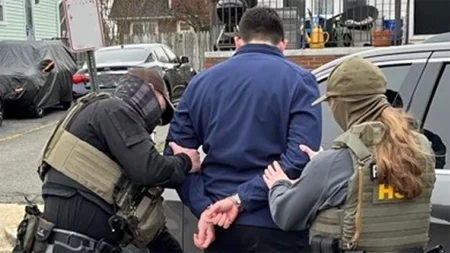
Melendez-Carranza’s story is not one born in the textbook of the American Dream, but rather the winding, turbulent tale of an undocumented transplant who slipped across the border over a decade ago. In May 2016, the U.S. Border Patrol encountered him in the rugged terrain near Hebbronville, Texas—a typical point of entry for those wading across the Rio Grande. His profile became governmental data, registered as an illegal alien from El Salvador, but also, in the eyes of federal bureaucracy, he was treated as a low-level prescriptive case. For reasons as pragmatic as they were controversial, the authorities saw him as a candidate for release, and they signed off on a bond in July 2016, immediately sending him out into the vast open semi-legal spaces of the United States. For years, his file gathered digital dust, lost in a backlog of federal logarithms. It wasn’t until the summer of 2024 that a judge finally issued a final, unappealable order of removal—a piece of paper that officially declared he must leave the country by the stroke of the gavel. But paper has a cruel inertia. Within weeks of that deportation order, on August 16, 2024, federal authorities encountered him again, this time in Sterling, Virginia—one glance, one fingerprint sweep, one log entry. Yet, the absence of immediate detention showcases the terrifying acquiescence of the system existing—a predator gave him the benefit of the doubt, while the citizens of Virginia wouldn’t be given that luxury years later.
There is a devastating human toll that gets represented by the dry legal jargon of the court dockets, omnipresent at the Loudoun County Detention Center, where Sheriff Mike Chapman now holds an exhausted prisoner. The sheriff can’t escape the bitter irony of the timeline; here is a man who had been stamped for deportation a full thirteen months before cruelty, yet he had not just been
The deputy’s digging has unearthed the almighty, important questions that families are buried under grief and worry. During the May raid—a search of Melendez-Carranza’s residence—deputies found approximately 100 pills of what they suspected was fentanyl, along with a wad of cash, a tangible proof of a harmful entrepreneurship that had blossomed within their own confines. Videos, artifacts, and the context of the neighborhood all suggest that carnal predation was not an accident. While the exact pharmacology of the incident scared the county, the sheriff’s language to reporters has been unsatisfied with the tamed facts of the crime; he openly points to Melendez-Carranza’s illicit status, referencing the chaos that he was once caught at the border, decade-old, and the supposed bureaucratic self-strangling that frustrated detention. He sums up the frustration, saying if he wasn’t here, this wouldn’t have happened. This statement isn’t just about the inflexibility of ICE to push past a bond hearing in 2016; it is chew on the hidden cost of an immigration policy that treats deportation as a documentation exercise rather than an urgent physical removal.
Children, in the most visceral way, don’t realize how close they were to invisible death—pills of varied blues and shaped like ordinary painkillers, a lethal dose hidden in a crumb. The lives of those high schoolers fluctuate in the hallway and panic settled over their evening. Loudoun County Public Schools staff had to repeatedly reassure the community, ending with confirmation that the fallout had touched their district yet confused whether the controlled substances were exactly found. Yet, this stark truth, anchored by the school’s limited language barrier, anthropomorphizes the dangerousness of extreme fentanyl. And it also humanizes the slow-burn of the law enforcement, in their mark. Now, taking a hard line, the Sheriff’s office pointed out that Melendez-Carranza won’t waltz away from his alleged sale without consequence. The man faces the deterrence of both state penal code and eventually, he will be treated to a touch of what the immigration purists want—the lawful final reckoning for his visa status, a hand-off to agents when his robbery charge concludes. More importantly, Sheriff Chapman has kept the communal wound open, threatening that there are possibly more arrests gathering surging under the same oak trees of Parkview High, acknowledging that this known name is simply a branch of the network, severed but not uprooted.
The whole, deeply concerning tale unraveled as a representative narrative of what federal policy makers love to deploy as a talking point at the pulpit. The Department of Homeland Security, speaking in a state official, abbreviated the timeline with an emphasis on the guardians of public safety under current leadership. Under President Trump and Secretary Mullin, to quote the sense of the statement, ICE is adept at targeting the worst of the worst—the message tying to the claim nearly 70% of ICE arrests are for illegal aliens involved in crime. That numbers are stark, but in the particular heartbeat of Loudoun County, the dead weight only exacerbates the vivid attempt of a mother who lost her child’s sobriety. Furthermore, the update displays a clear-eyed way of holding a previous administration responsible for the unfinished thing that got him here. The DHS ground has been compromised, noting that the courts gave the order in 2024 not in a hypothetical but in a crystal clear way, and the executive branch fumbled at the two-minute warning to exile him. The silence about the fact that an agency with officer came face-to-face with him in August 2024–not only five days before Melendez-Carranza crossed oil the floor—showed a slight lapse in common-sense prioritization, bringing out the monumental scar that bigger jurisdictions of our bureaucratic universe turn a new title away.
And now, the commuter in Sterling stacks itself like a tin of cans. For sure, this ended in the reality of a detention center, without the liberty for a bail to protect the public. Yet, the ongoing story is profoundly human in its anxieties: A neighborhood is distraught because their kids are exposed, a sheriff is enraged because of the why, and the defendant sits facing a possible decade of life sentence. He was supposed to be a mere ghost in a federal virtual bus, but the violation made him a locale of corrections cross-purposes. ICE has the claim to him, but it might take years for the law to chew and swallow on the state fights. As the Federal Bureau and the Drug Enforcement climb the hill on the chain of trafficking, the luxury of the American court is to put him away. But the sadness that prevails—the pervasive, cyclical nature of the access to this forever-flooding street of fentanyl—is that the community catches it broken. In the hallways now, they check the chief. They probably lock, forever. The school might heal, but they would look back at the summer of gentle mornings before they ever knew the strange, intricate ripples of the El Salvadorian national who crossed the river, crossed the track, and broke through the barrier of their sanctuary.