



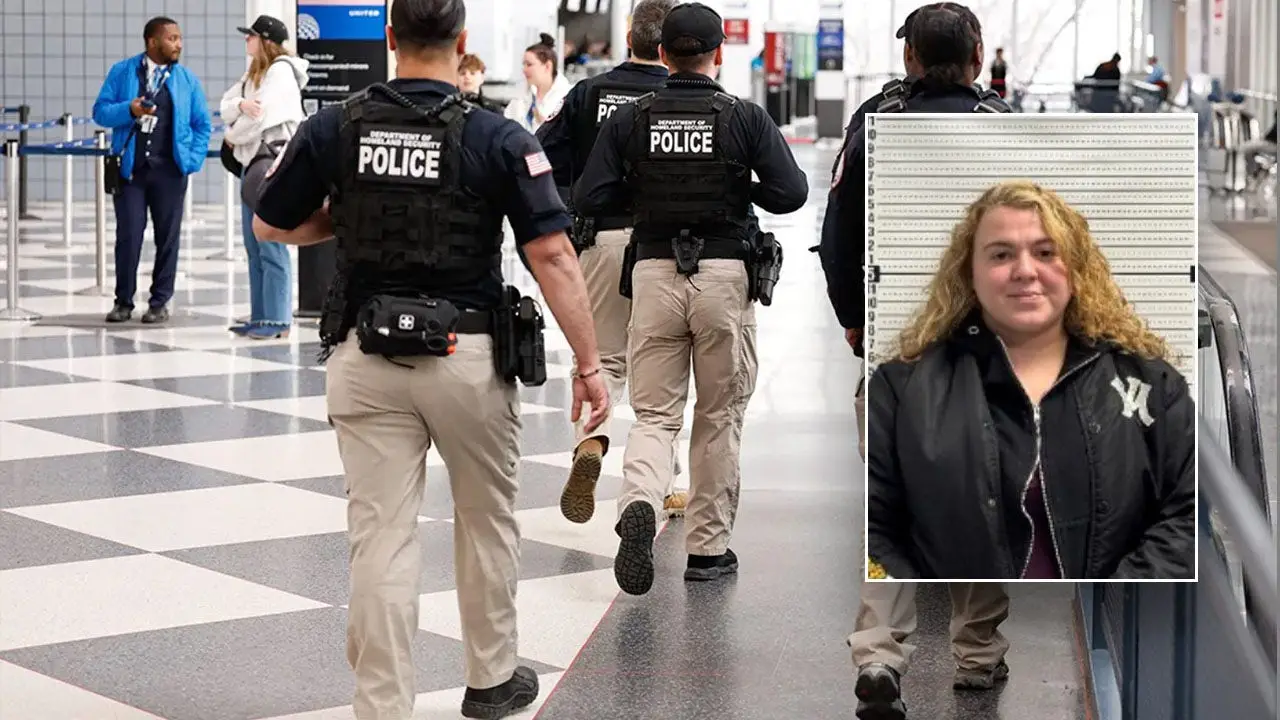
The quiet, picturesque suburbs of Elgin, Illinois, are typically defined by peaceful neighborhoods, tree-lined avenues, and community-centered schools that local families rely on as safe havens. It was within this tranquil Midwestern environment that Giovanna Mercedes Moreno Occhipinti, a 32-year-old woman possessing dual citizenship in Venezuela and Italy, managed to construct a remarkably ordinary and respectable life as a local educator. To the students she taught, her fellow faculty members, and the parents who trusted her daily, Occhipinti was an unassuming, helpful classroom presence who appeared fully integrated into the civic and social fabric of suburban Chicago. However, beneath this polished facade of suburban domesticity and public service lay a complex, deeply concerning, and illegal double life that would ultimately shatter the peace of the community she claimed to serve. Occhipinti had originally entered the United States in October 2021 utilizing the Visa Waiver Program, a system designed for temporary visits that legally required her to depart the country no later than January 2, 2022. Instead of returning to her home country or seeking legal pathways to extend her stay, she chose to slip quietly into the vast shadows of undocumented life in America, overstaying her visa while securing employment within the educational system. Years later, this carefully constructed secret identity came crashing down when federal agents with U.S. Immigration and Customs Enforcement (ICE) apprehended her on May 13, exposing her shocking alleged connections to one of the most ruthless transnational criminal organizations operating in the Western Hemisphere today: the Tren de Aragua gang. Her arrest sent shockwaves through the local school district, forcing local families to confront the terrifying reality of how easily dangerous transnational criminal elements can integrate themselves into the most sensitive, trusted, and vulnerable corners of everyday American life. The sheer cognitive dissonance of this situation has provoked a profound sense of betrayal among parents who once greeted her warmly during morning drop-offs.
The devastating reality of Occhipinti’s clandestine criminal associations was laid bare on the freezing night of December 2, 2024, during a lively house party in Chicago that instantly devolved into an unimaginable scene of terror and bloodshed. What was supposed to be a warm gathering of friends celebrating life was shattered in an instant when rapid gunfire tore through the residence, leaving three young people dead and five others grievously wounded in a calculated mass casualty shooting. As the sound of celebratory music was instantly replaced by the deafening cracks of semi-automatic gunfire, pandemonium ensued, and the victims, whose lives were filled with hope and potential, became tragic causalities of an unexpected intrusion of street violence. According to homeland security investigations and federal charging documents, the two primary gunmen responsible for unleashing this horrific violence were Ricardo Granadillo Padilla and Edward Martinez Cermeno, both identified as suspected operatives of the notorious Venezuelan gang Tren de Aragua. Occhipinti’s alleged involvement in this tragic event was far from passive or incidental; rather, federal prosecutors assert she served as the critical logistical mastermind of the entire operation. Authorities allege that she deliberately drove the two heavily armed gunmen to the residence, waited nearby as they executed the lethal assault, and subsequently acted as their getaway driver, helping them secure temporary escape as police sirens began to wail in the distance. When law enforcement officers eventually intercepted Occhipinti’s vehicle shortly after the attack, they discovered a disturbing cache of multiple weapons concealed within her car, signaling a premeditated conspiracy designed to inflict maximum human devastation. The staggering contrast between a woman who spent her daylight hours nurturing the minds of young school children and her nights assisting ruthless gang members in executing a mass homicide left the public, investigators, and her former school colleagues struggling to comprehend the profound psychological duality and chilling calculation behind her actions, while the grieving families were left with lasting psychological trauma.
In the immediate aftermath of the tragedy, the case rapidly evolved from a local criminal investigation into a fierce nationwide political controversy, highlighting the deep ideological battlefronts between local municipal leaders and federal law enforcement agencies over immigration policy. Following the mass shooting, the Chicago Police Department succeeded in arresting Occhipinti on December 5, 2024, charging her with unlawful use of weapons alongside several other severe weapons infractions, which briefly opened a window for immediate local prosecution. However, because of Chicago’s deeply rooted and controversial sanctuary city ordinances, which severely restrict local police officials from collaborating with federal immigration authorities or honoring ICE detainers, Occhipinti was unexpectedly released from local custody back onto the streets without immigration agents ever being notified of her arrest or detention status. This quiet release provoked instant, fierce condemnation from federal department leaders who viewed the move as an egregious violation of basic public safety protocols in the name of political expediency. Lauren Bis, the Acting Assistant Secretary for the Department of Homeland Security, released a highly critical statement pointing out that under the new leadership of President Donald Trump and Secretary Mullin, federal agencies are now being forced to step in and do the crucial security work that sanctuary politicians in Illinois actively refuse to do: prioritizing the safety of the American public and removing dangerous non-citizen criminals from local neighborhoods. While local advocates defend these sanctuary policies by arguing they encourage undocumented residents to report crimes without the fear of deportation, critics loudly argue that when such protections are extended to individuals connected to violent mass casualty events, they effectively compromise public safety, allowing potentially lethal actors to escape federal custody. To many critics, this political posture represents a dangerous dereliction of duty, where the safety of taxpaying citizens is sacrificed on the altar of progressive immigration ideals, creating a security vacuum that transnational cartels are only too happy to exploit.
At the core of the community’s deep anxiety is the rapid and aggressive expansion of the Tren de Aragua gang, a transnational syndicate that originated in the notorious prisons of Venezuela and has since expanded its violent criminal network across South America and directly into major U.S. metropolitan centers like Chicago. Known for their extreme brutality, human trafficking, extortions, and illicit narcotics distribution, the gang has increasingly preyed upon vulnerable migrant populations and established dangerous, armed holdouts in urban neighborhoods, transforming local streets into areas of heightened tension. The reality that this high-level criminal syndicate was able to recruit or utilize a suburban Illinois educator like Occhipinti reveals the sophisticated, highly pervasive, and insidious nature of their criminal recruitment operations, which often prey on shared cultural origins or leverage undocumented status to coerce cooperation. This dark underworld connection humanizes the tragic paradox of the modern immigrant experience, wherein families who fled the collapse and violence of Venezuela to find safety in America find themselves once again pursued and terrorized by the very same gang elements they sacrificed everything to escape. For the parents in suburban Elgin, the revelation that a suspected affiliate of this brutal cartel had daily access to their local school and was entrusted with the care of young children sparked immense outrage and panic. Many parents have voiced profound anger that a school system could remain entirely oblivious to a teacher’s illegal status and alleged gang associations, expressing fear that the very institutions designed to keep their children safe have become vulnerable to infiltration. This serves as an alarming wake-up call for school administrators nationwide, showing that international gang networks are no longer confined to border regions or major urban centers, but have effectively breached the quiet inner sanctuaries of suburban heartlands, prompting a critical need for more thorough background checks.
Adding further to the profound shock and frustration of local residents and the victims’ grieving families is the dizzying sequence of legal loopholes, procedural roadblocks, and institutional silence that has consistently hampered the pursuit of justice in this high-profile case. Despite the gravity of the December mass shooting that claimed three innocent lives, the Cook County State’s Attorney’s office ultimately declined to pursue state-level homicide prosecutions against the principal suspects, forcing federal immigration authorities to step in with administrative interventions. In another frustrating twist within the federal judicial system, one of the primary gunman suspects, Edward Martinez Cermeno, was ordered released from ICE custody in January 2025 by a federal judge who determined that government prosecutors had failed to meet the rigorous burden of proof required to keep him detained prior to his trial. While both Martinez Cermeno and his accomplice, Ricardo Granadillo Padilla, were eventually deported from the United States, the fact that they were able to repeatedly cycle through the justice system and secure temporary releases has left many community members deeply cynical about the government’s ability to protect them. This local cynicism has only been intensified by the absolute refusal of Illinois state and local educational officials to cooperate with Department of Homeland Security investigators or publicly identify the specific school where Occhipinti was employed. To federal authorities and concerned community parents, this defensive wall of bureaucratic silence is viewed as a highly troubling effort to shield educational institutions from public fallout, prioritizing administrative face-saving over transparent accountability and the safety of families. The decision to withhold the school’s name has created a dark cloud of paranoia across Elgin’s educational system, as families are forced to navigate an information vacuum while trying to ensure their children are safe from hidden dangers.
Today, Giovanna Mercedes Moreno Occhipinti remains incarcerated in the high-security Grayson County Detention Center situated in Leitchfield, Kentucky, where she is being held under federal authority as she awaits her immigration and potential criminal proceedings. Her arrest and detention by ICE represent a hard-fought and symbolic victory for federal Homeland Security Investigations (HSI) special agents, who worked tirelessly to locate, apprehend, and detain her despite the numerous administrative roadblocks erected by Illinois’ non-cooperative state laws. For HSI Chicago Special Agent in Charge Matthew Scarpino, bringing Occhipinti into custody is a critical step in sending a clear message that anyone who facilitates, assists, or actively participates in acts of mass violence on American soil will be hunted down and held fully accountable under the law. However, as the legal process slow-marches forward, the case of this former suburban teacher will continue to serve as a stark, tragic illustration of the complex convergence of global migration crisis, local street violence, and the highly polarized debates surrounding border security in contemporary America. The situation demands that we look beyond the political rhetoric to see the true human faces left behind: the promising young lives cut short at a festive gathering, the anxious parents demanding transparency from their school boards, the frustrated federal agents working with limited local support, and the enigmatic figure of an educator who traded her classroom books for a getaway vehicle and gang weapons. Ultimately, this tragic saga serves as a reminder that the fierce political battles over sanctuary cities and national border policies are not mere theoretical debates, but are matters of profound, life-altering consequence that directly affect the safety and security of American communities. It calls for a renewed dedication to pragmatic solutions that balance humanitarian principles with strict, uncompromising security enforcement, ensuring that our local institutions remain designed to protect the innocent.