


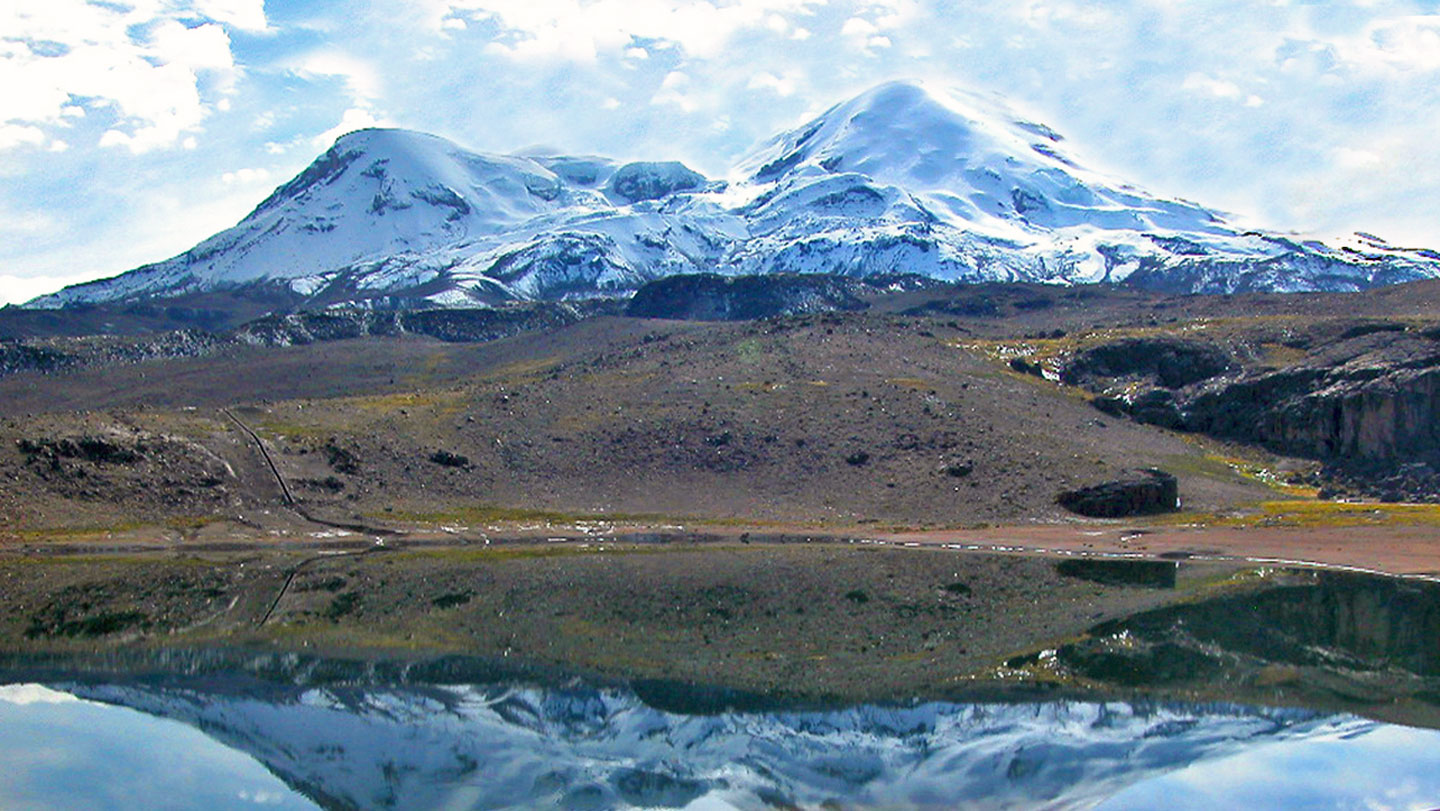
High atop the wind-swept, sun-scorched flanks of Nevado Coropuna, Peru’s tallest volcano, a silent revolution in our understanding of Earth’s water security is quietly unfolding beneath the feet of unsuspecting travelers. Rising majestically more than 6,000 meters into the thin, azure sky, this imposing stratovolcano has long been revered by local communities as an apu—a powerful mountain deity and a source of life-giving waters in an otherwise hyper-arid landscape. Yet, while the world’s attention has historically been fixed on the shrinking glaciers draped over its high peaks like fraying white silk, a team of pioneering researchers has turned its gaze downward, revealing an incredible secret hidden just below the volcanic soil. Led by Ramón Pellitero, an intrepid geographer from the National University of Distance Education in Madrid, the scientists discovered a colossal, continuous sheet of tropical permafrost lurking a mere two to four meters beneath the surface. Spanning a thickness of 15 to 20 meters, this massive slab of deep-frozen earth represents one of the largest reservoirs of tropical permafrost anywhere on the globe. Published in the prestigious journal Permafrost and Periglacial Processes, their groundbreaking findings suggest that this hidden icy layer is not merely an isolated geological quirk, but a vast underground network that likely extends across the volcano’s wider, high-altitude shoulders. As human-induced climate change relentlessly eats away at the visible glaciers above, this subterranean shield of ice, insulated by layers of volcanic debris, stands poised to emerge as a critical, unexpected savior of freshwater for a region increasingly pushed to its ecological limits.
The human scale of this discovery cannot be overstated, especially when contrasted with the famous, frozen expanses of the far north. When most people think of permafrost, they envision the endless, wind-battered tundras of Northern Canada, Siberia, or Alaska—colossal expanses of frozen ground that dominate the high latitudes of our planet. These polar giants are famous for trapping ancient greenhouse gases and preserving prehistoric mammoths, but their remote location means they have little direct impact on the day-to-day survival of large human populations. In stark contrast, the tropical permafrost of Nevado Coropuna is uniquely positioned at the doorstep of vulnerable human civilizations. In the hyper-arid rain shadow of the Peruvian Andes, water is more precious than gold; agriculture, traditional livestock herding, and municipal survival all depend on a highly delicate hydrological cycle. Historically, the predictable seasonal melting of glaciers acted as a reliable natural water tower, releasing a steady stream of freshwater during the dry season. Today, however, these glaciers are retreating at a heartbreaking speed, leaving local communities facing an agonizingly dry future. According to Pellitero and his colleagues, this is where the volcano’s hidden permafrost changes the game. While it may not match the sheer, continent-spanning scale of Arctic permafrost, its close proximity to thirsty agricultural communities makes it a localized lifesaver. As the visible glaciers above slowly vanish into history, this subterranean storehouse of ice is beginning to melt slowly, offering a secondary, incredibly precious defense line against catastrophic water scarcity.
The scientific community has long overlooked mountain permafrost in the tropics, making Pellitero’s discovery a watershed moment for high-altitude ecology. Stephan Gruber, a leading geographer and permafrost expert at Carleton University in Ottawa, points out that the intricate relationship between high-altitude permafrost and local environments remains one of the least understood frontiers of environmental science. Mountain permafrost is not just a passive chunk of subsurface ice; it is a dynamic geological glue that holds steep mountain slopes together, prevents catastrophic rockfalls, supports fragile alpine wetlands, and regulates the flow of river systems. When these hidden icy matrixes degrade due to warming temperatures, the structural integrity of the mountains themselves can fail, triggering devastating landslides that threaten communities residing thousands of meters below. At the same time, the melting of this underground ice feeds delicate highland ecosystems, known as bofedales, which serve as vital grazing pastures for alpacas and llamas. By shining a spotlight on the hidden icy underpinnings of Nevado Coropuna, this research bridges a critical gap in our understanding of how high-altitude ecosystems will transition in a warmer world. It proves that we can no longer afford to evaluate climate change impacts solely by looking at what is visible to the eye; we must learn to read the invisible, subterranean transformations that dictate the health, stability, and survival of our planet’s most extreme mountain ranges.
Executing this pioneering research was a testament to human endurance, requiring the team to overcome grueling physical and logistical hurdles that would deter all but the most committed scientists. Working at altitudes exceeding 5,000 meters above sea level, the researchers had to contend with a punishing environment characterized by bone-chilling cold, relentless winds, and a severe lack of oxygen that made even simple tasks feel like Herculean efforts. To peer beneath the volcanic surface without heavy digging equipment, the team relied on a sophisticated scientific toolkit, pairing ground-penetrating radar with vertical electrical sounding. This latter technique works by driving primary metal electrodes deep into the earth and measuring electrical resistance; because solid ice conducts electricity far more poorly than wet soil, spike-in-resistance readings serve as an unmistakable fingerprint of subterranean ice. However, the laws of physics presented a cruel paradox in this hyper-arid environment: vertical electrical sounding requires moisture in the uppermost soil layer to establish an electrical connection, yet the surface of Coropuna was bone-dry. Undeterred, the researchers had to manually carry heavy, sloshing containers of precious water up the steep, exhausting slopes of the volcano just to wet the dry soil around each electrode. This backbreaking labor, coupled with the profound isolation of a landscape located hours away from the nearest outpost of civilization, explains why this vast icy kingdom remained undetected and unstudied for so long.
While tropical permafrost is an incredibly rare phenomenon, it is not entirely unique to Peru, though the deposits beneath Nevado Coropuna dwarf all other known examples in scale and resilience. Small, fragile pockets of permafrost have been documented on other iconic high-altitude tropical peaks, such as the legendary slopes of Mount Kilimanjaro in Tanzania and the sacred volcanic summit of Mauna Kea in Hawaii. However, these other tropical vaults are in a state of rapid, heartbreaking collapse; for instance, the permafrost patch on Mauna Kea suffered a devastating retreat, shrinking from an estimated 600 square meters in the 1970s to a meager 200 square meters by the mid-2010s, and it continues to dissolve as global temperatures rise. The sheer volume and thickness of the permafrost discovered at Nevado Coropuna stands in stark, hopeful contrast to these dying remnants. Thanks to the unique geological and climatic conditions of the Peruvian Andes—where vast high-altitude plateaus are blanketed by thick layers of insulating volcanic ash and gravel—this regional deposit has managed to remain largely sheltered from the direct heat of the tropical sun. This protective cover has allowed the subterranean ice to persist as a robust, resilient giant, far larger and more stable than its global counterparts, making the Peruvian Andes the undisputed capital of tropical permafrost and a premier living laboratory for scientists studying climate adaptation.
Looking forward, the work of Pellitero and his colleagues is far from complete, as they race against the clock to map the full extent of this invisible frozen frontier. The researchers are already planning their next expedition back to the high Andes, armed with even more advanced subterranean imaging technologies, such as electrical resistivity tomography, to generate highly detailed, three-dimensional maps of the underground ice. Based on their initial observations, they strongly suspect that the massive 15-to-20-meter-thick permafrost layer they documented on Coropuna is just the tip of the iceberg, with similar frozen reservoirs likely mirroring these conditions across adjacent high-altitude peaks in the region. Understanding the exact boundaries and health of this subterranean giant is no longer just an academic pursuit; it is a critical race to provide local governments, conservationists, and agricultural communities with the data they need to survive an era of unprecedented climate disruption. As the white glaciers that have sustained Andean civilizations for millennia continue to fade into memory, these scientists are uncovering a hidden, silent reservoir of hope. By mapping this underground vault of ice, they are helping to ensure that when the visible waters of the high peaks finally run dry, the communities living below will not be left defenseless against the thirst of a warming world.