



The Great Digital Pivot: Core Scientific Secures Historic $14 Billion Deal as AI Infrastructure Boom Takes Hold
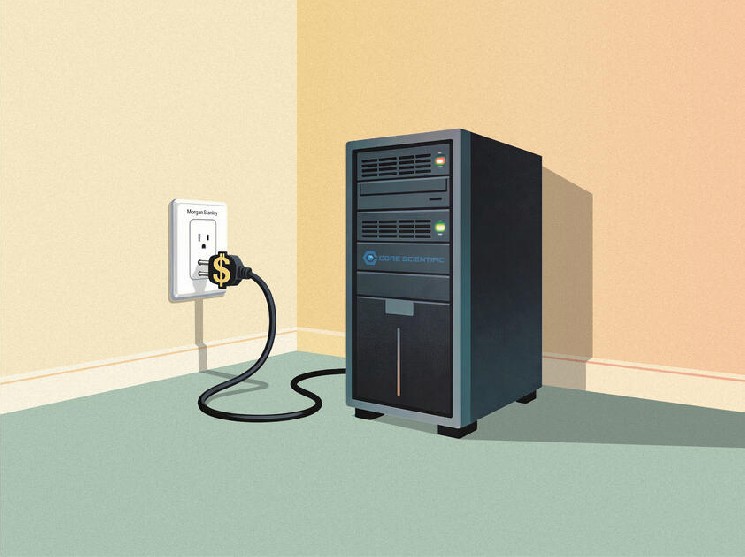
In a monumental transaction that highlights the rapid convergence of digital asset infrastructure and artificial intelligence, Core Scientific (NASDAQ: CORZ) has finalized a series of landmark 15-year lease agreements with advanced microchip giant AMD and a prominent Neocloud partner. Announced on July 28, this massive contract will see Core Scientific deliver an astonishing 529 megawatts (MW) of critical IT capacity across five of its premier United States operational sites, a move projected to yield in excess of $14 billion in cumulative, potential contracted revenue over the duration of the lease. This historic agreement marks a definitive turning point for the Austin, Texas-based enterprise, cementing its rapid and highly publicized evolution from a dedicated Bitcoin mining operation into one of the Western hemisphere’s most formidable high-performance computing (HPC) and artificial intelligence infrastructure operators. As hyperscale cloud providers and AI development firms scramble to secure the massive pools of electrical power and sophisticated data center real estate required to train next-generation large language models, Core Scientific’s strategic custody of institutional-grade power assets has transformed it from a niche player in the volatile cryptocurrency landscape into a critical gatekeeper for the future of global computational power. By repurposing its expansive, grid-connected infrastructure projects for the far more capital-stable demands of enterprise cloud hosting and neural network training, the company has effectively insulated itself from the cyclical volatility of digital currency markets while positioning itself squarely at the vanguard of the modern generative artificial intelligence revolution.
Wall Street Reacts: Independence Vindicated Post-CoreWeave Rejection
Stock Market Volatility and the Triumph of Strategic Autonomy
The financial markets reacted with immediate, high-volume enthusiasm to the announcement of the multi-billion-dollar deal, with Core Scientific’s shares surging as much as 18% in highly active pre-market trading to touch an intraday peak of $24.05 before experiencing a mild, broader-market stabilization that left the stock hovering around the $21.70 mark by midday. This dramatic upward trajectory carries profound symbolic and strategic weight for the company’s executive leadership and shareholder base, coming a mere nine months after Core Scientific’s investors decisively voted to reject a hostile, all-stock $9 billion acquisition proposal from rival AI infrastructure provider CoreWeave—which was the second highly public, multibillion-dollar takeover attempt the company’s board had successfully parried in recent memory. Acting on the explicit, comprehensive guidance of independent proxy advisory firms, who consistently contended that Core Scientific’s sprawling, pre-zoned property portfolio and long-term electrical grid connections possessed an intrinsic value far exceeding any immediate buyout premium, shareholders chose the path of independence, betting that the company’s physical footprint could command a premium on the open market. This newly minted $14 billion enterprise hosting transaction stands as a resounding, definitive vindication of that long-term independent vision, proving that the organization’s proprietary access to scarce electrical grid substations and industrial-grade high-voltage transformers is worth far more when leveraged through independent, direct-to-enterprise partnerships than when absorbed into a competitor’s consolidated balance sheet.
The Architecture of the AMD Alliance: Multi-Megawatt Scaling and Strategic Equity Warrants
Deepening the Hardware Moat through Structured Equity Incentives
At the core of this complex transaction lies a highly sophisticated, mutually beneficial financial structure that closely aligns the long-term operational success of hardware manufacturer AMD with the physical infrastructure capabilities of Core Scientific. Under the specific terms of the long-term lease, AMD has secured critical modern data center capacity while simultaneously receiving structured financial warrants that grant the chipmaking giant the right to acquire up to 30 million common shares of Core Scientific at a strike price of $23.47 per share. To ensure that this equity transfer remains directly tied to actual execution and the physical deployment of hardware, the vesting schedule for these warrants is intricately linked to the precise volume of megawatts successfully brought online and leased over the lifetime of the agreement, with approximately 6.5 million of these warrant shares vesting immediately upon the execution of the initial contract. This clever equity-linked hosting structure not only provides Core Scientific with a powerful, blue-chip institutional partner highly motivated to optimize the physical facility configurations but also offers AMD a direct stake in the infrastructure provider that will house its next-generation high-compute hardware, such as its MI300-series AI accelerators. By structuring the partnership in this manner, both enterprises have signaled to the broader market that the bottleneck in artificial intelligence development is no longer merely a shortage of microchips, but rather a profound, structural scarcity of physical, high-power facilities capable of safely cooling and powering those highly intensive chip architectures over long, uninterrupted operational cycles.
Decoding the Balance Sheet: Analyzing Q2 Earnings and the $1.16 Billion Non-Cash Paradox
Exceptional Operational Revenue Growth Overshadowed by Accounting Anomalies
Coinciding with the announcement of this historic multi-decade partnership, Core Scientific released its comprehensive financial and operational results for the second quarter, painting a portrait of a business undergoing rapid, hyper-scale expansion alongside a highly complex corporate restructuring. The company’s core operational metrics were undeniably strong: quarterly revenue more than doubled compared to the prior year’s matching period, ballooning to a record $164.2 million, while its adjusted EBITDA—a key metric of raw operational profitability—surged upward to an impressive $41.1 million, driven by highly efficient infrastructure management and an optimization of its hybrid hosting services. However, the headline-grabbing figure that dominated initial financial reporting was a substantial statutory net loss of $1.16 billion, an immense deficit that casual observers initially struggled to reconcile with the company’s otherwise stellar fundamental performance. Financial executives and corporate accounting experts were quick to clarify that this massive net loss was purely a non-cash, paper-based accounting artifact driven entirely by standard GAAP rules regarding the valuation of warrant liabilities: as Core Scientific’s own share price climbed dramatically throughout the quarter in anticipation of its AI expansion, the fair value of the outstanding warrants it had previously issued to creditors and partners rose in lockstep, requiring the firm to book a massive, non-cash balance sheet adjustment that has absolutely no impact on its actual day-to-day liquidity, cash reserves, or operational capital expenditure capabilities.
The Engineering Transformation: Retrofitting Industrial Crypto Facilities for Tier-3 Cloud Hosting
Overcoming the Grid-Capacity Bottleneck through Advanced Infrastructure Engineering
The physical migration of Core Scientific’s 529-megawatt capacity from the relatively simple demands of Bitcoin mining to the highly demanding, ultra-reliable environment required for enterprise AI cloud hosting represents one of the most complex engineering and logistical feats in the brief history of digital infrastructure. While traditional cryptocurrency mining setups are designed with a tolerance for minor power fluctuations, utilize basic ambient air-cooling systems, and operate under lower tier-classification uptimes, high-performance computing (HPC) workflows for artificial intelligence demand continuous, mission-critical reliability, liquid cooling loops, massive backup generator redundant systems, and highly specialized fiber-optic connectivity to minimize system latency. Core Scientific’s five selected United States data center sites are currently undergoing extensive, capital-intensive facility upgrades to install closed-loop liquid-to-air heat exchangers, robust industrial air-handling units, and redundant uninterruptible power supply (UPS) systems capable of keeping thousands of high-density graphics processing units (GPUs) running perfectly in parallel. This strategic transition allows the company to monetize its existing, hard-to-replicate electrical grid interconnection agreements—which can take up to seven years for developers to secure from local utility commissions in today’s supply-constrained environment—while transitioning from the unpredictable rewards of mining block headers to the high-margin, predictable cash-flow characteristics of creditworthy enterprise lease agreements.
A New Frontier for Computes: How Power Has Become the Ultimate Geopolitical Currency
The Strategic Realignment of Sovereign Tech Infrastructure and the Global Grid
As dry-bulk electricity contracts and reliable utility connections become the primary limiting factors for the expansion of global artificial intelligence, Core Scientific’s massive $14 billion lease agreement stands as a vital template for the rest of the energy-intensive computational industry. The traditional demarcation lines between digital asset miners, cloud service providers, and sovereign chip design firms are permanently blurring, replaced by a singular, high-stakes competition for physical access to sovereign, grid-stabilized electrical substations across North America and Europe. For cryptocurrency mining firms that managed to successfully emerge from the previous market downturn with clean balance sheets and active, high-volume grid hookups, this structural shift represents an unprecedented, once-in-a-generation opportunity to transform volatile computational facilities into highly secure, multi-decade cash-producing assets coveted by the world’s largest defense, cloud, and consumer technology companies. By paving the way with this massive AMD and Neocloud transaction, Core Scientific has proven that the physical data centers themselves hold the ultimate leverage in the technological arms race of the twenty-first century, demonstrating that in an increasingly digital world, the true source of artificial intelligence power is still grounded in the concrete, copper wire, and heavy industrial engineering of the domestic electrical grid.