






The journey of Selah Dine Habib began thousands of miles away from the quiet, structured corridors of midwestern American law enforcement, originating in the arid and politically complex landscapes of Mauritania, a nation in Northwest Africa. Like countless others seeking a reprieve from the challenges of their homelands, Habib set his sights on the United States, embarking on an arduous trek that eventually brought him to the sun-scorched borderlands of the American Southwest. In March 2023, he crossed into the United States near the remote desert outpost of Lukeville, Arizona—a region known for its harsh terrain and heavy migrant traffic. Upon his entry, he was apprehended by federal authorities, processed under the prevailing border management protocols of the Biden administration, and ultimately released into the interior of the country with a notice to appear in immigration court. For Habib, this release was not merely an administrative step; it represented the opening chapter of a brand-new life in a vast, unfamiliar land, filled with the quiet promise of safety, economic stability, and the chance to reinvent himself far away from the struggles of his past.
To secure his footing in this new society, Habib navigated the complex and often bewildering labyrinth of the United States asylum system, seeking legal protection based on a deeply personal claim. In his formal application, he asserted that he was a homosexual man who faced severe persecution, hostility, and potential violence in Mauritania, where same-sex relationships are highly criminalized and socially ostracized. The American asylum framework is designed to protect vulnerable individuals fleeing such systemic threats, but it also places applicants in a state of prolonged legal limbo, requiring them to wait months or even years for their cases to be adjudicated while they attempt to build a semblance of a normal life. During this period of waiting, Habib relocated to the heartland of America, settling in Indiana, where he sought to assimilate into the local community, establish social ties, and find gainful employment to support himself. His story during these initial months reflects the quiet, often invisible struggle of thousands of asylum seekers who must balance the psychological weight of their past traumas with the immediate, daily demands of surviving in a new culture.
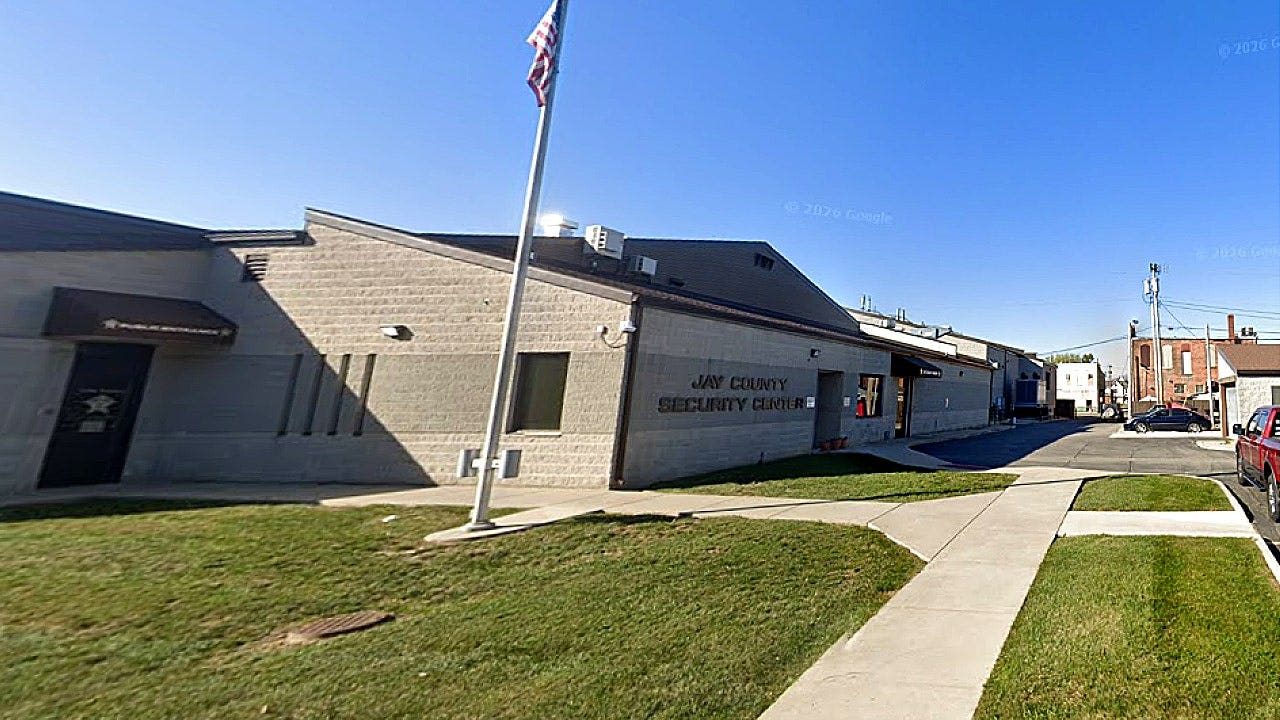
It was in Indiana that Habib’s life took a deeply personal and unexpected turn, blending his pursuit of the American Dream with the intimate bonds of family and community. He met and fell in love with a local woman, culminating in their marriage in 2025. This union, however, carried a unique significance that would later place Habib under an intense public spotlight: his new wife was the daughter of Jay County Sheriff Larry Ray Newton, making Habib the step-son-in-law of the county’s chief law enforcement officer. This familial connection paved the way for a remarkable career transition, as Habib successfully applied for and secured a position as an unarmed corrections officer at the Jay County Jail in Portland, Indiana. To those around him, Habib seemed to have achieved an extraordinary level of integration, transitioning from a recently arrived migrant to a uniform-wearing member of the local justice system, tasked with maintaining order and security within the very walls that house those accused of breaking the law.
The hiring of an asylum seeker with a pending immigration status into a law enforcement role understandably raises significant administrative and legal questions, yet local officials insisted that all standard protocols were meticulously followed. According to the Jay County Auditor’s Office, Habib’s onboarding process was entirely compliant with federal and state employment guidelines, as he presented official employment authorization documents that granted him the legal right to work while his asylum case was being resolved. Furthermore, he successfully passed the federal government’s E-Verify system, a web-based portal designed to confirm the employment eligibility of newly hired workers. This digital clearinghouse flagged no discrepancies, signals, or warnings that would have halted his hiring, leaving local administrative staff with no legal basis or reason to deny his employment. Sheriff Newton confirmed that Habib operated strictly within his authorized capacity as an unarmed guard, utilizing the proper credentials provided to him, highlighting a bureaucratic system where different federal agencies—one managing immigration status and another governing the right to work—often operate in isolated silos.
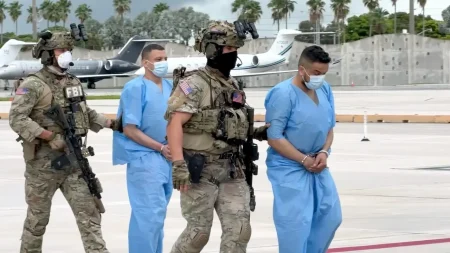
This carefully constructed life came to a sudden and dramatic halt on May 21, when federal immigration agents intervened, arresting Habib and thrusting him into the center of a national controversy regarding border security and administrative oversight. The Department of Homeland Security (DHS) revealed that investigators had flagged Habib’s pending asylum claims as highly suspicious, pointing to the profound contradiction between his initial claim of homosexual identity—the very basis of his plea for protection from Mauritania—and his subsequent marriage to a woman in Indiana. Federal officials openly characterized his asylum application as “fraudulent,” arguing that he had exploited the humanitarian system to gain entry and work authorization under false pretenses. The arrest transformed Habib overnight from an officer of the law, who wears a badge and commands authority over detainees, into a detainee himself. He was transported to the Clay County Jail in Brazil, Indiana—a facility contracted to hold federal immigration detainees—where he now sits behind bars, experiencing the criminal justice system from the opposite side of the steel doors he once guarded.
The fallout from Habib’s arrest has reverberated far beyond the borders of Jay County, serving as a potent symbol in the ongoing national debate over the integrity of the U.S. immigration and asylum systems. Federal representatives from the Department of Homeland Security under the Trump administration, including Secretary Mullin, have used the case to emphasize a renewed commitment to law and order, declaring that individuals who enter the country unlawfully have no place in American communities, and certainly not within the sensitive ranks of law enforcement. For critics of current policies, the case exposes alarming vulnerabilities in how the federal government tracks asylum seekers and shares critical background information with local municipalities. For others, the situation is a deeply tragic human drama, reflecting the desperate maneuvers individuals engage in to secure a future in America, and the complex realities of human relationships that do not always fit neatly into rigid bureaucratic categories. As Habib remains in federal custody, aggressively contesting a final deportation order, his uncertain future highlights the delicate, often precarious thread upon which the lives of immigrants hang in a deeply divided nation.