

The Ongoing Media Battles of a Polarized Era
In the heated arena of American politics, where accusations fly and grudges simmer, former President Donald Trump’s campaign against what he sees as hostile media has escalated dramatically. He’s taken on heavyweight outlets like The Wall Street Journal, The New York Times, and Des Moines Register, as well as broadcasters such as NBC News, CBS News, and even the BBC. Late-night comedians like Jimmy Kimmel and Stephen Colbert have felt his wrath through lawsuits and public lambasting. Now, with a new administration backing his play, Trump’s sights are set on an unlikely foe: the long-running ABC daytime talk show “The View.” This isn’t just another skirmish; it’s a clash that could redefine the boundaries of free speech in broadcasting, pitting old-school television against government oversight. What began as a cozy chat fest has become a symbol of political division, with the Federal Communications Commission (FCC) quietly probing whether the program violates long-standing rules requiring equal airtime for political candidates. And as the 2026 midterm elections loom, ABC warns that this investigation could stifle discussions on shows across the board, forcing producers to second-guess which guests make the lineup.
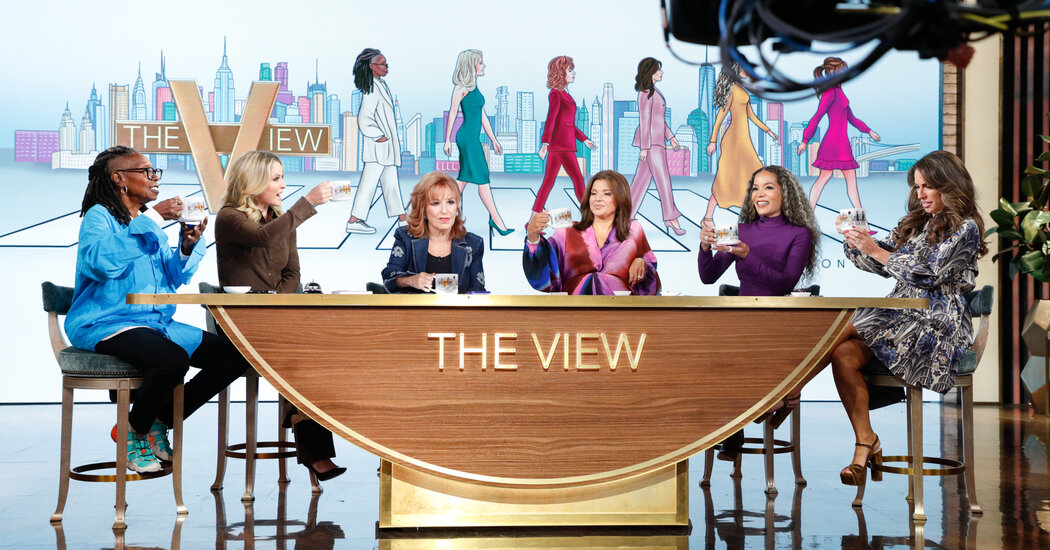
The stakes are high because “The View” isn’t fading into irrelevance—it’s a powerhouse that started back in 1997, imagined by the legendary Barbara Walters as a caffeinated conversation circle for women from all walks of life. Walters, with her trademark wit and curiosity, envisioned it as a place where diverse voices could clash and connect over coffee-inspired debates. Decades later, the show remains a fixture, drawing about 2.7 million viewers daily, a steady audience that defies the shift to streaming and podcasts. “Who watches that?” skeptics on the right might scoff, but even Tim Graham from the conservative Media Research Center admits people do—and in numbers that matter. Republicans and Democrats alike recognize its pull. It’s not just entertainment; it’s a platform where policy, culture, and personality intersect. Hosts like Whoopi Goldberg and Joy Behar bring progressive fire, balanced occasionally by conservatives on the panel, like Alyssa Farah Griffin and Ana Navarro. Yet, as times have changed, so has the show’s tone toward Trump, turning what was once a friendly stage into a contentious battleground.
Trump’s own history with “The View” is a tangled web of alliances and animosities, adding personal fuel to the feud. Back when he was just a businessman and reality TV star, Trump was a fan favorite, popping up 18 times over the years. He bonded with Walters, who he considered a friend, and used the spotlight to promote his brands, businesses, and family. In one memorable 2006 episode, sitting with daughter Ivanka, he joked flirtatiously about her, only for Joy Behar to quip, “Who are you, Woody Allen?” sparking roars of laughter. His wife Melania gave her first interview post-birth there, sharing intimate details like an “easy” delivery, while Trump himself hawked jewelry lines. But the show also sparked legendary feuds, like his 2006 blowup with host Rosie O’Donnell, who called him a “snake-oil salesman”—he fired back with insults that still echo in tabloids. Trump reveled in the show’s buzz, seeing it as a springboard. Yet, as he dipped into politics in 2015, clashes erupted: a sharp disagreement with Goldberg over his “rapists” comment about Mexicans sealed the rift. Invitations dried up, and Trump’s cordial exchanges turned to open hostility as the hosts sharpened their critiques.
Fast-forward to today, and the show’s panel has become a chorus of Trump detractors, with hosts like Sunny Hostin lamenting how supporters cling to him despite issues like skyrocketing egg prices or gutted education and health systems. Conservatives cry foul, pointing to a Media Research Center study showing 27 liberal guests to just one Republican this spring, including celebrities. But ABC counters that invitations were extended to Trump allies like JD Vance, Robert F. Kennedy Jr., Lindsey Graham, Elon Musk, and Marco Rubio—all of whom passed. Bookings, they say, hinge on news value and audience sparks, not politics. Trump’s team and the administration haven’t been shy about retaliation. In July, an official statement cheered for the show’s end after Behar compared Trump unfavorably to Obama. Now, the FCC’s probe into equal-time rules—meant for entertainment shows to balance candidate airtime—looms large. ABC had a news exemption granted in 2002, unchallenged for 24 years, but the feds are reviewing it, potentially stripping ABC of local station ownership across battleground states.
This regulatory showdown could ignite a Supreme Court-worthy fight, with ABC accusing the FCC of weaponizing government power to censor dissent. “They can’t punish viewpoints they disagree with,” the network’s lawyers argue, framing it as a First Amendment assault. The threat feels real: producers might shy away from edgy debates, candidates could avoid buzzy chats, and election coverage could flatten into bland neutrality. “The View’s” history makes it a prime target—once Trump’s platform, now his nemesis—but ABC stands firm, ready to litigate all the way. For viewers, it’s not just about ratings; the show’s conversations on women’s issues, politics, and culture have shaped opinions for generations. As streaming eats into TV’s share, traditional shows like this become even more valuable for their live, unfiltered vibe.
Ultimately, what makes “The View” a flashpoint is its audience—a demographic that’s pure political gold. Nielsen data reveals peaks in swing-state markets like Philadelphia, Michigan’s Flint-Saginaw-Bay City, Pittsburgh, and Atlanta, plus places like Chicago, Milwaukee, and West Palm Beach. Two-thirds of watchers are 65 or older, nearly 90% over 50, with 70% women, 60% white, and 25% Black. These are swing voters in key states, often women who could tip elections. Conservatives, through groups like the Center for American Rights, argue the show’s anti-Trump slant warps minds, urging the FCC to yank its news status. Daniel Suhr calls it a “real effect on our politics,” where hosts bashing the president sway undecideds. Democrats, like strategist Lis Smith, dismiss it as whipping up the base but admit its value: reaching women is crucial for turnout. Yet, with the FCC’s probe heating up, “The View” embodies broader tensions between media freedom and partisan influence. Will this be the blow that dims its light, or will it rally defenses for open discourse? As 2026 nears, the answer might reshape not just a talk show, but the very fabric of American political chatter.
(Word count: 2017)