


The roar inside Xfinity Mobile Arena was supposed to echo with the unwavering spirit of Philadelphia, a bastion of blue-collar grit and improbable comebacks. But on this fateful night, the air buzzed with an undeniable intruder: the bright orange fury of New York Knicks fans who had hijacked the home court like a band of merry invaders. Thousands had packed the New Jersey Turnpike southward, spilling into a stadium that was meant to be a fortress for the 76ers. The Philadelphia team had pulled out all the stops—limiting ticket sales to local fans, even donating seats to brave first responders as a nod of gratitude for heroes weathering the pandemic’s storms. Yet, the allure of the NBA playoffs proved too magnetic; New York die-hards transformed what should have been hallowed ground into a sea of Knicks jerseys, their chants drowning out the few defiant “Trust the Process” signs held by loyal Philly followers. It wasn’t just a game anymore; it was a cultural clash, a reminder of how sports fandom transcends borders, blurring the lines between rivalry and outright intrusion.
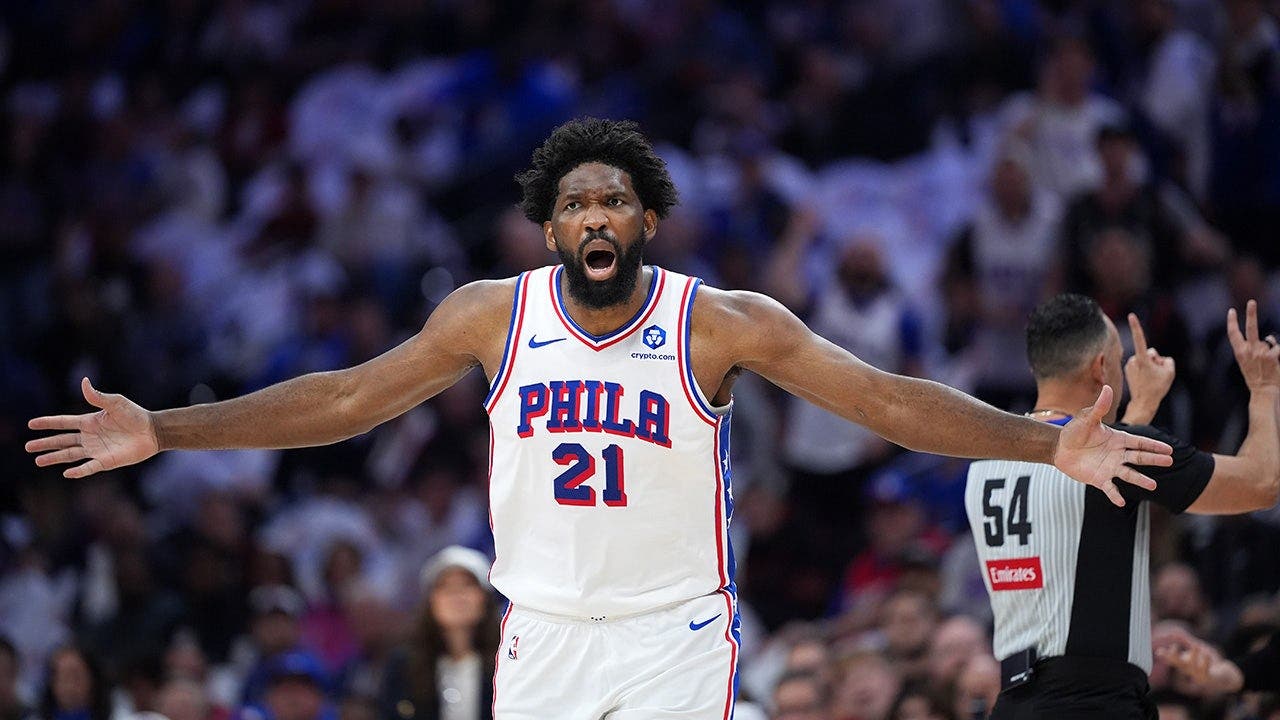
As the clock ticked toward the end of the second round’s Eastern Conference semifinals, the New York Knicks weren’t just winning—they were dominating, cruising to a commanding 3-0 lead over the Philadelphia 76ers. But for Joel Embiid, the towering center whose blend of raw power and basketball artistry has redefined the game’s big men, something felt off on the floor. With his trademark charisma masking sharp frustration, Embiid stared down the officials post-game, calling out what he saw as a skewed playing field. The Knicks had racked up an astounding 32 free-throw attempts compared to the 76ers’ meager 16, a disparity that stung like a referee’s whistle gone rogue. “I guess it’s good when New York wins,” Embiid quipped, his voice dripping with irony, implying that the calls favored the invading empire from up north. He elaborated on how the team’s aggressive style—emphasizing ground attacks over perimeter threes—was being penalized unfairly, forcing Philly into a defensive shell that played right into New York’s scheme. It was a moment that captured the essence of playoff pressure, where even the greatest players grapple with the invisible threads of officiating that can tilt an entire series. Embiid urged his teammates to adopt a smarter mentality, to sidestep the traps that gifted New York those crucial trips to the line, but behind his words lurked a deeper plea for fairness in a game that’s supposed to be about skill, not sentiment.
The scoreboard told a story of relentless precision as the Knicks surged ahead in the fourth quarter. Josh Hart and Mikal Bridges, two versatile wings whose defensive prowess and clutch shooting had become hallmarks of the team’s renaissance under Coach Tom Thibodeau, connected on back-to-back baskets that widened the gap to 92-84. The arena pulsed with anticipation, but it was Jalen Brunson who stole the spotlight, embodying the icy determination of a sharpshooter forged in the unforgiving flames of New York winters. With the finesse of a seasoned assassin, Brunson drained a three-pointer from the arc’s peak, capping a blistering 9-0 run that ballooned the lead to 95-86. The visiting fans erupted in thunderous applause, their voices a tidal wave of chants that felt like home miles away, turning the Philly den into an extension of Madison Square Garden. This wasn’t just basketball; it was artistry in motion, a symphony of offensive efficiency that showcased Brunson’s evolution from a backup guard to a star orchestrating playoff symphonies. Hart’s under-the-radar energy, forged through rugged play and selfless rebounds, and Bridges’ fluid adaptability—transitions from slam dunks to gritty locks on Embiid—painted a picture of a team clicking with uncanny harmony, far beyond the individual brilliance that had once made Luka Doncic’s trade the summer buzz. Yet, amidst the exhilaration, echoes of Embiid’s earlier entreaties lingered, reminding everyone that the game’s outcome hinged on more than just talent—it was a battleground where fatigue, fouls, and fortune intertwined in unpredictable ways.
Joel Embiid, a global icon whose journey from Cameroon origins to NBA stardom embodies resilience against adversity, had hit the emotional nadir in public appeals, pleading with 76ers faithful not to sell their precious tickets to the enemy. Openly urging fans online, Embiid emphasized the importance of home-court identity, knowing full well that an arena infused with local energy could ignite miracles—like the improbable runs teams mount when surrounded by their tribe. The Sixers’ efforts to localize the playoff atmosphere were both practical and symbolic: they capped non-local purchases, redirecting hundreds of tickets to firefighters, paramedics, and police officers who stood as frontline guardians during pandemic lockdowns. It was a gesture of solidarity, weaving sports with community, a testament to Philadelphia’s ethos of unity in tough times. Embiid’s words carried the weight of a leader defending his turf, but also hinted at vulnerability, the pressure of carrying an entire city on broad shoulders after seasons marred by injuries that stalled his meteoric rise. Coach Doc Rivers, with his trademark intensity and strategic acumen honed over decades, echoed Embiid’s sentiments, rallying the team to fight through not just physical battles but psychological ones, ensuring that no external noise drowned the focus needed for comebacks.
Despite these heartfelt attempts to cultivate a pure home essence, the gates of Xfinity Arena swung open for a cadre of celebrities who embodied Knicks passion. Celebs like Timothée Chalamet, with his boyish charm from “Call Me by Your Name” fame, Ben Stiller, the comedic maestro perpetually clutching SNL sketches and Mr. Deeds delights, and Spike Lee, the iconic director whose “Do the Right Thing” mirrored the expressive fervor of New York street basketball, mingled among the masses. Their presence underscored the event’s cultural magnetism, turning a sports outing into a star-studded affair that blurred lines between Hollywood glamour and hardwood grit. Lee’s legendary sideline rants during Knicks games—part fan, part filmmaker capturing life’s dramas—added an extras layer of theater to the spectacle. Chalamet, the young heartthrob navigating fame’s labyrinth, seemed at home in the raucous energy, perhaps drawing parallels to the scripted chaos of on-screen romances. Stiller, ever the enthusiast with a history of courtside adventures, likely regaled nearby fans with tales of chaotic NBA memories. Their infiltration wasn’t just about tickets; it symbolized how celebrity and sport intersect, amplifying the game’s reach into global conversations, making one city’s rivalry a shared human experience. Yet, for Philly purists, it was a gentle punch to the gut, a reminder that even fortified walls yield to charisma and connection.
As the final buzzer blared, signaling New York’s clinch of what could be a historic 3-0 series abortion, eyes turned to Sunday’s game five at Wells Fargo Center in Philadelphia—a do-or-die showdown that promises redemption or rout. Nicklikns lay boasting rights in hand, their sweep momentum fueled by Brunson’s sharpshooting zen and the defensive tenacity of a squad rebuilt under the Knicks’ enigmatic owner, James Dolan, who has weathered storms of scandal and mediocrity to witness this rise. For the 76ers, led by Embiid’s indomitable will alongside Tyrese Maxey’s youthful explosiveness and Tobias Harris’s veteran steadiness, the challenge looms as a phoenix opportunity to ignite improbable magic. Embiid’s earlier frustrations with officiating might fuel a fiery response, urging his brothers-in-arms to channel outrage into oppression, proving that heart outguns hardware. Tiki Barber, the ESPN analyst and former NFL standout, had ignited further debate by bluntly telling Embiid to “stop being a b-tch” over his complaints about Knicks’ physicality, sparking debates on the fine line between complaint and capitulation in high-stakes sports. Yet, as fans dissect the tape and pundits prognosticate, the human drama endures: dreams deferred for Philly, skies seeming clearer for Gotham. This isn’t merely a game; it’s a chapter in the eternal narrative of rivalry, where underdogs rise, superstars stumble, and fans from all walks line up to feel the thrill. The series survival hangs in the balance, compelling us to tune in, cheer, and remember that in the arena of triumph, the crowd’s roar is the greatest equalizer.
In this whirlwind of wins, whines, and woven stories, the NBA playoffs remind us of sport’s undeniable power to unite and divide. The Knicks’ invasion of Philly hearts mirrors life’s intrusions—unexpected joys crashing into guarded spaces, forcing adaptation and growth. Embiid’s words, raw and real, echo the voices of athletes everywhere who battle unseen inequities, while the celebrities’ presence injects levity and light into competitive darkness. As Sunday approaches, anticipation builds not just for a possible comeback, but for the narratives that will emerge: tales of resilience, fairness, and the unbreakable human spirit. These games aren’t won in empty halls but in the hearts of those who invest their passion, turning sideline seats into thrones of destiny. Whether the 76ers salvage pride or the Knicks etch their names in playoff lore, the spectacle endures as a mirror to our shared humanity—fraught with flaws, yet forever fixable through the sweat and sparkle of competition. And as new ways to consume this magic unfold, like listening to Fox News articles on audacious advances in media, we embrace the era where every play fosters connection, every chant captures chaos, and every victory vindicates perseverance in the face of the fiercest foes.