



The Underdog’s Journey
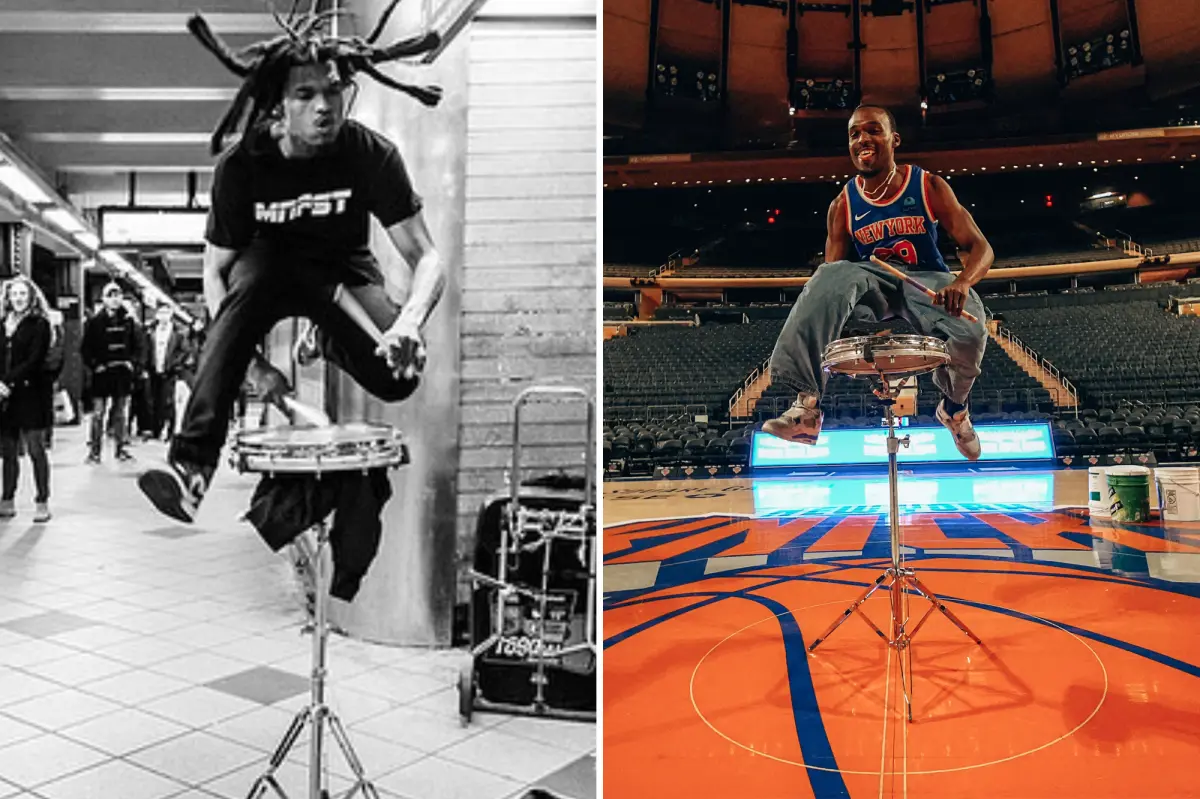
Cornelio Joseph, better known by his stage name Beat of New York, has always lived life with a rhythm that pulses through the heart of New York City. Born in Panama and raised in Brooklyn, he was drawn to the city’s vibrant streets from a young age. As a teenager, he discovered his passion for drumming, crafting handmade snare drums that he carried everywhere. Subway stations became his practice halls, landmarks his stages. He’d spend hours honing his beats, syncing them to the city’s energy—the rumble of trains, the bustle of pedestrians, the endless hum of ambition. At 33, he’s not just a musician; he’s a story wrapped in sweat and dreams. Part-time, he teaches music education at Juilliard, sharing his rhythm with kids who remind him of his younger self. But financially, things have been tough. Rent days strain his bank account, forcing him to hit the streets rain or shine. He’d play in the freezing cold outside Madison Square Garden, his fingers numbing on the drums, dreaming of the day someone would notice. That dream felt like a distant melody, one he’d chase relentlessly. Cornelio’s energy is infectious—his performances aren’t just music; they’re a burst of life, drawing crowds with his high-flying “manifesto jump” where he leaps high while drumming. He’s played alongside stars like Shakira, but MSG, the sanctuary of the Knicks, remained his ultimate fantasy. Every time he’d spot fans pouring into the arena, he’d pause, envisioning himself inside, the roar of 20,000 fans amplifying his beats. Life hadn’t been kind to him, though. Panama’s roots instilled resilience, but New York’s grind tested it. He’d wake up early, shoulders heavy from late-night gigs, yet he’d strap on his drum kit—buckets, snares, whatever he could—heave it onto the subway, and emerge at whatever spot called to him. Tourists, locals, they’d stop and cheer, some tossing dollars into his hat. But recognition? That was the elusive high note. He remembered nights folding his dreams small, questioning if the city’s indifference was eroding his spirit. Still, Cornelio’s faith kept him going. He spoke of God in quiet moments, crediting divinity for the strength to persist. This wasn’t just about money; it was about proving to himself that hustling mattered. His family back in Panama cheered him on through calls, urging him to chase the break that felt perpetually out of reach. Yet, Cornelio’s story isn’t one of endless struggle—it’s of quiet triumph, built beat by beat. Music, for him, is therapy, a way to channel pain into power. He’s battled self-doubt, wondering if his Panama heritage made him an outsider in the American dream machine. But on stage, that melted away. His drums spoke for him, universal in their language. As a teacher, he imparts that lesson: rhythm bridges divides, turns strangers into community. Those MSG performances outside weren’t failures; they were auditions, each note a resume. Cornelio’s life was a testament to patience, a reminder that even in a city that chews people up, passion can create openings. Little did he know, his big break was about to walk by. It started with a chance encounter that felt fated, a twist in his narrative he never saw coming.
The Fateful Encounter
Last week, as the biting wind whipped through the streets outside Madison Square Garden, Cornelio Joseph was doing what he did best: performing his heart out. His hands flew over the drums in a rendition of MC Hammer’s “U Can’t Touch This,” infusing it with his signature flair. Bucket lids clanged like subway cars, snares echoed like Manhattan’s heartbeat. Passersby paused, their cold breaths forming clouds, some even dancing along despite the chill. Cornelio, bundled in layers that barely fought off the frost, poured everything into the set, hoping for enough tips to cover another week’s expenses. His bank account had dipped into the red again, a familiar sting that’s plagued him since teen years. Teaching at Juilliard helped, but music gigs paid the bills irregularly. He spotted two figures among the crowd—execs from MSG, drawn in by the unexpected energy. Cornelio, ever the opportunist, seized the moment. “What are the odds of you just walking past while I’m here trying to bust my ass in the cold trying to pay my rent?” he quipped, his voice laced with the weariness of a true hustler. They laughed, impressed by the raw talent and charisma. He didn’t miss a beat; dropping a subtle pitch: “Hey, let me know if there’s any opportunity for entertainment at the Garden.” It was bold, a shot in the dark from a guy who’d learned to take them or starve. Cornelio recalled later how surreal it felt, as if destiny had tapped him on the shoulder. These weren’t just execs; they represented the pinnacle of gigs, the Knicks’ world. He exchanged contacts, playing it cool, but inside, adrenaline surged. Back home, replaying the interaction, he wondered if it was all just small talk. Days blurred into hope. Then, the text came: an invite to perform at Game 2 of the Eastern Conference semifinals against the 76ers. Cornelio’s phone shook in his hand. “I was freaking out,” he admitted, his mind racing through logistics—how to amp up his act for 20,000 fans? The assignment? “We want subway-themed street drumming.” Buckets for the vibe, right there on MSG’s iconic floor. He emailed a contract, committing to the full main timeout “Tonight’s Entertainment” slot. Dropping to the floor that night, staring at the ceiling, tears flowed as he thanked God. It was more than a job; it was validation. Years of subway smears on his knees, cold nights, rejection— all leading here. Cornelio prepared meticulously, refining his 80-second set for perfection. The theme required simulating the underground hustle, blending beats that mirrored train rhythms with pop energy. He practiced in his tiny Brooklyn apartment, neighbors pounding walls in rhythm. Nervously excited, he envisioned the crowd’s roar, celebrities watching. This wasn’t just a performance; it was redemption. The execs’ encounter felt predestined, a reminder that in New York’s chaos, connection can strike anywhere. For Cornelio, it was the universe rewarding persistence, turning street grit into spotlight gold.
Battling Nerves and Building Excitement
As the night of Game 2 approached, Cornelio Joseph’s world tilted into a whirlwind of preparation and emotion. The contract was signed, the paycheck promised—$2,000, a lifeline for his red account and dreams. But the reality sank in: performing for the Knicks diehards in a venue that hosted legends. Cornelio’s heart pounded as he imagined the energy, the court beneath his feet where superstars like Jordan once played. He’d be part of history, if only for a brief slot. Back in Panama, his family buzzed with pride over calls; “This is what you’ve worked for,” they’d say. Yet, nerves crept in. As a Juilliard alum and teacher, he knew stages, but MSG amplified everything. Celebs would be there: Jay-Z, the music icon; Adam Sandler, the comedian; Ben Stiller, the actor; Jeremiah Wright, the footballer. Nervous? Absolutely. Cornelio admitted fighting them when he spied the crowd pre-show. “Even though I’ve jammed with Shakira, this felt bigger,” he said, his voice trembling in recall. Doubts circled: Am I good enough? What if I slip? He channeled that into focus, practicing his “manifesto jump” until it was flawless—a high leap synchronized to beats, embodying freedom and power. The set, themed around subways, demanded buckets for that authentic clang, mimicking New York’s underground pulse. Cornelio designed layers: rhythmic groundwork evoking rumbling trains, crescendos mirroring crowded platforms. Bad Bunny’s tracks? Perfect for injecting Latin flair, tying back to his roots. He’d practiced solo, visualizing the arena: dark, monumental, the floor a vast stage. Physically, he pushed limits—long sessions leaving arms sore, but mentally, it was a battle. “This changed my life,” he thought, echoing lifelong aspirations. Memories of teenage subway gigs flashed: huddled against walls, dodging cops, proving himself. Now, at 33, shareable success felt within reach. He meditated, drawing on faith to calm jitters. Cornelio shared that post-show catharsis, how the prep built gratitude. It wasn’t just drums; it was storytelling—of his journey, New York’s spirit. Excitement outweighed fear, fueled by the shot he took outside. As game time neared, Cornelio arrived early, soaking in the atmosphere. Technicians wired him up, crew nodding approval. Sitting in the wings, he breathed deep, transforming nerves into motivation. Performing for the Knicks meant representing dreamers everywhere—the street musician, the immigrant chasing American rhythms. In those final moments, Cornelio embraced it: his pain, his passion, all converging into one electric 80 seconds. Little did he know, the show would exceed expectations, cementing his place in Knicks lore.
The Electrifying Performance
When the lights dimmed and Cornelio Joseph stepped onto the Madison Square Garden court, the world shrank to just him and his drums. The arena roared with 20,000 fans, their energy pulsing like a heartbeat. He positioned his buckets—simple, resonant tools evoking NYC subways— and began. The 80-second slot exploded with life: rhythms mimicking train wheels on tracks, snares cracking like doors slamming in the underground. Crowds leaned in, entranced by his high-energy fusion of street beats and pop flair. Mid-performance, Cornelio unleashed his signature “manifesto jump”—leaping high, body in perfect sync with the rhythm, spinning to land without skipping a beat. Bad Bunny’s music pulsed, infusing Latin roots that connected his Panama heritage to the multicultural crowd. The floor shook under the impact; he later called it “show-stopping,” feeling the vibrations through his skin. It wasn’t just drumming; it was a declaration—years of subway grime transmuted into triumph. Cornelio’s movements were fluid, expressive, a dance of victory that drew cheers. Fans erupted; even celebrities turned, impressed by the raw talent. Recalling it, Cornelio beamed: “I made the most out of that joint.” The set flowed seamlessly, each note building to a crescendo that mirrored the game’s intensity. As timeout ended, he bowed amid applause, heart swelling. Nostalgia hit—flashes of early days, shivering outside this very building. Now, inside, it felt surreal. Cornelio’s Juilliard training shone; precision met passion, crafting a performance that blended education with entertainment. He adapted on the fly, feeding off crowd feedback—smiles, cheers fueling his fire. The bucketing created that subway authenticity—echoes of his youth, when he’d drum for scraps. Knicks diehards, jersey-clad, sang along, uniting in the moment. Cornelio described the high: adrenaline, joy, validation. It was personal—proof persistence pays. Lingering nerves dissipated in the flow; he owned the stage. Though nervous beforehand, execution turned triumph. Post-show, words spilled out: “It definitely felt like I was a part of history.” Shaking with emotion, he knew this was destiny. The performance transcended entertainment; it humanized the game, injecting soul into spectacle.
Celebrity Cheers and Personal Triumph
Amid the haze of his MSG debut, Cornelio Joseph’s eyes lit up at the unexpected honors. As he caught his breath off-court, figures he’d idolized approached. Spike Lee, the iconic Knicks superfan and filmmaker, darted over, pumping his fist: “Great job!” Cornelio grinned, starstruck yet composed. Then, Jay-Z nodded approvingly, the rap mogul whose beats inspired so many. Adam Sandler and Ben Stiller, comedy legends, offered thumbs-ups. Jeremiah Wright, the footballer, even shared a bro-hug. Surrounded by such luminaries, Cornelio felt the weight of the moment. He’d dreamed of arenas, but this? It was validating—like his subway labors earned VIP status. The crowd’s roar lingered, a thunderous affirmation echoing his beats. Though nerves had plagued him, the performance banished them, replaced by elation. Recalling the scene, he admitted: “This is my dream—every performance in every subway and street led to this.” It wasn’t just fame; it was closure for struggles—the red bank accounts, cold nights, unnoticed hustles. Cornelio teared up sharing stories of teenage beginnings, when drums were escape and income. At Juilliard, he’d refined technique, but street bled into art. This gig bridged worlds: academia and asphalt. Financially, the $2,000 chiseled away debt, a preacher for future gigs. Emotionally, it healed—proving worth beyond paychecks. Celebrities’ praise felt surreal; Cornelio pondered their humanity. Lee, a fellow Brooklynite, connected deeply. Post-event, Cornelio texted thanks, humble in victory. Friends flooded messages: “You killed it!” Family in Panama celebrated via video call. The triumph extended beyond show—landing on news, his story inspiring others. Cornelio reflected on gratitude, crediting God and grit. It humanized his journey, turning dreamer into achiever.
A New Chapter and Unwavering Optimism
In the aftermath of his Madison Square Garden triumph, Cornelio Joseph found himself in a new rhythm, one where possibilities expanded like a drummer’s crescendo. The $2,000 check hit his account, easing financial woes and dreaming bigger. He mused on the path ahead, confident of return invitations: “I’m going to put a smile on everyone’s face.” Life post-performance overflowed with potential—pling invitations, media buzz amplifying his story. Yet, humility anchored him; Cornelio spoke of gratitude for the break, viewing it as reward for years of resilience. Subway gigs? They continued, fueling passion. Teaching at Juilliard energized him, students inspired by his tale. Future plans included honing acts, perhaps collaborative projects. Reflections deepened connection to roots—Panama’s pride, NYC’s grit. Cornelio’s optimism radiated: this wasn’t endpoint, but catalyst. Challenges loomed—rent, industry hurdles—but confidence surged. “The Knicks found me; this changed my life,” he reiterated, essence of hope. Grateful for executive encounter, he encouraged dreamers: take shots. Personal growth mined—nerves conquered, self-belief fortified. Cornelio envisioned legacy: drummer bridging worlds, story of undeterred pursuit. While MSG beckoned anew, he balanced highs with grounded nature. New York winter faded into spring, mirroring renewal. Cornelio’s tale, humanized everyday struggle turned stardom, resonated universally. In heart’s symphony, rhythm defined him—persistent, joyous. Ahead lay more performances, smiles etched. Stagedrums awaited, dreams unfolding. Cornelio Joseph, Beat of New York, drummed on.