


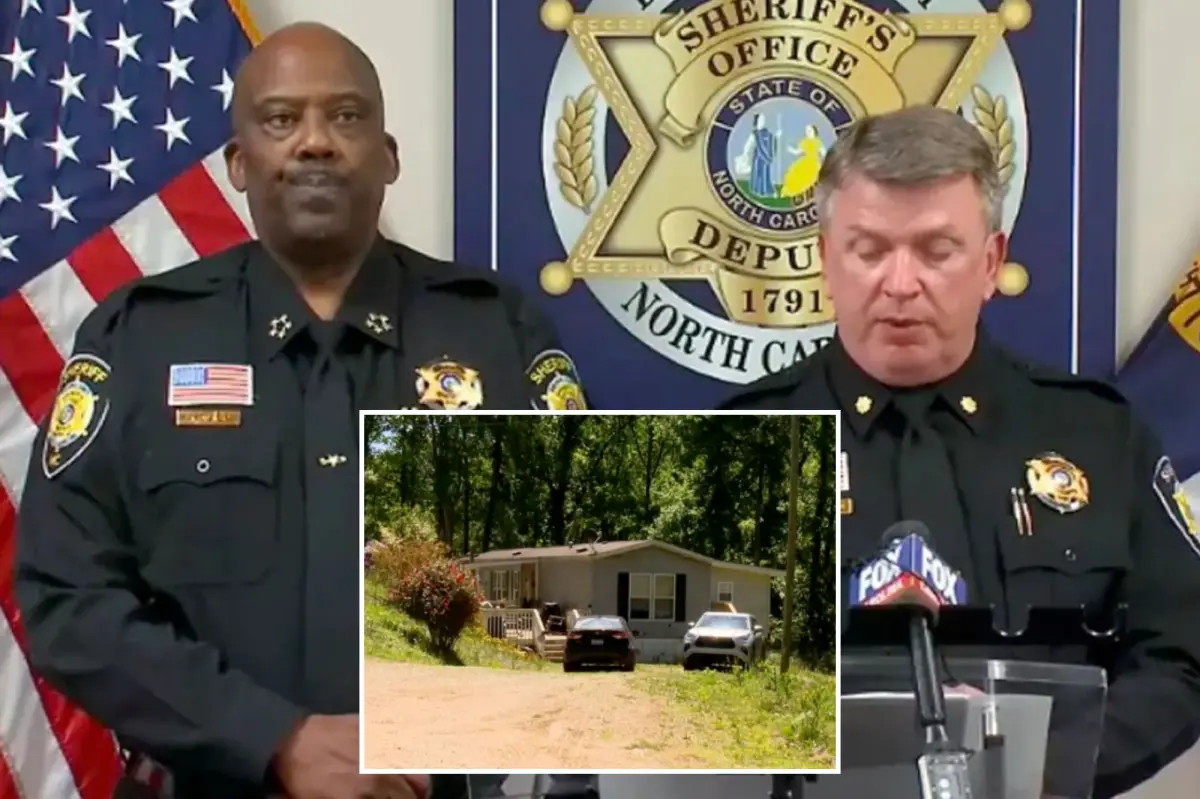
The quiet suburb of Fairview, North Carolina, felt like a world turned upside down on Thursday evening, when the unimaginable shattered the peace of a family’s home on Ashworth Drive. It had been a week of growing concern among relatives, who hadn’t heard from their loved ones—Travis Eugene Grant, a dedicated 41-year-old father and husband, Kimberly Michelle Grant, his caring 42-year-old wife, and Sharon Harwood Grant, their beloved 66-year-old matriarch. They were a tight-knit trio, bound by blood and shared memories that spanned generations. Travis was known in the community as a hardworking man, perhaps someone who enjoyed fixing things around the house or spending weekends coaching little league for the local kids. Kimberly, with her gentle smile, might have been the one organizing family dinners or lending a hand at church events, always there for her neighbors. And Sharon, the wise grandmother, probably spoiled her grandchildren with homemade cookies and stories from a life well-lived, her wisdom a cornerstone for the family. But on that fateful Thursday, around 7:15 p.m., Buncombe County deputies arrived for a welfare check, prompted by frantic calls from worried relatives. The door creaked open under duress, and inside, they found heartbreak etched in violence: all three were dead from gunshot wounds, their bodies discovered in the stillness of their once-safe sanctuary. It was a scene that no one should ever have to witness, a stark reminder of how fragile life’s routines can be, reduced to silence and sorrow in an instant. Law enforcement officials later revealed that deputies had conducted two previous checks earlier in the week—one on Monday and another on Wednesday—but lacked the probable cause to enter legally, a frustrating wait that felt almost torturous in hindsight. Now, with the bodies found, the investigation surged into overdrive, piecing together the final moments of these lives before the shots rang out, leaving a void in the hearts of those left behind.
At the center of this tragedy was Star Grant, the 16-year-old daughter of Travis and Kimberly, and the granddaughter of Sharon—a teenager whose own story had taken a dark turn. Star, raised in the warmth of her family’s embrace, had been missing from the scene, her absence adding layers of mystery and pain. Authorities quickly realized she wasn’t among the victims, but her role in the unfolding nightmare was becoming clearer. Charged as an adult due to the gravity of the crimes, Star faced three counts of first-degree murder and felony conspiracy to commit murder, alongside her alleged accomplice, a 28-year-old man named Devon O’Neil Loving. Living just nearby in Buncombe County, Loving’s background remained shrouded, but news of his arrest painted him as someone woven into this web of violence. As a minor, Star’s life should have been filled with dreams of high school dances, first loves, and college aspirations, yet here she was, thrust into the cold glare of adulthood through the worst circumstances. Her parents and grandmother had likely nurtured her with endless love—family vacations, bedtime stories, encouragement through tough times—only for it to culminate in this betrayal. Imagine the family gatherings where laughter echoed, or the quiet moments where Sharon offered advice on navigating teenage angst. Those memories now contrasted sharply with the charges against her, carrying the potential for life imprisonment or even the death penalty in North Carolina, where such felonies are treated with the utmost severity. The human cost was immense: a girl’s innocence lost, a family’s legacy stained, and a community grappling with how someone so young could be implicated in such horror. Advocates for juvenile justice might argue for mercy, pointing to her age and the possibility of manipulation or mental struggles, but the evidence painted a picture of calculated involvement, leaving loved ones to mourn not just the dead, but the living who might be forever changed.
The bond between Star Grant and Devon O’Neil Loving, two souls from Buncombe County, added another layer of intrigue to this heart-wrenching tale. Their relationship, the details of which authorities have yet to disclose, seemed to defy the usual boundaries of youth and experience with a 12-year age gap that must have bridged worlds apart. Loving, at 28, was a grown man with his own life story—perhaps a job, hobbies, or dreams unfulfilled—while Star was still navigating the tumultuous waters of adolescence. Friends might have noticed them together, whispering secrets in school hallways or meeting up after dark, but no one could have foreseen the path they’d chosen. Theories swirled: was it a toxic influence, a misguided romance, or something deeper like shared grievances against the family? Loving’s presence suggested he played a pivotal role, not just as a partner in flight but in the alleged crimes themselves. As Buncombe County residents, they knew the area well, making their cross-state escape both bold and desperate. This human element—the emotions of young love gone wrong, the allure of rebellion, or perhaps desperation—made the story palpable. We can imagine late-night conversations where decisions were made, fueled by passion or despair, leading to a point of no return. The family’s perspective, imagining their daughter with someone so much older, might evoke feelings of betrayal; how could they not have known something was amiss? Yet, in the fog of unanswered questions, it highlighted the complexities of human connections, where trust can shatter like glass and innocence can mask underlying turmoil.
The arrest of the pair unfolded like a tense thriller across state lines, showcasing the relentless pursuit of justice by multiple agencies. Shortly after deputies discovered the bodies, investigators from the Buncombe County Sheriff’s Office, teamed up with the North Carolina State Bureau of Investigation, Tennessee Bureau of Investigation, and Gatlinburg Police Department, launched a coordinated manhunt. Tracking them felt like following breadcrumbs through the mountains, as Star and Loving fled the scene of devastation, perhaps hoping to vanish into the misty Appalachians. They ended up at a hotel in Gatlinburg, Tennessee, a tourist spot known for its picturesque views and family vacations, ironically a place meant for joy turned into a hideout. It was just before 6 a.m. Friday when authorities swooped in, apprehending them in a raid that must have been a whirlwind of confusion and fear. Both were promptly taken into custody, held in Tennessee while awaiting extradition back to North Carolina. For the deputies and investigators, this was a victory born of tireless work—poring over phone records, surveillance footage, and witness statements—human detectives driven by the urgency of bringing closure to grieving families. One can picture the relief mingled with exhaustion on their faces as the cuffs clicked shut, yet the agony for the relatives lingered: why did their daughter run, and what had led to this irrevocable choice? The extradition hearing set for Monday would bridge the gap, transferring them back to face the music in Buncombe County, where the full weight of their actions awaited.
Legally, the charges against Star Grant and Devon O’Neil Loving were as severe as the crimes themselves, reflecting North Carolina’s uncompromising stance on such horrific acts. Each faced three counts of first-degree murder and felony conspiracy to commit murder, Class A felonies that carried the potential for the harshest punishments: life in prison without parole or, in the state’s death penalty statutes, even execution. As a 16-year-old charged as an adult, Star’s indictment marked a stark departure from the protections afforded juveniles, a decision rooted in the brutality of the case and the need for accountability. Prosecutors would argue that discretion was warranted given the premeditated nature, the lives extinguished with cold calculation, and the conspiracy that bound the couple. Defenders might plead for leniency, citing her young age, any possible coercion, or underlying factors like family strife, mental health struggles, or Loving’s influence—a plea to consider rehabilitation over retribution. The Grant family, in their mourning, might wonder if justice could ever heal the wounds, or if the system’s reach could restore the humanity stolen from them. Public sentiment ran the gamut: some demanded swift and severe penalties to deter such atrocities, while others pondered the cycle of violence in which a teenager could become entangled. As the case progressed, courtroom dramas would unfold, with evidence presented and lives dissected under the scrutiny of judges and juries, all while the victims’ spirits hovered, demanding truth. This wasn’t just a legal battle; it was a reckoning with the darker corners of human nature, where empathy and justice intersected in painful ways.
In the aftermath, with no motive yet disclosed by authorities as of Friday afternoon, the community of Fairview and beyond grappled with lingering questions and profound grief. Was it a robbery gone wrong, a domestic dispute escalated beyond control, or something more sinister like deep-seated resentments within the family? The lack of clarity allowed rumors to flourish, but officials emphasized that there was no ongoing threat to the public, assuring residents that the danger had been contained with the arrests. Still, the emotional ripple effects were inescapable—neighbors sharing stories of the Grants’ kindness, colleagues remembering Travis’s reliability at work, and friends reflecting on Kimberly’s infectious laugh. Sharon, the matriarch, might have been the glue holding everyone together, her absence leaving a cavernous hole. For Star’s former classmates, the news was a shockwave through their young lives, forcing reflections on how someone they knew could be linked to such tragedy. Loved ones left behind would face relentless heartache during funerals, memorials, and the slow crawl through the legal system, reconstructing lives torn apart. Advocates for mental health support highlighted the need for early intervention, wondering if signs of distress had been missed—after all, how does a 16-year-old end up in such a place? Community vigils or support groups might emerge, fostering healing amid the horror. Ultimately, this story underscored the fragility of trust and the irrevocable impact of violence, reminding us all that behind every headline are lives interwoven with love, loss, and the quest for understanding, even in the face of the unfathomable. As investigations continued and courts prepared for trials, the human story of the Grant family would echo long after the facts faded, a testament to resilience and the enduring need for compassion in times of darkness.