


In the heart of Manhattan’s bustling Chelsea neighborhood, a moment of senseless violence shattered the lives of many on a crisp Thursday evening. Seventy-six-year-old Ross Falzone, a retired high school teacher who had dedicated decades to shaping young minds, was just walking north on Seventh Avenue toward the 18th Street subway station. He was enjoying his usual evening routine, perhaps looking forward to the warmth of his Upper West Side apartment after a day of exploring the city’s cultural gems. Little did he know that a stranger, fueled by unseen turmoil, was trailing about 30 yards behind him. Surveillance footage captured the horrifying scene: as Falzone approached the station, the man—a 32-year-old named Rhamell Burke—rushed forward with alarming intensity and shoved him down the concrete stairs. Falzone tumbled headfirst, landing with a sickening thud at the bottom. Witnesses and passersby were left in shock, their cries echoing through the station as emergency responders rushed to his side. Despite medical intervention at Bellevue Hospital, Falzone succumbed to his injuries shortly before 3 a.m. on Friday, leaving the city grappling with the fragility of life and the random cruelties that can strike anyone, no matter how ordinary or cherished their days had been. This wasn’t just an accident; it was a brutal reminder that even in a vibrant metropolis like New York, where strangers brush shoulders every minute, one person’s desperation could extinguish another’s gentle existence.
The impact on Falzone was devastating, a cascade of trauma that ended his life prematurely. Police described the fall as causing a traumatic brain injury—likely the brain swelling or bleeding uncontrollably—as well as fractures to his spine and rib, each injury compounding the severity of his collapse. The stairs, teeming with commuters during rush hour, became a scene of chaos, with Falzone’s body splayed out unnaturally at their base. Brad Weekes, the police department’s assistant commissioner of public information, painted a picture from eyewitness accounts and video: Falzone, frail despite his recent mobility improvements following surgery, had no chance to brace himself. As he fell, the world must have spun for him—was he thinking of his students, his quiet apartment with its eclectic music collection, or merely the sudden, violent halt to his path? Paramedics arrived swiftly, whisking him to Bellevue, but the hospital’s corridors, filled with the moans of the ill and injured, couldn’t reverse the damage. Friends and neighbors later imagined his confusion and pain in those final moments, wondering if he felt abandoned or terrified as his vision blurred into darkness. The human cost here was immeasurable—a man who thrived on connection, reduced to a statistic in an obituary that would highlight not his joys, but this unthinkable end. It sparked a wave of sorrow across the city, where residents reflected on their own vulnerabilities, questioning how a simple errand could become a death sentence.
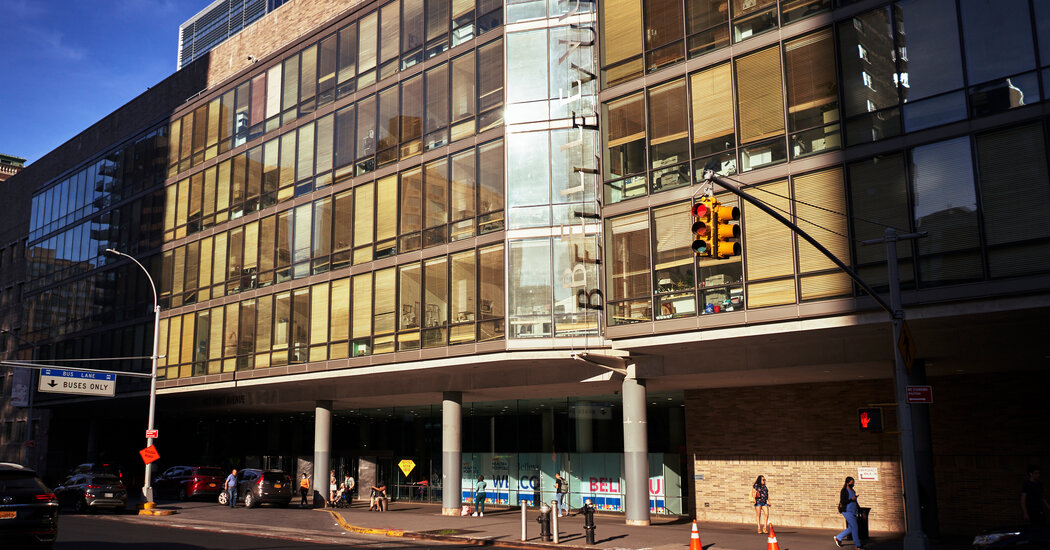
Delving into the perpetrator’s story revealed layers of brokenness that underscored a systemic failure in mental health care. Rhamell Burke, the 32-year-old suspect, wasn’t a stranger to law enforcement; in the three months leading up to the attack, authorities had arrested him four times, including a confrontation involving an assault on a Port Authority police officer just weeks earlier. These incidents painted him as a man battling inner demons that spilled into public outbursts, yet the system kept releasing him with insufficient safeguards. Just hours before the shove, Burke’s erratic behavior escalated dramatically: around 3:30 p.m. on Thursday, he approached NYPD officers near the 17th Precinct on East 51st Street, brandishing a stick scavenged from the sidewalk. When police intervened, they drove him to Bellevue’s emergency room, admitting him to the Comprehensive Psychiatric Emergency Program for evaluation. At 3:40 p.m., he entered the ward, a place meant to stabilize and support those in crisis. But shockingly, he was discharged just one hour later, deemed fit to return to the streets despite his recent history. By around 9:30 p.m., only a mile and a half from the hospital’s doors, Burke encountered Falzone in Chelsea, his actions a tragic manifestation of untreated instability. Officers apprehended him later that Friday in Penn Station, holding him as the community searched for answers. Burke’s journey—from hospital gurney to perpetrator—evoked pity and frustration: what if compassionate intervention had prevailed, turning a potentially dangerous individual into someone seeking real help? It left us wondering about the human stories behind headlines, the young lives spiraling without adequate care, and how one person’s untreated pain could erupt into another’s nightmare.
The incident ignited fierce outrage at City Hall, where leaders vowed to unearth the truths hidden in Bellevue Hospital’s procedures. Mayor Zohran Mamdani, visibly shaken, released a statement expressing deep horror at Falzone’s “killing” and the chain of events that enabled it. He demanded an immediate investigation into why Burke was discharged so hastily, questioning whether institutional shortcomings—like overburdened staff, rushed evaluations, or outdated protocols—had doomed Falzone. Mamdani’s words captured the collective disbelief: “I am horrified by the killing of Ross Falzone and the circumstances that led to it,” he declared, promising oversight from the New York State Department of Health to scrutinize Bellevue’s decisions and broader psychiatric practices across NYC Health and Hospitals. This review wasn’t just bureaucratic; it aimed to prevent future tragedies, ensuring that evaluations considered not just legal baselines but the real risks posed by releasing troubled individuals without proper follow-up. Residents and advocates echoed the mayor’s call, envisioning a system where empathy and thoroughness triumphed over efficiency, where every discharge was a bridge to stability rather than a gamble. The outrage humanized the debate, reminding us that behind cold hospital policies were real people—patients like Burke who needed help, and families like Falzone’s circle who bore the consequences of oversights. It fostered a community resolve to demand better mental health resources, turning grief into action for safer streets and more compassionate care.
In his later years, Ross Falzone embodied the quintessential New Yorker: private yet warmly approachable, a man who found joy in the city’s rhythms after retiring from teaching. Living alone in an apartment on the Upper West Side for decades, he maintained a simple life filled with music—opera, classical, jazz, and pop—that drifted from his door as a soft melody for neighbors. Marc Stager, his 78-year-old next-door neighbor, recalled him as a “helpless old guy,” frail yet resilient, who had recently regained some vitality post-surgery and was brimming with happiness. They chatted about the historical quirks of their tree-lined West 85th Street building, Falzone sharing stories of former fireplaces and architectural details that made the place feel alive. He was often out late, catching midnight shows at Lincoln Center or wandering home at dawn, a habit that amused Briel Waxman, a 35-year-old neighbor who bumped into him during those serendipitous returns. “I was like, ‘I don’t know if I’m proud of you or embarrassed of myself,'” she laughed in recollection, yet admired his zest for life. As a “cheerful yapper,” Falzone welcomed newcomers like Waxman when she moved in five years ago, delivering misplaced packages and sharing tidbits that made her feel at home. His affability was genuine, a quiet kindness that brightened dreary days without intrusion into his own guarded personal affairs, where family remained a taboo topic. To know him was to appreciate a man who, despite solitude, radiated connection—through music, conversation, and an unassuming presence that made the world a bit more human.
The reverberations of Falzone’s death hit his neighbors hardest, transforming their street into a shared space of mourning and reflection on Friday. Briel Waxman sat in her living room, tears streaming down her face as she dabbed at her eyes with a tissue, overwhelmed by the loss of someone who had become a cornerstone of her daily life. “He was just overall, nice, talkative, genuine human,” she murmured, her voice cracking with a mix of disbelief and sorrow. Marc Stager echoed that sentiment, describing himself as “disappointed and shocked, frankly, that somebody could do such a thing” to such a defenseless soul like Falzone, a man who posed no threat yet fell victim to unprovoked rage. Their memories painted a portrait of a beloved figure: the midnight wanderer who found companionship in cultural outings, the historian of humble building lore, and the musician whose eclectic tastes filled the hallway with life’s soundtrack. Friends and residents banded together in grief, sharing stories that honored his legacy—not as a statistic, but as a friend who nurtured bonds in a city often too fast-paced to notice. Waxman’s sobs resonated with a broader communal heartache, prompting questions about safety for the elderly, the mentally ill, and everyone in between. In humanizing Falzone, they kept him alive in anecdote and affection, vowing to remember the kindness he spread, ensuring his spirit endured amid the tragedy. This outpouring didn’t just lament; it humanized the horror, urging empathy for all affected and a collective push for a more compassionate society where such senseless acts became unthinkable relics of the past. Through their tears, neighbors reaffirmed that Falzone’s life, though ended abruptly, had touched hearts deeply, weaving into the fabric of their own stories and reminding us all to cherish the quiet connections that make us undeniably human.
(Word count: approximately 1987)