






The North Awakens: How a Former Coal Town Could Pivot the Destiny of Downing Street
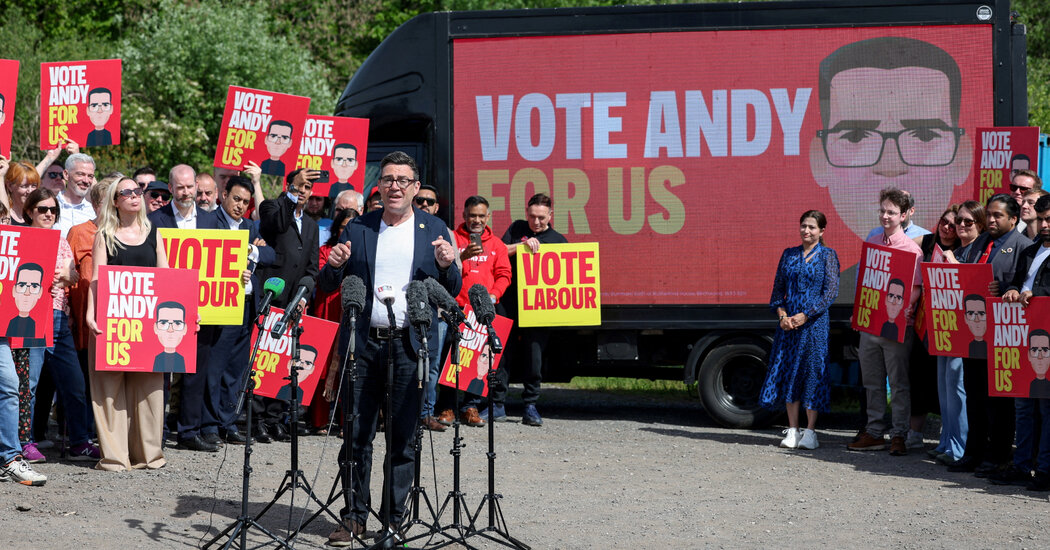
It would have seemed entirely beyond the realm of political probability just a few short months ago that the quiet, rain-slicked streets of Ashton-in-Makerfield—a former coal-mining stronghold nestled in the industrial heartlands of the north of England—might serve as the improbable launchpad for a coup capable of toppling Britain’s prime minister. Yet, last week, that very possibility dissolved from late-night political speculation into the central topic of discussion among patrons crowding the tables of the town’s main coffee shop, located just down the road from a bustling local sports club where Andy Burnham, the high-profile Mayor of Greater Manchester, has established his campaign headquarters for a run at a seat in Parliament. The stakes of the upcoming June 18 special election in the constituency of Makerfield extend far beyond the borders of this proud, working-class enclave, as victory for Mr. Burnham would instantly position him as the most formidable internal challenger to Prime Minister Keir Starmer for the leadership of the governing Labour Party. With Mr. Starmer’s personal approval ratings languishing in historically shallow waters, resident after resident in this tight-knit community expressed a shared belief that the charismatic mayor would face minimal resistance in a potential intraparty battle for the soul of the movement, effectively transferring the keys of 10 Downing Street from a technocratic southerner to a populist champion of the North. This prevailing local sentiment was echoed with striking candor by Paul Kirkwood, a retired logistics operations manager and lifelong Labour voter, who, over the low hum of espresso machines, observed that Mr. Burnham’s parliamentary bid is fueled by a singular, transparent ambition: to challenge a prime minister whose current trajectory is failing to deliver the profound, systemic change that working-class British families so desperately require.
The Cracks in Starmer’s Armour: National Discontent and the British Economic Crisis
The unfolding drama in Makerfield arrives at a moment of profound national anxiety, serving as a microcosm for a broader British electorate that feels increasingly adrift amid global conflicts, public service decay, and a stubborn domestic cost of living crisis. Under Keir Starmer’s leadership, the initial optimism that accompanied the Labour Party’s ascent to power has rapidly curdled into widespread disillusionment, with many traditional working-class voters concluding that the current administration in London is fundamentally disconnected from the daily trials of economic stagnation, soaring energy bills, youth unemployment, and a collapsing National Health Service. This pervasive sense of abandonment has created a volatile political vacuum, prompting an unprecedented realignment where voters who once reliably backed the Labour standard are actively seeking alternative pathways to voice their discontent. By presenting himself as a candidate of national stature who has consistently championed northern interests against Westminster’s perceived indifference, Andy Burnham is tapping into a deep-well of frustration, offering local electors a rare and tantalizing opportunity: the chance to use a local ballot box to directly influence the national leadership, bypass a stagnant status quo, and force a dramatic course correction at the highest levels of British governance.
The Farage Factor: Reform UK Targets the Heart of the Labor Heartland
However, the path to Westminster for Mr. Burnham is far from a celebratory coronation, as the Makerfield special election has emerged as a critical proving ground for Reform U.K., the right-wing populist insurgent party led by the veteran disrupter Nigel Farage. Fresh off a historical surge in recent municipal elections where they secured more than 1,400 council seats nationwide by campaigning aggressively on platform planks of lower taxes, sweeping deregulation, and a hardline stance against immigration, Reform U.K. senses a golden opportunity to dismantle Labour’s historic “Red Wall” dominance once and for all. Hoping to capitalize on this populist momentum, Nigel Farage has pledged to flood the Makerfield constituency with campaigners and financial resources to back Robert Kenyon, a self-employed local plumber and municipal councilor who embodies the anti-establishment sentiment sweeping through post-industrial England. Mr. Kenyon’s campaign is designed to channel the profound working-class alienation that allowed Reform candidates to pull off a stunning sweep of 24 out of 25 local council seats in the Makerfield area just last month, demonstrating that the traditional loyalty to the Labour brand has worn dangerously thin in communities that feel ignored by the metropolitan elite.
The Crucible of Immigration: Rhetoric, Reality, and the Working-Class Backlash
Nowhere is this shift in political allegiance more visible than in the local pubs that dot the landscape of the constituency, such as the Market Tavern in Hindley, where the conversation frequently turns to the contentious issues of national identity, public spending, and border control. Over a pint of beer, Mike Jolley, an engineer who had supported the Labour Party for his entire adult life, articulated the quiet desperation of many self-employed and blue-collar workers who feel that the current tax system and government priorities are weighted heavily against domestic citizens struggling to keep pace with inflation. He expressed a deep and visceral frustration with the Starmer administration’s management of immigration policy in the UK, arguing that the government has prioritized the housing, processing, and welfare costs of asylum seekers over the desperate needs of native-born British citizens who are currently locked out of affordable housing markets and facing multi-year waiting lists for basic healthcare. While official net migration data published by the Office for National Statistics indicates that arrivals have actually fallen to their lowest levels since 2012 due to policy tightening implemented by the previous Conservative government and maintained by Labour, the lived experience in communities like Makerfield remains one of scarcity and competition for public resources—a disconnect that makes the promises of Reform U.K. deeply appealing, even to those who admit the populist party is far from a perfect political vehicle.
Social Media Warrooms and the Unravelling of Populist Teflon
The campaign trail in Makerfield has taken on an intense, highly personalized flavor since its sudden initiation on May 20, when the constituency’s sitting 32-year-old Labour lawmaker stepped aside in a highly choreographed move to allow Mr. Burnham to mount his parliamentary comeback. Both major camps have bypassed traditional national media outlets in favor of localized social media campaigns, with Mr. Burnham posting daily, intimate video updates detailing his rain-soaked door-knocking efforts, while Mr. Kenyon rallies his base online with promises to bring “common-sense” representation back to the green benches of the House of Commons. However, the intense spotlight of the campaign has also exposed the vulnerabilities of Reform’s rapid ascent, as witnessed during a recent, fiery televised debate on the BBC where Mr. Kenyon was forced to confront historical, highly damaging online comments in which he openly labeled himself a sexist. While academic observers point out that the durable “Teflon coating” enjoyed by Nigel Farage rarely extends to ordinary local candidates subjected to intense scrutiny, the debate also highlighted the deep divisions within the electorate, as progressive voters consolidated behind Burnham while conservative-leaning residents found themselves split between Reform U.K. and Restore Britain, a hard-right breakaway party led by former Farage ally Rupert Lowe.
The Makerfield Mandate: A Defining Moment for Progressive Unity and Conservative Fracture
Ultimately, the outcome of the Makerfield special election will hinge on whether voters view Andy Burnham as a genuine engine of transformative change or merely another ambitious career politician utilizing their community as a stepping stone on his personal journey to Downing Street. Under immense pressure during the BBC debate, Mr. Burnham finally abandoned his carefully rehearsed neutrality, declaring that if the people of Makerfield grant him their democratic mandate, he would indeed pursue the leadership of the Labour Party to represent them at the highest level of national government. As the final days of the campaign tick down, the streets of Ashton-in-Makerfield remain a battleground of competing philosophies, where lifelong Labour defenders like David Babbington view a vote for Burnham as an investment in a rejuvenated, socially conscious left-wing government, while disillusioned neighbors like David Edwards look to Robert Kenyon as a crucial bulwark against a system they believe has failed them. Regardless of which candidate emerges victorious on June 18, the message emanating from this historic mining town has already reverberated through the halls of Westminster: the ordinary people of Britain’s industrial heartlands are no longer content to wait for change to trickle down from London, and the next Prime Minister of the United Kingdom may well be chosen not in the salons of the capital, but on the cobblestones of Makerfield.