





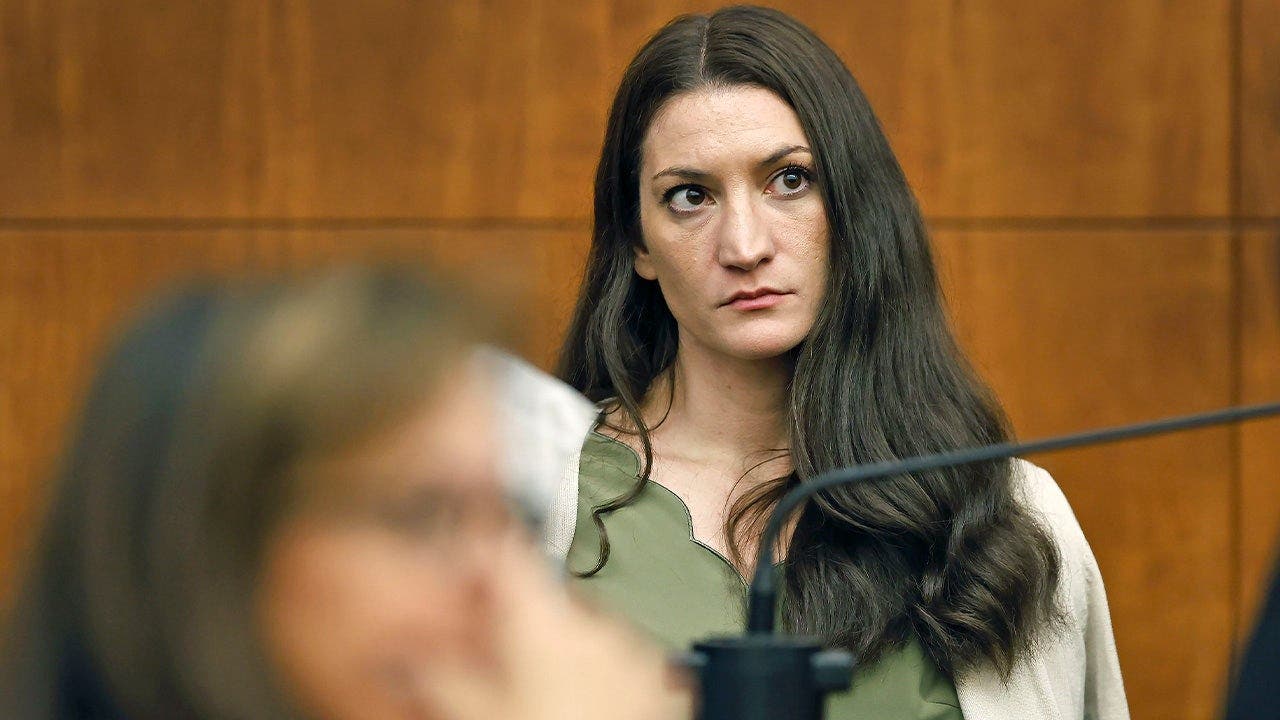
The quiet coastal town of Duxbury, Massachusetts, remains cloaked in the shadow of an unimaginable tragedy that unfolded on January 24, 2023, inside a home that once echoed with the laughter of three young children. Lindsay Clancy, a thirty-two-year-old labor and delivery nurse at the highly esteemed Massachusetts General Hospital—a woman whose life’s work was dedicated to bringing new life safely into the world—now sits in a wheelchair, paralyzed from a suicide attempt on the very night her children’s lives were taken. The upcoming trial in Plymouth Superior Court is not a mystery of who committed these devastating acts, but rather a profound and painful exploration of clinical tragedy and legal culpability. Lindsay has pleaded not guilty to three counts of murder and strangulation in the deaths of her five-year-old daughter Cora, her three-year-old son Dawson, and her eight-month-old baby Callan. As a jury of twelve women and six men prepares to hear opening statements, the courtroom is braced for a trial that will force a raw, public confrontation with the devastating realities of postpartum psychiatric disorders and the limits of criminal responsibility.
The legal battleground will not look at whether Lindsay caused the deaths of her children, but rather whether she possessed the cognitive and emotional capacity to be held legally accountable for her actions. The defense, led by attorney Kevin Reddington, plans to argue that Lindsay was suffering from severe postpartum psychosis, a rare, terrifying mental health emergency that completely severed her connection to reality. Prosecutors, however, paint a vastly different, more calculated picture of the events, alleging that the mother intentionally waited for her husband, Patrick Clancy, to leave the family home on errands—picking up takeout food and a prescription—before using exercise bands to strangle the three children. Legal experts note that mounting a successful insanity defense is an incredibly difficult hurdle in the American criminal justice system, yet Lindsay’s documented history of desperately seeking medical intervention may provide her defense with a uniquely compelling foundation. Her prestigious medical background as a nurse acts as a double-edged sword: the prosecution may argue her training made her more calculating and aware of her actions, while the defense contends it proves just how deep her psychotic break was, as even her professional knowledge could not save her from the overwhelming deluge of her mind’s collapse.
Behind the clinical arguments lies a harrowing narrative of a mother’s quiet, desperate descent into a psychiatric abyss in the months leading up to the tragedy. Lindsay was battling a crippling combination of postpartum depression, severe sleeplessness, and suicidal ideation, which eventually escalated into horrifying auditory hallucinations that urged her to harm both herself and her babies. Her family’s desperate search for path-clearing medical care led to a brief admission to a psychiatric hospital just weeks before the tragedy, alongside a revolving door of aggressive prescriptions designed to stabilize her rapidly deteriorating mental state. According to civil lawsuits later filed by both Lindsay and Patrick against her medical providers, her physicians failed to properly diagnose, treat, and monitor what was clearly a catastrophic post-pregnancy psychiatric emergency. Crucially, on the afternoon of the killings, Lindsay reportedly felt a crushing compulsion driven by a disembodied voice telling her it was her absolute “last chance” to save her children and herself. This tragic intersection of systemic medical oversight, heavy pharmacological treatments, and rapid psychological fragmentation highlights the crucial, often-ignored gaps in maternal mental healthcare that can lead to irreversible catastrophe.
At the devastating center of this loss stands Patrick Clancy, a father who stepped out of his house for less than an hour only to return to a scene of absolute ruin, and who must now navigate the wreckage of his former life under the glaring spotlight of national media attention. Patrick’s journey of grief has been nothing short of mercurial; having suffered what his attorney describes as one of the worst tragedies imaginable, he has had to find a way to breathe through the ashes of his family. He has since divorced Lindsay, remarried, and begun the grueling, delicate process of rebuilding his everyday existence, yet he remains deeply connected to protecting the sanctity and memory of his lost children. In a profound show of protective fatherhood, Patrick pleaded with the court to prevent the media from broadcasting or reproducing his agonizing initial 911 call, as well as the autopsy photos and the blood-stained clothing his children wore on that fateful night. His legal team argued successfully that allowing these deeply intimate, horrifying relics of the tragedy to circulate indefinitely online would inflict permanent, compounding emotional trauma upon a man who is actively trying to survive the unimaginable.
This plea for basic human decency sparked a heated, emotional confrontation inside the courtroom just after the jury was finalized, exposing the bitter divide between the defense’s call for empathy and the prosecution’s pursuit of a conviction. Attorney Kevin Reddington fiercely accused the prosecution of attempting to stage a “reprehensible circus” designed to inflame the emotions of the jury by parading graphic evidence, such as children’s blood-stained onesies, before the court. In response, prosecutor Sprague counterargued that the state did not choose the horrific nature of the evidence, the number of the victims, or their tender ages—rather, those factors were determined solely by the actions of the defendant. Judge William Sullivan ultimately intervened to de-escalate the hostile exchange, issuing a balanced and compassionate two-page order that allows reporters inside the courtroom to describe the visual and auditory evidence to the public, while strictly prohibiting the media from recording, broadcasting, or distributing the actual 911 audio or autopsy photographs. This ruling attempts to preserve the integrity of the judicial process while honoring Patrick Clancy’s plea for a small measure of privacy amid his permanent heartbreak.
As the trial prepares to commence, this deeply tragic case stands as a painful, urgent reminder of the hidden depths of maternal mental illness and the systemic failures that often leave struggling mothers in isolation. Postpartum psychosis remains a highly misunderstood illness, and this trial will undoubtedly push the boundaries of how the legal system defines sanity and criminal intent in the face of chemical and psychological brain failures. If this case can offer any solace to a grieving public, it is the hope that greater awareness and immediate intervention can prevent such profound suffering from occurring in other families. For those who are currently navigating their own dark battles with severe depression, postpartum anxiety, or suicidal thoughts, help is always within reach by contacting the National Suicide Prevention Lifeline at 988 or 1-800-273-TALK (8255). When the courtroom doors open and the trial begins, the proceedings will face the difficult task of balancing the biological tragedy of a broken mind with the heavy, solemn pursuit of justice for Cora, Dawson, and Callan.