


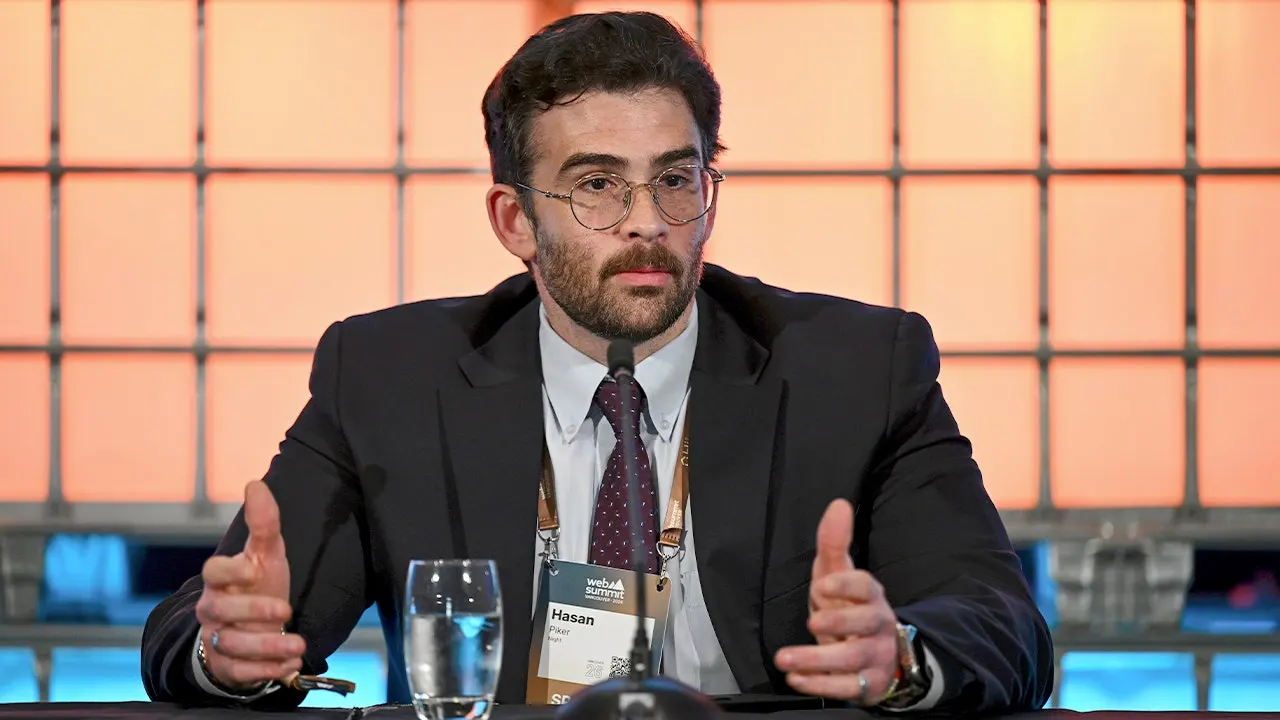
In an interview that quickly rippled through the political internet, Hasan Piker—one of the most recognizable left-wing streamers and political commentators on platforms like Twitch and YouTube—sat down with Axios to discuss the difficult, unresolved legacy of the September 11 attacks. Piker, who built a massive following by reacting to news and debating politics in real time, is known for his sharp, often blunt progressive takes. But even by his standards, his words were striking. At the center of the conversation was Osama bin Laden, the architect of the deadliest terrorist attack on American soil. Rather than describing bin Laden as a mastermind of evil or a fanatical religious zealot, Piker offered a different, almost strangely personal characterization: he called bin Laden a “spoiled brat.” The phrase felt jarring, even reductive, yet Piker used it to make a larger point about power, privilege, and the tangled history between the United States and the man who became its most infamous enemy. To hear him tell it, bin Laden was not simply an outsider who hated America from afar; he was, at one point, an American ally, someone trained and armed by the U.S. in a shared Cold War struggle. That history, Piker argued, complicates the story Americans tell themselves about 9/11 and raises uncomfortable questions about responsibility, revenge, and the unintended consequences of foreign policy.
Piker’s argument began with bin Laden’s own stated reasons for attacking the United States. In the years before 9/11, bin Laden had pointed again and again to American support for Israel, U.S. military bases in the Middle East, and American oil policies as the driving grievances behind his campaign of violence. Piker did not dismiss these grievances as irrelevant; he acknowledged that bin Laden framed his terrorism as a response to U.S. intervention in the region. But Piker also placed bin Laden in a longer historical context, one that is often overlooked in mainstream retellings. During the Soviet-Afghan War, the United States actively trained, funded, and armed the mujahideen in Afghanistan—a network that included not just Afghan fighters but foreign volunteers from across the Arab world. Among those volunteers was Osama bin Laden, a wealthy Saudi who used his connections and resources to support the anti-Soviet cause. The U.S., in other words, helped create the very environments and networks that eventually produced al Qaeda. For Piker, this makes bin Laden less of a mysterious villain and more of a product of geopolitics. That is why he used the strange phrase “spoiled brat.” Bin Laden, in Piker’s telling, was not some impoverished revolutionary or desperate refugee; he was a wealthy man with powerful backers in the Saudi kingdom and the royal family, someone who had been propped up by global superpowers when it suited their interests. When he didn’t get what he wanted, he lashed out in catastrophic ways.
Piker was careful, though, to make a distinction that he felt was crucial. The September 11 attacks were, in his words, a “horrifying tragedy,” and he said he does not accept the act morally. He used the term “blowback” to describe the relationship between U.S. actions abroad and the attacks at home, but he insisted that blowback is not the same as justification. “Blowback is just what it is,” he said. A justification, he explained, offers either a moral condemnation or a moral acceptance of an act. He rejected both. He was not saying that bin Laden was right, nor was he saying the victims of 9/11 deserved what happened. Instead, he was trying to describe cause and effect—a relationship that can exist without moral approval. To Piker, the United States spent decades intervening in the Middle East, propping up leaders, arming groups, and pursuing policies that created enormous resentment and instability. Those policies, he argued, produced an environment in which someone like bin Laden could rise and in which violence could be directed at American civilians. It is an uncomfortable and deeply controversial line of thinking, because for many people, any attempt to contextualize terrorism feels like blame-shifting or excuse-making. But Piker’s point was more nuanced: understanding why something happened does not mean forgiving it. He seemed to be wrestling with the difference between assigning responsibility for a specific atrocity and recognizing the broader conditions that made it possible.
The streamer’s broader message was not simply about the past but about the future. When asked what should be done, Piker said he wanted fewer actors like bin Laden “to exist in general.” He argued that the best way to achieve that is to stop creating the conditions that lead people to embrace radical violence in the first place. “The other path of least resistance,” he said, “is to not interfere in these affairs in general and not continue to dominate and create an environment where people are going to seek out revenge and put us in a position of danger.” That statement reflects a broader anti-interventionist worldview that Piker has long championed: the belief that American military and political meddling abroad creates more enemies than it eliminates. He pointed to the cycle of violence—the idea that when the United States bombs, sanctions, or overthrows governments, it plants seeds of anger that eventually grow into attacks on American soil. He framed this not as an abstract academic theory but as a practical safety issue. If you want to keep Americans safe, he was saying, stop doing things that make you a target. This is a position that resonates with many on the left and with war-weary Americans, but it also draws fierce criticism from those who see it as naive or even dangerous. Piker, however, did not back away. He seemed genuinely convinced that the most moral and pragmatic policy is a kind of restraint, a reluctance to dominate other nations, and a willingness to accept that the United States is not always the innocent party in its own stories.
The controversy around Piker’s interview, however, did not end with his comments about bin Laden. In the same conversation, he made a comparison that ignited even more outrage. When asked about the United States and al Qaeda, Piker said that “pound for pound” as far as the number of deaths, the United States had caused comparable terror around the world. “We have caused tremendous terror all around the world,” he said. That comparison was immediately seized upon by critics, who accused him of drawing a moral equivalence between a democratic nation and a terrorist network. The backlash was intense, with many on the right and even some on the center-left calling his remarks disgusting and disrespectful to the memory of those killed on 9/11. Piker’s defenders, on the other hand, insisted that he was not comparing the moral character of the two actors but rather pointing to the sheer scale of suffering caused by U.S. foreign policy. To them, his words were an uncomfortable truth, not a defense of terrorism. Piker himself seemed to be operating from a deeply anti-imperialist framework, one in which the United States’ global footprint has resulted in massive civilian casualties, whether through direct military action, drone strikes, sanctions, or support for brutal regimes. He was not claiming that every American death is morally equivalent to every terrorist attack, but he was saying that the United States has also terrorized populations around the world. The phrase “pound for pound” was meant to level the playing field, to argue that in terms of lives lost, the United States has caused its share of terror.
In the end, Piker’s interview represents the raw, unresolved tension that still surrounds the memory of September 11. For many people, the attacks were a moment of profound national tragedy, and any suggestion that they were “blowback” feels like an insult to the victims and a betrayal of American identity. For others, especially younger progressives who grew up after the attacks and watched the wars in Iraq and Afghanistan unfold, the events of 9/11 are inseparable from a broader pattern of American empire—a system that has often brought violence and destruction to other parts of the world. Piker sits firmly in the latter camp, and his blunt language reflects a generation that is willing to question the official narratives handed down by politicians and media. Calling bin Laden a “spoiled brat” is not the language of a scholar or a diplomat; it is the language of a streamer, someone who is used to speaking unscripted to a loyal audience. But beneath the provocative phrasing lies a serious argument about accountability, history, and the future of American foreign policy. Piker may have intended to provoke, but he also asked a question that will not go away: If terrorism is a response to U.S. actions, what does that mean for America’s responsibility in the world? The human challenge is to hold onto the memory of the 9/11 victims while also honestly examining the forces that led to that terrible day. It is a difficult balance, and Piker’s attempt to find it was messy, controversial, and deeply uncomfortable. Yet his words have ensured that the conversation continues, not just about who Osama bin Laden was, but about how nations should behave in a world where violence and revenge are never far away.